


Laying a paver path: 7 Pro Steps for Success
Why Laying a Paver Path is the Perfect Weekend Project
Laying a paver path is one of the most rewarding DIY projects you can tackle to transform your outdoor space. Most homeowners can complete this project in a single weekend, creating a beautiful walkway that can easily last 20 years or more when properly installed.
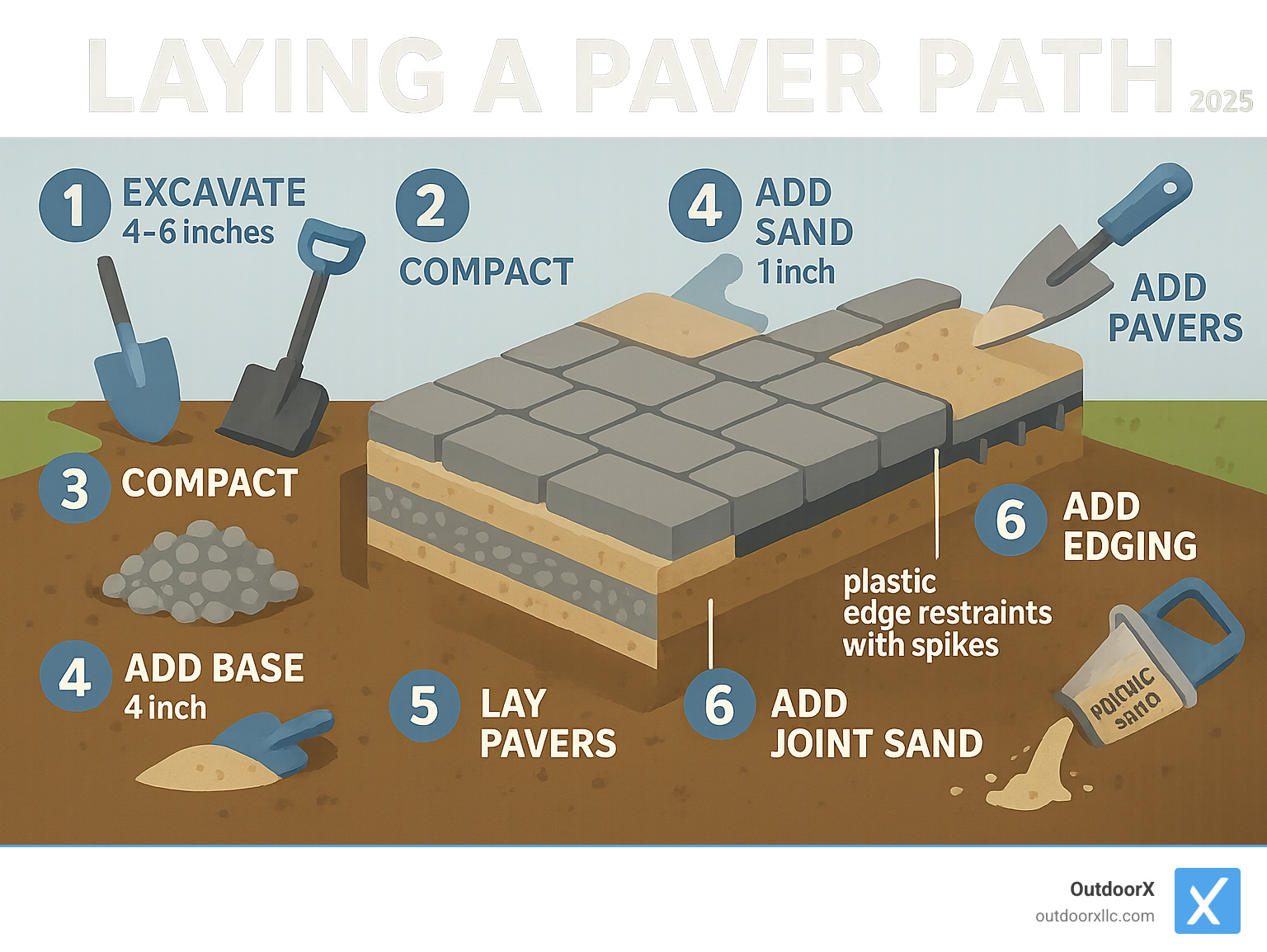
Quick Answer: The 7 Essential Steps for Laying a Paver Path
- Excavate – Dig 4-6 inches deep for the path area
- Compact – Tamp the soil to create a firm foundation
- Add Base – Install 4 inches of gravel paver base
- Add Sand – Apply 1 inch of leveling sand
- Lay Pavers – Set pavers in your chosen pattern
- Add Edging – Install edge restraints to prevent shifting
- Add Joint Sand – Fill gaps with polymeric sand and compact
A paver walkway adds instant curb appeal and increases your property value while requiring minimal maintenance. Unlike poured concrete that can crack over time, pavers flex with ground movement and individual stones can be easily replaced if damaged.
The secret to success lies in thorough planning and proper preparation. As one landscaping expert notes, “The most important ‘skill’ is patience and attention to detail.” With the right materials and techniques, you’ll create a functional pathway that protects your lawn from foot traffic while adding an attractive focal point to your landscape.
Easy laying a paver path word list:
Planning Your Paver Path: The Blueprint for Success
Successful laying a paver path installation starts with thorough planning. This phase is the blueprint for your project, saving you from costly mistakes. Pavers offer incredible advantages over other walkway materials. Their interlocking design allows them to flex with ground movement, preventing the unsightly cracks that plague solid concrete. Water drains naturally through the joints, eliminating puddles and ice buildup. When a paver does get damaged, you simply replace that single unit rather than tearing up an entire section. Plus, the design possibilities are virtually endless!
For more detailed information about professional installation techniques, check out our guide on brick walkway installation.
Designing Your Walkway & Choosing Pavers
Your walkway’s width sets the tone for how people will use the space. A standard 36-inch width works perfectly for single-file walking and meets wheelchair accessibility requirements. Planning for two people to stroll comfortably side-by-side? Bump that up to 48 inches. For wheelchair turning areas, you’ll want a 60-inch space.
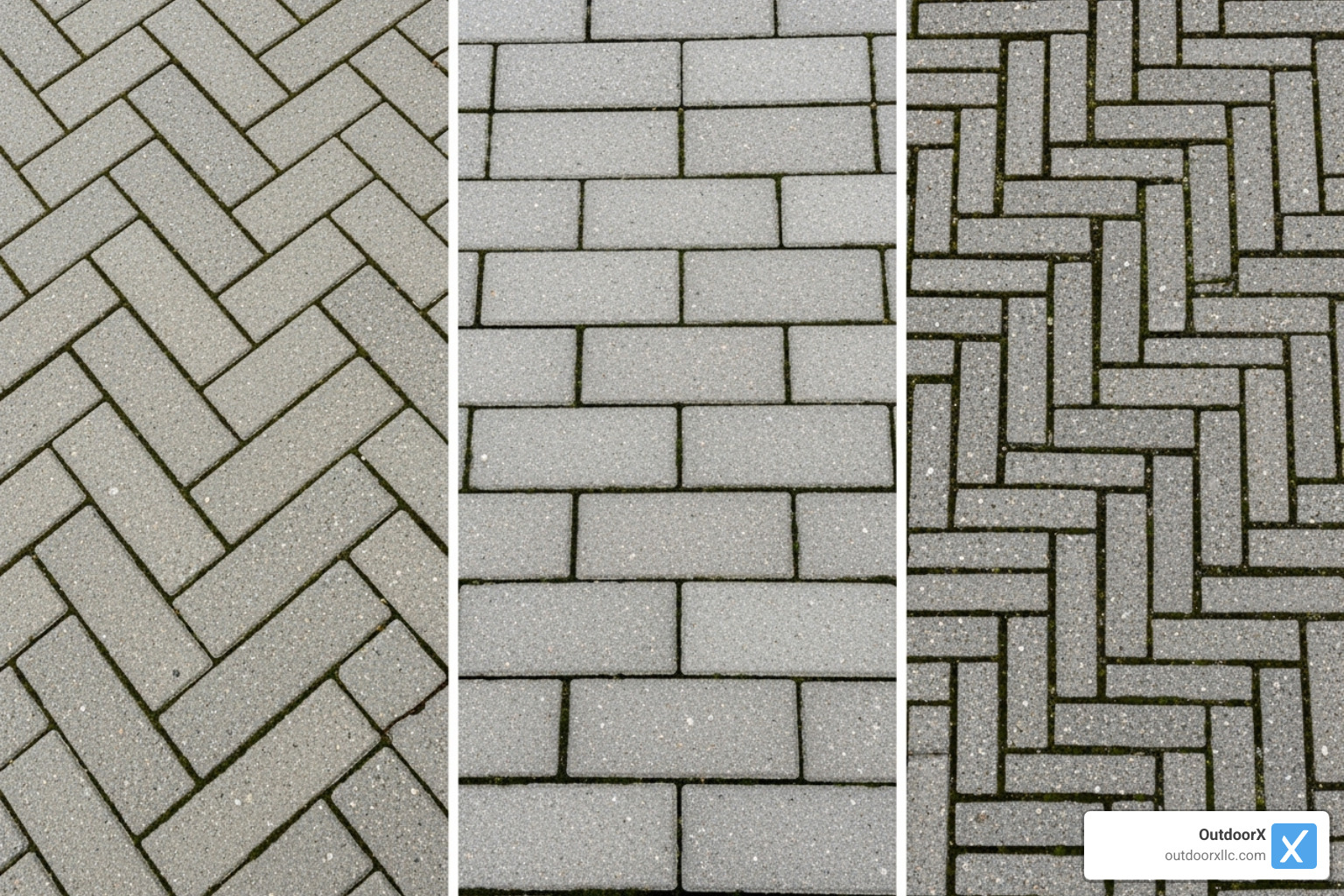
Now comes the fun part – choosing your pattern! Running bond is the beginner’s best friend, requiring minimal cuts and creating clean, straight lines. Herringbone offers incredible strength and visual appeal, though it demands more patience during installation. Basketweave creates a charming, traditional look that works beautifully with colonial-style homes.
Concrete pavers dominate the market for good reason – they’re affordable, durable, and available in countless colors and textures. You can find options that mimic natural cobblestone or sleek modern designs. Brick-style pavers bring timeless charm to traditional homes, while natural stone pavers like granite or slate create an upscale, luxurious feel.
When selecting colors, consider your home’s exterior and existing landscape. Textured surfaces provide better grip for safety, especially in wet conditions. The goal is creating a walkway that feels like a natural extension of your home’s character.
Essential Tools & Materials
Success in laying a paver path starts with having the right equipment. You’ll need basic tools like a shovel and rake for excavation, plus a wheelbarrow to move materials efficiently. A hand tamper works great for smaller areas, but we strongly recommend renting a plate compactor for larger projects – the superior compaction it provides is worth every penny.
Don’t forget your level for ensuring proper slopes, a rubber mallet for gentle paver adjustments, and stakes and string for maintaining straight lines. A masonry saw with a diamond blade is essential for cutting pavers to fit your design perfectly.
Safety gear isn’t optional – always wear gloves, eye protection, hearing protection, and a dust mask, especially when cutting pavers.
For materials, you’ll need your chosen pavers, gravel paver base (often called crusher run), leveling sand, edge restraints with spikes, and polymeric sand for filling joints. Geotextile fabric isn’t mandatory but highly recommended for preventing weeds and stabilizing your base.
Calculating Materials and Project Costs
Getting your material calculations right prevents those frustrating mid-project store runs. Start by calculating your square footage – simply multiply length times width. A 20-foot by 3-foot path equals 60 square feet.
For paver quantity, divide your total square footage by each paver’s coverage area, then add a 5-10% waste factor for cuts and future repairs. Paver base calculation requires multiplying your square footage by the depth in feet (4 inches equals 0.33 feet). That 60-square-foot path needs about 20 cubic feet of base material. Leveling sand goes on 1 inch thick, so multiply your square footage by 0.083 feet.
Project costs vary significantly based on materials and complexity. Average costs for laying a paver path range from $8 to $25 per square foot for materials and professional installation combined. A DIY materials budget might run $350-$475 for a modest project, though premium materials can push costs much higher. These are average costs based on industry data and not actual pricing for OutdoorX LLC.
For more insights into proper foundation techniques, explore our comprehensive guide on base for paver walkway installation.
Groundwork: The Foundation of a Lasting Walkway
The secret to a lasting paver path isn’t the pavers—it’s the unseen foundation. Proper preparation is the invisible hero of your project. Get this right, and your path will stay level and weed-free for 20+ years. Cut corners, and you’ll face wobbly pavers and weeds within a season.
The soil conditions beneath your future walkway matter more than you might think. Clay soil holds water and expands when it freezes, while sandy soil can shift and settle unevenly. That’s why compaction is absolutely critical—it creates a stable platform that won’t move with weather changes or foot traffic. For more details on this crucial layer, read our complete guide on creating the proper base for a paver walkway.
Ground Preparation: The First Step in Laying a Paver Path
Before we even think about touching a shovel, let’s mark the path with spray paint, stakes with string lines, or even a garden hose for curved designs. This gives you a chance to walk the route and make sure it feels right. Trust me, it’s much easier to adjust your layout now than after you’ve dug everything up!
Next comes the most important phone call of the entire project: calling utilities. Contact 811 Call-Before-You-Dig at least 48 hours before you start digging. Hitting a gas line or electrical cable can turn your weekend project into a very expensive—and dangerous—disaster.
Now for the excavation depth. You’ll need to dig down about 8 inches total for a pedestrian walkway. This accounts for your paver thickness (usually 2-3 inches), plus 4-6 inches of gravel base, plus 1 inch of leveling sand. Remove all grass, roots, and debris—anything organic will decompose and create settling problems later.
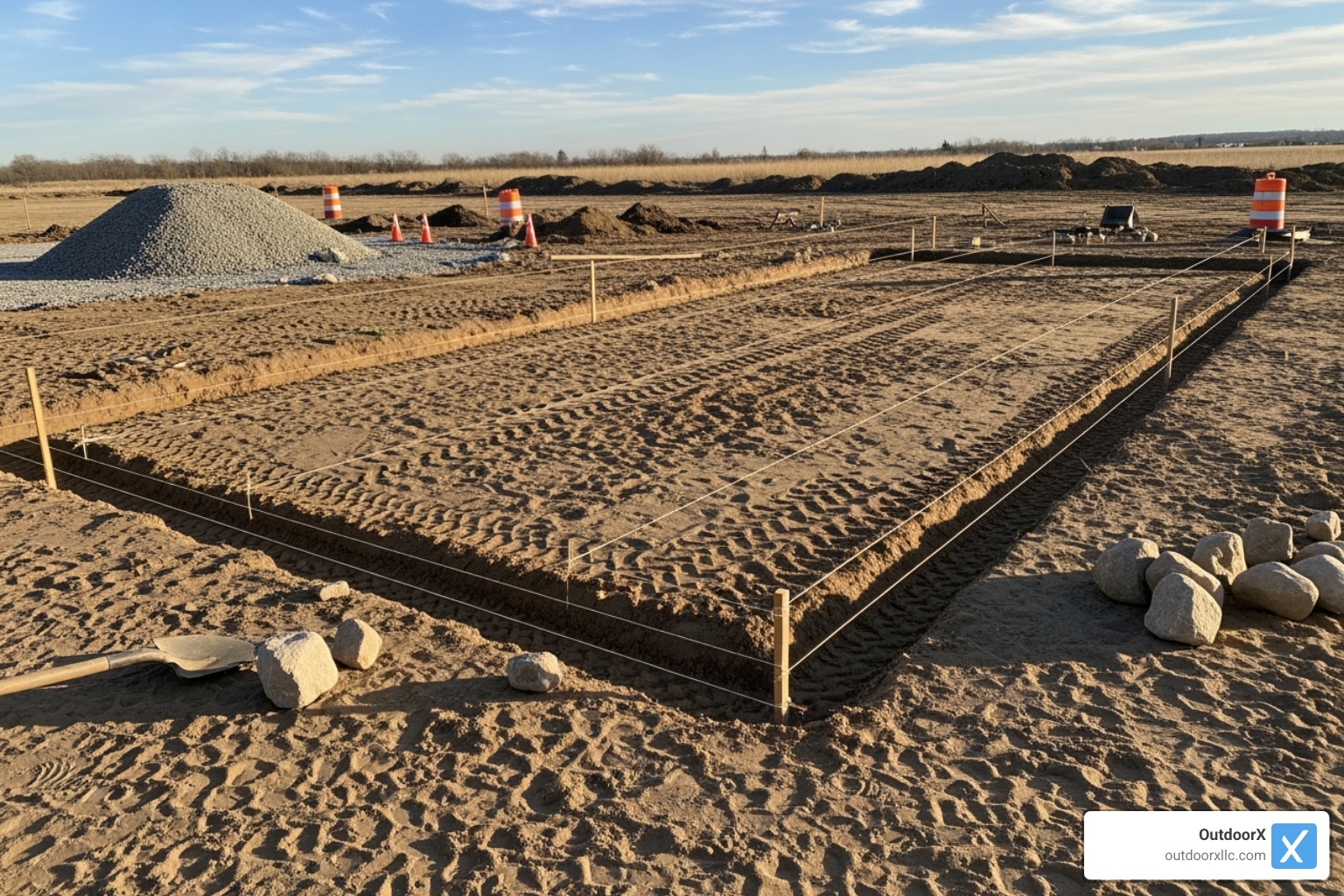
Here’s where many DIYers make a crucial mistake: they forget about creating a slope for proper drainage. Your path should slope away from your house at about 1/4 inch per linear foot. That means if your path is 8 feet long, one end should be 2 inches lower than the other. Use string lines stretched between stakes to maintain this slope—it’s your best friend for keeping everything level and properly graded.
Once you’ve got your excavation just right, it’s time to tamp the soil with a hand tamper or plate compactor. This step creates a firm sub-base that won’t settle over time. Don’t rush this—a few extra minutes of tamping now prevents years of maintenance headaches.
Consider laying geotextile fabric over the compacted soil, especially if you’re dealing with clay or sandy conditions. This fabric acts like a barrier that prevents your gravel base from mixing with the soil below while blocking weeds from growing up through your beautiful new path.
Creating a Solid Foundation
This is where we build the backbone of your walkway. The gravel base depth should be 4-6 inches for pedestrian paths. But here’s the professional secret: don’t just dump all that gravel at once. Work in 2-inch lifts, compacting each layer thoroughly before adding the next.
Why does this matter? Compacting in lifts ensures every inch of your base is rock-solid. A plate compactor rental from your local home improvement store (usually around $40-60 per day) is absolutely worth the investment. Hand tamping works for small areas, but a plate compactor gets the job done faster and more thoroughly.
After your gravel base is perfectly compacted and level, spread a 1-inch layer of leveling sand across the entire area. This sand acts as the final adjustment layer that lets you fine-tune the height and levelness of each paver.
Now comes the satisfying part: the screeding technique. Place two pieces of electrical conduit or metal pipes on your compacted gravel base, running parallel to each other about 6 feet apart. These pipes serve as guides for your screed board. Pour sand between the pipes, then drag a straight 2×4 across the pipes to create a perfectly smooth, level sand bed.
Carefully remove the pipes and fill those voids with sand, smoothing gently. Whatever you do, avoid walking on your freshly screeded sand—you’ve just created the perfect foundation for your pavers, and footprints will show up as uneven spots in your finished path.
The Art of Laying a Paver Path
Now comes the most exciting part of laying a paver path – watching your vision come to life! This is where all that careful preparation pays off. With your foundation perfectly prepared, you’re ready to create something beautiful that will serve your family for decades. For a full breakdown of the process, check out our guide with more info on paver walkway installation.
The key to success here is patience and attention to detail. Think of yourself as an artist creating a masterpiece – each paver placement matters. Take your time and enjoy the process. You’ll be amazed at how quickly your path takes shape once you get into a rhythm.
How to Lay the Pavers and Create Your Pattern
Starting from the right spot makes all the difference. Begin laying your pavers from a hard, straight edge like your house foundation, an existing patio, or a perfectly straight border you’ve established. This gives you a solid reference point and helps ensure your entire path stays straight and true.
If your design includes a border pattern, lay these edge pavers first. They’ll act as guides for the rest of your work and help frame your beautiful pattern. Working from the outside in often makes the job easier and more precise.
Now for the fun part – filling in your chosen pattern! Place each paver gently onto your screeded sand bed. Resist the urge to drag them across the sand or stomp them into place. Remember all that careful work you did creating that perfectly level sand bed? We want to preserve it.
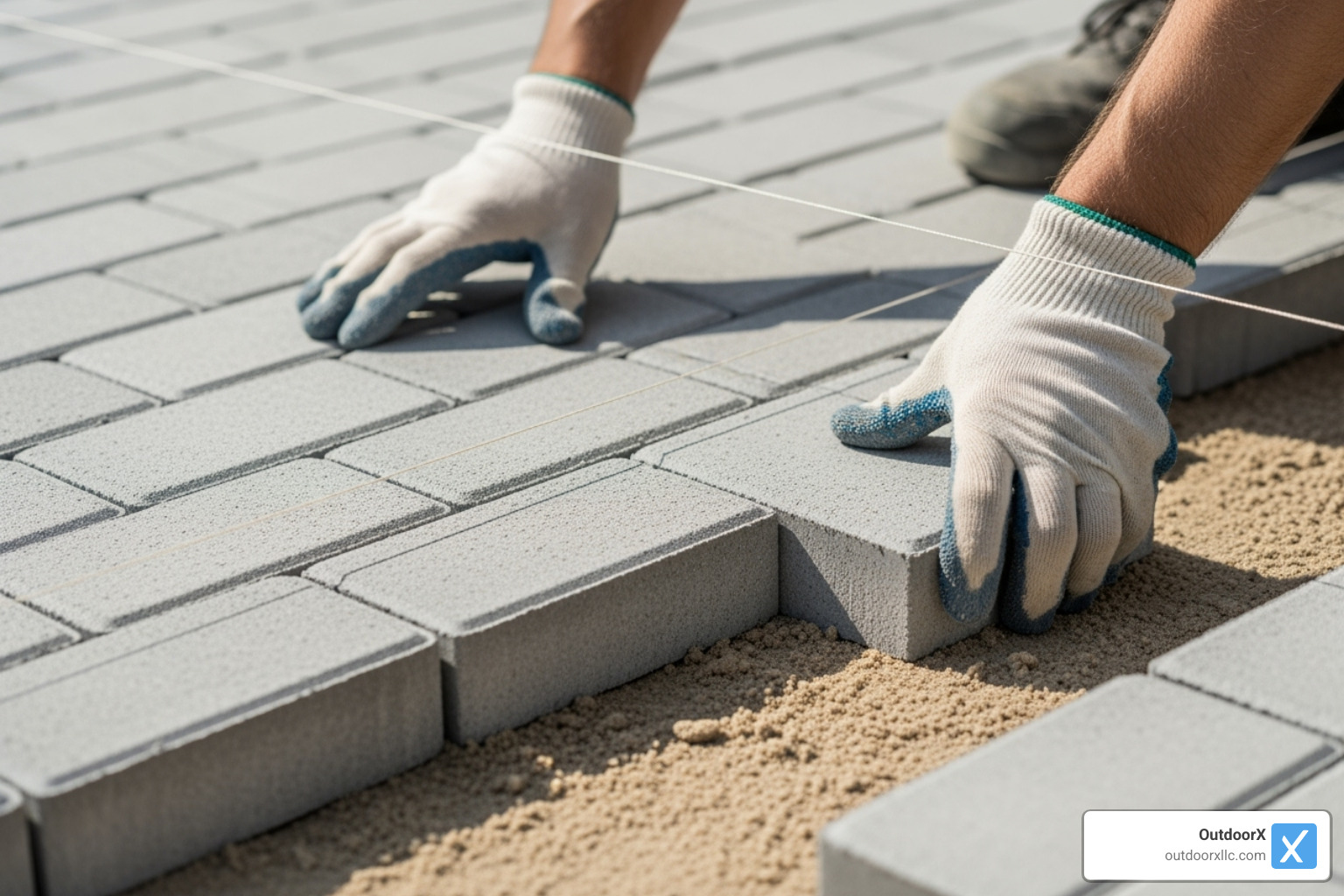
Maintaining consistent gaps between your pavers is crucial. Most pavers come with small nubs on their sides that automatically create the perfect spacing. If yours don’t have these helpful guides, aim for about a quarter-inch gap between each paver. These gaps aren’t just for looks – they’re essential for allowing the joint sand to properly lock everything together.
Use your rubber mallet to gently tap each paver into place. This ensures they’re firmly seated in the sand bed and level with their neighbors. Think of it as tucking each paver into its perfect spot.
Don’t forget to check your progress regularly! Use your level and string lines to make sure everything stays straight, level (or properly sloped), and your pattern remains consistent. It’s much easier to make small adjustments as you go than to fix problems later.
Cutting Pavers and Installing Edge Restraints
Even with the best planning, you’ll likely need to cut some pavers to complete your design. Don’t worry – it’s a normal part of any paver project, especially around edges or curves.
Mark your cuts carefully using a pencil and speed square. Measure twice, cut once, as they say! Accuracy here saves you time and materials.
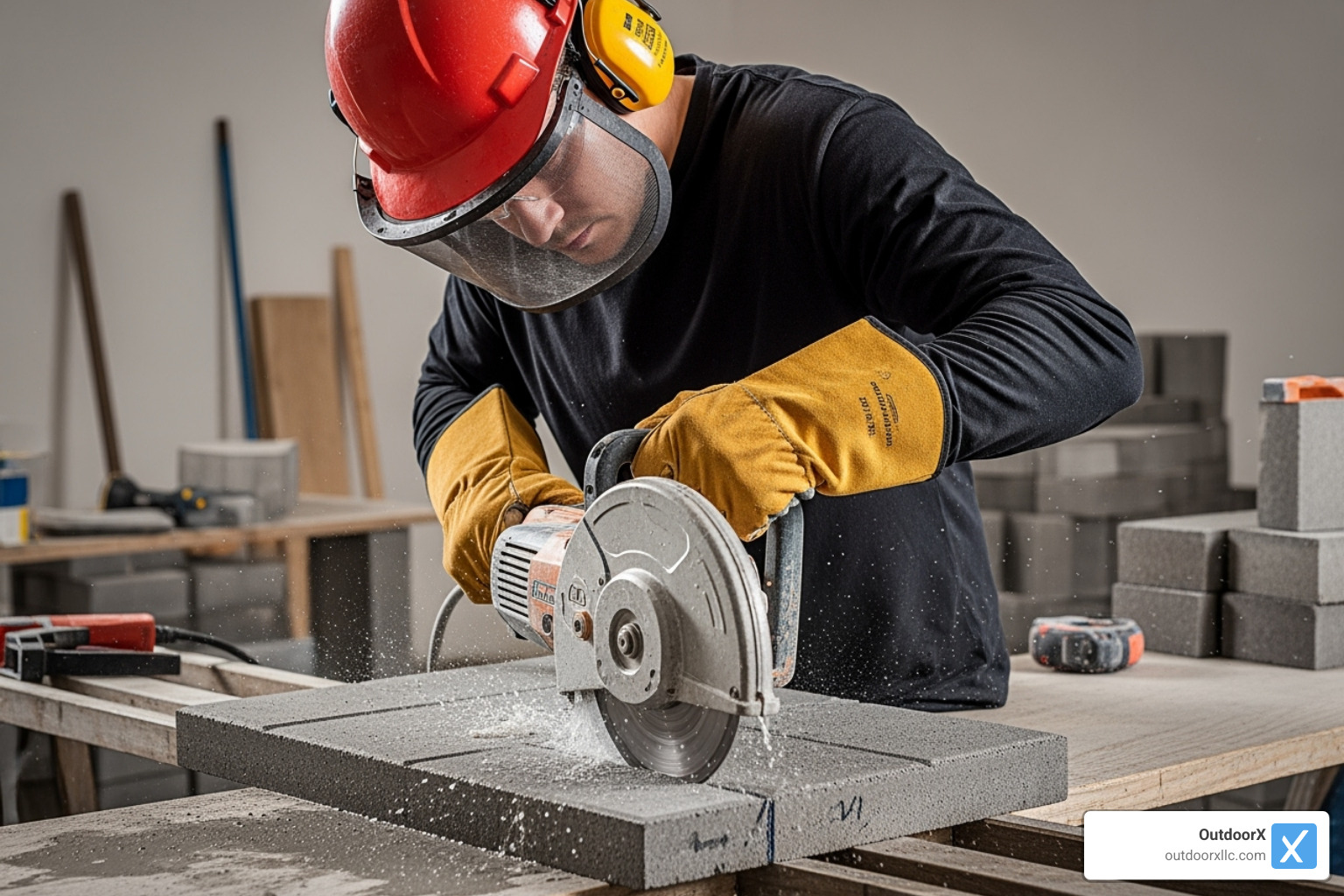
When it’s time to cut, safety comes first. Always wear safety glasses, hearing protection, gloves, and a dust mask. Concrete dust can be harmful to your lungs, and the cutting process is quite loud. Clamp your paver securely to a stable work surface before making any cuts.
A circular saw with a diamond blade makes quick, clean work of cutting pavers. Take your time and let the blade do the work – don’t force it through the material.
Now let’s talk about edge restraints – they’re like the unsung heroes of paver installation. Their job is simple but absolutely vital: they prevent your beautiful pavers from shifting, spreading, and losing their neat alignment over time. Think of them as the picture frame that keeps your masterpiece looking perfect.
Plastic edging is the most common choice for good reason – it’s effective, affordable, and easy to install. Run it along the entire perimeter of your paver path, securing it with 12-inch spikes every foot or so. Make sure the edging sits flush with the top of your pavers and will be hidden by your surrounding landscape or grass once the project is complete.
Without proper edge restraints, even the most beautifully installed paver path will eventually start to spread and lose its crisp lines. It’s one of those details that might seem optional but is absolutely essential for long-term success.
Finishing Touches: The Final Steps in Laying a Paver Path
We’re in the home stretch! These final steps are what transform your laying a paver path project from good to absolutely stunning. Think of this phase as adding the jewelry to your outfit—it’s what makes everything shine and stay beautiful for years to come. And should you ever need to fix a damaged area in the future, we have a helpful guide on pavers repair.
Filling Joints with Polymeric Sand
Here comes the magic moment that truly brings your paver path to life! Polymeric sand is like the secret sauce of paver installation—it’s what separates amateur jobs from professional-looking results.
Start by spreading a light, even layer of polymeric sand over your entire paver surface. Don’t worry about being too precise here; we’ll clean up the excess later. Using a push broom, carefully sweep the sand into every joint between the pavers, making sure each gap is completely filled.
Now, here’s why polymeric sand is such a game-changer compared to regular sand. This special sand contains polymers that, when activated with water, bind together like a gentle cement. This means no more weeds poking through your beautiful walkway, no more insects setting up shop in the joints, and excellent resistance to erosion from rain and weather.
Once your joints are filled, it’s time for another round of compaction. Run your plate compactor (with a protective rubber mat on the bottom) across the entire surface. This vibrates the sand deeper into the joints and gives your pavers that final, perfect settling.
Here’s where many DIYers make a costly mistake: you must remove all excess sand from the paver surface before adding water. Use a broom or leaf blower to sweep away every grain. Any sand left on top will create a permanent white haze once it gets wet—trust us, you don’t want that!
Now for the activation process. Using a hose with a fine misting nozzle, gently spray the entire walkway. You want to lightly wet the sand in the joints without washing it away. The polymers will begin their magic, binding everything together.
Allow the polymeric sand to cure for at least 24 hours before walking on your new path. Patience here pays off with decades of beautiful results.
Compacting, Cleaning, and Long-Term Maintenance
Congratulations—your paver path is officially complete! But like any beautiful thing, a little ongoing care will keep it looking magazine-worthy for years to come.
Regular sweeping with a stiff broom every week or two removes leaves, dirt, and debris before they can cause staining or create slippery surfaces. It’s amazing how much this simple step extends the life and beauty of your walkway.
When spills happen (and they will), address stains promptly using a paver-specific cleaner. The sooner you tackle a stain, the easier it comes out. For everyday cleaning, sometimes just a garden hose and a bit of elbow grease does the trick.
Over time, you might notice some joint sand settling or washing away, especially after heavy rains or freeze-thaw cycles. Every few years, simply sprinkle more polymeric sand into any gaps, sweep it in, and re-mist. This topping up process keeps your path looking fresh and prevents weeds from finding a foothold.
For those in colder climates, avoid harsh de-icing chemicals that can damage both pavers and joint sand. Instead, use regular sand or cat litter for winter traction. Your pavers will thank you come spring.
Consider applying a paver sealer every few years for extra protection against stains and to improve the color of your pavers. It’s like sunscreen for your walkway—not absolutely necessary, but it definitely helps maintain that just-installed look longer.
The beauty of a properly installed paver path is that it actually gets more stable over time as everything settles together. With these simple maintenance steps, you’ll enjoy your beautiful walkway for decades to come.
Frequently Asked Questions about Paver Walkways
Let’s address the most common questions homeowners have about laying a paver path. These are the real concerns we hear from folks considering this fantastic home improvement project.
How long can a properly installed paver path last?
Here’s the exciting news: when you follow proper installation techniques, your paver walkway can easily last 20 years or even longer. We’ve seen well-maintained paths still looking beautiful after three decades!
The secret lies in how all the components work together. The interlocking nature of pavers creates a flexible system that moves gracefully with natural ground shifts, unlike rigid concrete that cracks under pressure. Your carefully compacted gravel base and leveling sand provide rock-solid stability that resists settling over time.
Those edge restraints we installed? They’re working 24/7 to prevent your pavers from spreading outwards and losing their neat appearance. And that polymeric sand filling the joints acts like a gentle glue, locking everything in place while keeping weeds and insects at bay.
Think of it like a well-orchestrated team where every player has a crucial role. When they all work together, you get decades of beautiful, functional walkway.
What are the main benefits of installing a paver path?
Laying a paver path transforms your outdoor space in ways that go far beyond just having a nice place to walk. Let’s talk about the real advantages you’ll enjoy.
First, there’s the aesthetic appeal and curb appeal. Pavers offer an incredible range of colors, shapes, and textures that can complement any home style, from colonial charm to modern sleekness. Your neighbors will definitely notice the upgrade!
From a financial standpoint, a well-designed paver path increases your home value. It’s one of those improvements that not only improves your daily life but also pays dividends when it’s time to sell.
The durability factor is impressive. While concrete slabs crack and asphalt deteriorates, pavers flex with ground movement and weather the elements beautifully. They’re also remarkably low maintenance – just occasional sweeping and re-sanding every few years.
Here’s something homeowners love: easy repairs. If a single paver gets damaged (maybe from a dropped tool or tree branch), you can replace just that one piece without tearing up the entire path. Try doing that with a concrete sidewalk!
The design versatility means you can create something uniquely yours, whether you prefer rustic cobblestone charm or clean, contemporary lines.
Can I lay pavers directly on soil?
We get this question a lot, and we understand the temptation – it seems like such an easy shortcut! Unfortunately, laying a paver path directly on soil is one of those shortcuts that creates much bigger problems down the road.
Without a proper base, your pavers will start shifting and settling unevenly within the first season. What began as a smooth walkway quickly becomes a tripping hazard with wobbly, uneven stones.
Poor drainage becomes a major headache. Water pools on the surface instead of draining properly, leading to erosion that undermines your entire path. You’ll also battle constant weed growth as plants easily push through the joints, spreading your pavers apart and creating an unkempt appearance.
Here in South Hamilton and throughout Essex County, we deal with harsh winters. Frost heave is a real concern when pavers sit directly on soil. The freeze-thaw cycles cause the ground to expand and contract dramatically, heaving your pavers in different directions and potentially destroying your investment entirely.
Those layers of gravel and sand aren’t just suggestions – they’re the foundation that protects your time, money, and effort. They create the stable, well-draining base that keeps your path looking great for decades.
Conclusion
Laying a paver path is truly one of those satisfying weekend projects that gives you both immediate results and lasting pride. There’s something special about stepping back after two days of work and seeing a beautiful, professional-looking walkway that you created with your own hands.
From that first exciting moment of marking out your design to the final sweep of polymeric sand, every step in this process builds toward something both functional and beautiful. You’ve learned that success really comes down to patience during the planning phase, attention to detail during excavation, and taking your time with each layer of the foundation.
The best part? This isn’t just a temporary improvement. With proper installation using the techniques we’ve covered, your paver path will welcome guests to your home for decades to come. It’s the kind of project that makes you smile every time you walk along it, knowing you transformed a simple patch of lawn into something truly special.
Of course, we understand that not every homeowner wants to tackle the heavy lifting, precise grading, and detailed work that goes into laying a paver path. Maybe your design involves complex curves, challenging slopes, or you simply prefer to spend your weekends relaxing rather than wielding a plate compactor.
That’s where professional expertise can make all the difference. At OutdoorX, we’ve helped countless homeowners across South Hamilton, MA, and Essex County create stunning outdoor spaces that perfectly match their vision and lifestyle. Our team brings years of experience with complex installations, tricky drainage issues, and intricate design patterns that might be challenging for a first-time DIY project.
Whether you decide to roll up your sleeves for a weekend adventure or prefer to let the professionals handle the details, the important thing is creating an outdoor space that brings you joy for years to come. If you’re in the South Hamilton area and considering professional help, we invite you to explore our professional hardscaping services.
