


Pavers Over Concrete Walkway: 3 Easy Steps
Transform Your Walkway Without Demolition
Pavers over concrete walkway installation is one of the smartest ways to upgrade your outdoor space without the mess, cost, and time of full demolition. Instead of breaking up that old concrete walkway and hauling away tons of debris, you can simply overlay it with beautiful pavers.
Quick Answer for Installing Pavers Over Concrete:
- Check the concrete – Must be structurally sound with minimal cracking
- Ensure proper slope – Minimum 1 inch fall per 8 feet for drainage
- Clean thoroughly – Remove all dirt, grease, and debris
- Install border pavers – Glue perimeter pavers with construction adhesive
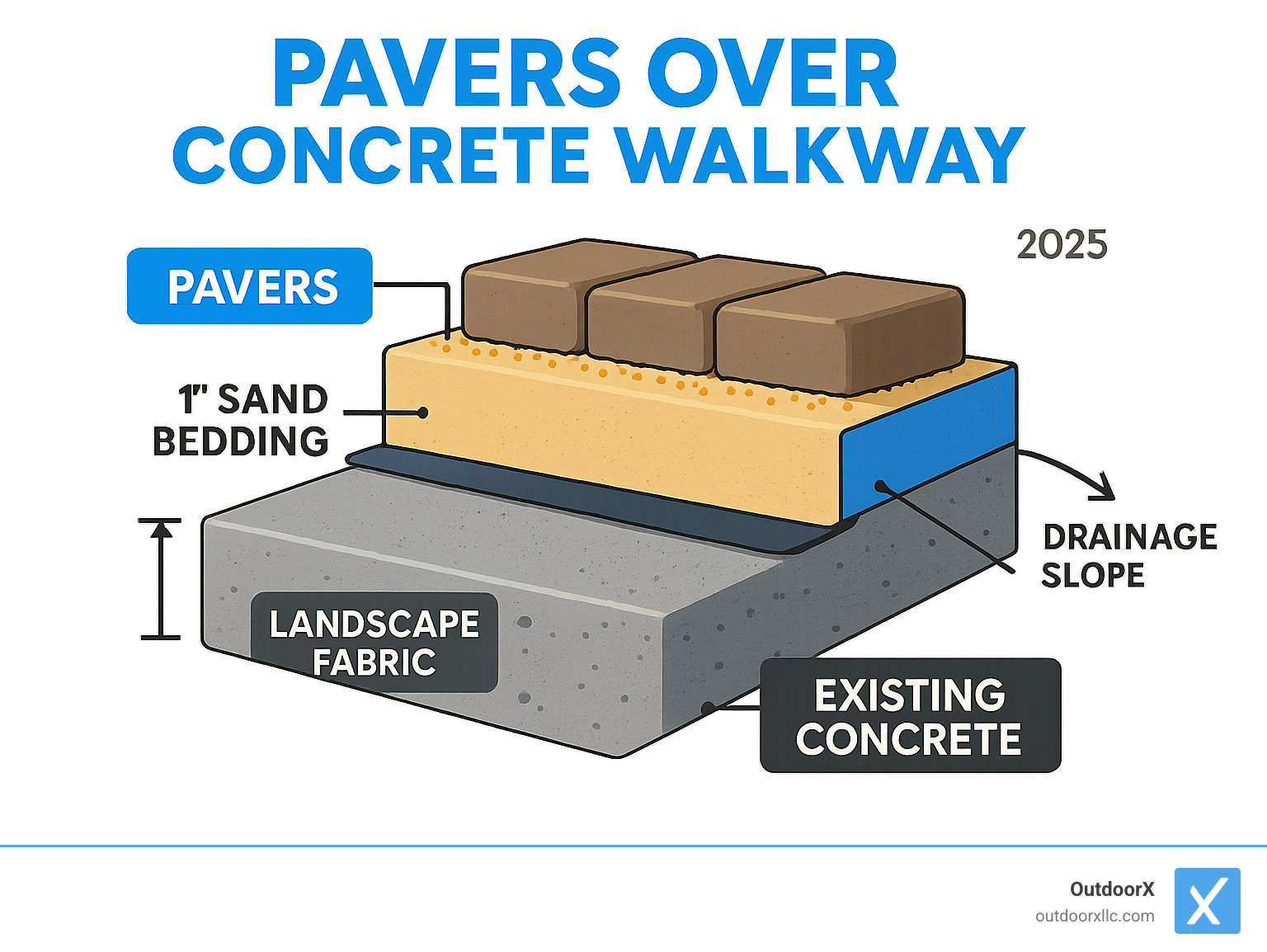
- Add bedding layer – Spread 1 inch of leveling sand over landscape fabric
- Lay field pavers – Use “click and drop” method to avoid disturbing sand
- Fill joints – Sweep in polymeric sand and activate with water
This overlay method can save you thousands of dollars compared to full replacement. According to industry data, concrete removal alone can cost anywhere from $500 to over $3,500, while a paver overlay project for a standard walkway can range from $600 to $2,500 or more. Please note, these are average costs based on internet data and not actual costs for OutdoorX LLC.
The process transforms tired, cracked concrete into an attractive entrance that boosts your home’s curb appeal. You’ll avoid the 12+ tons of wheelbarrow work that comes with traditional tear-out projects, and the job can often be completed in just a few days.
However, success depends on having a stable concrete base. Any concrete with major structural issues, significant heaving, or poor drainage may not be suitable for this approach.
Relevant articles related to pavers over concrete walkway:
Before You Begin: Planning Your Paver Overlay Project
Think of planning your pavers over concrete walkway project like preparing for a road trip – a little preparation upfront saves you from headaches down the road. The difference between a stunning change and a costly mistake often comes down to how well you assess what you’re working with.
Existing Concrete Assessment
Your existing concrete is the foundation of this entire project, so let’s give it a thorough health check.
Structural integrity is your make-or-break factor. Walk your walkway and look for signs of trouble. Minor hairline cracks? No problem – we can patch those up easily. But if you’re seeing large cracks, crumbling edges, or sections that have sunk or heaved up from ground movement, pumping the brakes might be wise. Severely damaged concrete won’t provide the stable base your new pavers need.
Here’s a simple test: stomp around on different sections of your walkway. Does anything feel spongy or rock back and forth? If so, that’s a red flag that the concrete isn’t structurally sound enough for an overlay.
Cracks and heaving deserve special attention. Small cracks can actually be your friend – they give you a chance to make repairs before they become bigger problems. Use concrete patch or filler to address any minor issues. However, if cracks are actively growing or causing noticeable shifting, they might “telegraph” through your beautiful new pavers over time, meaning those cracks will eventually show up on your new surface.
The slope and drainage check might be the most important step you’ll take. Grab your garden hose and wet down the concrete, then watch where the water goes. Does it flow away from your house? Perfect! Does it pool in spots or – yikes – run toward your foundation? We need to fix that before laying a single paver.
Your walkway needs a minimum slope of 1 inch of fall for every 8 feet of length. That’s about a 2% grade, which might not look like much but makes all the difference for proper drainage. Poor drainage leads to trapped moisture, which can damage pavers, promote mold growth, and even threaten your home’s foundation.
If your concrete doesn’t have proper slope, don’t panic. Solutions exist, from drilling weep holes to installing perimeter drainage systems. For complex drainage issues, consider consulting our Hardscape Drainage Solutions guide.
Height Considerations
Adding pavers means adding height – typically 3-4 inches when you include the bedding layer. This might not sound like much, but it can create some unexpected challenges.
Doorway thresholds are the first thing to check. Will your doors still open and close properly with the added height? Nothing ruins a beautiful walkway project quite like finding your front door now drags across your new pavers. Measure twice, install once!
Step risers can become tricky too. If your walkway connects to existing steps, that extra height might make the first step awkwardly short or tall compared to the others. Uneven step heights aren’t just annoying – they’re genuine tripping hazards.
Don’t forget about siding clearance either. You want adequate space between your new pavers and any siding or structural elements. Trapping moisture against your home’s exterior is asking for trouble down the road.
Material Selection
Choosing the right materials feels a bit like picking the perfect outfit – it needs to look good and perform well under pressure.
For paver types, you have some excellent options. Thin pavers are fantastic when height is a concern, with some brick pavers as slim as 1⅜ inches thick. Porcelain pavers at about ¾ inch thick offer incredible durability and low water absorption. Concrete pavers remain the most popular choice, offering endless design possibilities at budget-friendly prices – sometimes as low as $1 per paver for basic options.
Your leveling material choice typically comes down to bedding sand versus dry mudset. Bedding sand is the tried-and-true option – a 1-inch layer of fine, leveling sand that bridges minor concrete imperfections while allowing proper drainage. Dry mudset products can work for very thin applications, but they’re primarily designed for veneering rather than significant leveling.
For edging options, you can go with traditional plastic edging secured with spikes, or take the adhesive border approach. For pavers over concrete walkway projects, gluing border pavers directly to the concrete with construction adhesive creates a rock-solid, attractive edge that keeps everything in place.
Key Considerations for a Pavers Over Concrete Walkway Project
Not every concrete walkway is a good candidate for overlay. If yours has major structural issues or drainage problems, full replacement might be the wiser long-term investment.
Project cost estimates show why overlays are so appealing. While concrete removal alone can cost anywhere from $500 to over $3,500, a complete paver overlay for a standard walkway can range from $600 to $2,500 or more. These are average costs based on internet data and not actual costs for OutdoorX LLC. Costs can vary dramatically – from basic concrete pavers at $1 each to specialized options costing $50 per square foot or more.
Essential tools and materials you’ll need include a pressure washer, rubber mallet, plate compactor (rentable), circular saw with diamond blade, screed board, level, pavers, construction adhesive, landscape fabric, leveling sand, polymeric sand, and safety gear. Having everything ready before you start makes the whole process smoother and more enjoyable.
Step-by-Step Guide to Installing Pavers Over a Concrete Walkway
Now comes the exciting part – changing that old concrete into a stunning pavers over concrete walkway! Think of this as giving your walkway a complete makeover, one careful step at a time. We’ll guide you through each stage to ensure your project turns out beautifully and lasts for years to come.
Step 1: Surface Preparation
Getting your concrete ready is like prepping a canvas before painting – it makes all the difference in your final result.
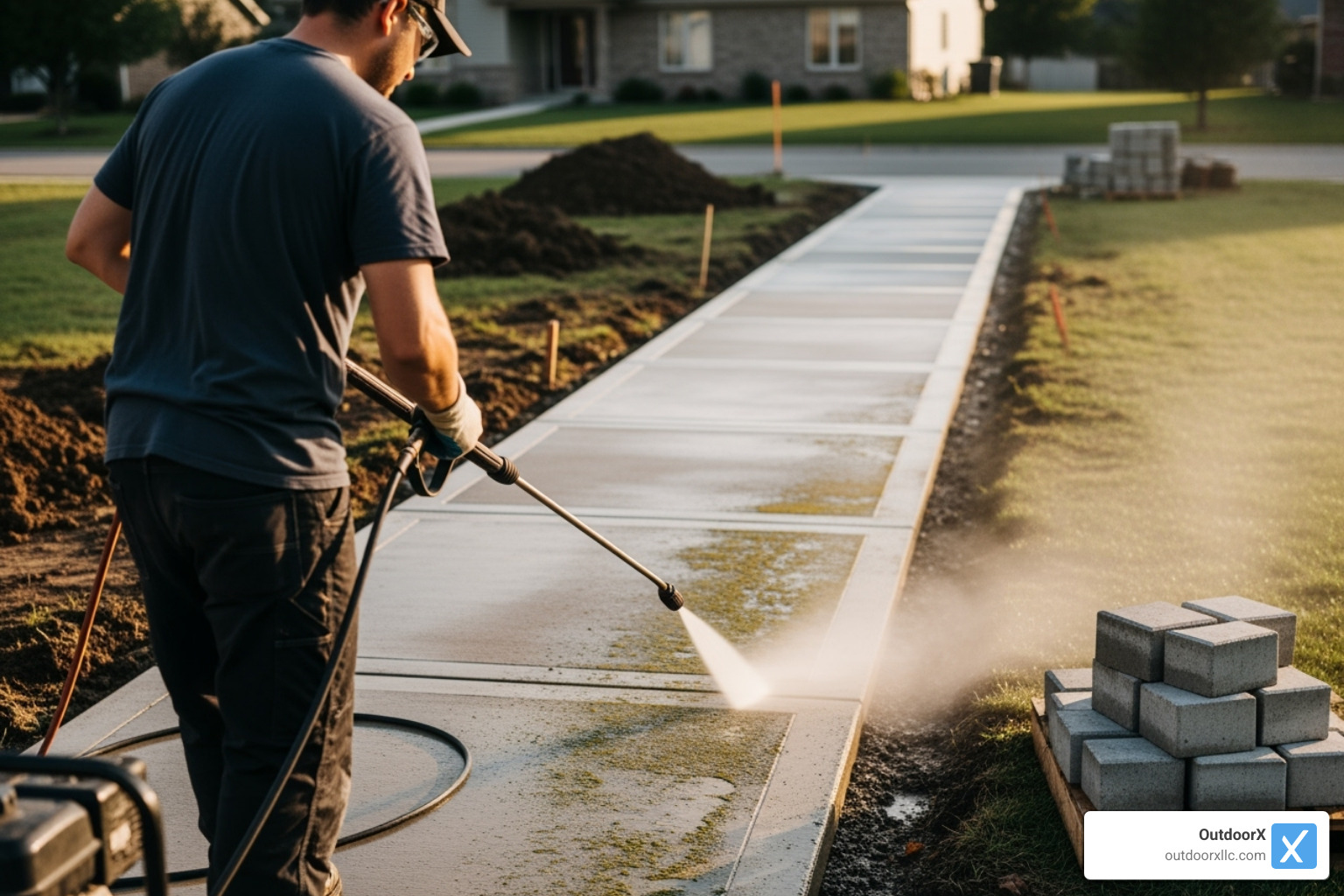
Cleaning the concrete is your first mission. Break out that pressure washer and give your concrete a thorough spa treatment! Use a concrete cleaner to blast away years of accumulated dirt, grime, moss, oil stains, and any loose debris. Don’t rush this step – every bit of dirt left behind can interfere with adhesives and prevent your landscape fabric from lying flat. Once you’ve given it a good cleaning, patience is key. Let that concrete dry completely for at least 24 hours before moving forward.
Repairing minor cracks comes next. Remember those hairline cracks we talked about earlier? Now’s the time to fix them. Grab some high-quality concrete patch or filler and fill any small cracks or areas where the concrete has chipped away. Follow the manufacturer’s instructions for curing time – rushing this step could compromise your entire project. We’re only talking about minor damage here. If you find major structural issues during this process, it’s time to call in the professionals.
Step 2: Install Perimeter Edging
Creating a solid border is absolutely crucial for your pavers over concrete walkway success. Think of it as building the frame that holds everything together.
Gluing border pavers directly to your existing concrete creates the strongest, most attractive edge possible. Here’s a pro tip: choose border pavers that are at least 3/4 inch thicker than your field pavers if you’re planning to use a sand bed. This height difference accommodates your bedding layer perfectly. Apply a generous bead of outdoor-rated polyurethane construction adhesive to the bottom of each border paver, then press it firmly into place along your walkway’s perimeter. Don’t forget to leave about a 1/4 inch gap between your border pavers and any structures like your house – concrete needs room to expand and contract.
Construction adhesive application doesn’t stop there. For extra security and to prevent your precious bedding sand from washing away, run another bead of adhesive along the inside edge of each border paver where it meets the interior of your walkway. This creates a U-shaped barrier that locks everything in place beautifully.
Step 3: Create the Drainage & Bedding Layer
This invisible foundation layer is what separates a good paver installation from a great one that stands the test of time.
Laying landscape fabric might seem like an extra step, but trust us – it’s worth every minute. Once your border pavers have cured securely, roll out geotextile filter fabric over the entire concrete surface within your borders. This hardworking fabric prevents your bedding sand from disappearing into concrete cracks, reduces moisture transfer that can cause those unsightly white powdery deposits (called efflorescence), and acts as a natural weed barrier. Take care to overlap the fabric at edges and corners for complete coverage.
Spreading leveling sand is where the magic happens. Cover your landscape fabric with an even layer of fine, leveling paver sand. A consistent 1-inch thickness gives you the perfect balance – enough cushion to bridge minor concrete imperfections while providing solid support for your pavers.
Screeding the sand transforms your loose sand into a perfectly level foundation. Place screed pipes (3/4-inch plumbing pipes work great) parallel to each other across your sand, resting them on your border pavers. Then take a straight 2×4 or 2×6 – your screed board – and pull it across the pipes like you’re smoothing frosting on a cake. This creates that smooth, level sand bed that’s essential for professional results. Work in manageable sections, removing the pipes and filling their depressions as you go.
For additional guidance on paver installation techniques, check out this helpful resource: A detailed guide on paver installation.
Laying and Securing the Pavers
This is where your vision truly comes to life! Watching your walkway transform with each paver you place is incredibly satisfying.
Step 4: Laying the Field Pavers
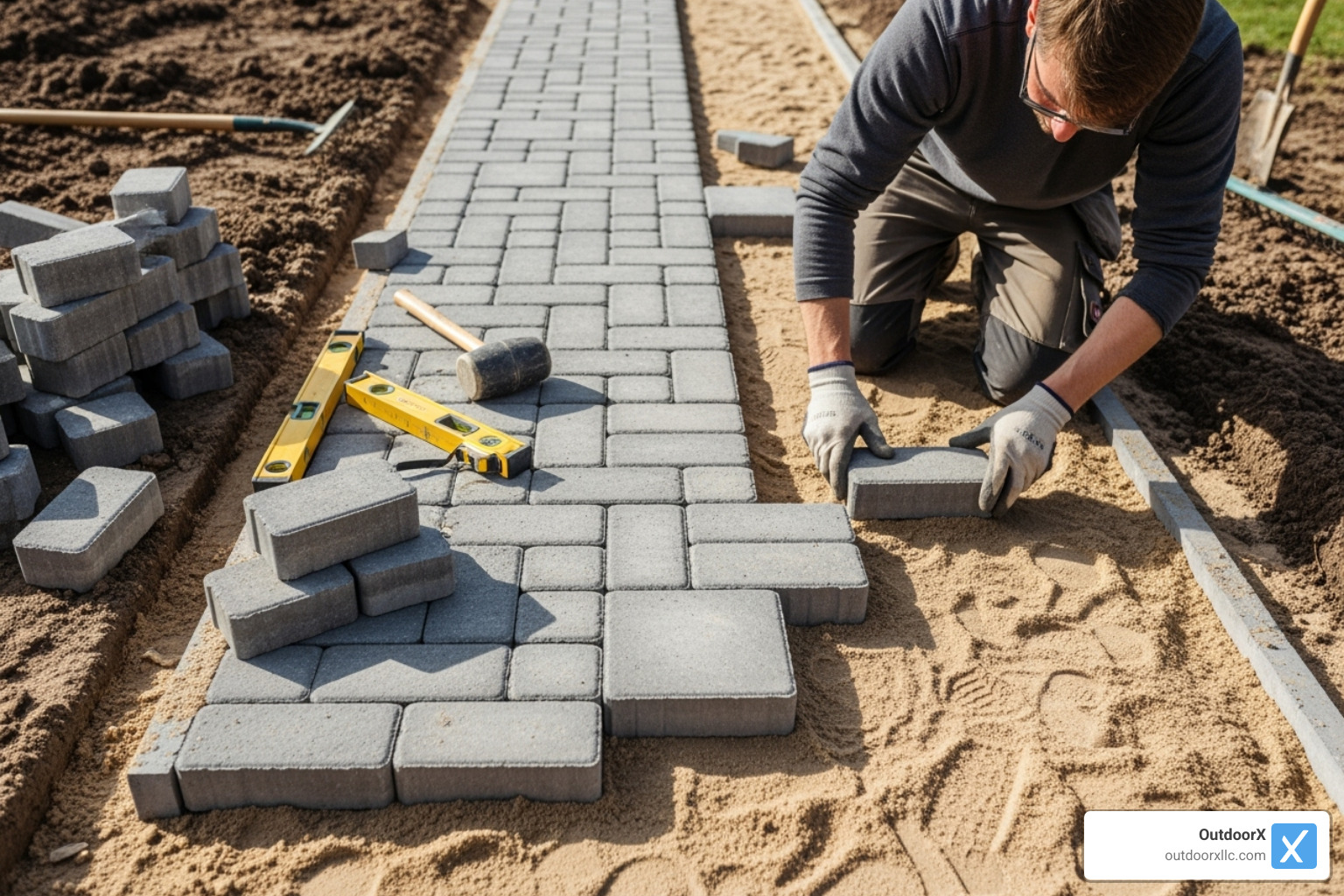
With your perfectly prepared sand bed waiting, it’s time to start laying pavers. Start in one corner and work systematically outward – this prevents you from working yourself into a corner (literally!).
The “Click and Drop” method is your secret weapon here. Gently lower each paver into place with a satisfying little “click” sound as it settles into the sand. The golden rule? Never slide your pavers once they touch the sand bed. Sliding disturbs all that careful leveling work you just completed. Instead, position each paver above its intended spot and drop it straight down. If your pavers don’t have built-in spacing nubs, use small paver spacers to maintain consistent gaps.
Cutting pavers for edges is inevitable – every walkway has unique curves, obstacles, or ending points that require custom-fit pieces. A circular saw or angle grinder fitted with a diamond blade makes clean, precise cuts. Always gear up with safety equipment: eye protection, dust mask, and gloves are non-negotiable when cutting pavers. Take your time with measurements – you can always trim a little more, but you can’t add material back!
Step 5: Compacting the Pavers
Once all your field pavers are in place, it’s time to lock them into their permanent positions.
Tamping best practices involve using a plate compactor across your entire paver surface. Make several passes in different directions – think of it as tucking your pavers into bed. The compaction settles each paver firmly into the sand bed, creating a level, stable surface that won’t shift under foot traffic. Your goal is to have your field pavers sitting flush with your border pavers after compaction. The vibration helps everything settle into perfect alignment.
Step 6: Filling the Joints
The final step transforms individual pavers into one cohesive, locked-together surface.
Sweeping in polymeric sand is like adding the secret ingredient that brings everything together. This isn’t ordinary sand – it contains special polymers that activate with water to create a strong, flexible bond. Spread the polymeric sand generously over your entire walkway, then use a stiff broom to sweep it into every joint until they’re completely filled. Make sure to sweep off any excess sand from the paver surfaces before the next step.
Activating the sand with water requires a gentle touch. Using a garden hose with a mist setting, lightly spray your entire walkway. Avoid strong water streams that could wash out your carefully placed sand. The water activates those polymers, changing loose sand into a hardened barrier that locks your pavers in place, keeps weeds out, and resists insects. Follow the manufacturer’s drying instructions carefully – typically 24 hours without heavy use or rain.
For professional pavers over concrete walkway installation services, explore our expertise at Paver Walkway Installation.
Pros and Cons: Is Overlaying the Right Choice for You?
Deciding whether to lay pavers over concrete walkway or opt for a full concrete removal can feel like a big decision. Let’s weigh the benefits against the potential drawbacks to help you make an informed choice.
| Feature | Paver Overlay -|
|—————–|————————————————————————————————————————————————————————————————————————————————————————————————————————————————————————————————————————————————————————————————————————————————————————————————————————————————————————————————————————————————————————————————————————————————————————————————————————————————————————————————————————————————————————————————————————————————————————————————————————————————————————————————————————————————————————————————————————————————————————————————————————————————————————————————————————————————————————————————————————————————————————————————————————————————————————————————————————————————————————————————————————————————————————————————————————————————————————————————————————————————————————————————————————————————————————————————————————————————————————————————————————————————————————————————————————————————————————————————————————————————————————————————————————————————————————————————————————————————————————————————————————————————————————————————————————————————————————————————————————————————————————————————————————————————————————————————————————————————————————————————————————————————————————————————————————————————————————————————————————————————————————————————————————————————————————————————————————————————————————————————————————————————————————————————————————————————————————————————————————————————————————————————————————————————————————————————————————————————————————————————————————————————————————————————————————————————————————————————————————————————————————————————————————————————————————————————————————————————————————————————————————————————————————————————————————————————————————————————————————————————————————————————————————————————————————————————————————————————————————————————————————————————————————————————————————————————————————————————————————————————————————————————————————————————————————————————————————————————————————————————————————————————————————————————————————————————————————————————————————————————————————————————————————————————————————————————————————————————————————————————————————————————————————————————————————————————————————————————————————————————————————————————————————————————————————————————————————————————————————————————————————————————————————————————————————————————————————————————————————————————————————————————————————————————————| Cost | Significantly Lower. You save on demolition, disposal, and extensive base preparation. According to industry data, a paver overlay project for a standard walkway can range from $600 to $2,500 or more, while concrete removal alone can cost anywhere from $500 to over $3,500. Please note, these are average costs based on internet data and not actual costs for OutdoorX LLC. -|
| Time | Much Faster. A typical overlay can be completed in a weekend. -|
| Labor | DIY-Friendly. With no heavy demolition, it’s a manageable project for a handy homeowner. -|
| Foundation | Relies on Existing Concrete. The new surface is only as good as the base beneath it. If the concrete slab cracks or shifts, your pavers will too. -|
| Height | Adds Height. Raises the walkway level by 2-4 inches, which can create issues with door thresholds, steps, and siding clearance. -|
| Drainage | Can Be Tricky. If the original slab has poor drainage, an overlay can trap water, leading to potential damage. -|
When to Choose Paver Overlay
An overlay is an excellent choice if:
- Your existing concrete is in good, stable condition with only minor surface cracks.
- You have adequate clearance at doorways and steps to accommodate the new height.
- Your current walkway has proper drainage, sloping away from your home’s foundation.
- You’re looking for a cost-effective and relatively quick way to dramatically improve your curb appeal.
When to Opt for Full Replacement
Sometimes, starting from scratch is the better long-term solution. You should consider a full replacement if:
- Your concrete has large, deep cracks, significant heaving, or is crumbling.
- The existing slab has major drainage issues, causing water to pool or flow toward your house.
- The added height of an overlay would create tripping hazards or interfere with doors and siding.
- You want the peace of mind that comes with a brand-new, professionally installed paver base, which is the industry standard for longevity.
The decision comes down to the condition of your existing concrete and your budget. A well-executed pavers over concrete walkway project can provide a beautiful, durable surface for many years. However, if the foundation is flawed, it’s often wiser to invest in a full replacement to avoid future problems.
