


Building a Stone Patio: 2025 Expert Guide
Your Guide to a Lasting Outdoor Oasis
Building a stone patio transforms your backyard into a beautiful, functional space that lasts for decades. Here’s the complete process:
Essential Steps:
- Plan and design – Choose location, size, and stone type
- Excavate – Dig 6-12 inches deep with proper slope for drainage
- Build the base – Add compacted gravel and sand layers
- Lay stones – Place and level each stone with consistent spacing
- Fill joints – Add stone dust or polymeric sand between stones
- Install edging – Secure perimeter to prevent shifting
Timeline: 3-4 days for a 12×16 foot patio
Skill Level: Intermediate (physically demanding)
Cost Range: $4-18 per square foot for materials
Stone patios offer a timeless appeal that improves with age. Unlike wood or concrete, a properly built stone patio can last 50+ years with minimal maintenance, developing more character over time.
Property value benefits are significant, as well-designed hardscaping can substantially increase home value, making it a smart outdoor investment.
While the project requires careful planning and physical effort, each step builds toward an outdoor space where memories are made.
Safety first: Always call 811 before digging to locate underground utilities, and check local building codes for permit requirements.
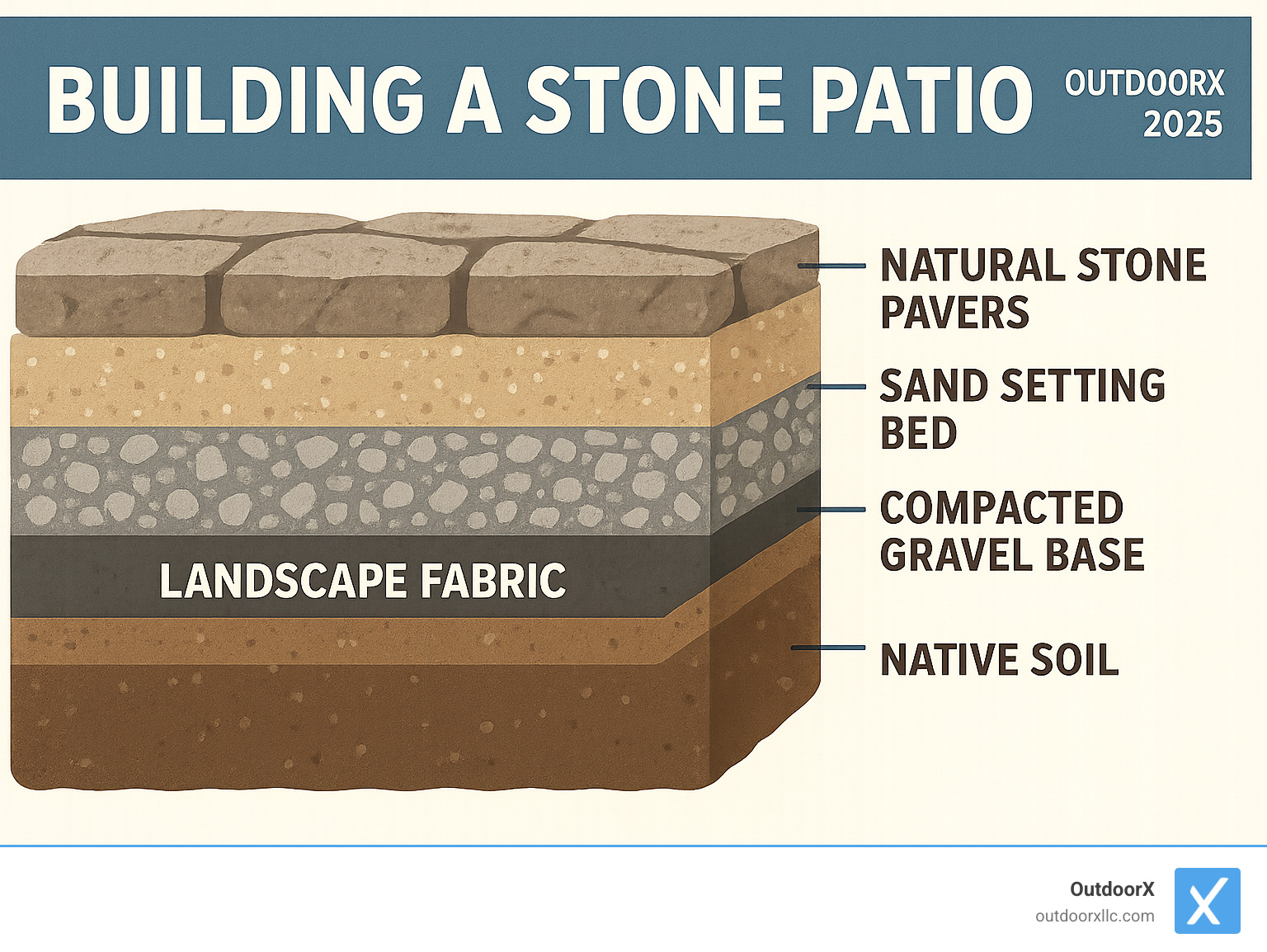
Building a stone patio terms at a glance:
Phase 1: Planning, Budgeting, and Gathering Supplies
This section covers the critical first steps before any digging begins, ensuring your project is set up for success from the start.
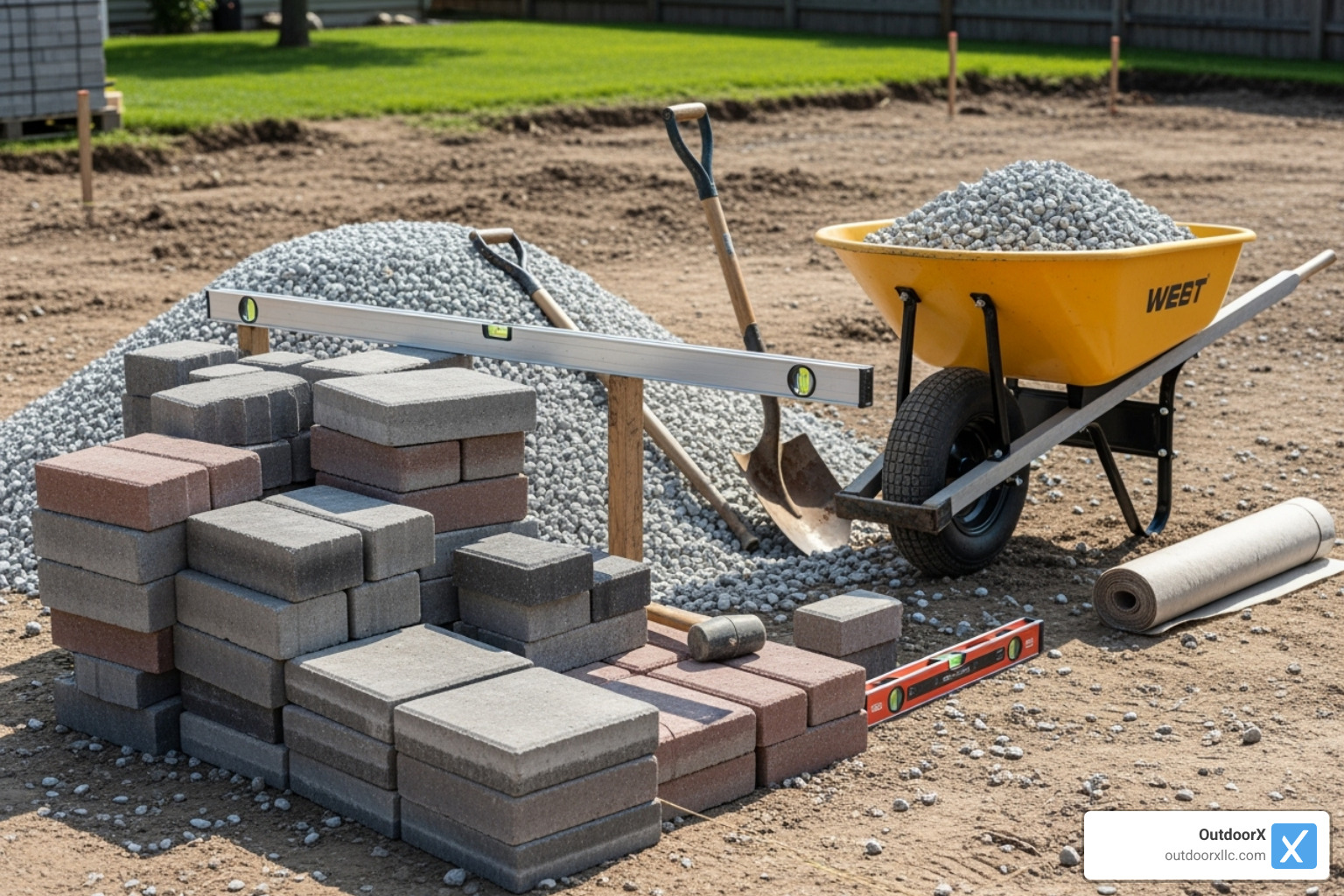
This phase is about laying the groundwork. Planning every detail before you start building a stone patio saves headaches later. For additional guidance, check out How to Install a Flagstone Patio.
Planning Your Project: The First Step in Building a Stone Patio
Smart planning is key to building a stone patio. Consider your patio design, including furniture placement and space for a grill or fire pit.
Size and shape are important. Ensure the patio is large enough for furniture and walking space. Also, consider the view from inside your home.
Location considerations include sun exposure, accessibility, and guest flow. A location near the house can also simplify material delivery.
Drainage planning is critical. Plan a slope of 1/4 inch per foot away from any structures to prevent water from pooling against your foundation.
Calling 811 before you dig is a legal requirement in most places. This free service marks underground utility lines to prevent dangerous and expensive accidents.
Check local codes and HOA rules for any permits or restrictions on materials and placement. For professional guidance, consider our Patio Design and Installation services.
Choosing the Right Stone and Materials
Choosing your stone is a fun part of the process, as each type has a unique character.
Flagstone is a popular choice, with varieties like Bluestone (blue-gray tones) and Sandstone (warm, earthy colors).
Granite is extremely durable with speckled patterns. Slate has rich, dark colors, while Travertine offers a classic, smooth look.
When choosing, consider key material properties: Durability for high-traffic areas, Texture for appearance and slip resistance, and Color to complement your home and landscape.
The foundation consists of a gravel base material (like crusher run) for stability and drainage, topped with a coarse sand setting bed to create a level surface for the stones.
Joint filler options include traditional stone dust or polymeric sand, which hardens to resist weeds. Edging materials like plastic or metal prevent stones from shifting.
For more details on selecting the perfect materials, explore our guide on landscape pavers.
Essential Tools and Budgeting for Your Patio
The right tools make building a stone patio much easier. You’ll need measuring tape, mason’s string, shovels, a wheelbarrow, and a pickaxe.
For base preparation, use a hand tamper or a rented plate compactor, which is highly efficient for larger areas. You’ll also need screed boards to level the sand.
For laying stones, you’ll need a rubber mallet, a 4-foot level, and safety gear (gloves, eye protection). A circular saw with a diamond blade is best for cutting stones.
Costs vary based on stone type, size, and whether you DIY or hire a professional.
DIY cost factors include materials, tool rental, and delivery fees. Professional labor costs add expertise but increase the total investment.
Here’s what you might expect to spend (these are average costs based on internet data, not actual costs for OutdoorX LLC):
| Project Type | DIY Materials Only | Professional Installation |
|---|---|---|
| Flagstone Patio | $3 – $18 per sq ft | $4 – $80 per sq ft |
| Brick Patio | $4 – $10 per sq ft | $5 – $50 per sq ft |
| Stone Pavers | $2.25 – $11 per sq ft | $3 – $55 per sq ft |
For a 200-square-foot flagstone patio, expect $855 to $1,385 for DIY materials, but professional installation could reach $8,400 including labor.
Material calculation involves measuring your space and adding 5-10% extra for waste. Factor in delivery and equipment rental costs, like a plate compactor (around $65/day).
Estimating costs should include your time and physical effort. While DIY saves money, professional installation guarantees quality results and saves you several days of hard labor.
For detailed cost breakdowns, check Angi reports on patio costs. Local prices in Essex County may vary from these national averages.
Phase 2: The Foundation – A Step-by-Step Guide to Building a Stone Patio
A stable, well-drained base is the most important part of a long-lasting patio. This phase covers excavation and base preparation, laying the groundwork for decades of enjoyment.
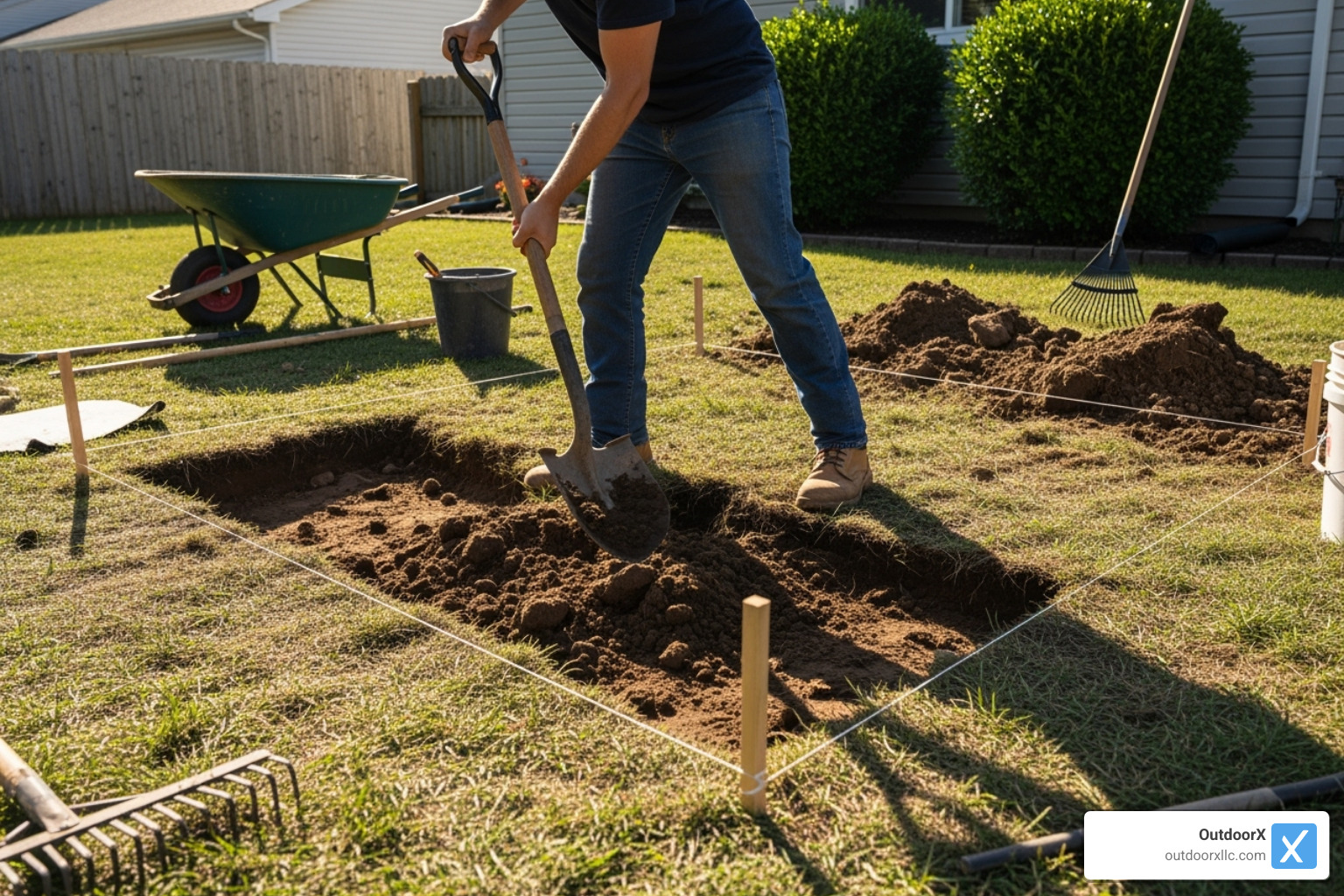
The foundation is the invisible hero of your patio. It ensures stability for 50+ years, so don’t cut corners here, or you’ll face wobbly stones and drainage issues later.
Step 1: Excavation and Grading for Proper Drainage
Building a stone patio starts with precision. Use stakes and mason’s line to create a clear outline of the patio area.
Use the 3-4-5 method for squaring corners: measure 3 feet along one line and 4 feet along the perpendicular line. The diagonal distance between those points must be exactly 5 feet for a perfect square.
Next is excavation. In frost-prone areas like Massachusetts, dig 6-12 inches deep. This depth is crucial to prevent frost heave, which can ruin a patio surface.
While digging, create a slope of 1/4 inch per foot away from the house. This ensures proper drainage and prevents water from pooling against your foundation.
Finally, tamp the subgrade soil with a hand tamper or plate compactor to prevent settling. For complex situations, consider adding a patio drain.
Step 2: Creating a Stable Base for Your Pavers
Now it’s time to build the foundation. Rushing this step is like building on quicksand, so be patient.
First, lay landscape fabric over the excavated area. This barrier prevents the gravel base from mixing with the soil and helps suppress weeds.
Next, add the gravel base layer. Spread compactible gravel (like crusher run) and compact it in 2-3 inch lifts for maximum stability.
Using a plate compactor is far more effective than tamping by hand. Compact each lift thoroughly before adding the next.
Finally, add a 1-inch sand setting bed over the compacted gravel. Screed the sand using a straight 2×4 and guide pipes to create a perfectly smooth, level surface for the stones.
This layer allows for fine adjustments, but its thickness must be precise to prevent shifting. For more details, see our guide on the base for paver walkway.
Phase 3: Laying the Stones and Finishing Touches
With the foundation set, the creative process of laying the stones begins, followed by the crucial finishing steps that lock everything in place. This is where your vision truly starts to take shape!
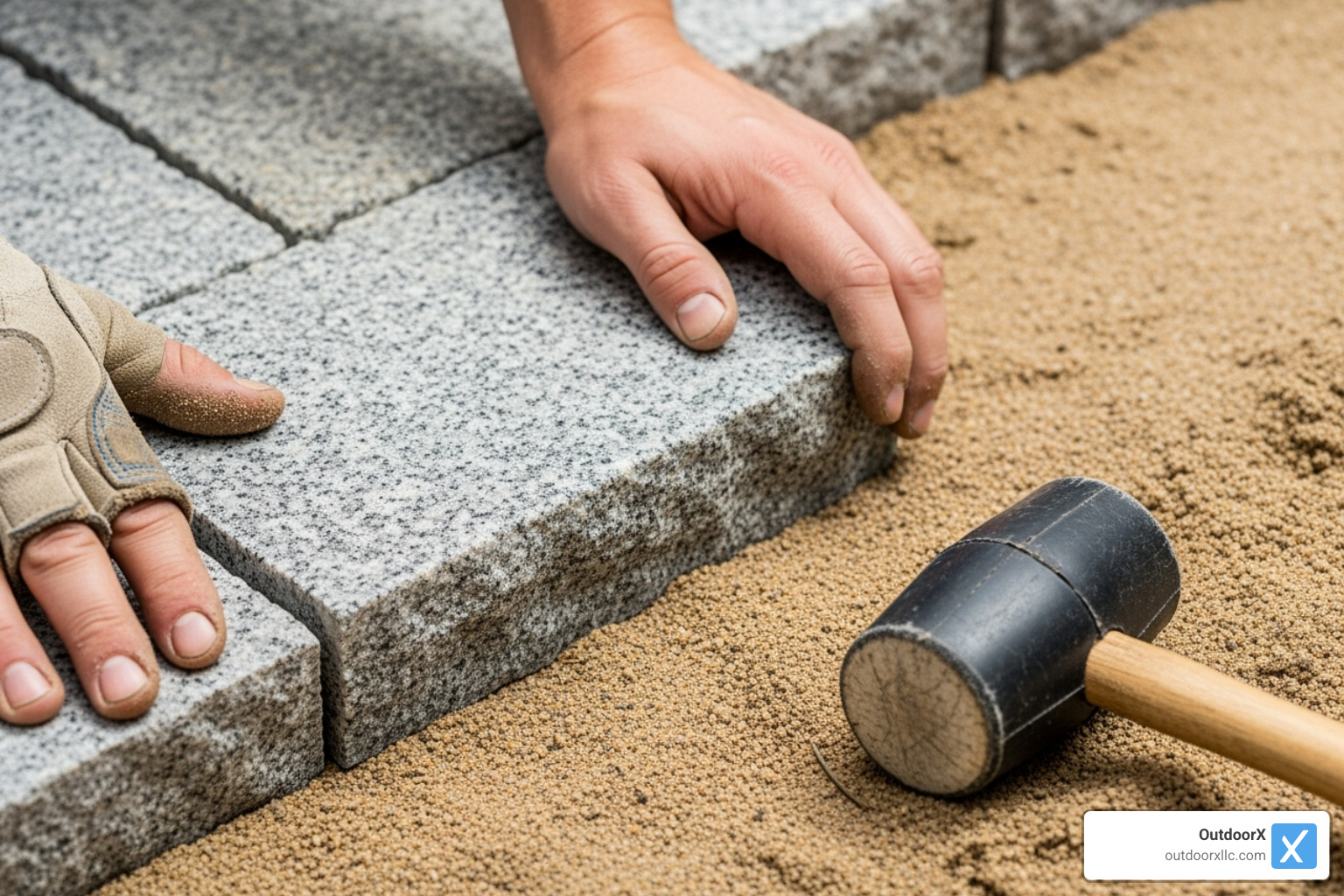
Step 3: Laying, Leveling, and Cutting the Stones
Now for the exciting part of building a stone patio: laying the stones. This process is like assembling a large, natural puzzle.
Start from a corner or straight edge for a solid reference point. Place each stone on the sand bed and tap it firmly into place with a rubber mallet to set it.
Constantly check your work with a 4-foot level. Each stone must be flush with its neighbors while maintaining the overall drainage slope.
Consistent joint spacing is key to a professional look. Aim for 3/8 to 1/2 inch gaps for irregular stones. Uniform stones can have tighter joints.
Laying irregular flagstone requires patience. Take time to find the best fit for each stone, as if solving a jigsaw puzzle. The results will reflect your care.
You will need to cut stones to fit the edges. Use a circular saw with a diamond-grit masonry blade, and always wear safety goggles and a dust mask. Misting the blade with water reduces dust and keeps it cool.
For more detailed techniques on working with different types of pavers, check out our guide on Laying Landscape Pavers.
Step 4: Filling Joints and Installing Edging
With the stones laid, it’s time for the finishing touches. Filling the joints is critical for locking pavers in place and preventing weeds.
You have two main options for joint filler. Stone dust is the traditional choice. Sweep it into the gaps with a stiff broom, then lightly mist the patio with water to help it settle and compact.
Polymeric sand is a modern alternative containing polymers that harden when wet. It offers superior weed and insect resistance but requires careful application to avoid staining the stone surface. Follow the manufacturer’s instructions precisely.
Avoid using plain sand, which encourages ants, or cement, which can crack and damage the stones.
The final step is installing paver edging around the perimeter to prevent stones from shifting. Options include plastic or metal edging secured with spikes, or a concrete haunch for maximum stability.
Install the edging snugly against the outer pavers to create a firm border that holds everything in place.
For additional insights on similar installation techniques, you might find How To Install a Bluestone Patio helpful for comparison methods.
Phase 4: Maintenance, Improvements, and Troubleshooting
Your patio is built, but proper care and smart improvements will ensure it remains a beautiful, functional space for years. With a little attention, it will only get better with time!
Long-Term Care and Maintenance
A well-built stone patio requires simple maintenance to look great for decades.
Regular sweeping removes debris that can stain or scratch the stone. For tougher grime, rinsing with a hose or use a mild detergent and a stiff brush.
Avoid harsh chemicals and high-pressure washers, as they can damage the stone or joint filler. Gentle cleaning is always best.
Remove weeds and moss promptly. Pull small weeds by hand. For moss in damp areas, use a commercial moss killer or a diluted bleach solution after testing in an inconspicuous spot.
Periodically top up joint sand that has settled or washed away. Sweep fresh stone dust or polymeric sand into the gaps and mist lightly with water to set it.
Sealing the stone is optional but recommended. A penetrating sealer improves color, protects against stains, and simplifies cleaning.
If you ever need to replace individual stones, our guide on Replacing Patio Stones walks you through the process step by step.
Enhancing Your Patio with Landscaping
Your patio is the foundation for a complete outdoor living experience. Improve it with landscaping that reflects your style.
Integrate garden beds to soften the transition from hardscape to landscape. Use raised beds with plants that complement your stone’s color palette to create natural, intimate borders.
Planting around the patio extends its beauty. Choose low-maintenance plants like ornamental grasses or native shrubs, considering their mature size.
Outdoor lighting turns your patio into an evening retreat. Use path lights for safety, uplights for drama, and string lights for a magical ambiance.
Add a fire pit to create a gathering spot and extend the patio season. Position it safely away from your home and overhanging branches, following all local fire codes.
Pergolas and arbors add vertical interest, provide shade, and can support climbing plants.
Walkways made of similar materials create a unified flow in your landscape design.
At OutdoorX, we specialize in comprehensive Hardscaping Services, helping homeowners throughout Essex County create cohesive outdoor spaces that work perfectly together.
Troubleshooting Common Issues When Building a Stone Patio
Most common issues that arise over time are easily fixable.
Fix wobbly or settling stones by lifting the stone, adjusting the sand bed beneath it for a level surface, and resetting it firmly with a rubber mallet.
Address drainage problems like pooling water by resetting stones to adjust the slope. Significant issues may require professional assessment and additional drainage solutions.
Manage persistent weeds by keeping joints filled. If weeds are a recurring problem, using polymeric sand can create a more effective barrier.
Repair cracked stones by carefully removing the damaged piece, preparing the sand bed, and installing a matching replacement stone.
For complex repairs or if you’d prefer professional assistance, our Paver Repair Services are available throughout Essex County. Sometimes it’s worth having an expert take a look, especially for drainage issues or extensive repairs.
Frequently Asked Questions about Building a Stone Patio
What is the hardest part of building a stone patio?
The most physically demanding part of building a stone patio is the excavation and base preparation, which involves moving tons of material. Renting equipment like a small excavator and a plate compactor can save significant time and effort.
The most technically challenging aspect is achieving a perfectly level and properly sloped surface. This is especially true with irregular stones like flagstone, where fitting each heavy piece requires patience and a good eye to ensure proper drainage and a stable finish.
How deep should the base of a stone patio be?
The base depth depends on your climate. When building a stone patio in regions with heavy frost, like Massachusetts, a base of 8-12 inches is recommended (6-10 inches of compacted gravel plus 1-2 inches of sand). This deep foundation prevents frost heave, where freezing ground can push up and damage the patio.
In milder climates without significant frost, a shallower 4-6 inch base is often sufficient. Always check local building codes for specific requirements in your area.
Can I build a stone patio on a slope?
Yes, building a stone patio on a slope is possible but requires more advanced skills. It often involves creating level, terraced sections supported by retaining walls.
Proper drainage is critical on a slope to prevent erosion. Water runoff must be carefully managed, sometimes requiring solutions like a French drain around the patio. Due to the complexity of engineering stable terraces and effective drainage, professional help is often recommended for sloped projects. Our team at OutdoorX has extensive experience turning challenging slopes in Essex County into beautiful, functional outdoor spaces.
From Blueprint to Backyard: Completing Your Patio Project
Building a stone patio is a challenging project that rewards you with decades of outdoor enjoyment. Following these phases, from planning to the finishing touches, gives you the knowledge to create your own lasting outdoor oasis.
The satisfaction of completing this project yourself is immense. Looking at a finished patio built with your own hands is a deeply rewarding experience.
However, this is a demanding project that requires significant physical labor and precision. If the scope of work feels overwhelming, that’s completely normal.
Professional installation offers expertise that saves time, prevents costly mistakes, and ensures a seamless result. At OutdoorX, we help homeowners across Essex County, including Newburyport, Topsfield, and Wenham, turn their patio dreams into reality. Our team understands local soil conditions, frost protection needs, and building codes.
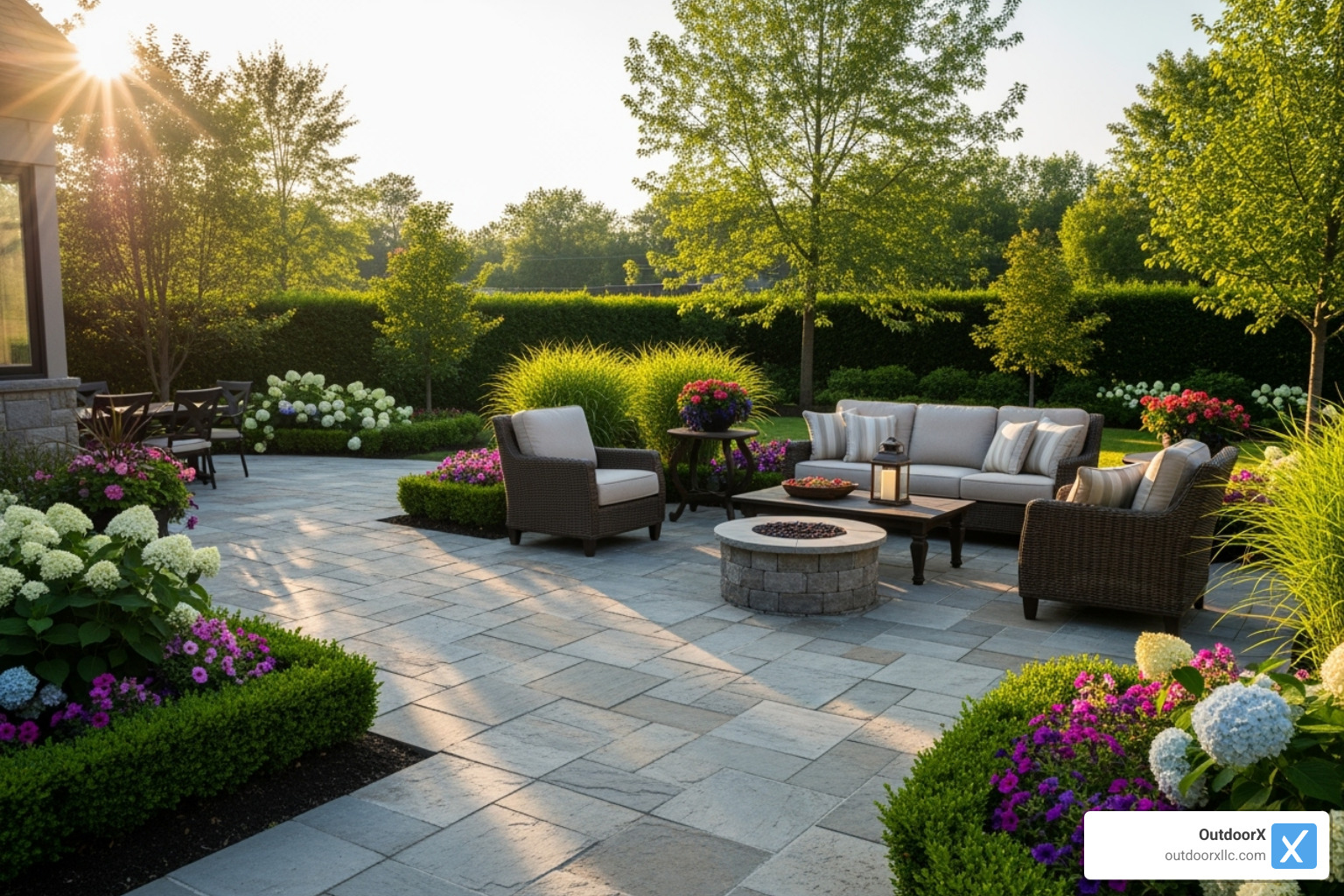
Whether you choose the DIY route or opt for professional help, a well-built stone patio is a smart investment that increases property value and extends your living space.
Unlike other surfaces, a natural stone patio develops more character over time, creating a foundation for memories that will last for generations.
Ready to move from planning to action? Contact us for your patio design and installation needs and let’s discuss how we can help bring your outdoor vision to life with the expert craftsmanship and attention to detail that makes all the difference.
