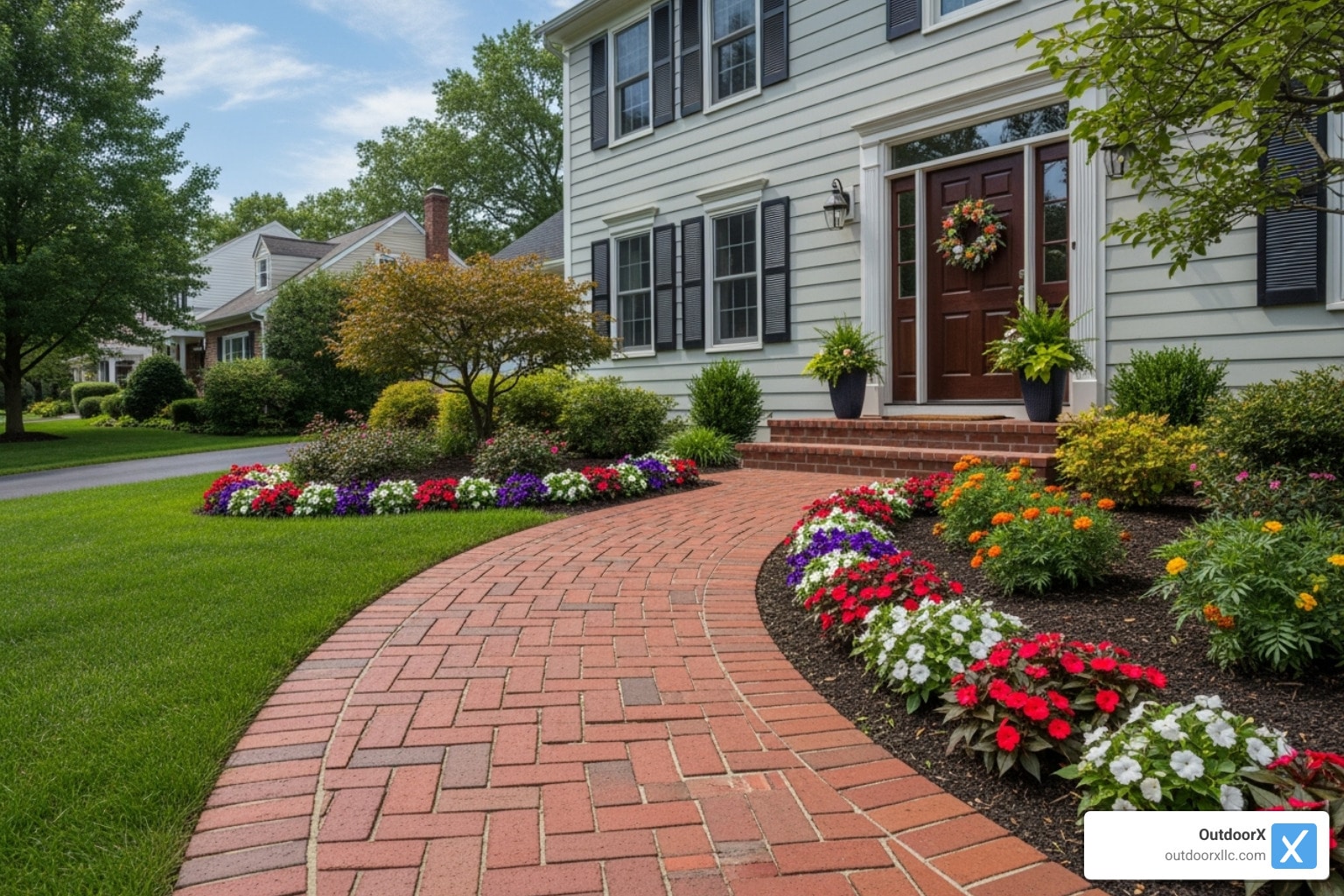
Brick walkway contractors near me 2025: Expert
Why Brick Walkway Contractors Near Me Are Essential for Your Home Investment
A professionally installed brick walkway improves curb appeal, increases property value, and provides decades of reliable performance. The key is hiring quality brick walkway contractors near me who understand proper installation techniques and use the right materials for our local climate.
Key Takeaways:
- Finding a Contractor: Get referrals from neighbors, check online reviews, verify licenses and insurance, and always get at least three detailed written estimates.
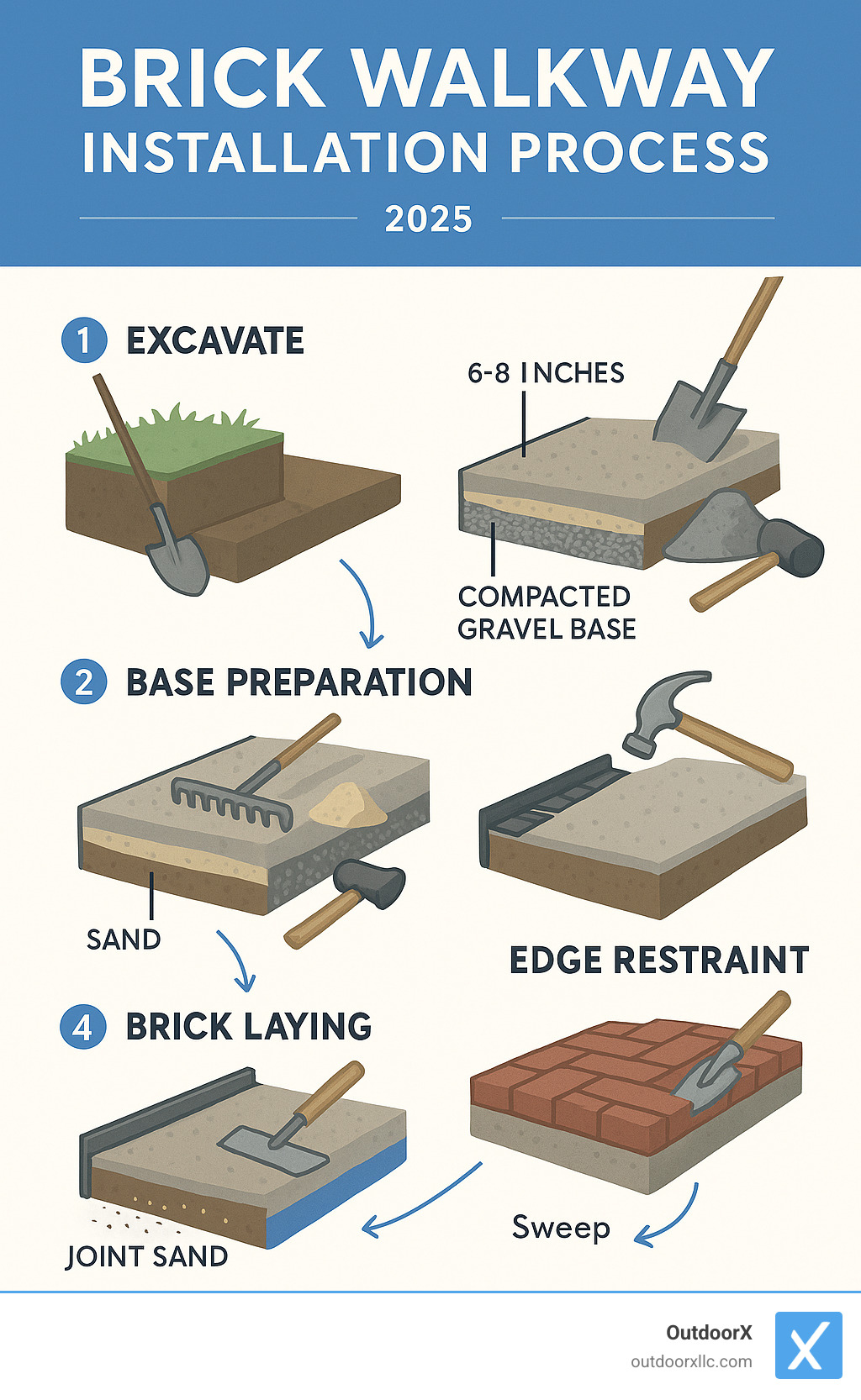
- Professional Installation: Expect a process that includes deep excavation (6-8 inches), a compacted gravel base, a sand setting bed, edge restraints, and polymeric sand to lock pavers in place.
- Long-Term Value: A well-built brick walkway can last 25-50 years, offering a timeless aesthetic with minimal maintenance.
Average costs range from $25-$75 per square foot based on internet data, though prices vary significantly based on your location, materials, and project complexity. These are not specific costs for OutdoorX LLC.
This investment pays off through increased property value and lasting beauty.
Basic brick walkway contractors near me vocab:
Why Choose a Brick Walkway? Unpacking the Benefits
Brick walkways offer a powerful combination of practical and aesthetic benefits, making them a smart investment for any homeowner. They provide stunning visual appeal, incredible durability, improved safety, and surprisingly low maintenance. As an eco-friendly option made from natural materials, a brick walkway can also significantly boost your property value. For homeowners exploring their options, our hardscaping services can help you understand how brick fits into your overall landscape design.
The Timeless Appeal and Versatility
Brick never goes out of style. Whether your home is a classic colonial or a sleek modern farmhouse, a brick walkway provides a warm, inviting entrance. Made from natural clay, its rich tones complement any architectural style. The design flexibility is remarkable, allowing for simple, straight paths or intricate patterns like herringbone. Unlike other materials that can look dated, brick develops more character over time, creating an established, welcoming atmosphere.
Durability and Longevity
A properly installed brick walkway can last 25+ years, often much longer. Unlike poured concrete that cracks under pressure, individual brick pavers flex with seasonal ground shifts—a critical feature for New England’s freeze-thaw cycles. This prevents the widespread cracking that plagues solid surfaces. Brick also withstands heavy foot traffic and resists fading because its color runs through the entire material. If a single brick is ever damaged, it can be replaced easily, a simple fix not possible with a concrete slab.
Safety and Maintenance Advantages
Brick’s natural texture provides a non-slip surface with excellent traction, even when wet, making it a safer choice for your family. Maintenance is refreshingly simple, usually requiring just a good sweep and an occasional rinse. When installed with polymeric sand in the joints, it creates a hardened barrier that discourages weed and moss growth. Should repairs be needed, they are typically simple and localized. If you need help keeping your walkway pristine, our landscape installation and maintenance services can help.
Brick vs. The Rest: A Material Showdown
Choosing a walkway material can be overwhelming. While there are many options, not all are created equal. Here’s an honest look at how brick stacks up against popular alternatives so you can make the best choice for your home.
Brick Pavers vs. Poured Concrete
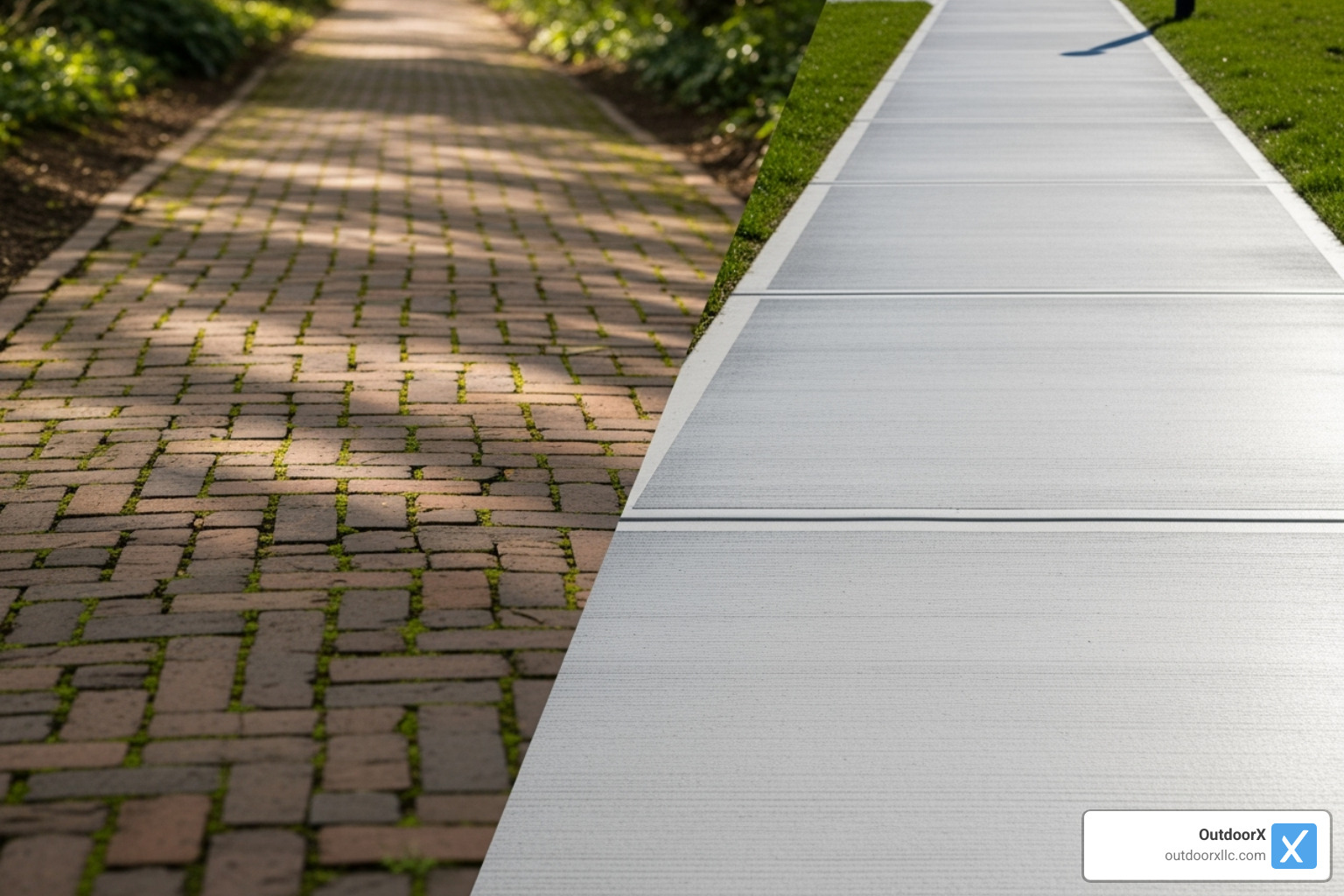
Poured concrete may have a lower upfront cost, but its long-term performance often falls short. The key difference is repairability. A damaged section of a brick walkway can be fixed by replacing individual pavers. With concrete, a similar issue requires jackhammering and leaves a permanent patch. Concrete is also prone to cracking in Massachusetts’ freeze-thaw cycles, while brick’s flexibility allows it to move with the ground. Aesthetically, brick offers a natural, warm character that stamped concrete can’t truly replicate. Its color is consistent throughout, so it won’t chip or fade like a surface-level concrete stain.
Brick Pavers vs. Natural Stone
Natural stone is undeniably beautiful but comes at a premium. The cost comparison is straightforward: natural stone is typically much more expensive than brick. While brick offers classic uniformity, stone provides organic, one-of-a-kind uniqueness. Both are highly durable, but installation is often more complex and specialized for heavy, irregularly shaped stone. Brick pavers, being uniform in size and weight, are generally easier and faster to install. For more information on our installation approach, see our Paver Walkway Installation services.
Comparing Brick Pavers, Concrete, and Natural Stone
| Feature | Brick Pavers | Poured Concrete | Natural Stone |
|---|---|---|---|
| Average Cost per Sq. Ft. (Internet Data) | $25-$75+ | $20-$60+ (stamped/decorative costs more) | $50-$150+ |
| Lifespan | 25-50+ years | 20-30 years (cracking common) | 50-100+ years |
| Maintenance Needs | Low: sweeping, occasional re-sanding | Moderate: cleaning, sealing every few years | Low: sweeping, occasional cleaning |
| Repair Ease | Easy: replace individual pavers | Difficult: often requires section replacement | Moderate: individual replacement possible but matching is hard |
| Design Options | High: many patterns and colors available | Moderate: stamped and colored options | High: unique natural variations create custom looks |
| Flexibility | High: moves with ground changes | Low: rigid and crack-prone | Moderate: individual pieces allow some movement |
| Traction | Good grip, even when wet | Can be slippery (especially smooth finishes) | Good, varies by stone type |
| Color Retention | Excellent: color throughout material | Fades and chips over time | Excellent: natural color is permanent |
The bottom line is that brick offers a fantastic balance of beauty, durability, and value. When you’re ready to move forward, finding experienced brick walkway contractors near me who understand these differences is key to a successful project.
The Nuts and Bolts: Installation, Cost, and Lifespan
When you’re ready to proceed with a brick walkway, it’s natural to have questions about the installation process, budget, and longevity. Let’s walk through these key details.
What is the Process for Installing a Brick Walkway?
A durable, beautiful brick walkway is the result of a methodical, proven process. Experienced brick walkway contractors near me will follow these critical steps:
- Design and Planning: Collaborating with you to determine the layout, pattern, and how the walkway integrates with your landscape.
- Site Preparation and Excavation: Marking the area and excavating to a depth of 6-8 inches, ensuring proper grading for drainage to prevent water damage.
- Gravel Base Installation: Laying and compacting 4-6 inches of crushed gravel to create a rock-solid foundation.
- Sand Setting Bed: Spreading and leveling a 1-inch layer of coarse sand, which allows for precise placement of each brick.
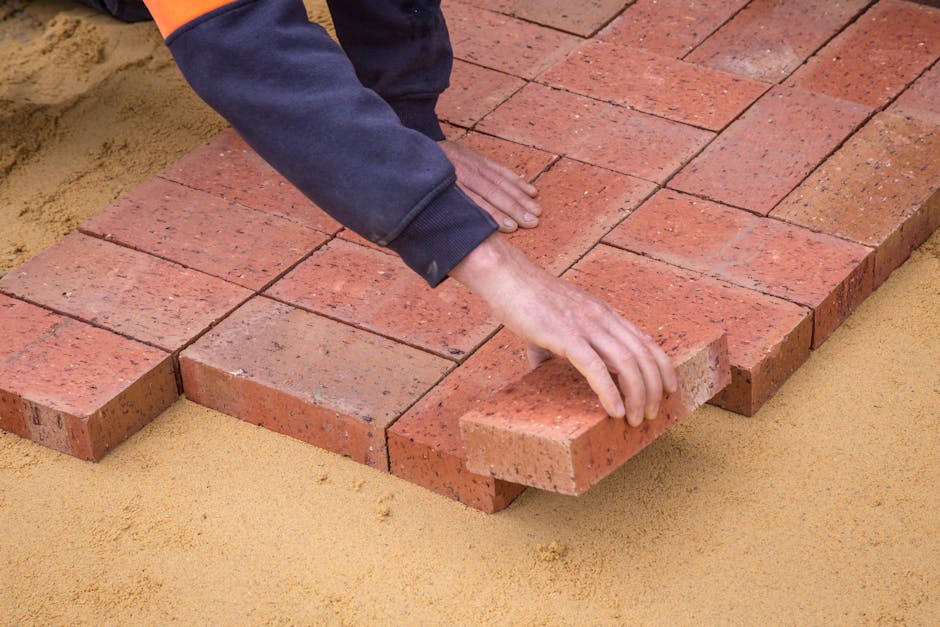
- Laying the Bricks: Carefully placing each brick in the chosen pattern, ensuring proper alignment and spacing.
- Edge Restraints: Installing a border along the perimeter to lock the pavers in place and prevent shifting over time.
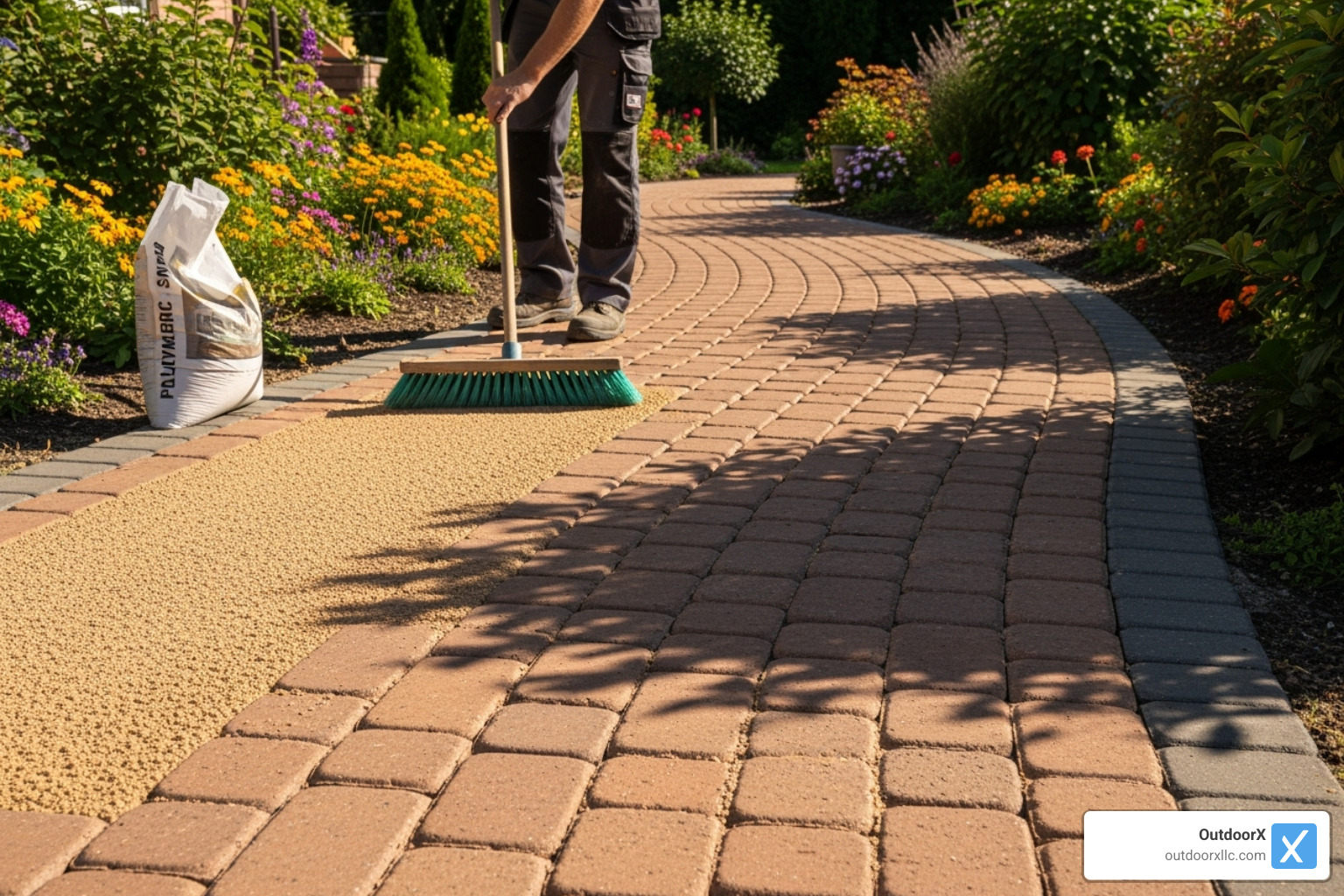
- Jointing Sand: Sweeping polymeric sand into the joints and activating it with water. This hardens to secure the bricks while allowing for slight movement.
For more details, see our Brick Walkway Installation page.
What is the Average Cost of a Brick Walkway?
Budgeting is a key part of any home improvement project. Based on internet data, brick walkway installation typically runs $25 to $75 per square foot, but can exceed this for premium materials or complex designs. Please note: these prices are national averages and do not reflect specific pricing for OutdoorX LLC. Factors influencing the final cost include project size, material choice, design complexity (e.g., curves vs. straight lines), and site conditions that may require extra prep work.
How Long Does a Brick Walkway Last?
This is where brick truly shines as an investment. A properly installed brick walkway typically lasts 25 to 50 years, and often longer. The key is the quality of the installation—a solid, well-compacted base is essential to prevent settling and shifting. High-quality materials and minimal maintenance, like keeping joints filled, ensure your walkway achieves its maximum lifespan. This durability also makes brick an environmentally friendly choice, reducing the waste associated with replacing surfaces every decade. You can learn more about sustainable paving from resources like the Interlocking Concrete Pavement Institute.
Keeping Your Walkway Pristine in New England
Living in South Hamilton, MA, and Essex County means our outdoor surfaces must withstand everything from summer heat to heavy snow. Fortunately, brick walkways are built for New England weather, and proper care will keep them looking fantastic for years.
How Brick Walkways Handle Massachusetts Weather
Freeze-thaw cycles are the biggest threat to outdoor surfaces here. Unlike rigid concrete that cracks under pressure, a brick paver system is designed to be flexible. The individual pavers and sand-filled joints allow for slight movement as the ground freezes and thaws, preventing damage. Proper drainage is also key. A well-built base allows water to drain away, preventing the frost heave that can destroy other walkways. For winter care, use plastic shovels to avoid scratches and choose calcium-based deicers over rock salt, which can damage the brick surface.
What Maintenance is Required?
Brick walkways are surprisingly low-maintenance. Following these simple steps will keep yours in top condition:
- Regular Cleaning: Sweep away leaves and debris regularly. A quick rinse with a hose can remove most dirt. For tougher stains, use a mild detergent and a stiff brush.
- Weed Control: Polymeric sand helps deter weeds, but some may still appear. Hand-pulling or using an appropriate weed killer is effective.
- Re-sanding Joints: Inspect the joints annually, especially in the spring. Top them off with fresh polymeric sand as needed to maintain stability.
- Sealing (Optional): Applying a quality paver sealant every 3-5 years can improve color, protect against stains, and further inhibit weed growth.
For professional help, visit our Services page.
Signs Your Brick Walkway Needs Repair
Even the best walkways may eventually need attention. Addressing issues early can save you money and prevent trip hazards. Look for:
- Uneven or Sunken Bricks: This often indicates a problem with the base underneath.
- Wide Gaps or Loose Pavers: A sign that joint sand has washed out and the pavers are no longer interlocked.
- Cracked or Broken Bricks: These can typically be replaced individually.
- Excessive Weed or Moss Growth: This may signal underlying drainage issues.
According to internet data, minor repairs can cost between $350 and $600, but more extensive base reconstruction can cost $1,500 or more. These are average costs and not actual costs for OutdoorX LLC. Proactive maintenance from quality brick walkway contractors near me can prevent small issues from becoming major repairs.
How to Hire the Best Brick Walkway Contractors Near Me
Your choice of contractor will make or break your project. A skilled team delivers a walkway that lasts for decades, while a poor choice can lead to issues within a few years. Here’s how to find the right professionals in South Hamilton, MA, and Essex County.
How do I find reputable brick walkway contractors near me?
Finding the best contractors requires some research. Start by asking neighbors for referrals and looking for quality work in your area. Use online platforms like Google to read detailed reviews, focusing on comments about communication, punctuality, and long-term results. Most importantly, verify their credentials. A legitimate contractor must be licensed and insured; this protects you if something goes wrong. Prioritize contractors with proven experience in our local New England climate, as they will understand the specific challenges of our soil and freeze-thaw cycles. This local knowledge is essential for a lasting installation in our service areas.
What to ask potential brick walkway contractors near me
Once you have a shortlist, ask the right questions to gauge their expertise. A professional contractor should be able to readily answer the following:
- Can I see a portfolio of your recent brick walkway projects?
- How does your installation process account for our local soil and climate?
- Will you provide a detailed, itemized estimate breaking down all costs?
- What kind of warranty or guarantee do you offer on your workmanship?
- What is your payment schedule?
- Who will be my main point of contact during the project?
Red Flags to Watch Out For
Be cautious of contractors who exhibit these warning signs:
- High-Pressure Sales Tactics: Avoid anyone demanding an immediate decision or offering “today only” deals.
- Extremely Low Bids: A price significantly lower than others often means cut corners on materials or labor.
- Lack of Professionalism: A legitimate business should have a website, business cards, and a professional demeanor. Be wary of handwritten estimates or unmarked vehicles.
- Vague Answers: If they can’t clearly explain their installation process, they may lack the necessary experience.
Choosing wisely ensures your investment is safe. For more information, visit our Landscape Paver Contractors page.
Frequently Asked Questions about Brick Walkways
Homeowners often have similar questions when considering a brick walkway. Here are answers to some of the most common ones.
What are the most popular brick walkway patterns?
The pattern you choose affects both the look and structural integrity of your walkway. The most popular options include:
- Herringbone: An interlocking “V” shape that is visually stunning and very strong, ideal for high-traffic areas.
- Basket Weave: A charming, traditional pattern with alternating pairs of bricks that creates a woven look.
- Running Bond: A classic, linear pattern where bricks are offset by half, offering a clean and timeless look.
- Stack Bond: A modern, grid-like pattern. It’s less interlocking, so it’s often better suited for mortared applications.
Experienced brick walkway contractors near me can help you choose a pattern that suits your home’s style and functional needs.
Can a brick walkway be installed on a slope?
Yes, but it requires professional expertise. For steep slopes, the best approach is often creating terraces connected by steps, with each level supported by a small retaining wall. This ensures stable, flat walking surfaces. On gentle slopes, the walkway can follow the grade, but proper drainage is critical to manage water runoff and prevent erosion. A professional will ensure any sloped walkway is safe, stable, and has a non-slip surface.
Are brick pavers environmentally friendly?
Yes, brick pavers are a sustainable choice for several reasons. They are made from natural clay and shale, which are abundant earth materials. Their long lifespan of 25-50+ years significantly reduces waste compared to surfaces that need frequent replacement. Furthermore, many old bricks can be reclaimed and reused. One of the biggest benefits is the option for permeable installation, which allows rainwater to filter through the joints into the ground. This reduces stormwater runoff and helps replenish the local watershed, a key environmental benefit you can learn more about from the Interlocking Concrete Pavement Institute.
Conclusion
A brick walkway is more than just a path; it’s a beautiful, durable investment that adds lasting value and curb appeal to your home. With a lifespan of 25-50 years, minimal maintenance needs, and the ability to withstand harsh New England weather, brick is a superior hardscaping choice.
Its timeless aesthetic, safety benefits, and eco-friendly properties make it an ideal option. However, these benefits are only realized through proper installation. The quality of the base preparation and the skill of the installer are what separate a walkway that lasts for decades from one that fails in a few seasons.
Choosing the right brick walkway contractors near me is the most critical step. For homeowners in South Hamilton, MA, and throughout Essex County, working with an experienced local team ensures your project is built to withstand our unique climate challenges. An expert contractor will deliver a walkway that not only looks stunning but also performs flawlessly for years to come.
Ready to transform your property with a beautiful and functional brick walkway? Our team has the expertise to bring your vision to life with quality craftsmanship.
Transform your property with our expert hardscaping services