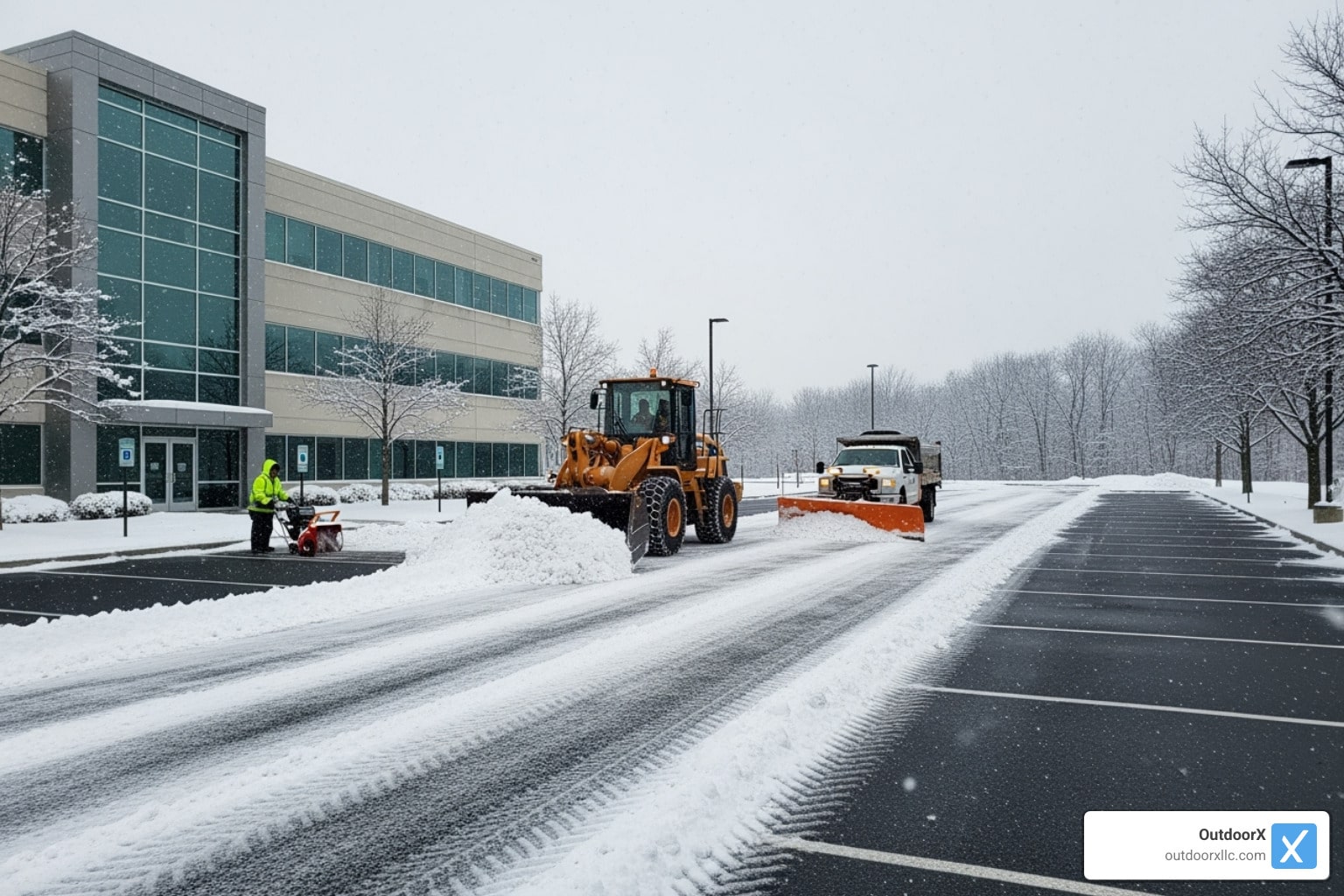
Winter maintenance for businesses: Smart & Safe 2025
Why Winter Maintenance for Businesses is Critical for Your Success
Winter maintenance for businesses is the systematic care of commercial properties during cold months to ensure safety, prevent damage, and maintain operations. It covers snow and ice removal, building winterization, equipment protection, and emergency preparedness.
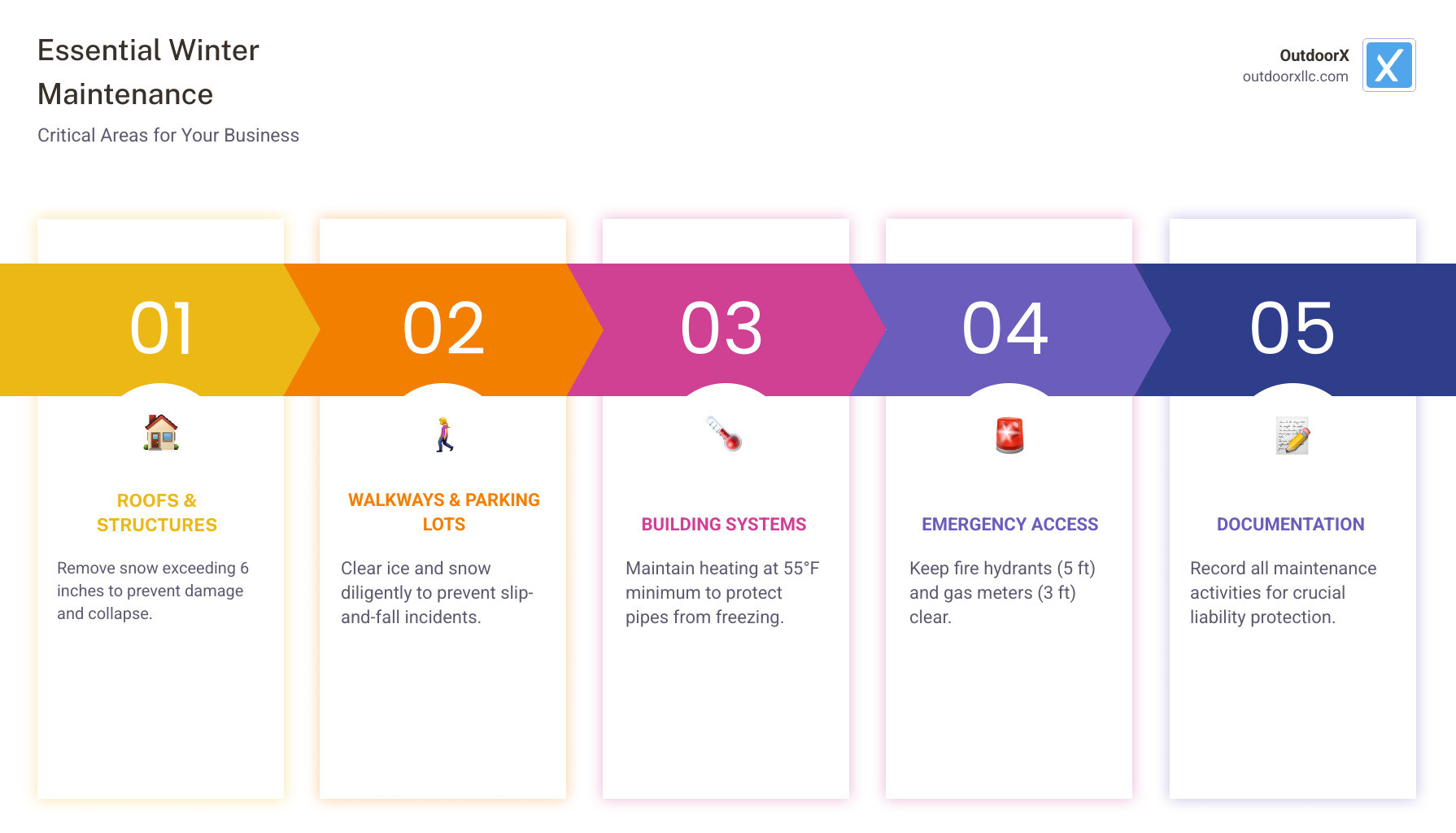
Essential Winter Maintenance Areas:
- Roofs & Structures – Remove snow when it exceeds 6 inches to prevent damage
- Walkways & Parking Lots – Clear ice and snow to prevent slip-and-fall incidents
- Building Systems – Maintain heating at minimum 55°F and protect pipes from freezing
- Emergency Access – Keep fire hydrants clear within 5 feet and gas meters clear within 3 feet
- Documentation – Record all maintenance activities for liability protection
Winter poses serious challenges that can lead to shutdowns or costly liability issues. Severe winter weather is a major cause of insured losses for businesses, with common claims including burst pipes, roof damage, and slip-and-fall accidents.
The stakes are high: 90% of walkway injuries occur with less than 1 inch of snow. Property damage also escalates quickly, as freezing water expands and can double the size of small cracks in pavement or buildings.
Smart business owners know proactive winter maintenance costs far less than reactive repairs. A comprehensive plan protects your property, keeps people safe, and ensures your business stays open when winter hits.
Quick Winter maintenance for businesses terms:
Proactive Preparation: Your First Line of Defense
Think of winter maintenance for businesses like insurance. Preparing before the first snowfall can prevent a major crisis. Winter arrives without warning, making pre-winter inspections crucial. We hunt for sneaky issues that cause problems when temperatures drop, not just obvious ones.
Risk mitigation starts with understanding what you’re up against. Small cracks in pavement seem harmless, but when water freezes inside, they can double in size overnight. Catching these issues early offers dramatic cost savings.
Watch for structural stress signs like new wall cracks, sticking doors, or windows that won’t close. These minor issues can signal that your building is struggling before winter even begins.
Gutter cleaning is essential because clogged gutters are ice dam factories. When melting snow can’t drain, it refreezes at the roof’s edge, pushing water under shingles and into your building, causing interior water damage.
Landscape winterization is also key. Protect irrigation systems, prune trees to prevent falling branches, and tidy up potential winter hazards. For detailed guidance on protecting your commercial landscape, check out our Commercial Landscaping Winter strategies.
Emergency kit preparation and a solid staff communication plan are your winter lifelines. During a blizzard power outage, you need to know who to call and what supplies are on hand. The Downloadable Winter Ready Business Checklist is an excellent resource to ensure you haven’t missed anything critical.
Protecting Your Building’s Envelope
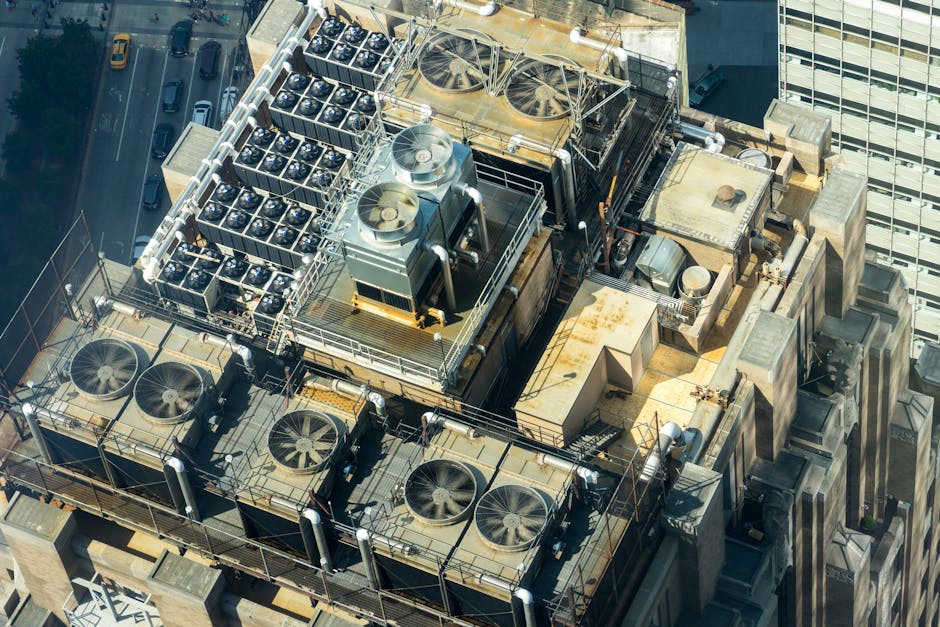
Your building’s exterior, or envelope, is its defense against winter. A thorough pre-winter roof inspection is non-negotiable. Check every shingle, examine vents and chimneys for leaks, and ensure drainage systems are clear.
Icicles are often warning signs of ice dams. When snow melts and refreezes at the roof’s edge, it blocks drainage. Water then backs up under shingles, causing interior leaks.
Window and door sealing is where many businesses lose money and comfort. Feel for drafts around your building. Caulking drafts around window and door frames can significantly reduce heating bills and prevent moisture problems like mold or rot.
The nightmare scenario is frozen pipes. Freezing water expands with incredible force. Plumbing insulation is your first defense, especially for pipes in unheated areas or along exterior walls.
Setting thermostats to 55°F (12.8°C) minimum is crucial, even when your building is empty. This cost is far less than repairing burst pipes and water damage. During extreme cold, open cabinet doors under sinks and let faucets drip slightly to prevent freezing.
Preparing Your Grounds and Systems
Don’t forget the grounds. Irrigation system winterization is critical. Frozen water will destroy pipes, valves, and sprinkler heads. Drain all water and shut down systems for the season.
Exterior lighting checks are extra important during winter’s shorter days. Reliable illumination is vital for safety. Freeze-thaw cycles can loosen fixtures or damage wiring. Replace burnt bulbs and secure wobbly fixtures now.
Your HVAC system service deserves professional attention. A heating system failure during the coldest week is a disaster. Regular maintenance ensures efficiency and reliability.
Keep furnace vent clearance a priority. Snow can block exhaust vents, causing system failures or dangerous carbon monoxide buildup. Ensure vents remain clear all winter.
For comprehensive property care that extends beyond basic maintenance, our Commercial Landscape Maintenance services cover these essential winter preparation areas.
Finally, if you have a backup generator, check your fuel supplies for generators now. You don’t want to find it won’t start during a storm. Preparation now prevents headaches later.
The Ultimate Checklist for Winter Maintenance for Businesses
When winter arrives, your business must respond effectively. Winter maintenance for businesses shifts from preparation to action, focusing on keeping your property safe, accessible, and operational.
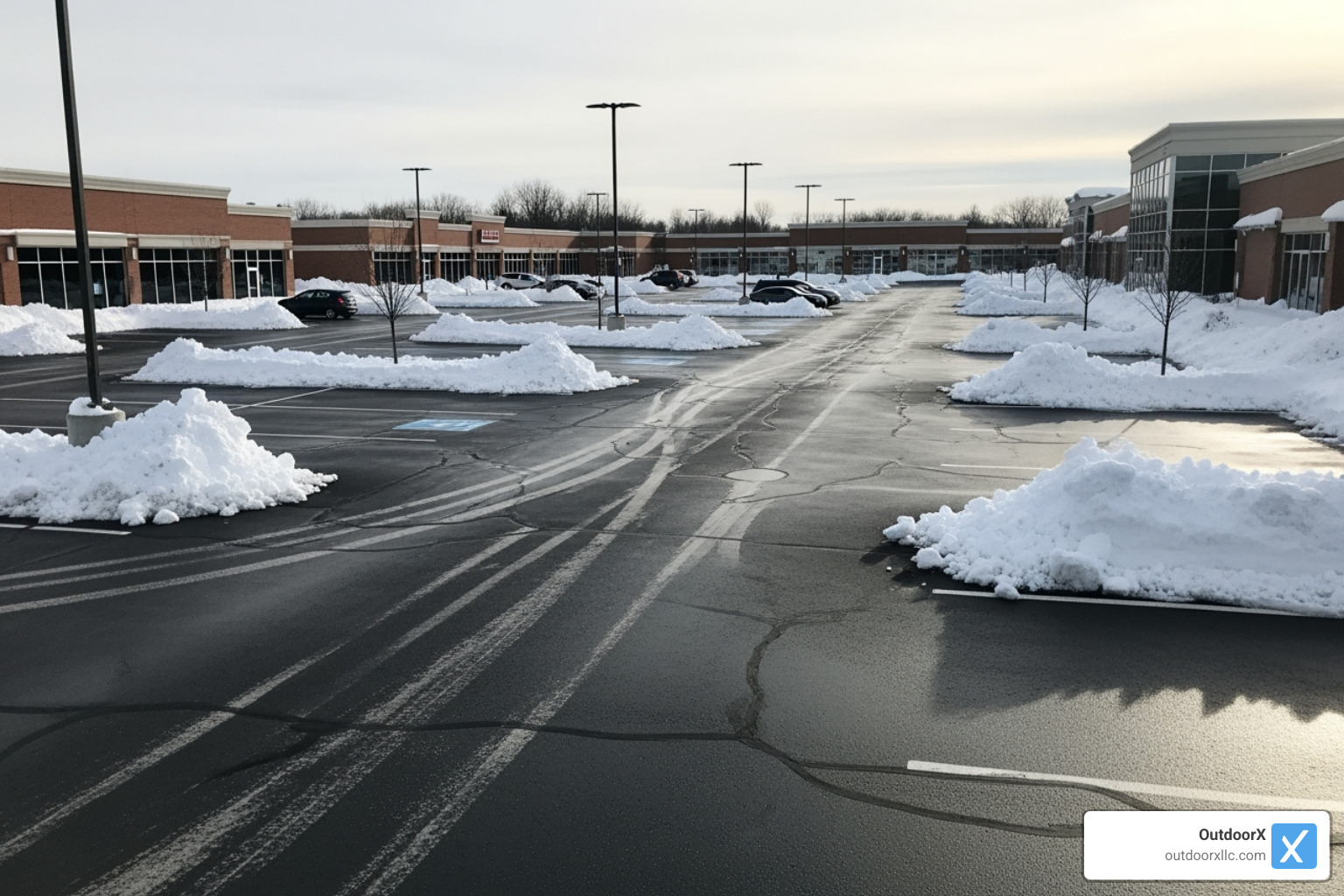
Even a small amount of snow or ice creates serious liability. Slip and fall accidents can happen with little accumulation, and the consequences affect your reputation, insurance rates, and bottom line.
A solid maintenance routine is your lifeline, ensuring your business can operate normally when others might close.
Essential Winter Maintenance for Businesses: Parking Lots & Walkways
Your parking lot and walkways are where winter safety battles are won or lost, as they see the most traffic. The sobering truth is that most slip-and-fall incidents happen with less than an inch of snow on the ground.
Before winter, address foundation issues. Small potholes and cracks become major hazards when water freezes inside them. The expansion can double their size overnight, creating avoidable trip hazards and vehicle damage risks.
Sealcoating your parking lot provides a protective barrier against moisture and makes spring cleanup easier. Fresh line markings are crucial when snow obscures visual cues, helping drivers steer safely.
Effective walkway maintenance requires consistency. Regular snow and ice treatment creates a safe environment for customers and employees. For comprehensive guidance, Winterizing Your Parking Lot: Protecting Your Property offers detailed strategies.
Our Snow Removal Services ensure your South Hamilton and Essex County property stays accessible and safe, no matter what winter throws your way.
Managing Heavy Snowfall: Roofs and Utilities
When snow piles up, your roof becomes a critical concern. Heavy snow loads can cause serious structural damage. The general rule is simple: when snow and ice on a roof exceeds 6 inches, that’s when it should be removed.
Not all snow is created equal. Wet, heavy snow weighs far more than light, fluffy snow. Watch for signs of structural stress like creaking, sticking doors, or sagging ceilings. These are red flags requiring professional attention.
Safe removal techniques are non-negotiable. Don’t use sharp tools that can damage your roof. If handling it in-house, use wood or plastic shovels and work from the edge inward. For large accumulations or safety concerns, professional removal is the wiser choice.
Your utilities need attention too. Gas meters must stay clear within a 3-foot radius to prevent heating problems or safety hazards. Use a soft brush to clear them. Fire hydrants require a 5-foot clearance for emergency access. Keeping emergency access routes clear is often legally required and could save lives.
Smart Snow & Ice Management Strategies
For winter maintenance for businesses, the right snow and ice management strategy is key. Smart businesses think strategically, considering environmental impact and long-term property protection.
The goal is to balance safety with environmental mindfulness, avoiding damage to landscaping or groundwater.
Good documentation is crucial. A paper trail of all snow and ice removal efforts can protect your business and shows you take your responsibilities seriously. Our Commercial Snow and Ice Management services always include thorough documentation as part of our comprehensive approach.
De-Icing: Beyond Traditional Salt
While salt melts ice, it’s not a miracle solution. Oversalting can make surfaces more slippery, damage concrete, and kill landscaping.
Here’s a key fact: salt stops working when temperatures drop below -10°C (14°F). During brutal cold snaps, applying it is ineffective.
The environmental impact is significant, as salt runoff affects soil and groundwater. Many businesses now explore safer alternatives that are often more effective.
Sand and grit are fantastic options because they provide traction at any temperature. Magnesium chloride is another excellent choice; it works in colder temperatures than regular salt and is gentler on concrete and plants.
Anti-icing, applying de-icer before a storm, is a game-changer. It prevents ice from bonding to surfaces, making cleanup easier and using less material.
For businesses looking to make more sustainable choices, the insights from the Sustainable Winter Management Workshop 2023 offer valuable guidance.
Eco-Friendly De-Icing Alternatives:
- Sand or grit for traction at any temperature
- Magnesium chloride for lower-temperature effectiveness
- Commercial eco-friendly blends with corrosion inhibitors
- Anti-icing treatments applied before storms
In-House vs. Contractor: A Key Decision in Winter Maintenance for Businesses
Deciding between an in-house team and a professional contractor for snow removal is a key decision. The best choice depends on your property size and typical winter weather.
Professional contractors have specialized equipment and are available 24/7, clearing your property at 3 AM, not 8 AM. Snow removal is their expertise.
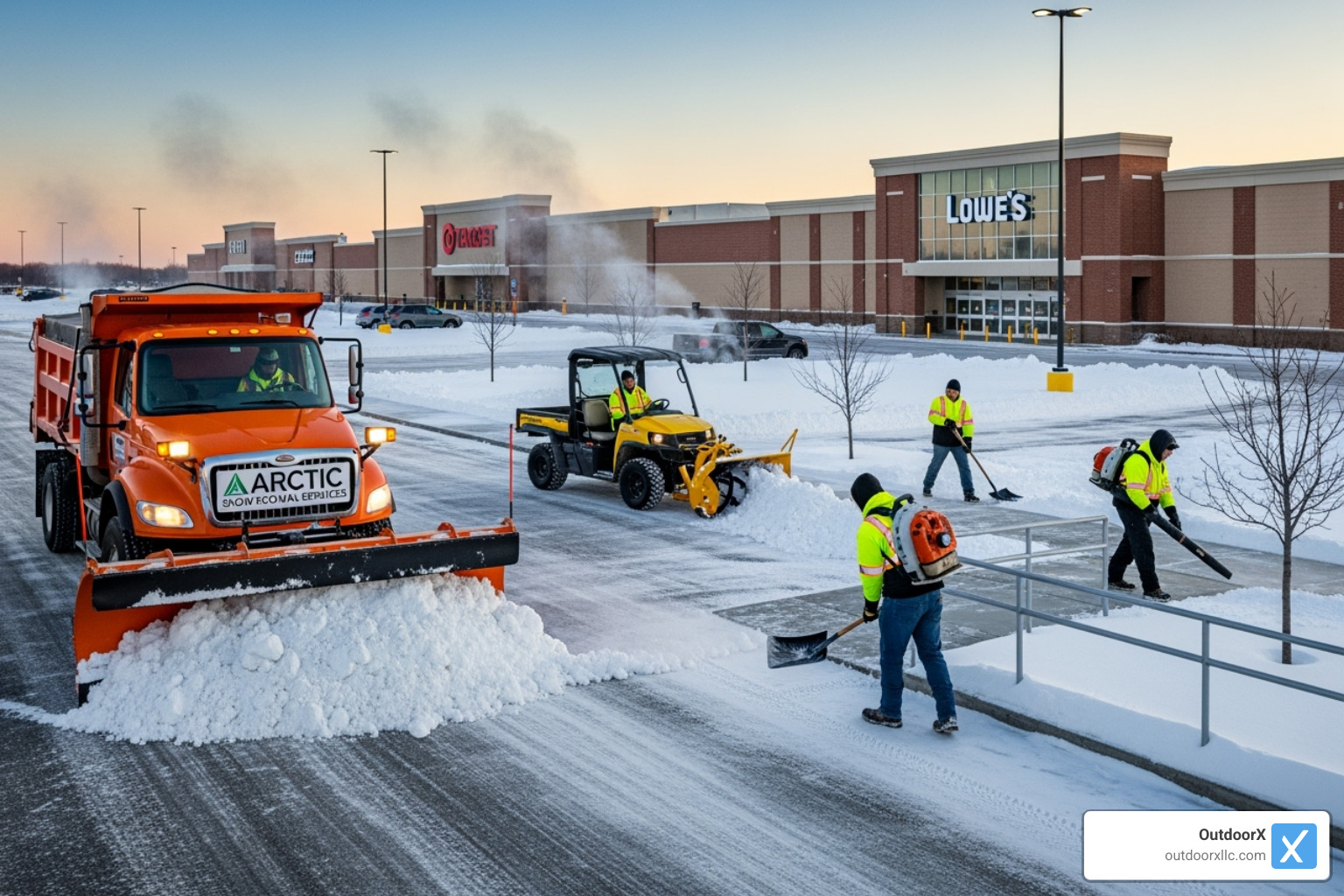
When choosing a contractor, the contract details are critical. It should clearly define the scope of work, service triggers (e.g., 2 inches of snow), materials used, and cost. Always request insurance certificates to avoid liability.
For businesses choosing the in-house route, success depends on preparation and training. An in-house team needs clear instructions on priorities, snow piling locations, and safe equipment use. Equipment maintenance is critical, as a breakdown during a storm is a major business risk.
Regardless of your choice, record keeping is essential. The importance of maintaining good records cannot be overstated. A detailed Snow Removal Log is your shield against lawsuits. If a claim arises, your records can be the difference between a dismissed case and a costly settlement.
Maintaining a Safe & Clean Indoor Environment
The battle against winter doesn’t end at the front door. Tracked-in snow, salt, and slush create indoor challenges. A smart approach keeps your business professional and comfortable all season.
Your lobby is a visitor’s first impression. Clean, safe floors, even during a storm, show you care. Indoor cleanliness impacts productivity and customer satisfaction.
Winter also brings indoor air quality challenges. Sealed buildings can trap stale air, moisture, and germs, making the workplace feel stuffy.
Combating Tracked-In Salt and Grime
Salt is great for melting ice but terrible for floors. The white, crusty residue looks unprofessional and can damage flooring over time, leading to costly replacements.
Your first line of defense is a smart matting system. Use heavy-duty scraper mats outside and large, absorbent mats inside each entrance. These mats need frequent cleaning to remain effective.
Quick action is key for salt residue. Don’t let it build up. A simple vinegar-water solution is effective for dissolving salt deposits and preventing stubborn stains. For hard floors, a protective sealant applied before winter makes cleanup easier.
Winter requires an adapted cleaning schedule. High-traffic areas need daily attention, sometimes more during storms. Carpets may need deep cleaning every week or two to remove embedded salt and grit. Increased cleaning frequency maintains your professional appearance and protects flooring from premature damage.
Ensuring Indoor Comfort and Air Quality
Winter heating systems create dry, stuffy air and put more strain on filters. Employees and customers will notice the decrease in comfort.
HVAC filter changes are critical. Dirty filters reduce efficiency and circulate dust and allergens. Fresh filters improve air quality and lower heating bills—a simple task with big results.
Dry winter air is uncomfortable and can damage wooden fixtures. Properly maintained humidifiers can restore comfort.
With cold and flu season, sanitizing high-touch surfaces like door handles and elevator buttons is extra important to prevent germs from spreading.
Provide employee shoe-drying stations near entryways with mats or boot trays. This small courtesy reduces the mess tracked through your building.
Creating a comfortable, healthy indoor environment requires consistent attention. Your employees will be more productive, customers more comfortable, and your building will stay in better condition.
Frequently Asked Questions about Commercial Winter Maintenance
Here are answers to common questions about keeping your commercial property safe and compliant during winter.
What are a business’s primary legal responsibilities for winter safety?
As a business owner, your top job is creating a safe space for everyone on your property. This is a legal requirement that is critical to your business. It means taking reasonable steps to prevent foreseeable hazards, like slip-and-fall incidents on snow and ice. Failure to clear walkways, parking lots, and entrances can lead to significant liability claims.
Documentation is your best friend for proving you’ve met your duty of care. Keep detailed records of all snow removal efforts, including dates, times, and materials used. This paper trail can be the difference in a liability case.
How do I choose a reliable snow removal contractor?
Choosing the right snow removal contractor is like picking a business partner for the winter. A good one saves you money and stress; a bad one creates significant problems.
Look for contractors with a proven track record and positive reviews from commercial clients. Ask for references.
Insurance is non-negotiable. Request a certificate of insurance showing adequate liability and workers’ compensation coverage. This protects your business from liability.
The contract details are critical. A reliable contractor provides a written agreement specifying service triggers (snow depth), areas to clear, de-icing materials, and clear pricing (per event, seasonal, or hourly).
Watch for red flags like a refusal to provide a written contract or proof of insurance, or quotes that seem too good to be true.
When is it critical to remove snow from a commercial roof?
Roof snow removal is a serious matter of structural integrity. The general rule is to take action when snow accumulates to 6-8 inches. However, not all snow is created equal.
Heavy, wet snow can weigh 10 times more than light powder, putting enormous stress on your building’s structure.
Watch for warning signs like creaking sounds, sagging ceilings, or doors that stick. If you see these signs, immediately call a structural engineer and a professional snow removal service.
Never attempt roof snow removal yourself. The risks are too high, including falls and electrocution. Professionals have the right equipment, training, and insurance to do the job safely.
The bottom line is to err on the side of caution. A professional assessment costs far less than a roof collapse.
Conclusion
With the right approach to winter maintenance for businesses, you safeguard your operation, people, and peace of mind.
Every hour of fall preparation saves days of winter headaches. Every dollar invested in proactive maintenance prevents hundreds in emergency repairs. Safety measures protect your bottom line and the well-being of everyone on your property.
Comprehensive winter maintenance has year-round benefits. Roof inspections prevent leaks, sealcoating extends pavement life, and snow removal logs are your best defense in a liability claim.
You don’t have to tackle this alone. Winter maintenance can be overwhelming while running a business, so the right partner makes all the difference.
At OutdoorX, we’ve been helping businesses in South Hamilton, MA, and Essex County weather every storm for years. We know New England winters, from the first surprise freeze to the last February blizzard.
Our team doesn’t just show up when it snows. We’re your year-round partners in keeping your property safe, functional, and looking great. We understand that your business success depends on reliable, professional service.
Ready to make winter your least stressful season? For comprehensive and reliable Commercial Snow Removal services custom to your property’s needs, contact our team today. Let’s work together to keep your business running smoothly.