Retaining wall repair contractors near me: Top Experts
Why Your Retaining Wall Needs Professional Attention
Retaining wall repair contractors near me are essential professionals when your landscape’s structural foundation starts showing signs of distress. A failing retaining wall isn’t just an eyesore – it’s a serious safety hazard that can lead to property damage, soil erosion, and costly emergency repairs. If you’d like a quick refresher on how retaining walls actually work, the retaining wall overview on Wikipedia gives a clear explanation of the forces and design principles involved.
Quick Answer: Finding the Right Contractor
- Licensed & Insured: Verify credentials before hiring
- Local Experience: Choose contractors familiar with Essex County soil conditions
- Portfolio Review: Ask to see similar repair projects
- Written Estimates: Get detailed quotes from 3+ contractors
- Drainage Expertise: Ensure they understand the root causes of failure
- Warranty Offered: Look for guarantees on repair work
Your retaining wall works 24/7 to hold back tons of soil pressure. Internet research shows that average repair prices range from $100 to $1,500 depending on wall size and damage severity—these figures are broad web-based averages and are not quotes from OutdoorX LLC. Waiting too long can turn a simple fix into a complete replacement costing thousands more.
As one frustrated homeowner noted in a Minneapolis forum: “I’ve contacted three local companies and they all only accept larger contracts for ‘full slope and yard redesign package’.” This highlights a common challenge – many contractors prefer large projects over smaller repair jobs.
The good news? With the right knowledge about warning signs, repair methods, and contractor selection, you can protect your landscape investment before minor issues become major disasters.
Explore more about retaining wall repair contractors near me:
Is Your Retaining Wall Crying for Help? Key Warning Signs & Causes

Your retaining wall might be sending you distress signals right now – you just need to know how to read them. Think of these warning signs as your wall’s way of saying “Help me before I become a much bigger (and more expensive) problem!”
The truth is, most homeowners in Essex County walk past their retaining walls every day without really looking at them. But spending five minutes doing a visual inspection could save you thousands of dollars and prevent a potential safety hazard.
Common Signs of a Failing Wall
When retaining wall repair contractors near me assess a wall, they’re looking for specific red flags that tell the story of what’s happening beneath the surface. Here’s what you should watch for during your own inspection.
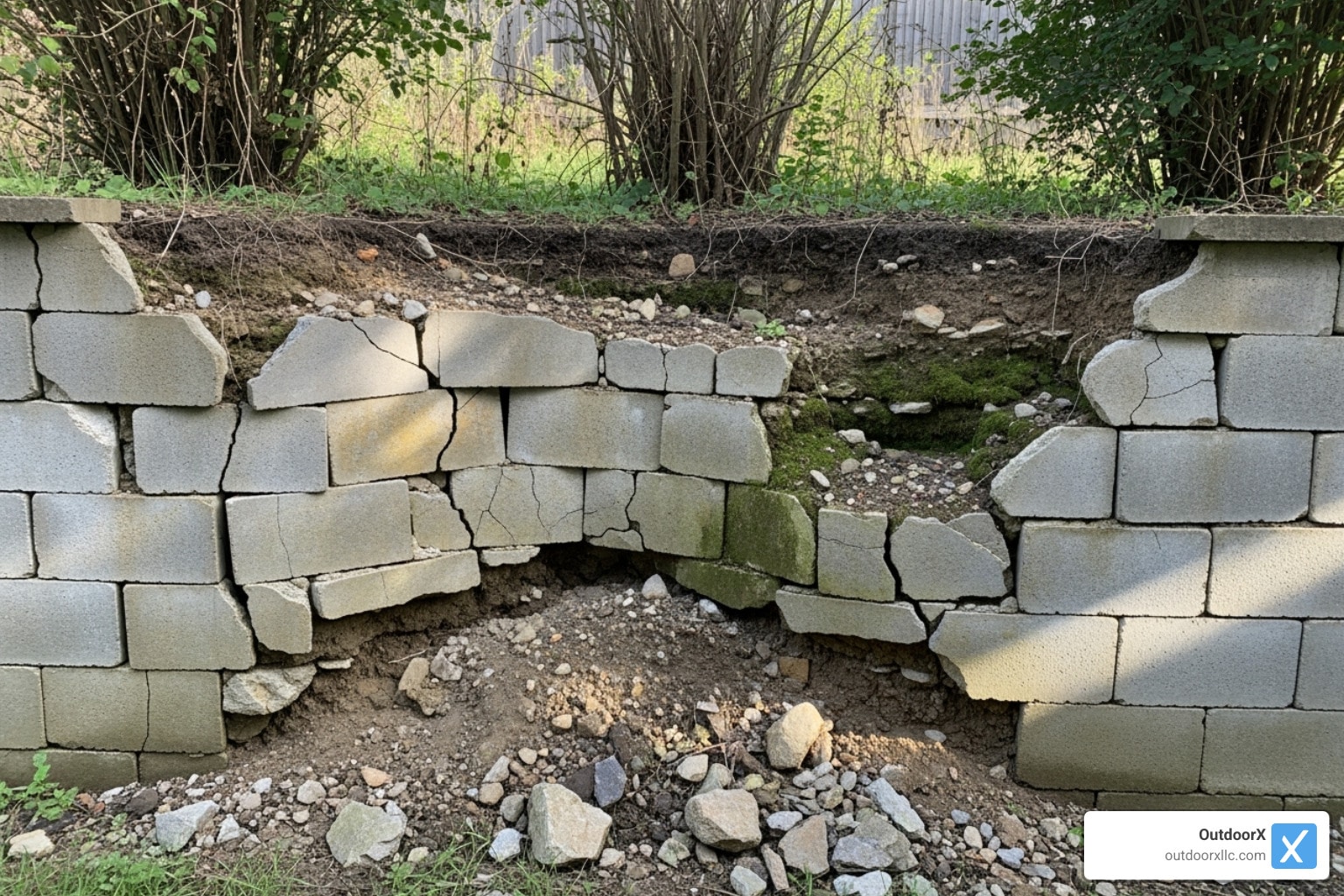
Leaning or tilting is probably the most dramatic warning sign – and the one that makes homeowners panic. If your wall looks like it’s doing the Tower of Pisa impression, that’s your cue to call professionals immediately. Even a slight lean can quickly become a major structural failure.
Bulging sections are like your wall’s version of a beer belly – not a good look and definitely not healthy. When parts of your wall start pushing outward, it means the pressure from behind has become too much to handle. This usually happens when water builds up in the soil, making everything heavier and more aggressive.
Cracks come in different flavors, and each tells its own story. Vertical cracks often mean the foundation is settling unevenly. Horizontal cracks usually point to too much pressure pushing from behind. Those zigzag stairstep cracks in block or stone walls? They’re screaming about foundation movement. Small hairline cracks might just be cosmetic aging, but any crack that’s growing, widening, or letting water through needs immediate attention.
Crumbling materials are your wall’s way of showing its age – or poor health. Concrete that’s flaking off, stones that are falling apart, or timber that’s rotting are all signs that the materials have reached their limit. In Massachusetts, our freeze-thaw cycles are particularly hard on retaining walls.
Water drainage problems are like having a cold that won’t go away – they make everything worse. Standing water around your wall’s base, excessive seepage through the wall face, or those white powdery deposits (called efflorescence) are all signs that water isn’t going where it should.
Soil separation creates gaps between your wall and the ground behind it, or worse, small sinkholes. This means soil is washing away or shifting, which undermines everything your wall is trying to accomplish.
Here’s a quick visual checklist for homeowners:
- Does the wall stand perfectly straight?
- Are there any bulges or unusual curves?
- Have cracks appeared or gotten bigger?
- Is any material crumbling or rotting?
- Do you see water problems around the wall?
- Is soil pulling away from the wall?
The Root Causes of Retaining Wall Damage
Understanding why walls fail is crucial because fixing symptoms without addressing causes is like putting a band-aid on a broken pipe – it won’t hold for long.
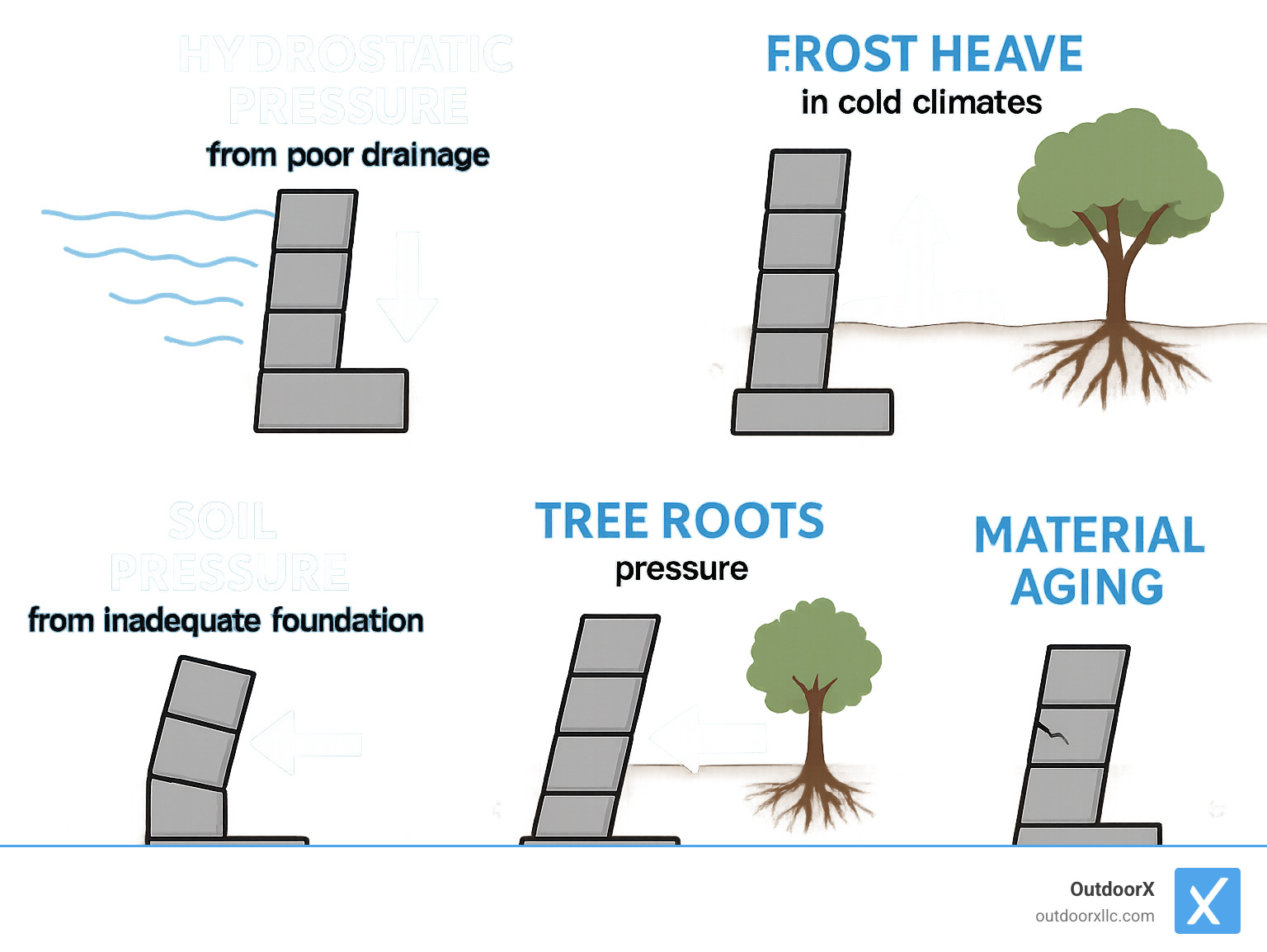
Poor drainage is the villain in most retaining wall horror stories. When water can’t escape from behind your wall, it turns the soil into a heavy, aggressive force that pushes relentlessly against the structure. Without proper weep holes or drainage systems, your wall is basically trying to hold back a swimming pool of saturated soil.
Improper foundation issues are like building a house on quicksand. If the foundation wasn’t designed correctly for your specific soil conditions and wall height, everything above it suffers. Missing or improperly installed reinforcement makes the problem even worse.
Overloading happens when too much weight gets placed on the soil behind the wall. Maybe someone parked a heavy truck there, built a deck, or even just piled up landscaping materials. Your wall wasn’t designed for that extra pressure, and it lets you know by failing.
Material lifespan varies dramatically depending on what your wall is made from. Timber walls typically last 10 to 15 years, while concrete can go 50 years, and stone walls can last anywhere from 50 to 200 years. When materials reach their expiration date, problems become inevitable.
Expansive soil, especially clay-heavy soil common in our area, acts like a sponge that swells when wet and shrinks when dry. This constant movement puts stress on your wall that it was never designed to handle. Add in frost heave from our Massachusetts winters, where freezing water expands and pushes against walls, and you’ve got a recipe for structural problems.
Tree root pressure might sound gentle, but roots are incredibly strong. A tree planted too close to your wall can literally push it apart as the roots grow and seek water and nutrients.
The key takeaway? Most retaining wall problems are preventable with proper design, installation, and drainage. When you spot warning signs early and understand their causes, you can work with professionals to address issues before they become disasters.
For comprehensive solutions to these structural challenges, explore our Hardscaping Services Beverly MA to learn how proper design and installation prevent these problems from the start.
To Fix or to Replace? Making the Right Decision
When you’re staring at a damaged retaining wall, the million-dollar question isn’t really about money – it’s about making the smart choice between repair and replacement. This decision can feel overwhelming, especially when you’re not sure if that crack is just cosmetic or a sign of something more serious.
The truth is, there’s no one-size-fits-all answer. A wall that’s been faithfully holding back your hillside for decades might just need some TLC, while another that looks “okay” from a distance could be on the verge of catastrophic failure. Retaining wall repair contractors near me often tell homeowners that the key is understanding what your wall is really telling you.
Minor damage like small cracks, slight settling, or surface weathering often responds beautifully to targeted repairs. These fixes can extend your wall’s life by years or even decades, giving you excellent value for your investment. But when you’re dealing with severe structural failure – think major leaning, widespread cracking, or foundation issues – trying to patch things up is like putting a band-aid on a broken bone.
Wall age and material type play huge roles in this decision too. A timber retaining wall that’s been standing for 15 years has likely reached its natural lifespan, while a concrete or stone wall might still have decades of service left with the right repairs. The material itself often determines whether repair is even possible – you can repoint mortar joints in a stone wall, but you can’t really “fix” rotted timber.
Here’s something that might surprise you: a well-maintained wall can boost property value significantly. In fact, according to some reports, thoughtful landscaping can increase home value by as much as 20%. That’s not just about curb appeal (though that matters too) – it’s about buyers knowing they won’t inherit a costly structural headache. When retaining wall repair contractors near me evaluate your situation, they’re looking at both the immediate fix and the long-term investment potential.
The cost-benefit analysis doesn’t always favor the cheapest option upfront. Sometimes spending more on a quality repair saves thousands down the road. Other times, replacement is the only path that makes financial sense. Your future plans matter here too – if you’re planning major landscaping changes or thinking about selling in the next few years, that influences the equation significantly.
When Repair is the Smart Choice
Sometimes your retaining wall just needs a little love, not a complete overhaul. Repair becomes the smart choice when you’re dealing with problems that haven’t compromised the wall’s fundamental structure.
Isolated cracks are often perfect candidates for repair, especially if they’re not growing or allowing significant water infiltration. These can usually be sealed with appropriate materials, stopping further deterioration in its tracks. Minor leaning in small sections might sound scary, but if it’s limited to a specific area and hasn’t progressed, targeted reinforcement can often solve the problem.
Drainage correction is another area where repairs shine. Many wall problems stem from poor water management, and adding proper weep holes, improving backfill drainage, or installing French drains can transform a failing wall into a stable one. This is often much more cost-effective than replacement, especially when the wall structure itself remains sound.
Mortar repointing in stone or block walls can work wonders. When the stones are solid but the mortar has deteriorated, skilled repointing can restore both strength and appearance. It’s like giving your wall a facelift that goes deeper than just looks.
Even some cosmetic issues that seem purely aesthetic can be worth addressing through repair. Surface spalling, minor staining, or weathering might not threaten structural integrity, but addressing them prevents progression to more serious problems. For comprehensive solutions to these repair scenarios, explore our hardscaping services.
When Replacement is Unavoidable
There comes a point when even the most optimistic contractor has to deliver the hard truth: your wall needs to go. Replacement becomes unavoidable when the structural integrity is so compromised that repairs would be throwing good money after bad.
Complete structural failure is the most obvious sign – when your wall has collapsed partially or entirely, there’s no going back. But you don’t need to wait for total failure to know replacement is necessary. Wall leaning more than 15% from vertical indicates such severe structural compromise that repair attempts are typically futile and potentially dangerous.
Widespread material decay tells its own story. When timber shows extensive rot, when concrete is crumbling throughout, or when stone is deteriorating at multiple points, you’re looking at systemic failure rather than isolated problems. A rotted timber wall, for instance, has lost the structural capacity that made it effective in the first place.
Foundation issues are particularly serious. If the wall’s base has failed – whether through inadequate design, soil settlement, or erosion – everything above it is compromised. While foundation problems can sometimes be addressed through underpinning or other techniques, the cost and complexity often make replacement the more practical choice.
Finally, when your wall is past its expected lifespan and showing multiple signs of distress, replacement often provides better long-term value than attempting multiple repairs. A 20-year-old timber wall with several problems is telling you it’s time for something new, while a 30-year-old concrete wall with similar issues might still be worth repairing.
The decision between repair and replacement ultimately comes down to safety, cost-effectiveness, and your long-term plans. When in doubt, consulting with experienced professionals can help you make the choice that’s right for your specific situation and budget.