


Retaining wall companies near me 2025: Expert Guide
Finding the Right Retaining Wall Companies for Your Project
Searching for retaining wall companies near me is the first step to changing a sloped yard into a functional and beautiful landscape. Whether you need to control erosion, create level planting areas, or add visual appeal, choosing the right contractor is crucial.
What to Look for in a Retaining Wall Contractor:
- Licensed and insured with local experience
- A portfolio of completed projects
- Detailed quotes with material and labor breakdowns
- Positive customer reviews and references
- Knowledge of local soil and building codes
- Warranty on materials and workmanship
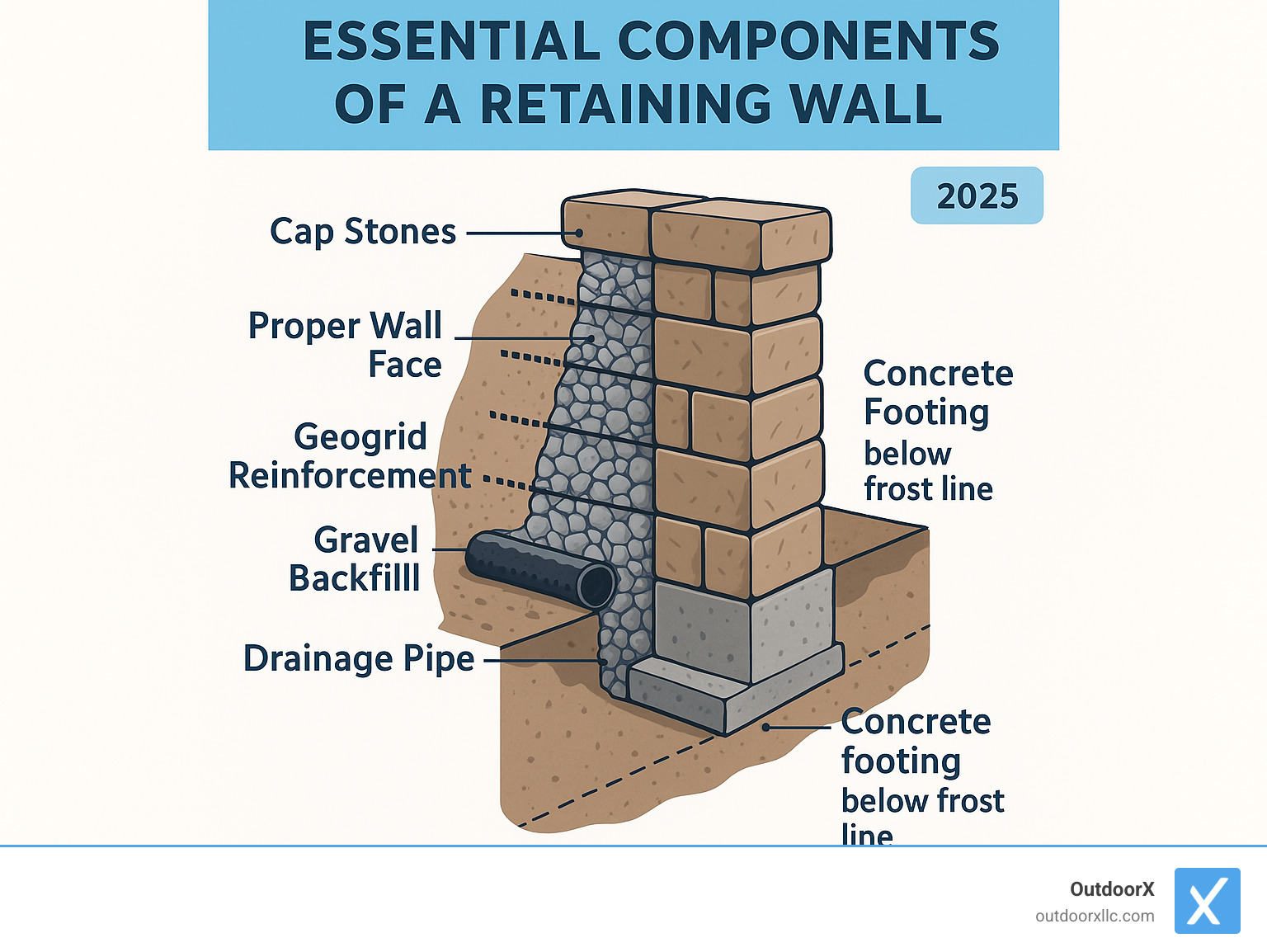
The stakes are high, as one forum user shared: “Be wary of landscaping companies that only use landscaping stones. Ensure they follow best practices like including a French drain, gravel backfill, and geogrid/deadmen, as many companies do not.”
Retaining walls are structural elements, not just decorative features. They require proper drainage, solid foundations, and the right materials to prevent costly failures. Costs typically range from $20 to $150+ per square foot (these are average costs based on internet data and not actual costs for OutdoorX LLC), depending on materials, height, and site conditions.
Retaining wall companies near me basics:
Understanding Retaining Walls: Types, Materials, and Benefits
When searching for retaining wall companies near me, it’s helpful to know what you’re building. A retaining wall is a hardworking structure that holds back soil and prevents erosion, turning unusable slopes into beautiful, functional spaces.
The Different Types of Retaining Walls
The right type of wall depends on soil pressure, slope, and desired aesthetics.
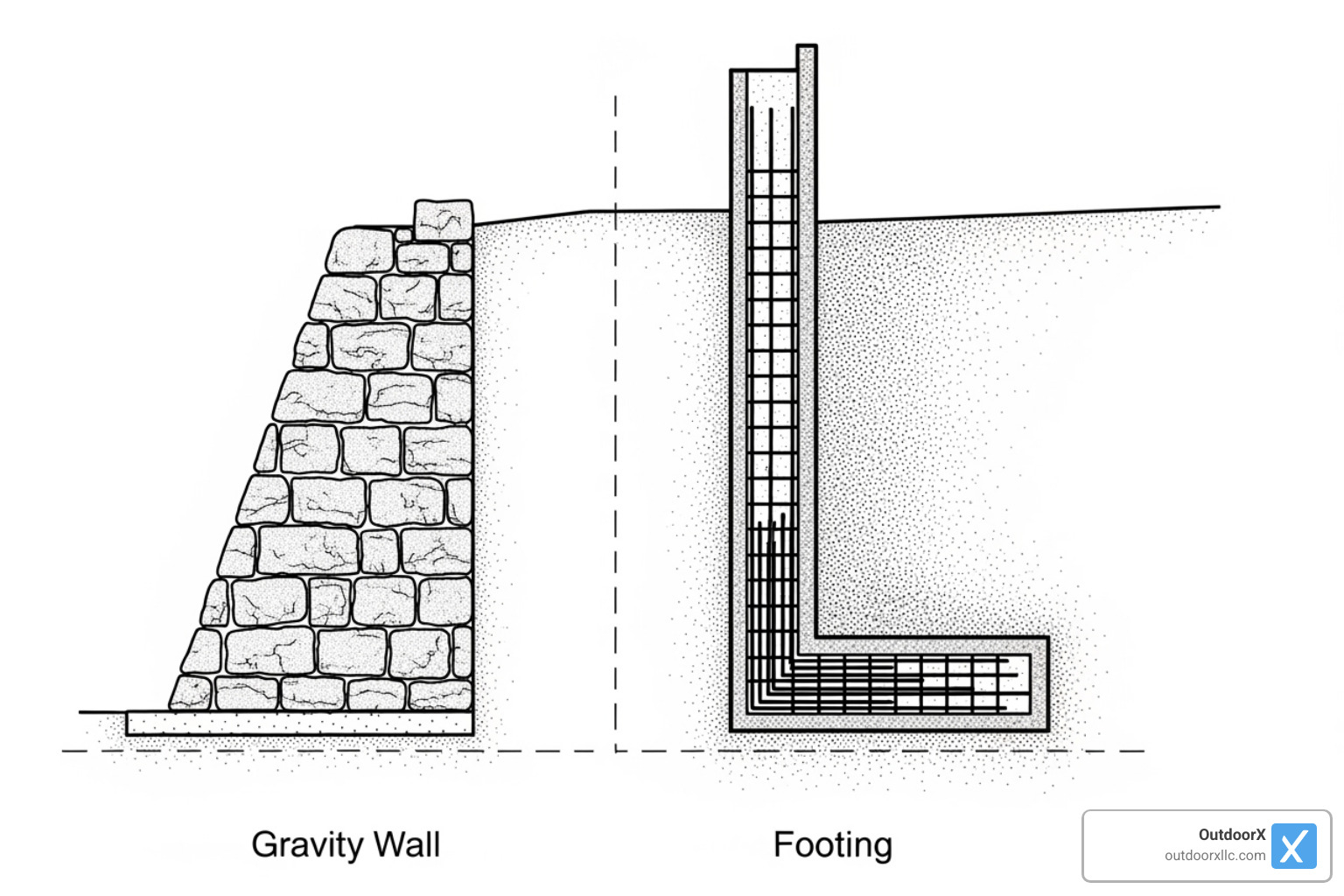
Gravity walls use their own mass and weight from materials like stone or concrete blocks to hold back soil. They are ideal for shorter walls where soil pressure is moderate.
Cantilever walls, typically made of reinforced concrete, use a footing that extends under the backfill. This design cleverly uses the soil’s own weight to stabilize the wall, making it suitable for taller applications with significant soil pressure.
Sheet piling walls consist of interlocking sheets of steel, vinyl, or wood driven directly into the ground. This method is often used in tight spaces or near waterfronts.
Anchored walls are used for very tall walls or heavy loads. They are reinforced with anchors or “tiebacks” driven deep into the soil behind the wall, providing additional support.
| Feature | Gravity Walls | Reinforced Walls (e.g., Cantilever) |
|---|---|---|
| Primary Support | Mass and weight of the wall | Internal reinforcement (rebar, geogrid) and footing |
| Height Limits | Generally shorter (up to 4-6 feet) | Can be much taller (tens of feet) |
| Best Use Cases | Small to medium slopes, aesthetic features | Significant slopes, heavy loads, structural support |
| Cost | Varies, often less for simpler designs | Can be higher due to engineering and material complexity |
More info about retaining wall concrete design services
Common Materials and Their Lifespan
Material choice affects durability, appearance, and cost.
- Concrete blocks are a popular choice due to their durability, versatility, and wide range of styles.
- Poured concrete creates a strong, monolithic wall that can be formed into custom shapes and curves.
- Natural stone offers a timeless, classic look that blends with the landscape but often requires skilled masons and a higher budget.
- Timber walls provide a rustic look and are often more budget-friendly, typically costing $10 to $40 per square foot installed (these are average costs based on internet data and not actual costs for OutdoorX LLC). Their lifespan is generally 20 to 40 years.
- Gabion baskets are wire cages filled with rocks, offering a unique, durable, and permeable wall solution.
A well-built concrete or stone wall can last 50 to 100 years or more, while timber walls may need replacement every few decades. Material durability is a key factor in the long-term value of your investment.
More info about stone wall contractors near you
Key Benefits for Your Property
Retaining walls offer numerous advantages beyond holding back soil.
- Erosion prevention: They manage water flow and keep valuable topsoil in place.
- Improved drainage: Properly designed walls redirect excess water away from your home’s foundation.
- Creating usable flat space: They transform steep slopes into level areas for patios, gardens, or play areas.
- Garden beds: Terraced walls create ideal planting beds that are easier to access and maintain.
- Increased property value: A professional installation is a desirable feature that boosts curb appeal and solves landscape problems.
- Aesthetic appeal: Walls define outdoor spaces and add architectural interest to your property.
More info about hardscaping services
Planning Your Project: Costs and Permits
Before breaking ground, it’s crucial to understand the budget and legal requirements for your retaining wall project.
What Factors Influence Retaining Wall Costs?
When getting quotes from retaining wall companies near me, you’ll find prices vary based on several key factors.
- Wall height and length are the primary drivers, as they determine the amount of material and labor required.
- Material choice causes the widest price swings. Timber is often the most affordable, while natural stone or complex engineered systems are at the higher end.
- Site accessibility impacts labor costs. Difficult access for machinery or materials will increase the price.
- Soil conditions can lead to unexpected expenses. Rocky or unstable soil may require special equipment, more extensive foundations, or robust drainage.
- Design complexity, such as curves, tiers, or integrated features like lighting and seating, adds to the overall cost.
The price range typically runs from $20 to $150+ per square foot (these are average costs based on internet data and not actual costs for OutdoorX LLC), with most residential projects falling between $40-80 per square foot. A small wall might cost $1,200, while a major structural project can exceed $24,000.
The lowest quote isn’t always the best value. As one homeowner learned: “My cheap retaining wall started leaning after two winters – fixing it cost more than doing it right the first time.”
More info about retaining walls
Do I Need a Building Permit?
Permit requirements vary by municipality, so check local rules before starting.
- Local regulations often trigger a permit requirement based on wall height, typically for walls over 3-4 feet tall (measured from the footing). Some areas have stricter rules for walls over 2 feet or those supporting a load like a driveway.
- Engineering requirements may apply for taller walls (often over 4-6 feet) or those supporting structures, requiring stamped drawings from a licensed engineer.
- Property lines and utility easements can also affect your project. Walls built near property lines may have specific setback requirements or impact neighbor drainage.
The importance of checking with your city or county cannot be overstated. A quick call to your local building department can prevent costly fines and reconstruction. While many professional retaining wall companies near me handle permits, the property owner is ultimately responsible for compliance.
For reference, Contra Costa County’s wall examples show how detailed local regulations can be. When in doubt, get the permit.
How to Find the Best Retaining Wall Companies Near Me
Choosing the right contractor is the most critical step to ensure a durable and beautiful retaining wall.
Vetting Local Retaining Wall Companies Near Me
To find the best retaining wall companies near me, focus on identifying contractors who deliver quality work that lasts.
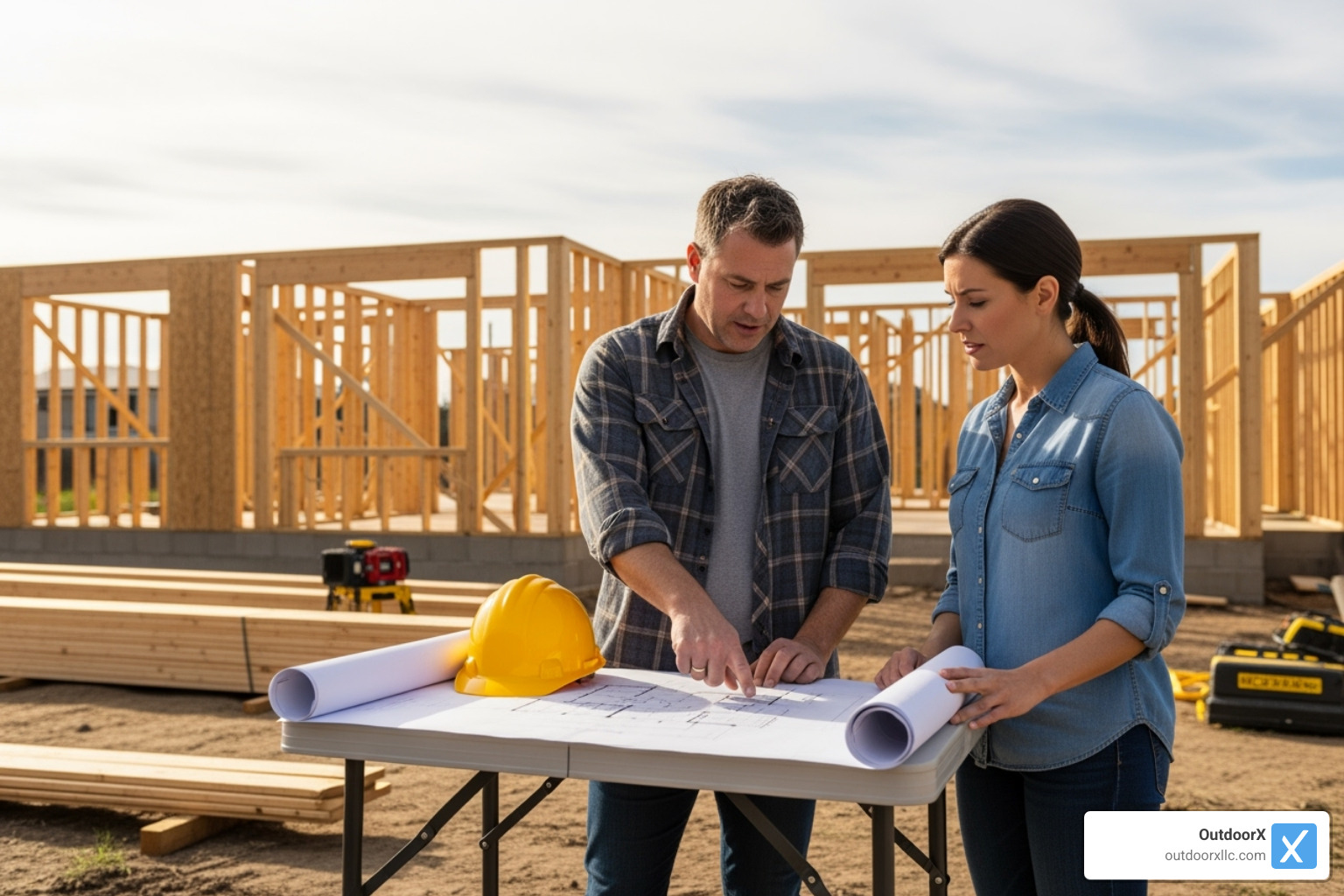
Look for specialized experience in retaining walls, not just general landscaping. A true specialist understands the structural engineering involved.
- Licensing and insurance are non-negotiable and protect you from liability.
- Online reviews and references from sources like Google, HomeGuide, and Angi provide insight into a contractor’s reliability and quality.
- A portfolio of past work should showcase projects similar in scope and complexity to yours.
- Getting multiple detailed quotes is key. Compare breakdowns of materials, labor, and drainage solutions, not just the final price.
- A contractor should demonstrate technical knowledge during the consultation, discussing soil conditions, drainage, and material recommendations.
More info about retaining wall contractors
Key Questions to Ask Potential Retaining Wall Companies Near Me
Once you have a shortlist, ask targeted questions to assess their expertise and professionalism.
- Experience: “How long have you specialized in retaining walls, and can you provide references for similar projects?”
- Materials: “What materials do you recommend for my site, and why?” A good contractor will justify their suggestions based on soil, drainage, aesthetics, and budget.
- Drainage: “How will you ensure proper drainage behind the wall?” A detailed plan is crucial, as poor drainage is the leading cause of wall failure.
- Process: “What is your construction timeline and process?” Understand their approach to site prep, excavation, compaction, and potential delays.
- Warranty: “What does your warranty cover and for how long?” A confident contractor will stand behind their work with clear coverage.
- Payment: “What are your payment terms and schedule?” Terms should be reasonable and tied to project milestones.
- Subcontractors: “Do you use subcontractors, and how do you ensure their quality of work?”
- Budget: “How do you handle unforeseen issues or changes that could affect the budget?” Transparency is key to a good working relationship.
Retaining Wall Maintenance, Problems, and Modern Solutions
A well-built wall requires minimal maintenance, but it’s important to recognize signs of trouble and know the solutions available.
Common Causes of Failure and Signs of Distress
Most retaining wall problems stem from preventable issues that skilled retaining wall companies near me know how to avoid.
Common Causes of Failure:
- Improper drainage is the primary cause, as trapped water creates immense hydrostatic pressure that can bow or break a wall.
- Poor construction, such as an inadequate foundation, poor backfill compaction, or insufficient reinforcement, can lead to premature failure.
- Surcharge weight from nearby structures, vehicles, or soil piles can overwhelm a wall’s design capacity.
- Soil movement from settling or moisture changes (especially in clay soils) can gradually stress a wall.
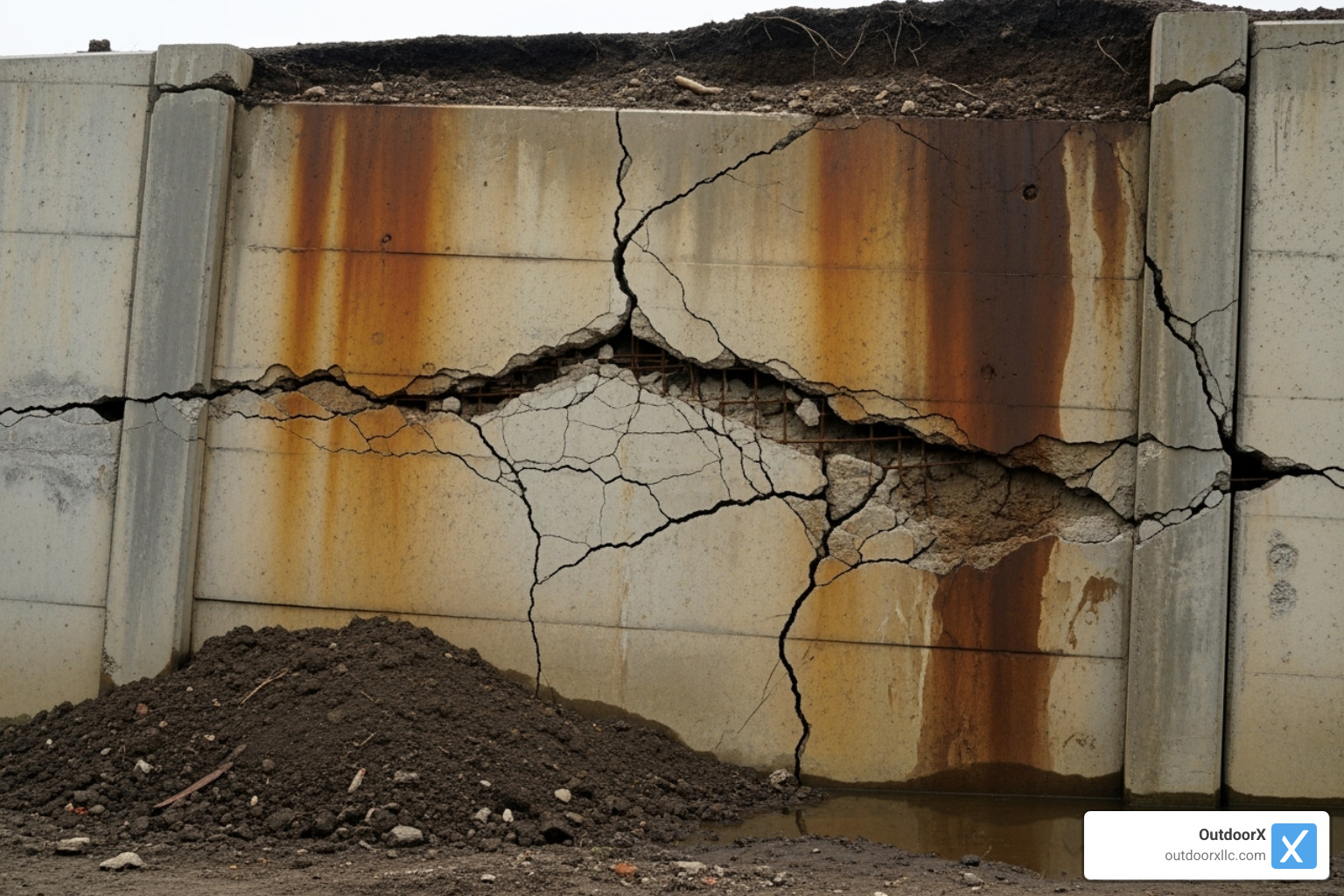
Warning Signs to Watch For:
- Leaning or bulging sections
- Cracking, especially if cracks are widening over time
- Water damage, such as damp spots, mineral deposits (efflorescence), or seepage
- Separation between wall sections or washouts at the base
If you notice these signs, contact a professional immediately.
Best Practices for Construction and Repair
A long-lasting retaining wall depends on solid fundamentals from the start.
- A proper foundation, typically a concrete footing below the frost line, is essential to prevent settling.
- Effective drainage systems, including gravel backfill, a perforated drainpipe (French drain), and weep holes, are critical to relieve water pressure.
- Geogrid reinforcement, a synthetic mesh laid in layers, anchors taller walls to the hillside.
- Proper backfill and compaction in layers ensure even pressure distribution behind the wall.
For repairs, modern solutions can often save a failing wall. Carbon fiber reinforcement uses strong, lightweight straps to straighten bowing walls. For more severe issues, helical tieback anchors are screwed deep into stable soil to pull the wall back into alignment and provide permanent support.
The Fortress Stabilization System is an example of advanced carbon fiber technology for wall reinforcement.
Any repair must address the root cause, which is often poor drainage. Retaining walls are a key part of effective hardscape drainage solutions.
Frequently Asked Questions About Retaining Walls
Quick answers to some of the most common questions about retaining wall projects.
When homeowners research retaining wall companies near me, a few key questions often arise. Here are concise answers to help you plan your project.
What is the difference between a gravity wall and a reinforced wall?
A gravity wall uses its own heavy mass (from stone or large blocks) to hold back soil. It’s typically wider at the base and best for shorter walls under 4-6 feet.
A reinforced wall uses internal strengthening elements like steel rebar or layers of synthetic geogrid to anchor the wall face into the soil behind it. This creates a stronger, integrated system capable of supporting much taller walls and greater pressure.
Can a retaining wall increase my home’s value?
Yes. A professionally installed retaining wall significantly boosts property value. It solves practical problems like erosion while creating usable flat space from a slope. This improvement improves curb appeal and demonstrates a thoughtful investment in the landscape, making your property more attractive to potential buyers.
How long should a professionally built retaining wall last?
The lifespan depends on the material and quality of construction. Proper drainage is the most critical factor for longevity.
- Timber walls typically last 20-40 years.
- Concrete block and poured concrete walls can last 50-100 years or more.
- Natural stone walls are the most durable, potentially lasting over 100 years.
Working with experienced retaining wall companies near me who prioritize correct drainage is the best way to protect your investment for decades to come.
Transform Your Landscape with an Expertly Built Retaining Wall
Your outdoor space has incredible potential, and hiring a qualified contractor is essential for a retaining wall that is both beautiful and built to last. This guide has covered the key aspects of turning a sloped yard into a functional masterpiece.
We’ve explored wall types, material options with lifespans from 20 to 100+ years, and the many benefits of a well-built wall, including erosion control and the creation of usable space. A professionally installed wall is a significant investment that adds beauty and value to your property.
Proper planning is crucial. Understanding costs, which can range from $20 to $150+ per square foot (these are average costs based on internet data and not actual costs for OutdoorX LLC), and local permit requirements is the first step. Vetting retaining wall companies near me by checking their license, portfolio, and technical knowledge ensures you hire the right team.
Recognizing warning signs like leaning or cracking allows for timely repairs, sometimes using modern solutions like carbon fiber reinforcement or helical tieback anchors.
Quality materials, expert installation, and proper planning are the pillars of a successful retaining wall project. When these elements combine, the result is a structure that solves landscape challenges and becomes a beautiful focal point.
For homeowners in South Hamilton and Essex County, the team at OutdoorX provides professional landscape design build services to create stunning and durable hardscapes. We are committed to creating outdoor spaces that are both beautiful and functional, custom to your preferences and site conditions.
