


Replacing Patio Stones: 3 Expert Fixes
Fixing Your Wobbly Welcome Mat
Are you looking into replacing patio stones that have become loose, cracked, or uneven? A wobbly patio can be annoying and even unsafe. The good news is, fixing an individual paver is often a simple DIY task.
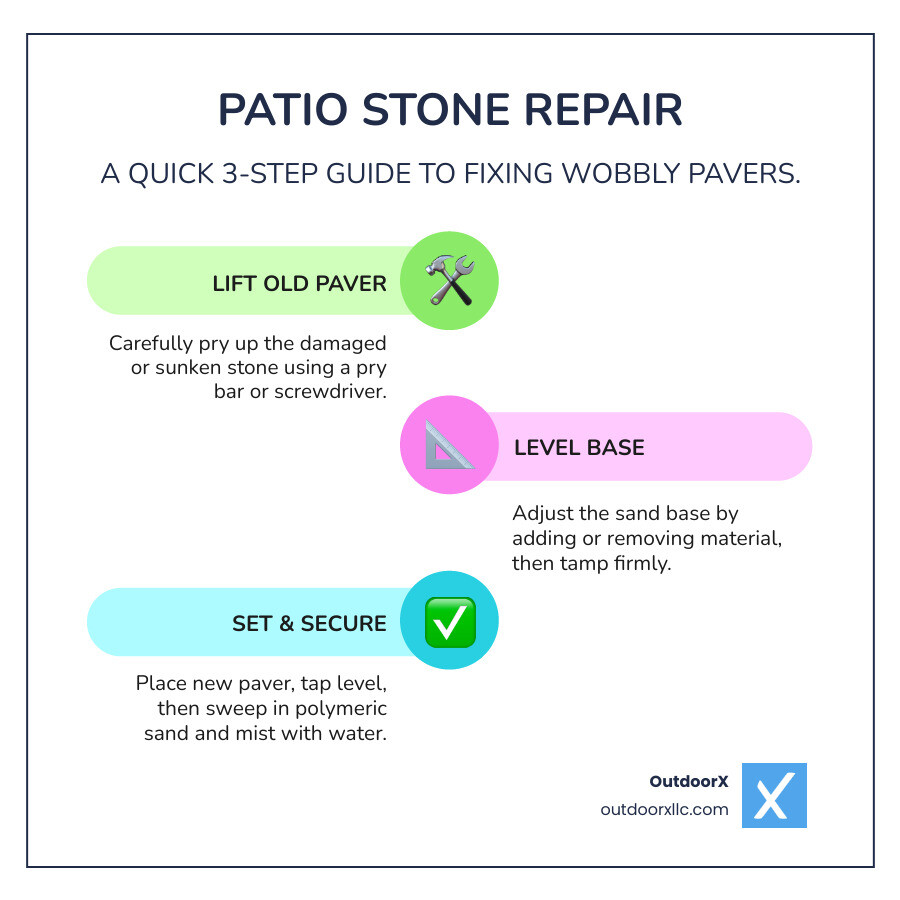
Here’s a quick overview of how to replace a single patio stone:
- Remove the old paver: Carefully pry up the damaged stone using a pry bar or screwdriver.
- Adjust the base: Add new sand to the base layer. Smooth and tamp it down firmly to create a level spot.
- Place the new paver: Set the replacement stone into the prepared space. Make sure it sits level with the pavers around it.
- Secure it: Gently tap the new paver into place with a rubber mallet until it’s snug.
- Fill the gaps: Sweep fresh sand (polymeric sand works best) into all the joints around the new paver. Lightly mist with water to help it settle and harden.
Your patio once looked perfect. All those stones, neatly in line. But over time, things happen. Maybe a stone cracked, or one started to sink. This often comes from issues with the sand base underneath, or the constant freeze and thaw cycles of winter. Don’t worry, you’re not alone. Many homeowners deal with this.
The good news? You can often fix these problems yourself. This guide will walk you through making those wobbly spots solid again.
Simple replacing patio stones glossary:
Why Good Patios Go Bad: Diagnosing the Problem
Ever step onto your patio and feel that familiar wobble? Or maybe you’ve noticed a whole section that just doesn’t look quite right, like it’s doing a gentle wave? We’ve all seen it! There are several common culprits behind a patio’s decline. Understanding these issues is the first big step toward making a lasting repair.
Usually, that annoying wobble or sunken spot points to one main culprit: a shifting sand base. Think of it this way: your pavers aren’t glued down like tiles. They rely on a nice, firm bed of sand underneath to keep them steady. But sometimes, that sand can get restless and shift, leaving little empty spaces. When that happens, your pavers lose their footing and start to sink or wiggle.
But the sand isn’t always the only troublemaker. Sometimes, problems start right from the beginning with improper installation. If the base wasn’t built just right, or if the sand wasn’t packed down enough, you’re setting yourself up for future headaches. Even skipping out on enough filler sand between the pavers or forgetting good edging can cause issues down the road.
Then there’s poor drainage. Water is surprisingly powerful, and it can be a real enemy to a stable patio. If your patio doesn’t gently slope away from your house (think a tiny downhill slide, about a quarter-inch for every foot), water can just sit there. That standing water can slowly, but surely, wash away the sand base, leading to those annoying sunken spots.
And don’t forget your patio’s trusty border: the failed edging. This is like the fence around your yard, keeping everything contained. Good edging, whether it’s plastic, metal, or even natural stone copings, holds your pavers tightly in place. If that edging fails or wasn’t installed correctly, your pavers are free to wander off, creating gaps and uneven spots.
Finally, the very ground beneath your patio can cause issues. Soil settlement happens naturally over time. If the soil wasn’t properly prepared or compacted before the patio went in, or if there are other underlying issues like nearby tree roots, the ground can settle unevenly, making your patio sag in places.
Understanding the Foundation
Think of your patio like a house – it’s only as strong as its foundation. The pavers you see are just the roof; the real work happens underneath.
Building a strong patio starts with proper excavation. We dig down to a certain depth – often about 12 inches in places with cold winters like South Hamilton, MA, because of frost. This clears out any organic stuff and makes room for the important layers.
Next, we often recommend laying down a geotextile fabric. Imagine it like a strong, breathable blanket that goes over the dug-out soil. It acts as a barrier, keeping the different layers of your patio base from mixing with the subgrade soil, which is super important for long-term stability.
Then comes the mighty gravel layer, often called the base material. This is the real muscle of your patio’s foundation. We use a sturdy material like crushed rock or road base, and we lay it down in layers, compacting each one thoroughly with a plate compactor. This dense, well-compacted layer gives your patio its strength and allows for crucial drainage.
On top of the compacted gravel, we add a layer of sand bed, usually about an inch thick. This isn’t just any sand; it’s a coarse sand or stone dust. It acts as a comfy cushion for your pavers and helps us make those tiny, perfect adjustments so your patio surface ends up perfectly level. Some experts even mix dry cement with stone dust for an extra stable setting bed.
And here’s a big secret to a happy patio: the right slope. Your patio absolutely needs to be built with a gentle incline, sloping away from your house. We aim for about 1/8 to 1/4 of an inch down for every foot. This isn’t just for looks; it makes sure rainwater runs right off, instead of pooling and causing trouble for your base.
The Impact of Weather
Here in South Hamilton, MA, and across Essex County, we know all about tough winters. And unfortunately, harsh weather is a big reason why good patios can go bad. The biggest offender? Those tricky freeze-thaw cycles.
When water sneaks into the sand base and between your pavers, and then freezes, it expands. This pushes the pavers up – what we call ‘heaving.’ When the ice melts, it leaves empty spaces, and your pavers settle unevenly or sink. This constant up-and-down movement can loosen them, make them crooked, or even crack them, leading to the need for replacing patio stones.
Beyond freezing, just too much water from heavy rain can be a problem. This water infiltration can constantly wash away those tiny sand particles from the base and the joints, leaving your pavers without proper support. That’s why good drainage and keeping those joints filled are so critical.
While most pavers are tough, certain materials can be vulnerable to harsh winter conditions or improper care. For example, using de-icing salts can actually cause material disintegration, harming both the pavers and nearby plants over time. We always suggest using plain old sand for traction on icy spots instead of salt. It’s safer for your patio and your garden!
Understanding these underlying issues helps us not only fix existing problems but also implement best practices to prevent future ones, ensuring your patio remains a beautiful and functional space for years to come.
Your Step-by-Step Guide to Replacing Patio Stones
Replacing patio stones might sound like a big job, but when it’s just one or two wobbly ones, it’s a perfectly manageable DIY project. You can absolutely tackle this yourself, save some money, and get your patio looking sharp again. We’ll walk you through the process, step by step, so you feel confident from start to finish.
Step 1: Gathering Tools and Materials for Replacing Patio Stones
Before you get your hands dirty, it’s a smart move to gather everything you’ll need. Having your tools and materials ready to go makes the whole job smoother and a lot less frustrating. Think of it like cooking – you wouldn’t start baking without all your ingredients measured out!
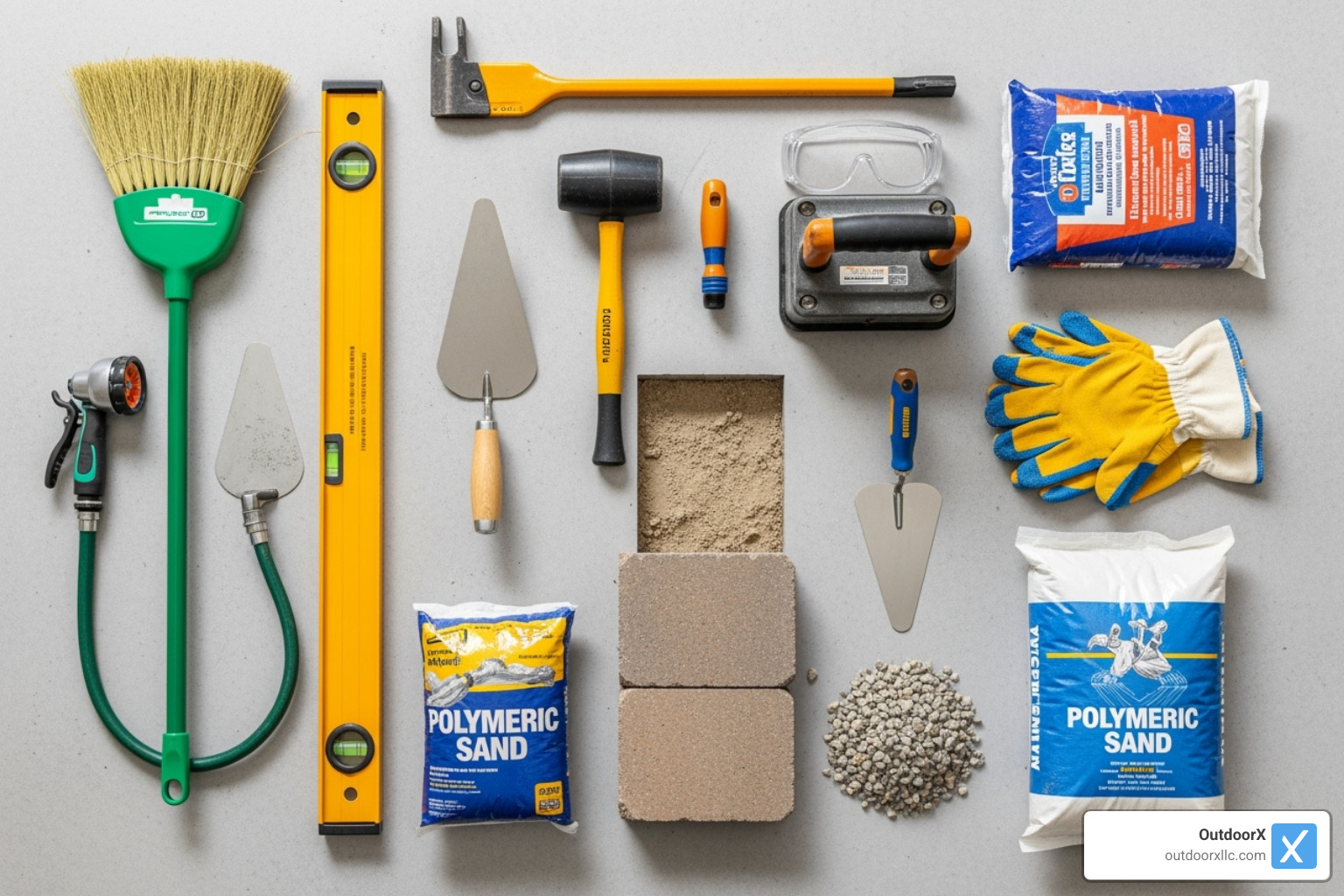
First up, the tools you’ll use for removal and placement. You’ll want a paver extractor or paver-puller if you have one; it makes lifting the old paver a breeze. No fancy tool? No problem! A regular pry bar or even two sturdy flathead screwdrivers can do the trick by gently prying up the sides. Once you’re ready to set the new stone, a rubber mallet is essential. It lets you tap the new paver gently into place without damaging its surface.
Next, you’ll need tools for leveling and compacting. A good level (either a 2-foot or 4-foot size) is crucial for making sure your new stone sits perfectly even with its neighbors. A hand tamper is your best friend for compacting the base material and sand underneath. For smaller repairs, even a piece of wood or a small hand tamper will work just fine.
For digging, spreading, and cleaning up, grab a trowel or small shovel. A push broom is super handy for sweeping sand into the joints. And a garden hose with a mist nozzle or a pump sprayer will be key for wetting that special polymeric sand later on.
And please, don’t forget safety! Always wear safety glasses to protect your eyes, especially when you’re prying or tapping. A good pair of gloves will also protect your hands from scrapes and the materials you’re working with.
Finally, for materials, you absolutely need your replacement paver. Try your best to find one that matches your existing patio in size, color, and texture. If your patio is older, matching might be a bit like finding a needle in a haystack due to weathering or discontinued styles. Your best bet is to take a photo or even bring a sample of your old paver to a local supplier.
You’ll also need sand – specifically coarse sand or stone dust for the setting bed. If the base under your sand has eroded, you might need a small bag of gravel or crushed stone too. And for the final touch, polymeric sand is highly recommended for filling the joints. This special sand hardens when wet, locking pavers in place and keeping weeds from sprouting up.
Step 2: Removing the Damaged Stone and Preparing the Base
Okay, tools in hand, it’s time to get a little dirty! This is where you address the root of that wobbly paver problem.
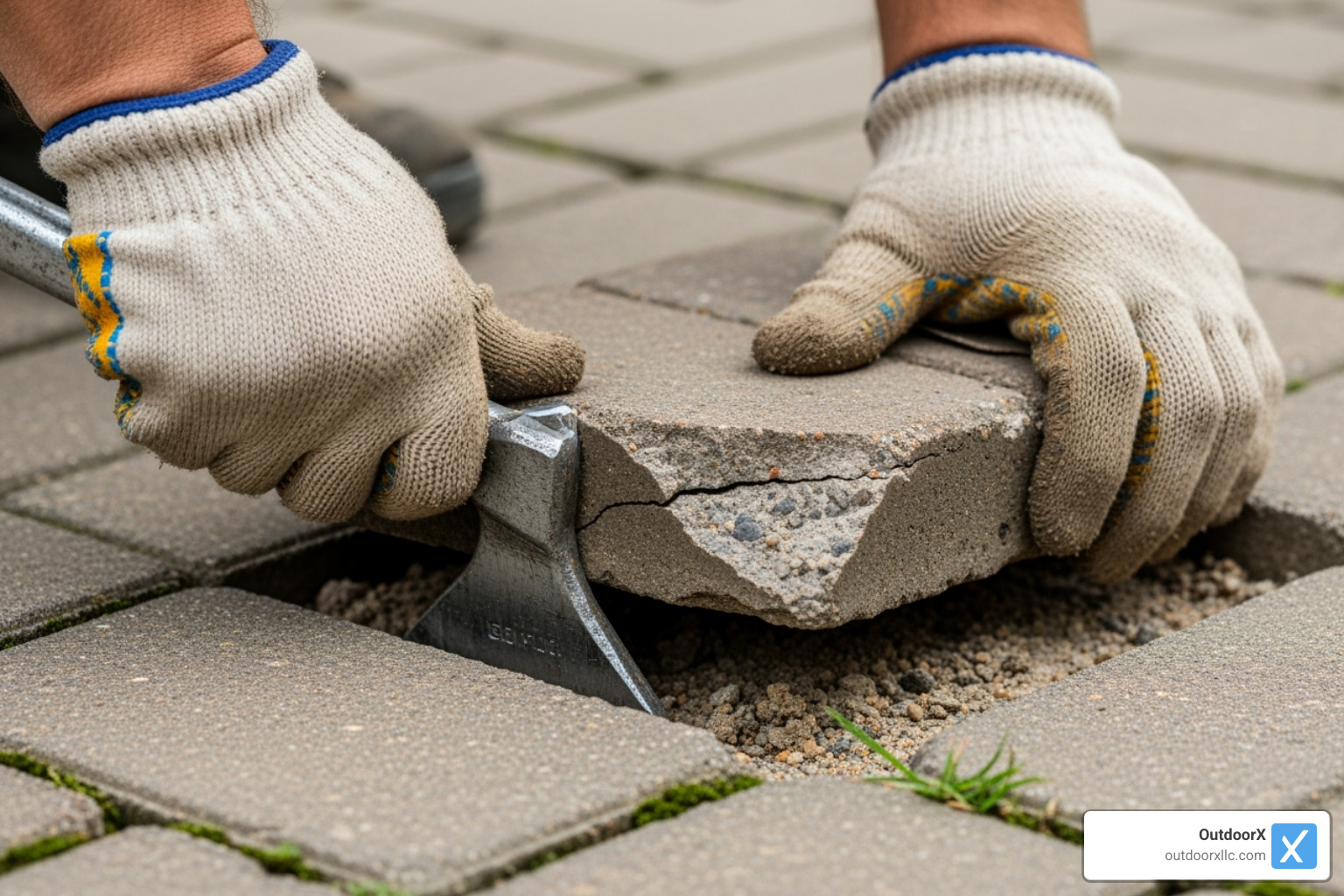
First, let’s remove that damaged paver. If it’s already loose, you might just be able to lift it out with your hands. For stubborn ones, gently insert your pry bar or screwdrivers into the joints and carefully pry upwards. A paver-puller, if you have one, will grip the paver and let you pull straight up. Sometimes, a little trick is to wet the sand around the paver; it can make removal easier. If you’re tackling a sunken area with more than one paver, especially those tricky cut ones, a pro tip is to number them with a crayon as you take them out. That way, they go back exactly where they belong!
Once the paver is out, it’s time to inspect and clear the base. Take a good look at the hole. Is it squishy mud? Soggy clay? Or just loose, uncompacted sand? This is the troublemaker! Dig out any soft, unstable material. You want a firm, consistent surface underneath. Make sure to clear out any debris, weeds, or pesky roots that might be lurking there.
Now, you might need to add and compact new base material. If the gravel or crushed stone layer beneath your sand has really settled or eroded, you’ll want to add a fresh layer. Spread it out evenly, then compact it thoroughly with your hand tamper. This step is super important for long-term stability – don’t skip it!
Finally, you’ll add and level the sand layer. Pour a layer of coarse sand or stone dust into the cleared area, aiming for about an inch on top of your compacted base. Use your trowel or a straight piece of wood to rough-level the sand. For super precise leveling, a hardscaping best practice is to use electrical conduit or thin metal pipes as guides.
Lay two pieces parallel, slightly wider than your paver. Pour sand between them, then use a straight board (a “screed board”) to drag across the conduits, creating a perfectly flat sand bed. Carefully remove the conduits and fill in the tiny channels they leave behind with more sand. Throughout this process, keep checking the level of the sand base with your spirit level. You want it at just the right height so your new paver will sit perfectly flush with its neighbors.
Step 3: Setting the New Paver and Finishing the Job
This is the satisfying part – putting the new paver in its rightful place and making your patio whole again!
Carefully place the new paver onto your perfectly prepared sand bed. Try not to drag it or stomp it down, as that can mess up your nice, level base. Instead, gently set it down, maybe giving it a slight twist to ensure it makes good contact with the sand.
Now, tap it into place with your rubber mallet and check its level. Gently tap the new paver, starting from the edges and working your way towards the center. As you go, frequently check its levelness against the surrounding pavers using your spirit level. It should be perfectly flush – no bumps, no dips. If it’s too high, carefully lift it, remove a tiny bit of sand, and re-tap. If it’s too low, lift it, add a little more sand, and re-tap. A little patience here really pays off for a smooth, finished look that will blend seamlessly with the rest of your patio, much like a professionally installed paver walkway.
Once your paver is perfectly set, it’s time to fill the gaps with polymeric sand. This is where the real magic happens for keeping your patio solid! Pour a generous amount of polymeric sand over your newly installed paver and the surrounding area. Then, using your push broom, sweep that sand into every single joint and crevice between the pavers. Make sure the joints are completely filled right up to the top. Sweep away any excess sand from the surface of the pavers; you don’t want it sitting there when you activate it. A leaf blower on a light setting can help get rid of any lingering grains.
Finally, mist it with water. Using your garden hose with a mist nozzle or a pump sprayer, lightly mist the entire area where you applied the polymeric sand. The goal is to activate the binders in the sand without washing the sand out of the joints. Mist gently until the surface of the sand looks wet, but not soaked.
Now for the curing time and final check. Let the sand cure according to the manufacturer’s instructions, which is usually a few hours. Just make sure to avoid heavy rain or walking on the area for about 24 hours. The sand will harden, locking those pavers in place and helping to prevent weeds from popping up later. Once it’s all set, do a final check of your work. Your patio should now be smooth, level, and ready for you to enjoy!
Repair or Replace? Making the Right Call for Your Patio
We’ve talked about how to tackle that single wobbly paver, a rewarding DIY fix. But what happens when your patio woes extend beyond just one or two stones? Sometimes, a simple replacing patio stones job isn’t enough. If your outdoor living space is starting to look more like a rollercoaster than a relaxing retreat, it might be time to think bigger.
How do you know if you need a quick patch-up or a complete patio overhaul? It often comes down to the extent of the damage. If you’re seeing widespread damage, where a significant portion of your pavers are sinking, heaving, or cracked, fixing them one by one can become a never-ending task. It’s like trying to patch a leaky boat with chewing gum when it really needs a new hull.
Signs of deeper trouble, or structural failure, include persistent puddling after rain, large dips that collect water, or a border that’s clearly giving way and letting pavers spread. These issues usually point to a problem with the base underneath, which means a more comprehensive fix is needed. It’s a good idea to step back and do a cost analysis. While individual repairs are budget-friendly, the total cost of repeated small fixes can sometimes creep up to — or even exceed — what a larger, more permanent solution would cost.
Beyond just fixing what’s broken, a bigger project can offer long-term value and aesthetic upgrades. Maybe your patio is showing its age, or you’re simply dreaming of a fresh look. A full replacement gives you the chance to redesign, expand, or choose new materials that truly transform your backyard.
Comparing Patio Materials: Natural Stone vs. Concrete Pavers
When you’re thinking about replacing patio stones on a larger scale, or even installing a brand-new patio, choosing the right material is a big decision. From classic outdoor patio tile ideas to modern designs, your options are varied. Two of the most popular choices are natural stone and concrete pavers. Each has its own charm and benefits, so let’s take a quick look at how they stack up.
| Feature | Natural Stone Pavers Natural Stone Pavers | Concrete Pavers |
|---|---|---|
| Durability & Longevity | Highly durable, especially if properly installed. Can last for decades, even centuries, if carefully maintained. Known for its remarkable strength and timeless endurance. | Very durable, capable of lasting 20-30 years or more with proper care. Engineered for strength and long-term performance. |
| Cost (Materials & Installation) | Generally higher due to quarrying, cutting, and transportation. Installation can also be more labor-intensive. | More affordable, making them a popular choice for various budgets. Manufacturing processes are more streamlined, contributing to lower costs. |
| Appearance & Aesthetic | Unique, natural beauty with variations in color, texture, and pattern. Creates an neat, organic, and timeless look. | Uniform in color and texture, offering a wide range of shapes, sizes, and colors. Can mimic natural stone. Provides a consistent, clean aesthetic. |
| Maintenance | Requires sealing to prevent staining, especially with porous types. Can be prone to moss or algae in damp, shaded areas. | Low maintenance. Requires occasional cleaning. Can be sealed for added protection against stains and fading. |
| Installation Difficulty | More challenging to install due to irregular shapes and sizes, often requiring skilled craftsmanship and precise fitting. | Easier to install due to uniform dimensions, making them a popular choice for DIY projects. |
| Freeze-Thaw Resistance | Varies by stone type; some are highly resistant, while others can be susceptible to damage if not properly selected for climate. | Engineered to withstand freeze-thaw cycles well, making them suitable for diverse climates. |
| Environmental Impact | Natural resource, but quarrying can have environmental impacts. Often considered a sustainable choice due to its longevity. | Manufacturing process uses resources, but many pavers are made with recycled content and are permeable, aiding stormwater management. |
| Repair | Can be difficult to match exactly if a stone needs replacing patio stones due to natural variations. Individual stone replacement might be more complex. | Easier to match and replace individual pavers if damaged, as they are manufactured with consistent specifications. |
| Resale Value | Can add significant perceived value and curb appeal due to its premium, luxurious appearance. | Offers good resale value, especially if well-maintained and aesthetically pleasing, contributing positively to property appeal. |
Cost of Repair vs. Full Replacement
When your patio needs attention, the question of “how much will this cost?” is always on your mind. A quick repair for a single paver is usually quite affordable, often just the cost of a replacement stone and some polymeric sand. This is where you can see significant DIY savings.
However, if you’re looking at a larger project, the costs will naturally increase. A full patio replacement involves more material pricing for new pavers and base materials, and higher labor costs if you hire professionals. Think about it: a small fix is like changing a tire, but a full replacement is like getting a brand-new engine – different scales, different price tags.
According to various internet sources, the average national costs for patio projects can range widely. For small DIY repairs, you might spend around $855. But for professional installation or larger projects, costs can easily go up to $8,400 or even more, depending on the size, complexity, and materials chosen. Please remember, these figures are general estimates based on internet data and are not actual costs for OutdoorX LLC. They are provided for general reference only.
When to Call a Professional
While replacing patio stones on your own is a great skill to have, there are definitely times when it’s best to call in the experts. OutdoorX specializes in creating beautiful, functional outdoor spaces, and we’re here to help when the job gets bigger than a DIY weekend project.
So, when should you pick up the phone? Consider calling a professional if you’re facing extensive sinking across large areas of your patio. This often means the base underneath is compromised, requiring specialized equipment and expertise to fix properly. Similarly, if you’re dealing with major drainage problems where water consistently pools or runs towards your home’s foundation, a professional can assess the underlying issues and implement effective solutions.
Perhaps you simply have a lack of time or tools to tackle a big project, or you have a desire for a new design that transforms your entire outdoor living space. Whatever the reason, bringing in professionals ensures a professional finish that’s built to last. For homeowners in South Hamilton, MA, and Essex County looking for reliable local patio repair and installation services, OutdoorX is ready to help you achieve the patio of your dreams.
