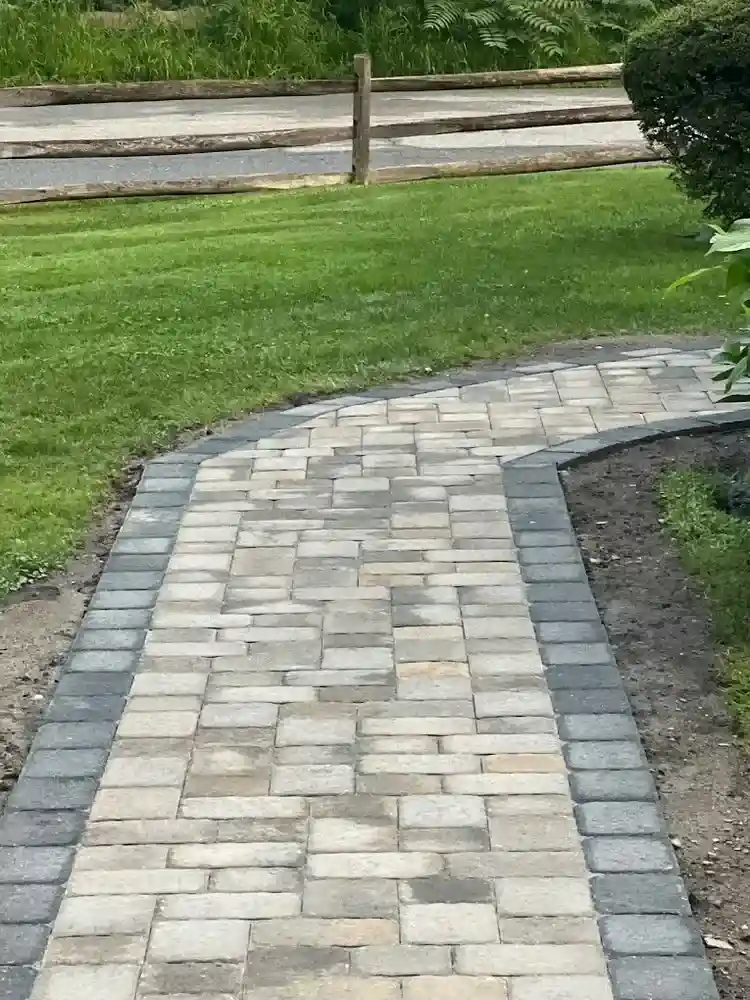
Laying Landscape Pavers: 5 Easy Steps to Beautiful Yards
Laying landscape pavers is a fantastic way to transform your outdoor space. Whether you’re dreaming of a new patio, a striking walkway, or a stylish pool deck, pavers offer versatility and aesthetic appeal. Perfect for the Essex County homeowner short on time but big on ambition, this guide will help you take the first step toward a beautiful and functional landscape.
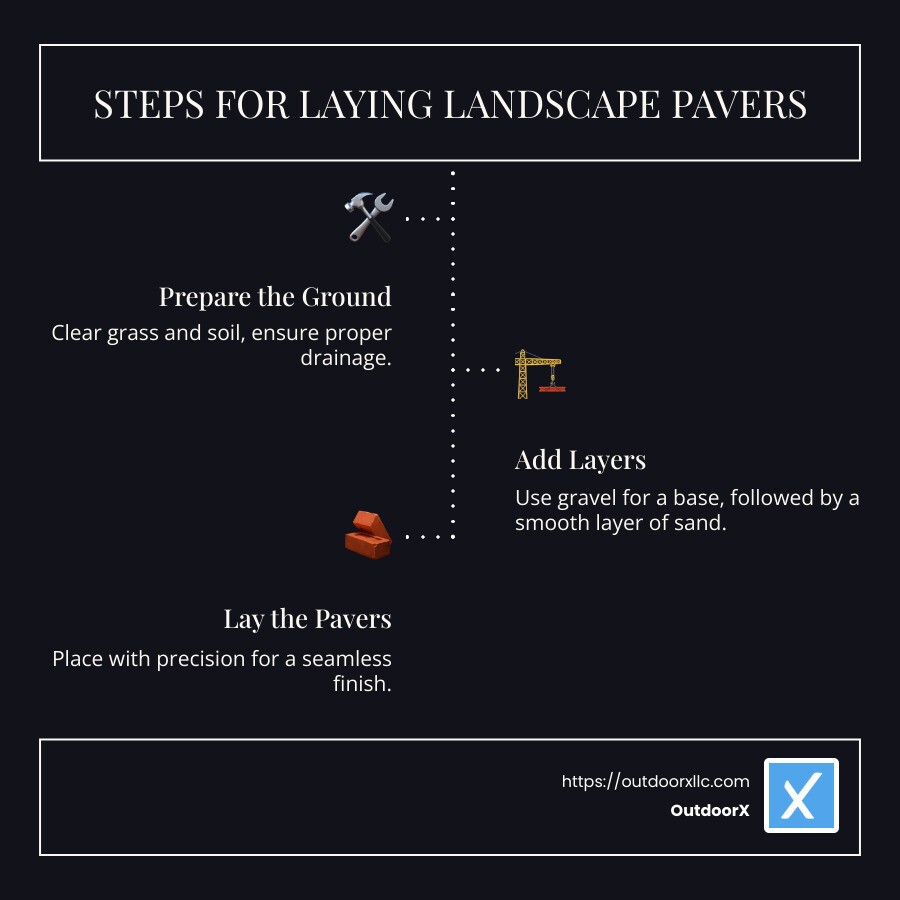
Here’s a quick overview of the essential steps:
- Prepare the Ground: Clear grass and soil, ensure proper drainage.
- Add Layers: Use gravel for a base, followed by a smooth layer of sand.
- Lay the Pavers: Place with precision for a seamless finish.
- Cut and Edge: Trim pavers as needed and secure edges for stability.
Changing your outdoor environment doesn’t have to be daunting. By following these steps, you can create a durable and visually pleasing area that improves your home’s exterior. Imagine the ease of maintaining a beautiful landscape that feels like an extension of your home.
“The 16th Street Mall was a big visionary project… [It was] a huge destination for visitors and retail draw.” — John Desmond
By taking a cue from successful projects, you can apply similar techniques to your garden design, achieving both form and function with paver installation.
Laying landscape pavers vocab explained:
– adding a drain to a concrete patio
– french drain around patio
– landscape paver contractors
Preparing the Ground for Laying Landscape Pavers
Proper ground preparation is crucial for a successful laying landscape pavers project. It sets the foundation for durability and ensures your outdoor space remains beautiful and functional for years.
Ground Preparation
Start by clearing the area of grass, soil, and any debris. This is essential to ensure a smooth surface for your pavers. Use marking paint to outline the area and garden stakes with a mason’s line to guide your work. The pavers should slope away from your home to allow water to drain properly, with a drop-off of about 1 inch every 8 feet.
Gravel Base
Next, lay a solid gravel base. This layer should be about 4 inches deep to support foot traffic and provide stability. Use a landscape rake to spread the gravel evenly. For larger areas, a plate compactor can save time and effort by compressing the gravel efficiently. Lightly wet the gravel with a garden hose to solidify the base. This step is vital as it forms the foundation for the paver stones.
Sand Layer and Leveling
Once the gravel is compacted, add a 1-inch layer of paver sand. Use lengths of electrical conduit as guides to help level the sand. Pour the sand between the conduits and drag a straight board across them to smooth out the surface. Check with a level to ensure evenness, as this will directly impact the flatness of your pavers.
After leveling, remove the conduits and fill the gaps with more sand. This step is crucial for creating a flat, even surface for the pavers to sit on. Remember to avoid stepping on leveled areas, as this will require re-leveling.
By following these steps, you’re setting the stage for a successful paver installation. Proper preparation ensures that your pavers remain stable and visually appealing, enhancing your outdoor space’s functionality and beauty.

With a solid base and level surface, you’re now ready to move on to the next exciting step: laying the paver stones.
Step-by-Step Guide to Laying Landscape Pavers
Now that you’ve prepared the ground, it’s time to move on to the main event: laying landscape pavers. This step-by-step guide will walk you through the process, ensuring your DIY project is a success.
DIY Installation
Begin by gathering all your tools and materials. You’ll need paver stones, a rubber mallet, a level, a chisel, and a saw for cutting pavers. Ensure you have safety gear like gloves and safety glasses to protect yourself during the installation.
Paver Placement
Start laying the pavers from a corner, working your way outwards. Think of it as starting at the tip of a triangle and expanding. Place each paver stone carefully, ensuring they almost touch but leave a small gap for sand to fill. Use your level frequently to check that the pavers are even. If a paver is too high, gently tap it down with the rubber mallet. If it’s too low, add more sand underneath.
Cutting Pavers
Sometimes, you’ll need to cut pavers to fit around edges or corners. For this, a diamond blade saw is your best friend. You can use a standard circular saw with a diamond blade attachment or rent a masonry saw. If you only have a few cuts to make, a chisel and hammer can do the job. Precision is key to maintaining the aesthetic appeal of your project.
Edging Stones
Edging stones are crucial for keeping your pavers in place. These stones act as a border, preventing the pavers from shifting over time. You can choose from various materials like plastic, steel, or concrete for your edging. Install them along the edges of your paver area, securing them with stakes or spikes. This step not only adds stability but also improves the overall look of your patio or walkway.
With the pavers laid and secured, your outdoor space is starting to take shape. Next, you’ll fill in the gaps between pavers with sand, ensuring everything stays in place. This step is essential for a long-lasting and visually appealing finish.
Essential Tools and Materials for Laying Landscape Pavers
When starting on a laying landscape pavers project, having the right tools and materials is crucial. This ensures not only efficiency but also safety and a polished finish.
Tools You Need
- Shovel and Garden Rake: These are your go-to for clearing the area and leveling the ground.
- Plate Compactor: Essential for compacting the gravel and sand layers. You can rent one if it’s a one-time project.
- Rubber Mallet: Perfect for gently tapping pavers into place.
- Level and Line Level: Ensure your paver surface is even and aligned.
- Circular Saw with Diamond Blade: Necessary for cutting pavers to fit edges and corners.
- Hand Tamper: Useful for compacting smaller areas.
- Broom: To sweep sand into the joints between pavers.
- Safety Gear: Always wear gloves, safety glasses, and a dust mask to protect yourself.
Must-Have Materials
- Paver Stones: Choose from a variety of styles to suit your design needs.
- Gravel (Paver Base): A 6-inch layer is recommended to provide a stable foundation.
- Paver Sand: A 1-inch layer helps level the surface and allows for minor adjustments.
- Polymeric Sand: Used to fill the gaps between pavers, locking them in place.
- Edging Stones or Paver Edging: These keep the pavers from shifting and add a finished look.
Safety Gear
Safety should never be an afterthought. Equip yourself with:
- Work Gloves: To protect your hands from rough materials.
- Eye Protection: To shield your eyes from dust and debris, especially when cutting pavers.
- Hearing Protection: If you’re using power tools like a saw or compactor.
- Respirator: To avoid inhaling dust particles during cutting and sanding.
The Role of Paver Sand
Paver sand plays a critical role in the installation process. It provides a cushion for the pavers and fills the joints to prevent shifting. After laying the pavers, you’ll sweep polymeric sand into the gaps. This type of sand hardens when wet, locking the pavers in place and preventing weed growth.
With these tools and materials at your disposal, you’re well-equipped to tackle your landscaping project. Now, let’s address some common questions about laying landscape pavers.
Benefits of Using Landscape Pavers
Landscape pavers are not just about creating pathways or patios; they bring a host of benefits that improve both the functionality and beauty of your outdoor space. Here’s why they are a top choice for homeowners:
Durability
Landscape pavers are built to last. Made from materials like granite, bluestone, and slate, they can withstand heavy foot traffic and harsh weather conditions. This durability means that once you lay them down, you won’t have to worry about frequent repairs or replacements.
Fact: The average lifespan of quality pavers can stretch over decades, making them a wise long-term investment.
Low Maintenance
One of the standout benefits of landscape pavers is their low maintenance requirement. Unlike other materials that may need regular sealing or painting, pavers typically just need occasional cleaning to keep them looking their best. Plus, any necessary repairs are straightforward; you can replace individual pavers without disturbing the rest of the installation.
Design Flexibility
With a wide array of shapes, colors, and patterns, pavers offer immense design flexibility. Whether you prefer a classic herringbone pattern or a modern geometric layout, pavers can accommodate your vision. This versatility allows you to create a unique outdoor space that reflects your personal style.
Aesthetic Appeal
Pavers add instant curb appeal. Their natural stone look can complement any landscape design, from rustic to contemporary. The variety of textures and colors available means you can match your pavers to your home’s exterior or garden theme effortlessly.

Quote: “A beautifully landscaped property not only looks more appealing but also commands a higher resale value.” – OutdoorX
Incorporating landscape pavers into your outdoor area not only boosts its functionality but also lifts its aesthetic value, making it a smart choice for homeowners looking to improve their property.
Next, let’s dive into some frequently asked questions about laying landscape pavers to help guide your project.
Frequently Asked Questions about Laying Landscape Pavers
How do you prepare the ground for laying pavers?
Preparing the ground is a crucial step in ensuring your landscape pavers last for years. Start by clearing the area of grass and soil to the desired depth. You’ll need to remove enough material to accommodate a gravel base and a sand layer beneath the pavers.
Steps for Preparation:
- Excavate the Area: Dig down to a depth that allows for at least 4 inches of gravel and 1 inch of sand. This ensures a stable foundation.
- Compact the Soil: Use a tamper or plate compactor to compact the soil. This creates a firm base that prevents shifting.
- Add Gravel: Spread a 4-inch layer of gravel over the compacted soil. This gravel layer helps with drainage and stability.
- Compact the Gravel: Wet the gravel lightly with a hose and compact it until solid.
- Add Sand: Spread a 1-inch layer of sand over the gravel. This sand layer acts as a bed for the pavers and helps with leveling.
- Level the Sand: Use a straight board to level the sand. Ensure it’s even to avoid uneven paver surfaces.
What materials do you need before laying pavers?
Before you start laying landscape pavers, gather the necessary materials to ensure a smooth process:
- Gravel: A 4-inch layer of gravel is essential for a stable base.
- Sand: You’ll need about 1 inch of sand for leveling and cushioning the pavers.
- Paver Stones: Choose stones that fit your design and space requirements.
- Edging Stones: These help keep the pavers in place and define the edges of your project.
- Compactor: A plate compactor helps ensure a firm base.
- Leveling Tools: A straight edge and level are crucial for achieving a flat surface.
How do you ensure proper drainage when laying pavers?
Proper drainage is key to preventing water pooling and ensuring the longevity of your paver installation. Here’s how to manage water flow effectively:
- Slope the Surface: As you lay your base layers, create a slight slope away from any structures, such as your home. A drop of about 1 inch every 8 feet is generally recommended.
- Check Water Flow: After laying the gravel and sand, check that water flows away from buildings and doesn’t pool in low spots.
- Leveling: Ensure the sand layer is level and even. This will help maintain the slope and prevent water from collecting in dips.
By following these steps, you’ll create a well-prepared base that supports your landscape pavers and ensures proper drainage, keeping your outdoor space functional and beautiful.
Conclusion
At OutdoorX, we believe that changing your outdoor space can significantly improve both the beauty and functionality of your property. Our team, based in South Hamilton, MA, and serving Essex County, specializes in custom landscaping and hardscaping services. We pride ourselves on our expert craftsmanship and the use of high-quality materials to create stunning outdoor areas custom to your preferences.
When it comes to laying landscape pavers, our approach ensures that your project is not only aesthetically pleasing but also durable and low-maintenance. Whether you’re dreaming of a charming patio, a winding garden path, or a robust driveway, we have the expertise to bring your vision to life. Our process is designed to be seamless and stress-free, from the initial consultation to the final installation.
Our commitment to excellence extends beyond just the installation. We work closely with you to understand your unique needs and preferences, ensuring that every detail of your outdoor space is just right. This personalized approach is what sets us apart and allows us to create outdoor spaces that are both visually stunning and highly functional.
If you’re ready to transform your outdoor space with a custom patio design, contact us today. Let OutdoorX pave the way to your dream landscape!