Laying a Cobblestone Path: 5 Easy Steps Guide
Why Laying a Cobblestone Path is the Perfect DIY Project
Laying a cobblestone path is more than just a home improvement task; it’s an opportunity to create a timeless walkway that adds instant charm, character, and significant value to your outdoor space. This classic hardscaping project perfectly marries rugged durability with natural beauty, resulting in a functional pathway that can last for generations with proper installation. Whether you envision a winding path through a flower garden or a stately walkway to your front door, the enduring appeal of cobblestone complements a wide range of architectural styles, from historic New England Colonials to modern rustic homes.
Quick Overview – Essential Steps for Laying a Cobblestone Path:
- Plan and Measure: The blueprint for success. Carefully determine the path’s route, width (typically 30-48 inches), and overall design. Use stakes and string to visualize the layout on the ground.
- Excavate: This is the most labor-intensive step, but it’s critical. Dig a trench 9-10 inches deep to accommodate the necessary base layers that provide stability and prevent frost heave in cold climates.
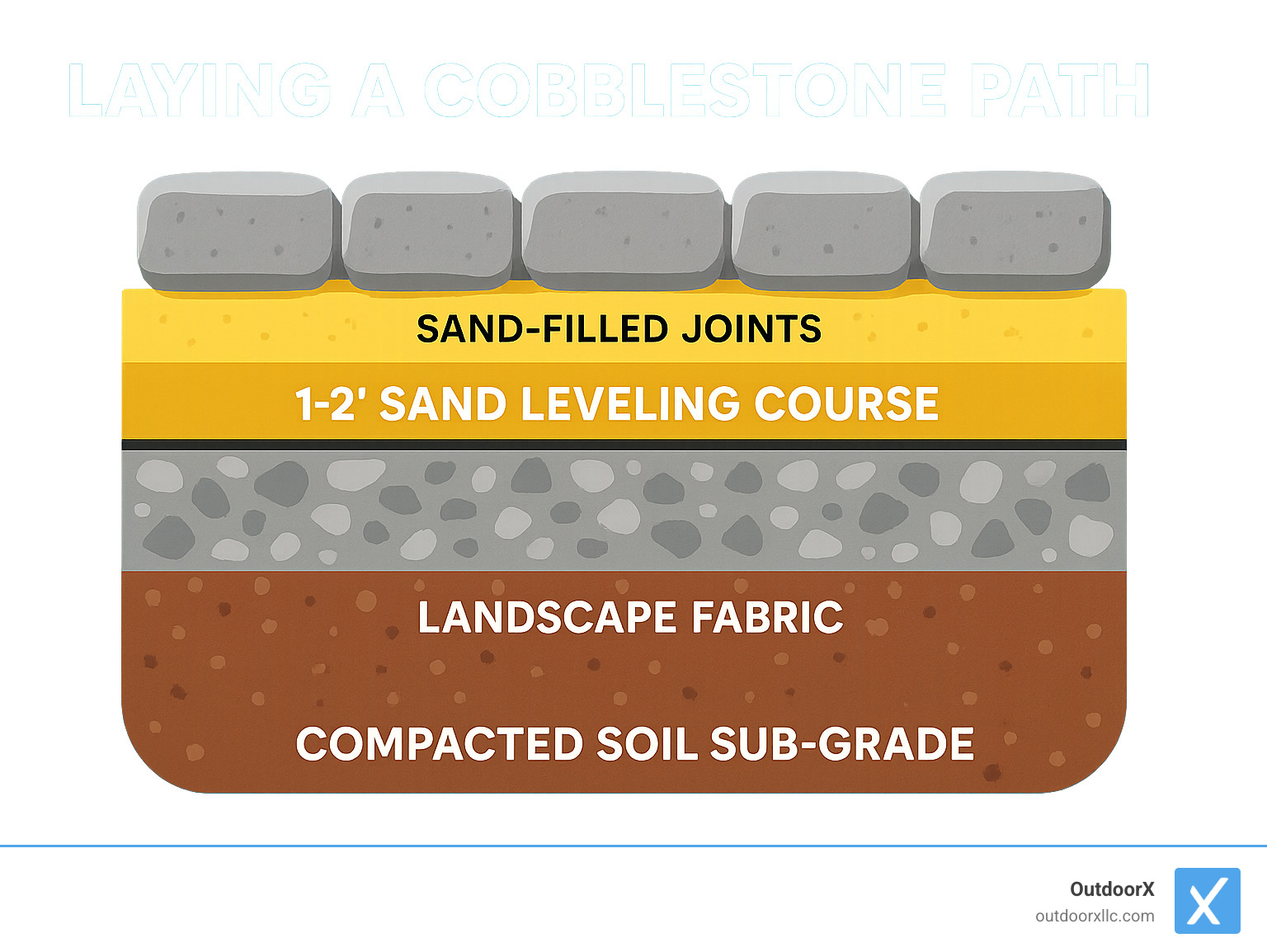
- Build the Foundation: A path is only as strong as its base. Add and compact a 4-6 inch layer of gravel for drainage and support, followed by a 1-2 inch layer of sand to create a smooth, level bed for the stones.
- Lay the Stones: The creative part begins. Set each cobblestone into the sand bed, tapping it gently with a rubber mallet to achieve the correct height. Maintain consistent 1/4-inch gaps for the jointing material.
- Fill the Joints: Lock everything together. Sweep polymeric sand into the gaps between the stones, which hardens when misted with water to create a firm, weed-resistant bond.
- Finish the Edges: Install a sturdy edging material (like metal, plastic, or stone) along the sides of the path to prevent the cobblestones from spreading or shifting over time.
The unique beauty of cobblestone paths lies in their imperfect perfection. Unlike the uniform, manufactured appearance of modern pavers, natural cobblestones boast variations in size, shape, and color that create unparalleled character and visual interest. As one research source noted, “People have been using cobbled walkways throughout history and they are still in use and lovingly maintained in many gardens today.” This history is palpable in every stone, lending a sense of permanence and authenticity to your landscape.
A typical DIY cobblestone project costs around $7-25 per square foot for materials and takes 3 or more days to complete, depending on its size and your experience. While it demands physical effort and patience, the immense satisfaction of building a beautiful, permanent feature with your own hands is a reward in itself. This isn’t just an upgrade; it’s a legacy feature for your property.
The absolute key to success lies in meticulous preparation. Ground preparation accounts for 70% of your path’s longevity. Rushing this foundational stage is the number one cause of failure, leading to wobbly stones, poor drainage, and costly repairs down the line.
For busy homeowners in Essex County who desire professional, guaranteed results without the steep learning curve and physical toll, OutdoorX offers expert hardscaping services. Our team handles every detail, from sophisticated design to flawless completion, ensuring your vision comes to life perfectly.
Quick look at laying a cobblestone path:
Planning Your Perfect Cobblestone Path
The secret to laying a cobblestone path that looks professional and lasts for decades starts with smart planning. This is the most critical phase of the entire project. Think of it as laying the groundwork for success – literally and figuratively. The decisions you make now about materials, design, and budget will directly determine whether you’re admiring your handiwork in ten years or dealing with the frustrating consequences of wobbly stones, poor drainage, and weed-infested joints.
Choosing Your Stones
Selecting the right stones is where your path’s personality really begins to shine. While traditional cobblestones are small, rounded stones that paved European streets for centuries, modern laying a cobblestone path projects often use various natural stones that capture that same rustic, timeless appeal. Your choice should balance aesthetics, budget, and the demands of your local climate.
- Granite: The heavyweight champion of durability. These dense, low-porosity stones can handle anything Mother Nature throws at them, from the harsh freeze-thaw cycles of a Massachusetts winter to scorching summers. They come in beautiful grays, pinks, and speckled patterns with a crystalline texture. While they are a premium-priced option, their longevity makes them a sound investment.
- Bluestone: A classic choice, prized for its signature blue-gray color that deepens when wet. It complements most home styles beautifully. As a type of sandstone, it’s moderately porous and handles freeze-thaw cycles well, but sealing is recommended in harsh climates to prevent spalling and staining. Its relatively flat surface makes for a comfortable walking path.
- Slate: Brings dramatic color options to your landscape, from deep charcoals and blacks to rich purples, greens, and rust tones. However, its layered, foliated structure can make it prone to flaking (delamination) over time, especially in areas with heavy foot traffic or extreme weather changes. It’s best used in more sheltered locations.
- Flagstone: This term typically refers to any large, flat slab of sedimentary rock, often sandstone or bluestone, split into layers. Its irregular shapes mean each installation is unique, creating a very natural look. The larger pieces can cover ground more quickly, but fitting them together requires careful puzzle-solving skills.
- Limestone: Offers a softer, more muted palette of tans, grays, and whites, often containing visible fossil fragments that add unique character. It’s easier to cut and shape than granite but is more porous and susceptible to acid rain, which can cause pitting over time. Sealing is essential for durability in most climates.
- Reclaimed Cobblestones: For ultimate authenticity, nothing beats reclaimed stones. These weathered beauties, often sourced from old streets or buildings, come with history built right in. Their rounded tops and varied patina are impossible to replicate. Availability varies by region, and they often command higher prices due to their scarcity and the labor involved in sourcing them.
The key is balancing your aesthetic preferences with practical considerations. For a fascinating dive into the rich history behind these time-tested materials, check out this brief history of cobblestones.
Path Design and Dimensions
Your path’s purpose should drive its design. A meandering garden stroll calls for different planning than a direct, functional walkway to your front door.
- Width: Single-person paths work well at 30-36 inches wide, providing comfortable walking space without overwhelming smaller gardens. For main walkways, two-person paths need a full 48 inches to allow people to walk side-by-side without feeling cramped.
- Shape: Gentle curves create more visual interest and a sense of findy compared to ruler-straight lines, feeling more natural in most landscapes. Use a garden hose to lay out and adjust curves before you start digging. That curves require more careful planning and potentially some stone cutting to look clean.
- Slope and Drainage: This is a non-negotiable design element. Your path must have a slight slope (a 1/4-inch drop per foot is standard) to one side or down its length to ensure water runs off and doesn’t pool, which can lead to ice in winter and foundation damage.
- Laying Patterns: The pattern dramatically impacts the final look. Random patterns offer the most natural, rustic appearance but require patience to fit irregular pieces together. Coursed patterns line up stones in neat rows for a more formal, orderly feel. Running bond staggers the joints like brickwork for a classic look, while herringbone creates a dynamic zigzag pattern that is both beautiful and structurally strong, excellent for areas with turning traffic.
For professional design guidance custom to your specific space, OutdoorX offers expert hardscape design services that can help you create the perfect layout that is both beautiful and functional.
Essential Tools and Materials
Having the right tools makes the difference between a smooth project and a frustrating struggle. Don’t skimp here; quality tools make the work safer and more efficient.
- Essential Tools: You’ll need a pointed shovel for digging, a square-nosed shovel for moving material, a sturdy wheelbarrow, and a rubber mallet for setting stones without cracking them. A 4-foot level is crucial for keeping the path even, while a hand tamper or plate compactor is non-negotiable for compacting your base layers. You’ll also need stakes and twine to mark your path boundaries precisely. Don’t forget safety gear: gloves, safety glasses, and steel-toed boots are a must.
- Helpful Additions: Consider renting a plate compactor for a larger path to ensure a rock-solid base. A brick set chisel and small sledgehammer are useful for splitting stones, and an angle grinder with a diamond blade is invaluable for making precise cuts for curves or edges.
- Materials: You’ll need 3/4-inch crushed gravel (also called crusher run or paver base) for the base layer, coarse construction sand for the leveling course, polymeric sand for filling the joints, and high-quality landscape fabric to go under the gravel to suppress weeds and stabilize the soil. And, of course, your carefully chosen cobblestones.
Most heavy-duty tools can be rented, which often makes more sense for a one-time project than buying everything new.
Budgeting for Your Project
Laying a cobblestone path typically costs between $7 to $25+ per square foot for DIY projects. Premium materials, complex designs, and extensive site work can push costs significantly higher.
- Material Costs: This is your biggest expense. Costs vary dramatically based on stone type (granite is often the most expensive, some flagstones are more moderate), local availability, and quantity. Buying materials like gravel and sand in bulk (by the cubic yard) is far more cost-effective than buying individual bags for any path larger than a small landing.
- Tool and Equipment Rental: Factor in $100-300 for renting items like a plate compactor or a masonry saw for a weekend. This is money well spent for a professional result.
- Delivery and Disposal: Don’t forget to budget for delivery fees for your bulk materials, which can be substantial. You may also need to pay for a small dumpster or disposal fees for the soil and sod you excavate.
For a detailed, personalized cost breakdown and professional installation options, visit our comprehensive guide on paver walkway installation cost. While DIY saves on labor costs, the investment in quality materials and proper preparation pays dividends in longevity and curb appeal for years to come.