


Laying a Bluestone Walkway: 4 Smart Steps
Why a Bluestone Walkway is a Smart and Stylish Choice
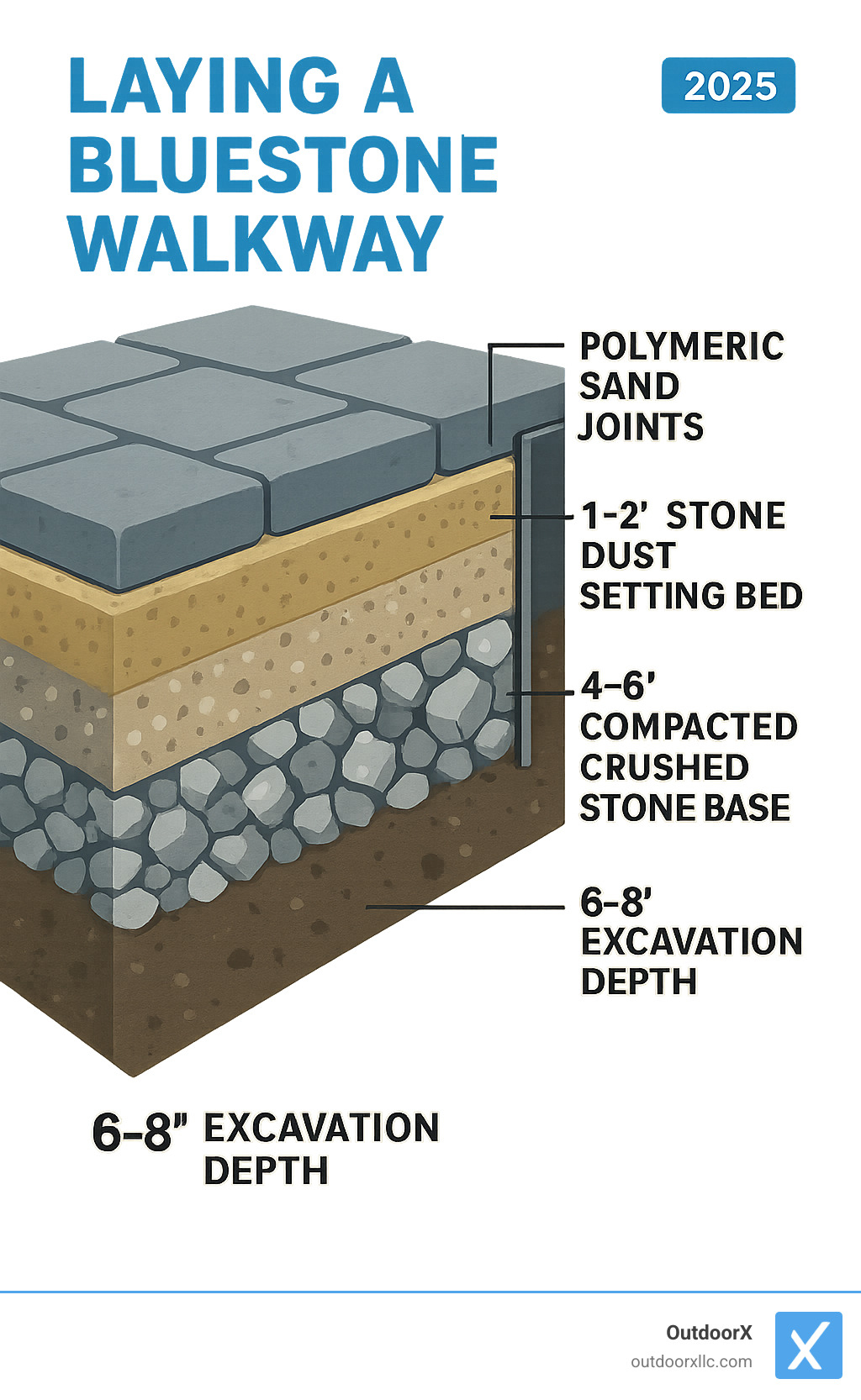
Laying a bluestone walkway involves creating a proper foundation with compacted gravel and stone dust, setting the stones, and filling the joints. The basic process includes:
- Excavate 6-8 inches deep, extending 6 inches beyond the walkway edges.
- Build the base with 4-6 inches of compacted 3/4-inch crushed stone.
- Add a setting bed of 1-2 inches of stone dust or coarse sand.
- Lay bluestone with 1/2 to 3/4-inch gaps between stones.
- Fill joints with polymeric sand and activate with water.
- Install edging to contain the walkway materials.
For a stunning entrance that lasts for generations, bluestone is hard to beat. Many bluestone sidewalks installed over a century ago in cities like Philadelphia and Boston are still in service today—a testament to this material’s incredible durability. Unlike concrete pavers that can crack or fade, bluestone offers unique natural colors and textures that improve with age. Its dense, slip-resistant surface is perfect for New England’s harsh winters and complements any architectural style.
With proper installation, a bluestone walkway is a sound investment that can increase property value while providing a low-maintenance path for decades. The upfront cost may be higher than other materials—ranging from $25-$75+ per square foot for DIY installation based on internet data—but the longevity makes it cost-effective over time.
Laying a bluestone walkway further reading:
Benefits of Bluestone Over Other Materials
Bluestone stands out from other materials with a compelling list of advantages:
- Durability: Renowned for its strength, bluestone withstands heavy foot traffic and harsh weather, often lasting over 100 years.
- Natural Beauty: Each slab is unique, with a rich, earthy color palette of deep blues, grays, and purplish hues that manufactured materials can’t replicate.
- Longevity: A bluestone walkway is a long-term investment that requires less maintenance and fewer repairs than other materials, making it cost-effective over its lifespan.
- Slip-Resistant: Its naturally textured surface provides excellent traction, making it a safer choice for walkways in wet or icy conditions.
Choosing bluestone improves your outdoor space aesthetically and adds significant value to your property. For more information, explore our Hardscaping Services.
Understanding Bluestone: Types and Finishes
Bluestone comes in various forms and finishes. The two main types are Pennsylvania Bluestone and New York Bluestone, both known for their quality and blue-gray tones.
Common finishes include:
- Natural Cleft: The most popular choice for walkways, this finish has a naturally rough, uneven surface that is inherently slip-resistant.
- Thermal (Flamed): Created by applying high heat, this finish has a uniformly rough texture for a more refined, contemporary look. It is also slip-resistant.
- Honed: This finish is ground to a smooth, matte appearance. It can be slippery when wet and is not generally recommended for outdoor walkways in climates with rain or ice.
Bluestone is also available in different cuts:
- Irregular Flagstone: Naturally shaped pieces used for rustic, informal pathways.
- Dimensional Cut: Uniformly cut squares or rectangles for more geometric and formal patterns.
Walkway pavers are typically 1-2 inches thick, providing ample strength for foot traffic. Our team can help you select the ideal type and finish for your home.
Planning Your Project: Tools, Materials, and Costs
Proper planning is the key to successfully laying a bluestone walkway. Whether you plan to DIY or hire a professional, understanding the required tools, materials, and costs will help you make the best decision for your project.
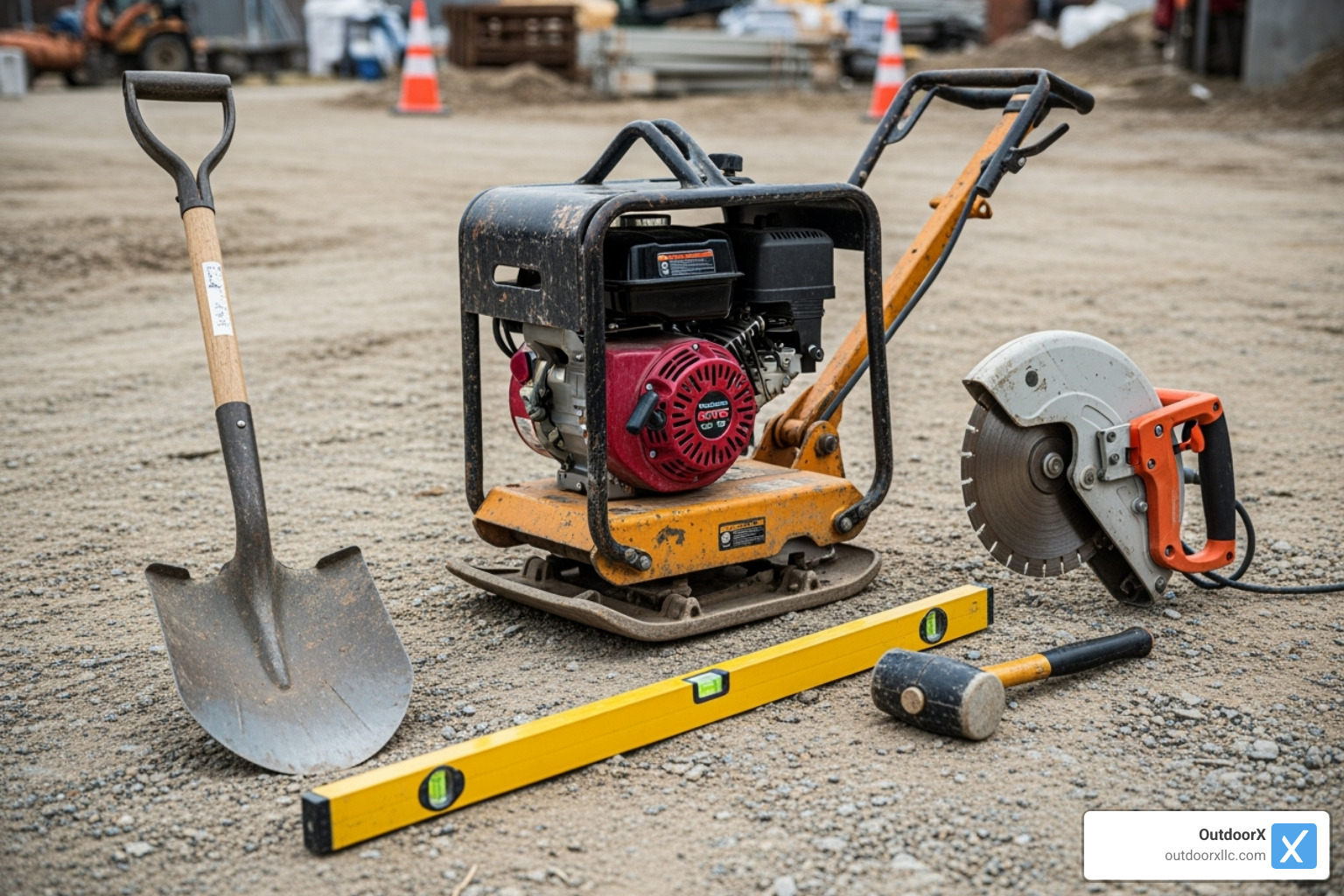
This stage is about setting yourself up for success with a clear plan for tools, materials, and a realistic budget.
For additional guidance, this helpful guide on building a walkway offers another perspective on the process.
Essential Tools and Materials
Gathering the right tools and materials is critical. Specialized equipment can often be rented to save on costs.
Essential Tools:
- Shovel and Wheelbarrow: For moving earth and materials.
- Plate Compactor: Essential for a solid base. Rental costs typically run $50-$300+ per day.
- Masonry Saw with Diamond Blade: For precise cuts. Rental costs are similar to a compactor.
- 4-6 foot Level: To ensure proper slope and a flat surface.
- Rubber Mallet: For setting stones without cracking them.
- Stakes and Mason’s Line: For layout and alignment.
- Safety Gear: Eye and ear protection are a must.
Essential Materials:
- Bluestone Pavers: The star of the show.
- 3/4-inch Crushed Stone: Forms the stable, draining foundation.
- Stone Dust or Coarse Sand: The setting bed for leveling individual stones.
- Steel or Heavy-Duty Plastic Edging: Contains the base materials.
- Polymeric Sand: For filling joints, which hardens to lock stones in place, deter weeds, and prevent insect intrusion.
How to Budget for Your Bluestone Walkway
The following numbers are internet-based average costs, not actual costs for OutdoorX LLC, but they provide a realistic starting point for planning.
- Bluestone Pavers: This is often the largest expense. Natural cleft bluestone typically runs $6-$12 per square foot, while premium or thermal-finished stones can cost $20-$40+ per square foot.
- Base Materials: Crushed stone and stone dust generally cost $8-$12 per square foot, but can range from $5 to $35+ per square foot depending on location and delivery.
- Tool Rentals: A plate compactor and masonry saw can cost $125-$400+ per day.
The Bottom Line
A DIY bluestone walkway typically runs $25-$75+ per square foot, reflecting stone choice and local pricing. While this is a significant investment, you are creating an asset that can last over 100 years.
Professional installation often provides better long-term value. While some sources suggest professional costs around $25-$32 per square foot, high-quality professional installation in areas like Essex County often ranges from $50-$150+ per square foot, depending on design complexity and site conditions. The upfront cost is higher, but bluestone’s longevity makes it cost-effective compared to cheaper materials that need replacement within 10-20 years.
The Complete Guide to Laying a Bluestone Walkway
This is where your planning becomes reality. Laying a bluestone walkway correctly ensures it will last for decades. The secret lies in the fundamentals: precise excavation, a rock-solid base, and proper drainage.
Step 1: Site Preparation and Excavation
Proper site preparation is what separates a lasting walkway from one that fails after a few winters.
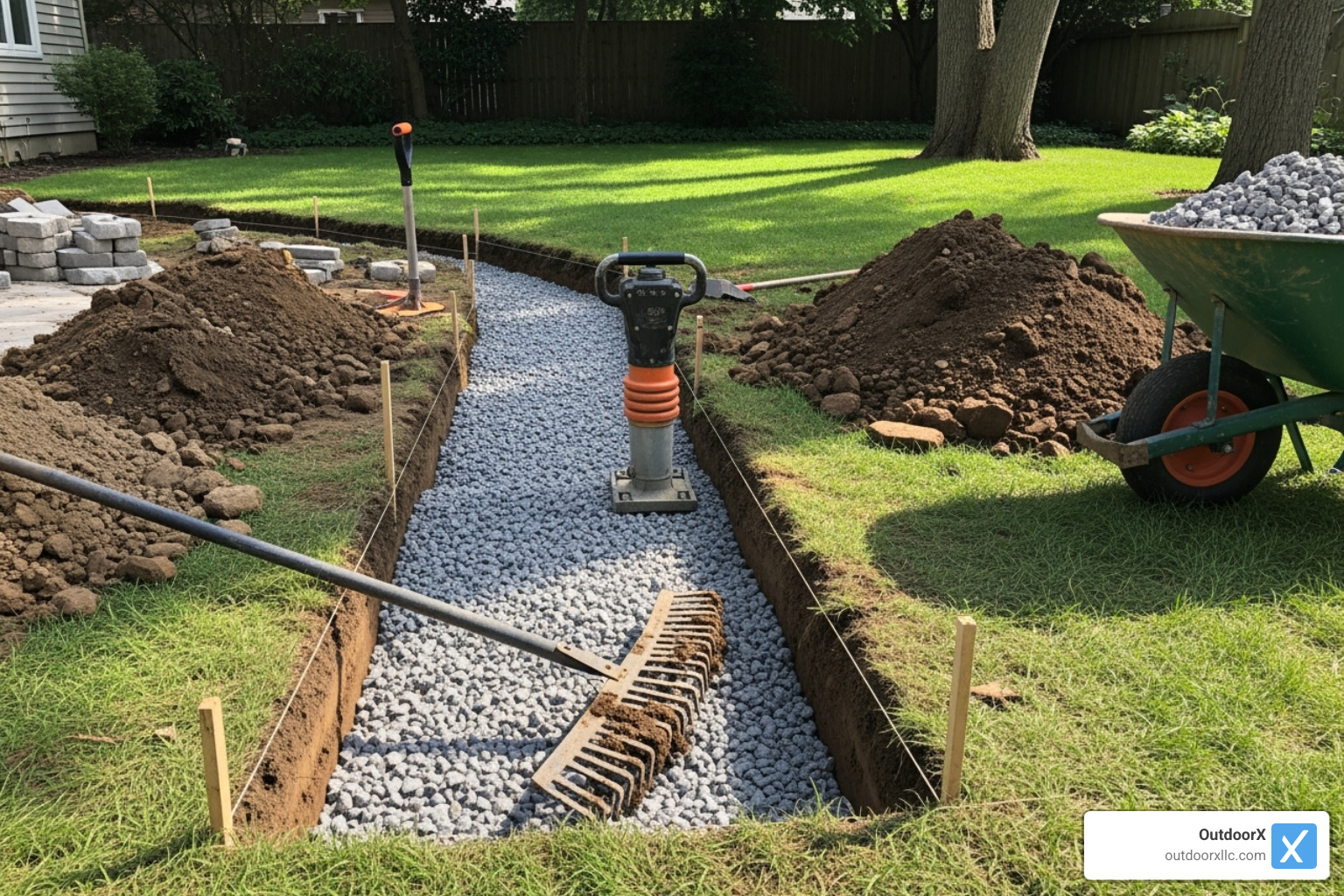
- Mark the Path: Use stakes and mason’s line to outline the walkway. A 4-foot width is standard. Mark the excavation area 6 inches wider on each side to accommodate edging.
- Call 811: Before digging, call 811 to have underground utilities marked. This is a critical safety step.
- Excavate: Dig 6-8 inches deep throughout the marked area. For New England’s climate, 8 inches is recommended to prevent frost heave. Remove all sod, topsoil, and debris.
- Establish Drainage: Ensure the walkway slopes away from structures at a rate of 1/4 inch per foot to prevent water damage.
- Compact Subsoil: Use a plate compactor to create a firm foundation at the bottom of your excavation.
For more detailed guidance, see our guide on proper base preparation.
Step 2: Building a Frost-Proof Base
A solid base is the unsung hero of your walkway project. Do not cut corners here.
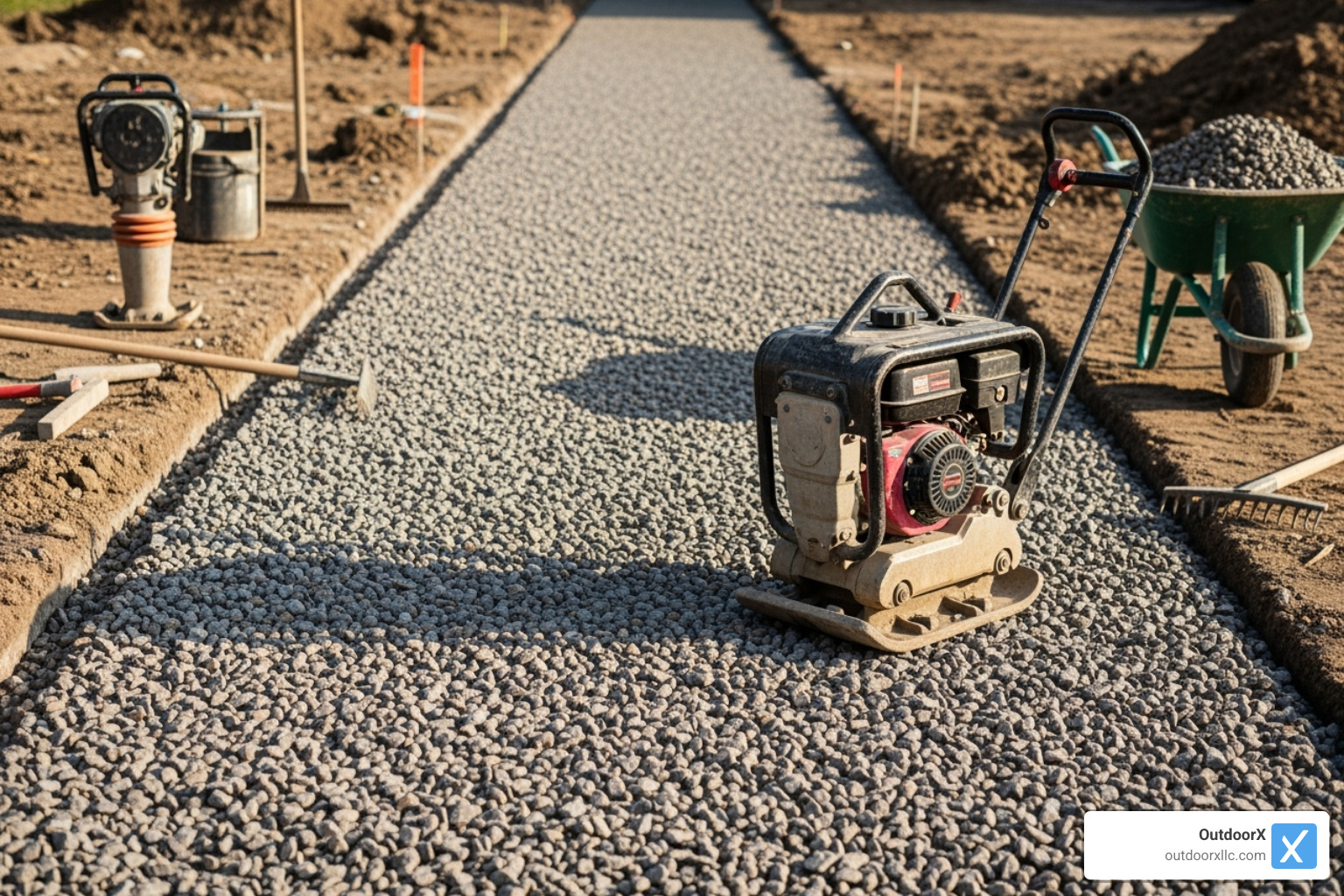
- Add Gravel Base: Spread a 4-6 inch layer of 3/4-inch crushed stone. Apply and compact it in 2-3 inch lifts.
- Compact Thoroughly: Use a plate compactor to make at least three passes over each layer. Lightly misting the stone with water reduces dust and aids compaction.
- Add Setting Bed: Spread a 1-2 inch layer of stone dust or coarse sand. This allows for precise leveling of the bluestone.
- Screed the Bed: Use a straight 2×4 to screed the setting bed to a smooth, even surface, maintaining the proper slope.
Step 3: Techniques for Laying a Bluestone Walkway
This step requires patience and an eye for detail.
- Dry-Fit the Pattern: If using irregular flagstones, arrange them on a nearby surface first to create a pleasing pattern with minimal gaps. Number the stones and take a photo for reference.
- Lay the Slabs: Begin laying stones at one end, leaving consistent 1/2 to 3/4-inch gaps for joint material.
- Set the Stones: Use a rubber mallet to gently tap each stone into the setting bed until it is stable and at the correct height. Add or remove setting material as needed.
- Level as You Go: Use a level to check each stone individually and across multiple stones to ensure a smooth surface and maintain the overall drainage slope.
Step 4: Cutting and Fitting Bluestone
Cutting stone is necessary for a professional finish.
- Use a Masonry Saw: A rented masonry saw with a diamond blade is essential for clean, precise cuts.
- Prioritize Safety: Always wear safety goggles, gloves, a dust mask, and ear protection when cutting stone.
- Mark Carefully: Use a grease pencil and square to mark your cuts. Measure twice, cut once.
- Cut Wet: Use the saw’s water connection to reduce harmful dust and cool the blade.
- Be Patient: Make several shallow passes for straight cuts. For curves, make a series of small straight cuts that can be chipped away to form the arc.
Finishing Touches and Long-Term Maintenance
After laying a bluestone walkway, the final steps are crucial for locking the pavers in place and protecting your investment for years to come.
Best Practices for Finishing Your Walkway
These touches transform your project into a polished, professional-looking walkway.
- Install Edging: Secure steel or heavy-duty plastic edging along the walkway to contain the base materials and prevent shifting. Ensure it sits flush with or slightly below the final grade.
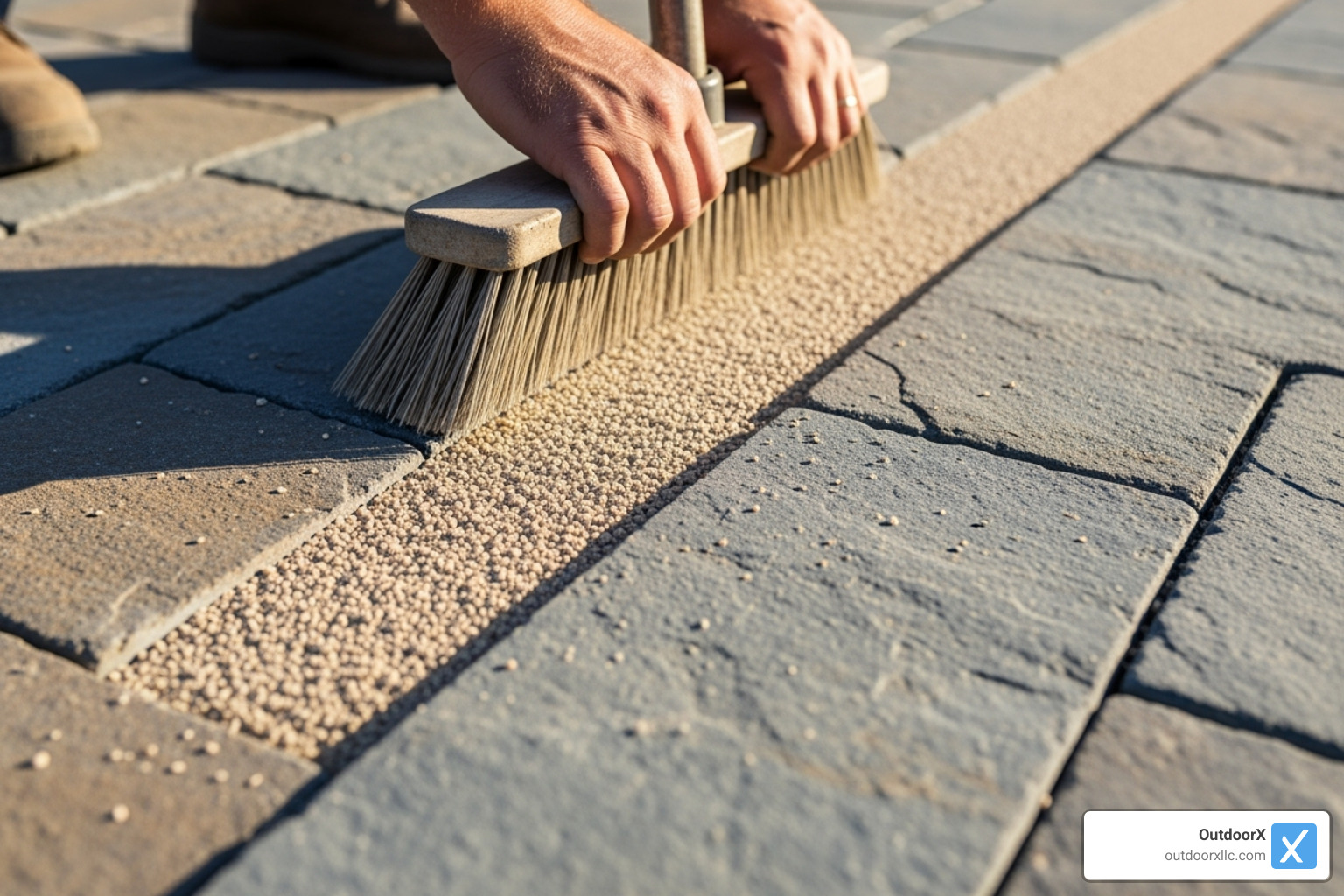
- Fill Joints with Polymeric Sand: This is our top recommendation. Polymeric sand is a mix of sand and polymers that hardens when wet, locking stones together, resisting erosion, and preventing weeds and insects. To apply:
- Start with a completely dry surface.
- Pour sand over the walkway and use a stiff broom to sweep it into every joint until full.
- Remove all excess sand from the paver surfaces with a broom and a leaf blower on a low setting to prevent a hazy film.
- Lightly mist the joints with a garden hose on a fine spray setting to activate the polymers. Do not flood the area.
- Allow the sand to cure for 24-48 hours, as per the manufacturer’s instructions.
For homeowners who prefer professional expertise, we invite you to explore our Paver Walkway Installation services.
How to Maintain Your Bluestone for Lasting Beauty
Properly installed bluestone is refreshingly simple to maintain.
- Regular Sweeping: Use a stiff broom to remove loose debris and prevent stains.
- Deeper Cleaning: For grime, use a mild, pH-neutral detergent and water. Scrub with a soft brush and rinse thoroughly. Avoid harsh chemicals or pressure washers, which can damage the stone and joints.
- Re-sealing Every 3-5 Years: A quality penetrating stone sealant improves the stone’s natural colors and protects against stains and moisture, which is especially important during New England’s freeze-thaw cycles.
- Weed Management: Hand-pull any occasional weeds that may appear in the joints.
- Simple Repairs: If a stone becomes loose, lift it, adjust the setting bed material underneath, and reset it. Re-apply polymeric sand to the joint as needed.
Frequently Asked Questions about Bluestone Walkways
Here are answers to the most common questions about laying a bluestone walkway.
What is the best material to put under a bluestone walkway?
The foundation is critical. A proper base consists of two layers:
- A 4-6 inch layer of compacted 3/4-inch crushed stone for drainage and stability.
- A 1-2 inch setting bed of stone dust or coarse sand on top for leveling the individual stones.
Laying bluestone directly on dirt or sand will lead to shifting, sinking, and frost heave, causing the walkway to fail.
How do you avoid common mistakes when laying a bluestone walkway?
Avoid these three critical mistakes:
- Inadequate Base Depth: Always excavate to at least 6-8 inches to accommodate the full base system.
- Poor Compaction: Use a plate compactor to thoroughly compact the subsoil and each layer of gravel until it is rock-solid.
- Improper Drainage: The walkway must slope away from any structures at a rate of 1/4 inch per foot to prevent water pooling and frost heave.
Is bluestone more expensive than concrete pavers?
Yes, bluestone typically has a higher upfront material cost than standard concrete pavers. However, it is a long-term investment. Bluestone’s exceptional durability, natural beauty, and potential lifespan of over 100 years make it a more cost-effective choice over the long haul. It requires fewer repairs and replacements and adds significant character and value to your property that manufactured pavers cannot match. When you factor in longevity and reduced maintenance, bluestone often comes out ahead financially.
Enjoy Your Timeless Walkway
Congratulations on completing your project. Laying a bluestone walkway is a rewarding accomplishment that creates a special feature for your home that will serve your family for decades.
The beauty of bluestone is that it improves with age, developing a natural character and patina. You’ve also made a smart financial investment that increases your property value and curb appeal with its timeless elegance.
We understand that not every homeowner has the time or tools for such an ambitious project. It requires significant physical effort and attention to detail. For homeowners in South Hamilton and Essex County, MA, who prefer to leave this work to professionals, the expert team at OutdoorX offers custom Landscape Design & Build services to bring your vision to life.
Whether built by you or installed by a professional, a bluestone walkway is a lasting legacy that beautifully connects your home to the landscape.
