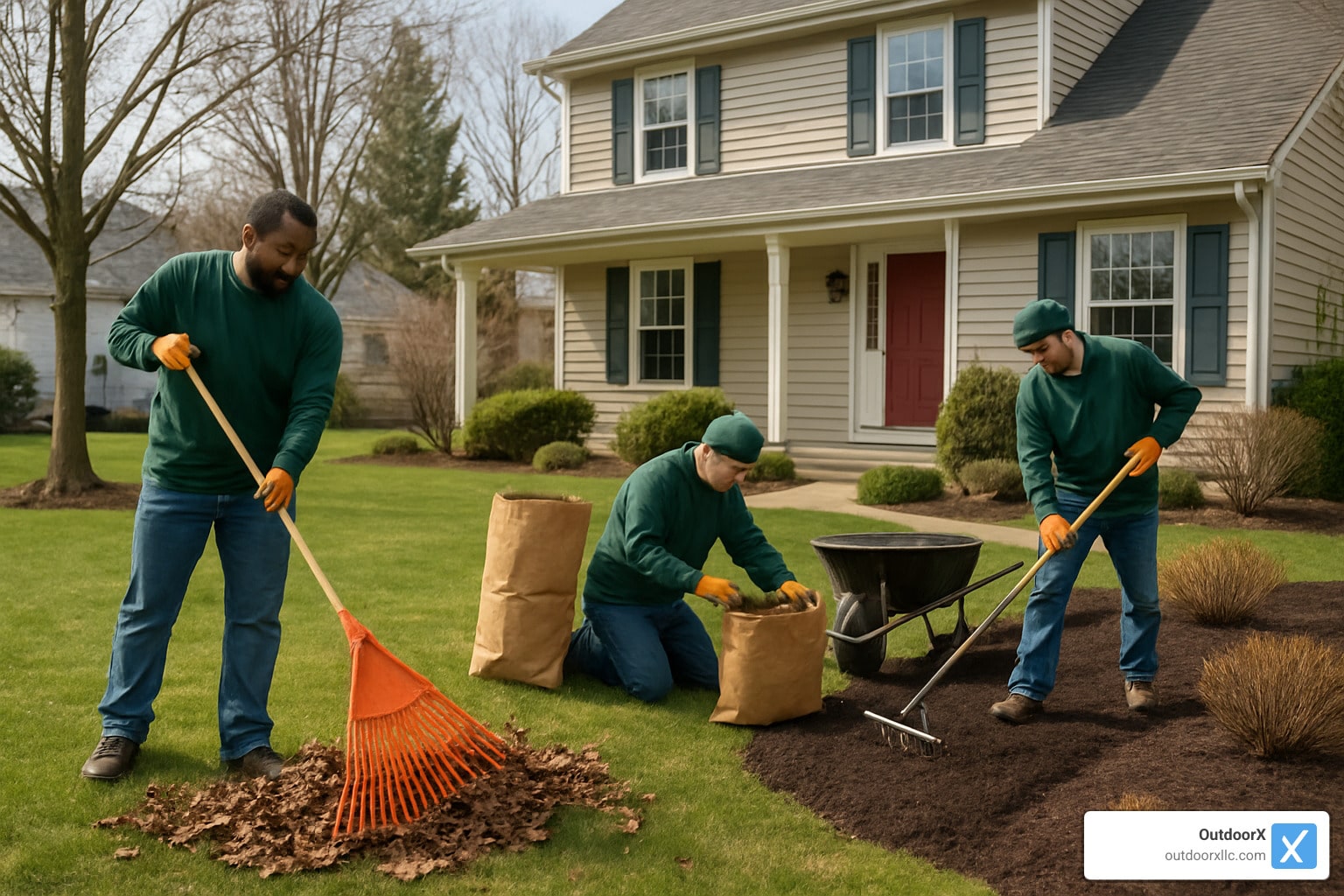
Lawn spring clean up cost: 9 Key Savings for 2025 Revealed
Why Understanding Lawn Spring Clean Up Cost Matters for Essex County Homeowners
Lawn spring clean up cost ranges from $125 to $1,000+ depending on your yard size, service scope, and local market conditions. Here’s what you need to know:
Quick Pricing Overview:
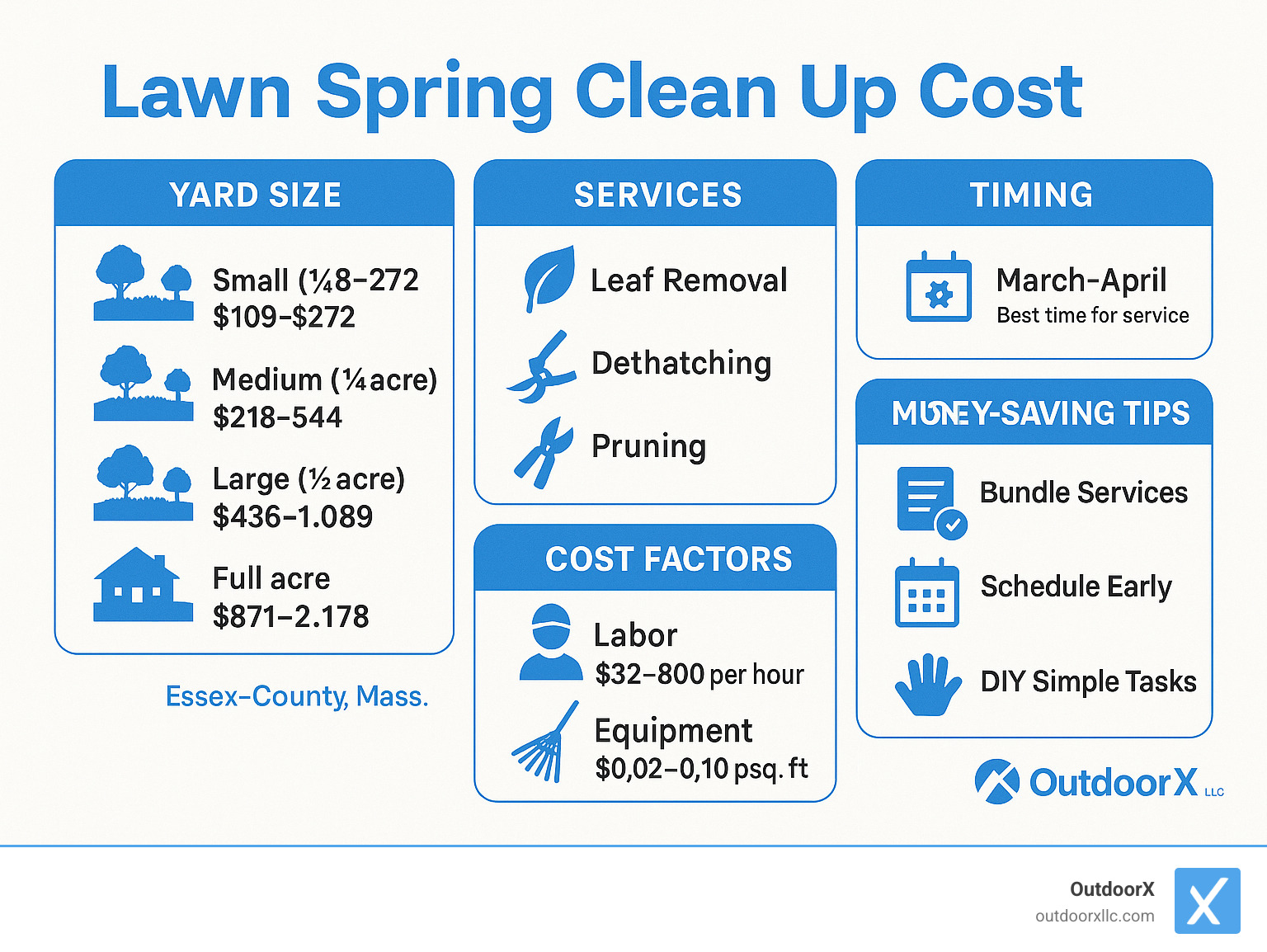
– Small yards (⅛ acre): $109-$272
– Medium yards (¼ acre): $218-$544
– Large yards (½ acre): $436-$1,089
– Full acre: $871-$2,178
– Hourly rates: $32-$80 per hour
– Per square foot: $0.02-$0.10
Note: These are average costs based on internet data and not actual costs for OutdoorX LLC.
Spring is the perfect time to refresh your outdoor space after a harsh New England winter. But as one homeowner in a high-cost suburb finded, getting caught off guard by pricing can be painful – they paid $1,900 for overgrowth removal on just 5,000 square feet.
The stakes are higher than you think. Poor timing or choosing the wrong service can cost you hundreds in wasted money. Wait too long, and you’ll pay premium rates during peak demand. Start too early, and you might damage emerging plants.
This guide cuts through the confusion with real pricing data, insider tips, and strategies specifically for busy Essex County homeowners who want beautiful results without the headaches.
Why Timing Matters
Spring cleanup isn’t just about aesthetics – it’s about timing your investment right. The optimal window for lawn spring clean up cost effectiveness is when soil temperatures consistently reach 50-60°F, typically in March or April after the last hard freeze.
Start too early, and you risk damaging emerging plants or working in muddy conditions that double your labor costs. Wait too long, and you’ll compete with peak demand pricing that can inflate costs by 30-50%. We’ve seen homeowners in Beverly and Marblehead pay premium rates simply because they waited until everyone else was calling for service.
The sweet spot? Schedule your consultation in February for March/April service. This gives you first pick of contractors’ schedules and often secures off-season pricing that can save you $100-300 on larger properties.
What You’ll Learn in This Guide
We’ll break down every aspect of lawn spring clean up cost so you can budget smart and avoid surprises. You’ll find regional pricing insights specific to Essex County, understand when DIY makes sense versus hiring professionals, and learn insider budgeting tips that can cut your costs by 20-40%.
Most importantly, we’ll help you ask the right questions to get accurate quotes and avoid the hidden fees that catch many homeowners off guard.
How Much Does a Lawn Spring Clean Up Cost in 2025?
If you’re planning your spring yard refresh, you’re probably wondering about the bottom line. The truth is, lawn spring clean up cost varies dramatically – and Essex County homeowners need to be prepared for our local market realities.
Nationally, most homeowners pay between $125 and $1,000+ for spring cleanup, but that range tells only part of the story. Here in Essex County, our coastal location and higher cost of living mean you’ll likely see prices toward the upper end of that spectrum.
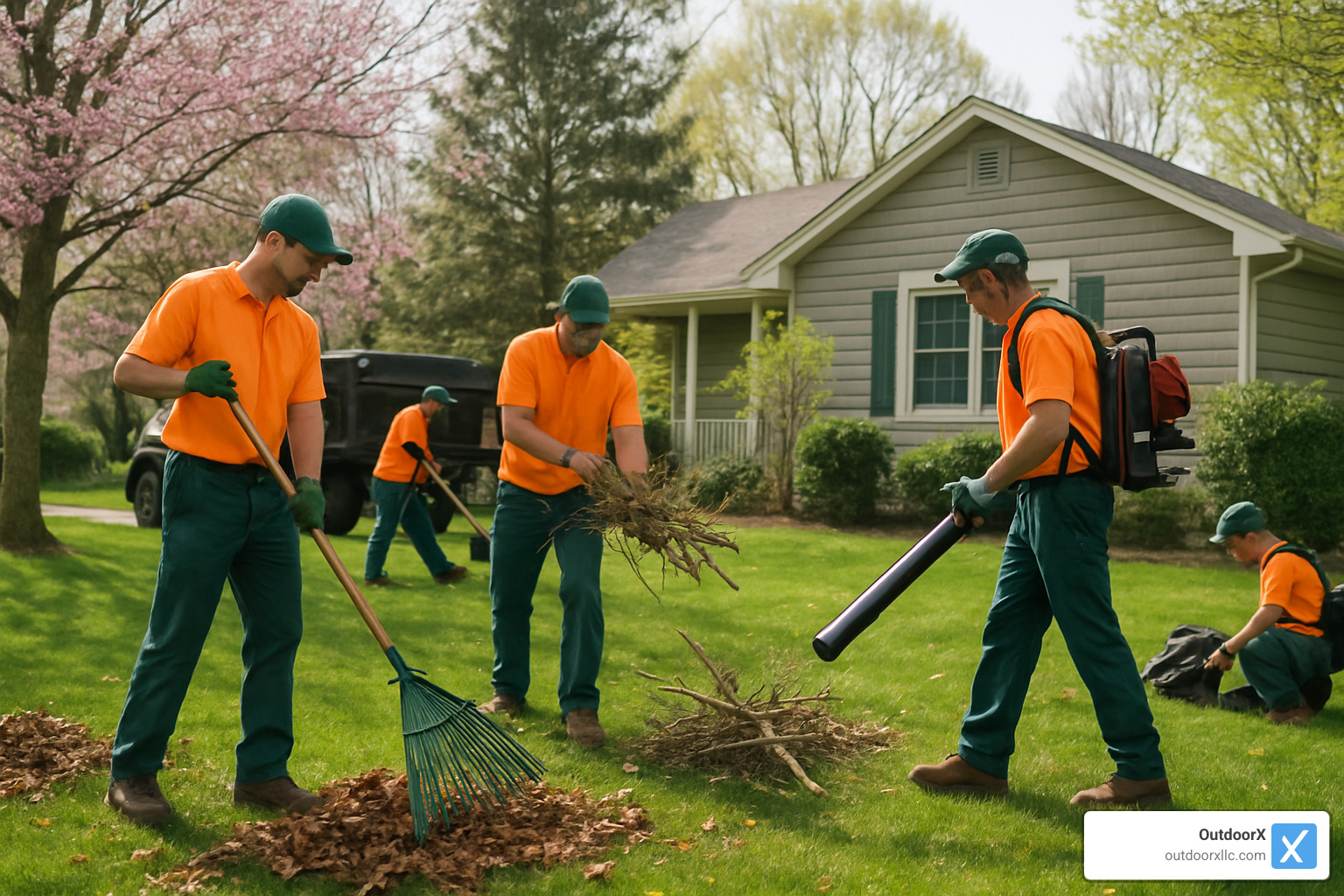
The most common pricing methods break down to $0.02-$0.10 per square foot or $32-$80 per hour, depending on your contractor’s approach. Many prefer square footage pricing because it’s more predictable for both you and them.
Here’s what different yard sizes typically cost:
| Yard Size | Cost Range |
|---|---|
| ⅛ acre | $109-$272 |
| ¼ acre | $218-$544 |
| ½ acre | $436-$1,089 |
| 1 acre | $871-$2,178 |
These are average costs based on internet data and not actual costs for OutdoorX LLC.
National Averages & Extremes for Lawn Spring Clean Up Cost
Let’s be honest about the numbers you’ll find online. Internet pricing data can be all over the map, and it’s important to understand why. The low-end extreme of around $109 typically covers basic leaf removal on a small, well-maintained property. The high-end extreme of $1,500 or more reflects extensive cleanup on neglected properties or premium coastal locations.
Here’s the key insight: labor accounts for 90-95% of your total cost. Unlike automated services like lawn mowing, spring cleanup requires careful hand work around emerging plants, selective debris removal, and attention to detail that machines simply can’t provide.
That’s why a quarter-acre property might cost $250 if it’s been maintained, but the same size yard that’s been neglected for several seasons could easily run $800-1,200. The difference isn’t the space – it’s the intensive labor required to restore an overgrown landscape.
Regional Price Swings & High-Cost-of-Living Premiums
Essex County’s coastal charm comes with a price tag. Our HCOL markup (high cost of living) can add 25-50% to what you’d pay in lower-cost regions. Towns like Marblehead, Manchester-by-the-Sea, and parts of Beverly consistently see higher rates due to local wage standards and client expectations.
Disposal fees add another layer of complexity. Some municipalities offer free spring leaf collection, while others charge $4-8 per bag. If you live in Rockport or Gloucester, expect potential fuel surcharges since contractors may need to travel farther to disposal sites.
The Midwest might see spring cleanup for $150-300, but coastal New England properties often start at $300 and climb quickly from there.
One-Time Cleanup vs Maintenance Packages (lawn spring clean up cost focus)
Here’s where smart homeowners save serious money. Annual contract savings typically reduce per-visit costs by 15-25%. That $400 one-time spring cleanup might drop to $300-320 when bundled with fall service and ongoing maintenance.
Monthly bundle packages offer even better value for larger properties. Instead of paying $400 twice yearly for intensive cleanups, you might pay $50-75 monthly for ongoing care that prevents debris buildup. It’s like the difference between deep cleaning a neglected house versus maintaining a tidy one.
Per-visit discounts also apply when you commit to multiple services. Many contractors offer package pricing that includes spring cleanup, summer maintenance, and fall preparation as a complete solution.
Landscape Maintenance services understand this math and often structure their pricing to reward loyal customers who invest in year-round care rather than emergency cleanups.
9 Factors That Move Your Cleanup Price
Picture this: your neighbor gets a quote for $300 while you’re quoted $800 for seemingly identical yards. What gives? Understanding what drives lawn spring clean up cost helps you budget accurately and spot inflated quotes before you sign on the dotted line.
The truth is, nine key factors determine whether you’ll pay toward the low or high end of the pricing spectrum. Master these, and you’ll never feel blindsided by a quote again.
Spring & Fall Cleanup costs vary dramatically based on these variables that every Essex County homeowner should understand before picking up the phone.
Yard Size & Density
Here’s where things get interesting. Size matters, but density matters more. A heavily wooded quarter-acre lot with mature oaks and maples can cost significantly more to clean than a half-acre of open lawn. Those beautiful trees create mountains of leaves, require careful navigation around root systems, and often involve ladder work for branch removal.
Acreage typically breaks down like this: ⅛ acre properties run $109-$272, while quarter-acre lots (the most common suburban size) range from $218-$544. Half-acre properties jump to $436-$1,089, and full acre estates can cost $871-$2,178 or more.
These are average costs based on internet data and not actual costs for OutdoorX LLC.
The lawn-to-garden bed ratio also plays a huge role in your final bill. Garden beds require careful hand-work around emerging perennials and delicate shrubs, while open lawn areas can be cleared efficiently with power equipment. A property that’s 70% beds will cost more per square foot than one that’s mostly grass.
Service Scope & Add-Ons
Basic spring cleanup typically covers debris removal, mowing, and edging. But here’s where costs can snowball quickly – popular add-ons can double your investment if you’re not careful.
Lawn aeration averages $82-$251, while dethatching runs $146-$246. Want your gutters cleaned while the crew’s there? Add another $100-$250. Mulch installation costs $35-$70 per cubic yard, and tree trimming can range from $200-$900 per tree depending on size and complexity.
These are average costs based on internet data and not actual costs for OutdoorX LLC.
Smart homeowners bundle services for efficiency, but each addition increases your total investment. The key is understanding what you actually need versus what sounds nice to have. Your lawn might not need dethatching every year, but aeration could be essential after a harsh winter.
Labor & Equipment Charges
Most contractors charge $32-$80 per hour for cleanup labor, with crew leaders commanding higher rates than general laborers. Don’t be surprised by minimum fees starting at $100-$125, even for smaller jobs – it costs money just to load equipment and drive to your property.
Crew size creates an interesting cost dynamic. A two-person crew might complete a quarter-acre cleanup in 2-3 hours, while a solo operator could take 4-5 hours. The total often balances out, but crew work usually delivers better results and faster completion.
Equipment charges vary wildly by contractor. Some include everything in their hourly rate, while others add fees for specialized tools like commercial-grade leaf vacuums or stump grinders. Always ask upfront what’s included.
Location, Season, and Demand
Spring demand creates serious pricing pressure that affects lawn spring clean up cost across Essex County. Post-storm cleanups command premium rates due to urgent demand and dramatically increased debris volumes – we’ve seen rates jump 40-60% after major weather events.
Seasonal timing can save you serious money. Early spring cleanup in March often costs 15-20% less than peak season in April and May when everyone wants service simultaneously. It’s like trying to book a hotel during peak tourist season – supply and demand rules apply.
Fuel surcharges also creep into pricing, especially for properties in more remote areas like Rockport or Essex. What seems like a small detail can add $25-50 to your final bill.
Find Local Pros to compare rates during different demand periods and see how timing affects your bottom line.
Price Guide by Yard Size & Common Services
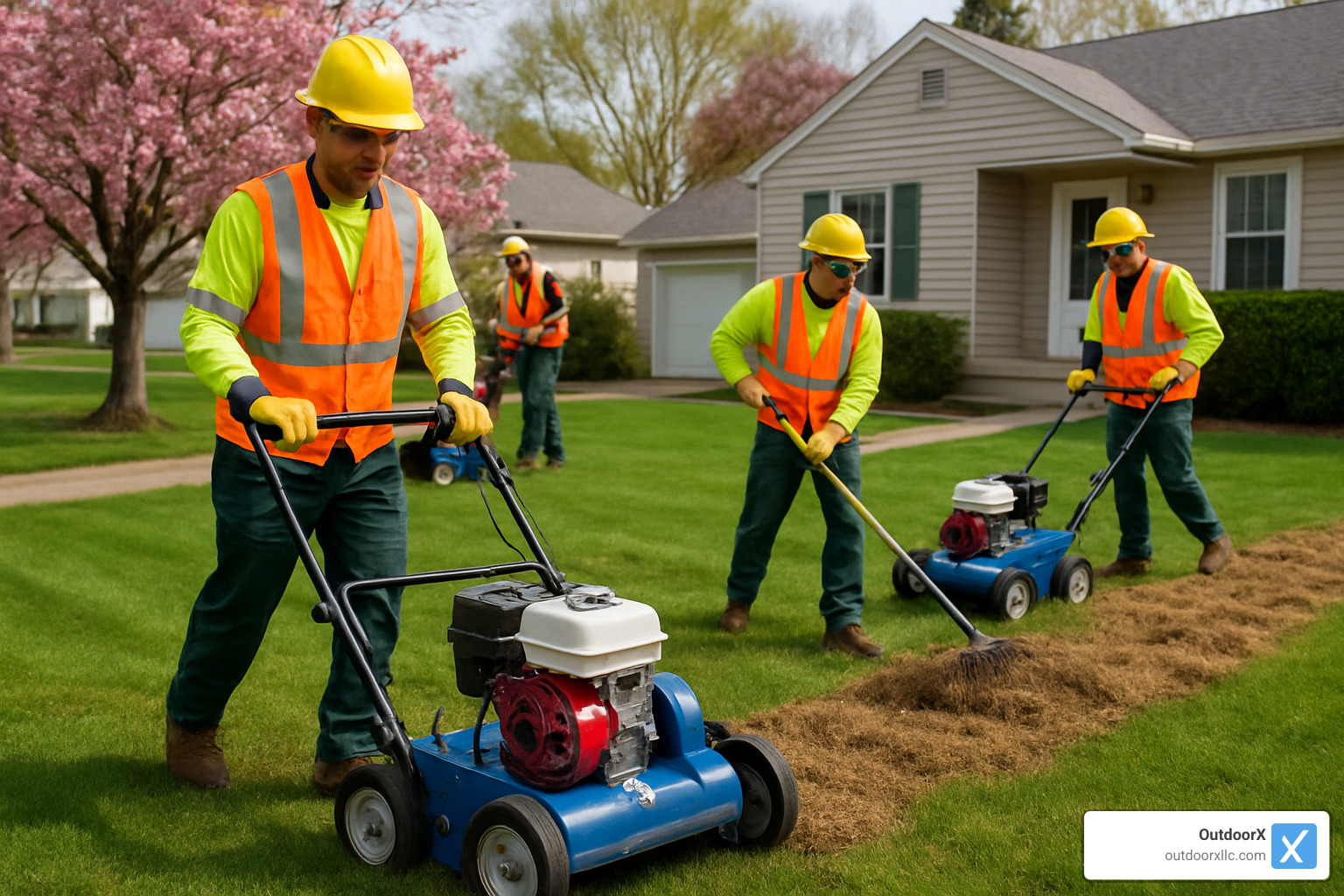
Let’s break down realistic pricing for different property sizes and service combinations. These ranges reflect what Essex County homeowners actually pay, from basic cleanup to comprehensive spring preparation.
All pricing ranges are average costs based on internet data and not actual costs for OutdoorX LLC.
Small Properties (⅛ acre – typical 5,000 sq ft):
– Basic cleanup: $109-$272
– With aeration: $191-$523
– Full service with mulch: $244-$642
Medium Properties (¼ acre – typical 10,890 sq ft):
– Basic cleanup: $218-$544
– With dethatching: $364-$790
– Complete spring prep: $453-$1,134
Large Properties (½ acre):
– Basic cleanup: $436-$1,089
– With tree trimming: $636-$1,989
– Estate-level service: $871-$2,678
Full Acre Properties:
– Basic cleanup: $871-$2,178
– Comprehensive service: $1,306-$3,928
– Luxury maintenance: $1,742-$6,534
Core Service Bundle Costs
Most contractors offer package pricing for common service combinations. A typical “spring startup” bundle includes:
- Debris removal and hauling
- Initial mowing and edging
- Bed cleanup and weeding
- Basic pruning of damaged branches
This bundled approach usually saves 10-15% compared to individual service pricing and ensures comprehensive property preparation.
Popular Add-Ons & Their Impact
Smart add-on selection can maximize your spring investment. Popular combinations include:
The “Lawn Health” package: Cleanup + aeration + overseeding
The “Curb Appeal” package: Cleanup + mulching + pruning
The “Full Reset” package: Everything above plus gutter cleaning and power washing
Each add-on increases total cost but often provides better per-service value when bundled together.
DIY vs Hiring a Pro: Dollars, Time, and Safety
The DIY vs professional decision for lawn spring clean up cost isn’t just about money – it’s about time, safety, and results quality. Here’s the honest breakdown of what each approach really costs.
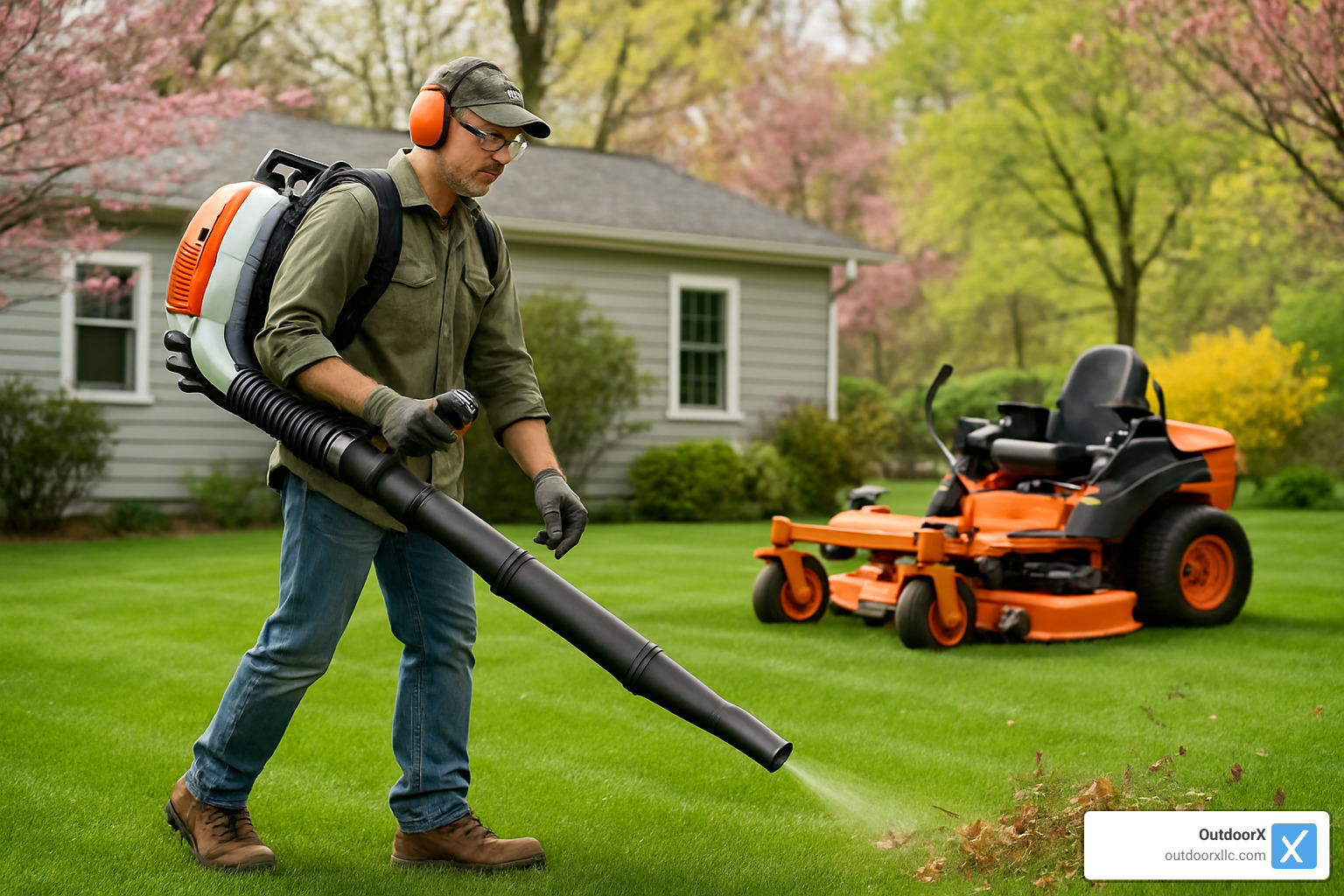
Let’s be real about this choice. Most homeowners think about the upfront cost difference but miss the bigger picture. That $400 professional cleanup starts looking different when you factor in your weekend plans, potential injury risks, and whether you actually know which plants to prune versus which ones to leave alone.
DIY Cost Breakdown
The equipment investment hits harder than most people expect. You’re looking at an average $938 initial investment just to get properly equipped. That includes a decent rake for $25-$45, a reliable leaf blower running $150-$400, and a mulching mower that’ll cost you $300-$600.
These are average costs based on internet data and not actual costs for OutdoorX LLC.
Don’t forget the smaller expenses that add up quickly. Pruning tools run $75-$150 for quality versions that won’t break mid-job. Safety equipment like eye protection and work gloves cost another $50-$100. Even disposal bags and containers will set you back $25-$50.
Then there are the ongoing costs every time you tackle cleanup. Fuel and oil for equipment costs $15-$25 per session. Disposal fees can hit $20-$80 depending on your town’s policies. Equipment maintenance adds another $25-$50 per cleanup when you factor in blade sharpening, tune-ups, and inevitable repairs.
Here’s the kicker: plan on spending 8-12 hours for a thorough quarter-acre cleanup if you’re working solo. That’s a full weekend for most people, and you’ll feel every minute of it come Monday morning.
Professional Cost Breakdown
When you hire professionals, you’re not just paying for labor – you’re buying efficiency, expertise, and peace of mind. Professional crews complete in 2-3 hours what takes you a full weekend. That’s not just about having better equipment (though they do), it’s about knowing exactly what they’re doing.
You’re paying for commercial-grade equipment that makes quick work of tasks that would exhaust you. Professional crews carry insurance and liability coverage that protects you if something goes wrong. They bring expertise in plant care and timing that prevents costly mistakes like pruning at the wrong time or damaging emerging plants.
Most importantly, professional work comes with a warranty. If something isn’t done right, they’ll fix it. Try getting that guarantee from your own weekend efforts.
Professional crews often spot problems you’d miss entirely – pest damage, disease issues, or drainage problems that could cost thousands if left untreated. That alone can justify the service cost.
Ways to Mix DIY & Pro for Savings
Smart homeowners find middle-ground approaches that optimize lawn spring clean up cost without sacrificing results. You don’t have to choose all-or-nothing.
Pre-cleanup preparation can save you money. Spend a Saturday gathering loose debris, moving outdoor furniture, and clearing obvious obstacles before the crew arrives. This reduces their time on-site and your total bill.
Selective service works well for handy homeowners. Handle simple tasks like raking open areas yourself, then hire professionals for specialized work like tree pruning or equipment-intensive jobs like dethatching.
Off-season scheduling offers the best of both worlds. Book your service in February for March completion and you’ll often secure rates 15-20% below peak season pricing.
Bundle negotiation maximizes value when you combine spring cleanup with other needed services. Adding mulch installation or minor pruning to your cleanup often costs less than scheduling separate visits.
Services can be customized to match your budget and DIY comfort level, letting you tackle what you enjoy while leaving the heavy lifting to the professionals.
The bottom line? If you enjoy yard work, have the time, and already own quality equipment, DIY can make sense. But if you value your weekends, want guaranteed results, or have a larger property, professional service usually delivers better value when you factor in all the hidden costs of doing it yourself.
Money-Saving Strategies & Smart Scheduling

Smart homeowners know that cutting lawn spring clean up cost doesn’t mean settling for poor results. With the right strategies and timing, you can save 20-40% while still getting that magazine-worthy yard you’re dreaming of.
The secret isn’t finding the cheapest contractor – it’s working smarter, not harder. Think of it like buying a car. You wouldn’t just pick the lowest price without considering value, reliability, and long-term costs. The same logic applies to your spring cleanup investment.
Regular maintenance is your best friend. Homeowners who keep up with basic yard care throughout the year save hundreds on spring cleanup. When debris doesn’t pile up for months, contractors can work faster and more efficiently. One client in Beverly saved $400 simply by doing monthly leaf removal instead of waiting for spring.
Turn waste into wealth with composting and mulching. Instead of paying $4-8 per bag for disposal (which adds up fast on larger properties), consider mulching leaves in place or starting a simple compost bin. Your plants will thank you, and your wallet will too. This simple switch can save $50-150 on quarter-acre properties.
Municipal pickup programs are hidden gold. Many Essex County towns offer free seasonal leaf collection – you just need to time your cleanup right. Check your town’s schedule and coordinate your cleanup to take advantage of these services. It’s like getting free disposal delivered to your curb.
Off-peak booking is where the real savings live. Schedule your service for early March or late February, and many contractors will offer 10-20% discounts just to fill their slower periods. Everyone wants service in April when the weather turns nice, but smart homeowners book early and save big.
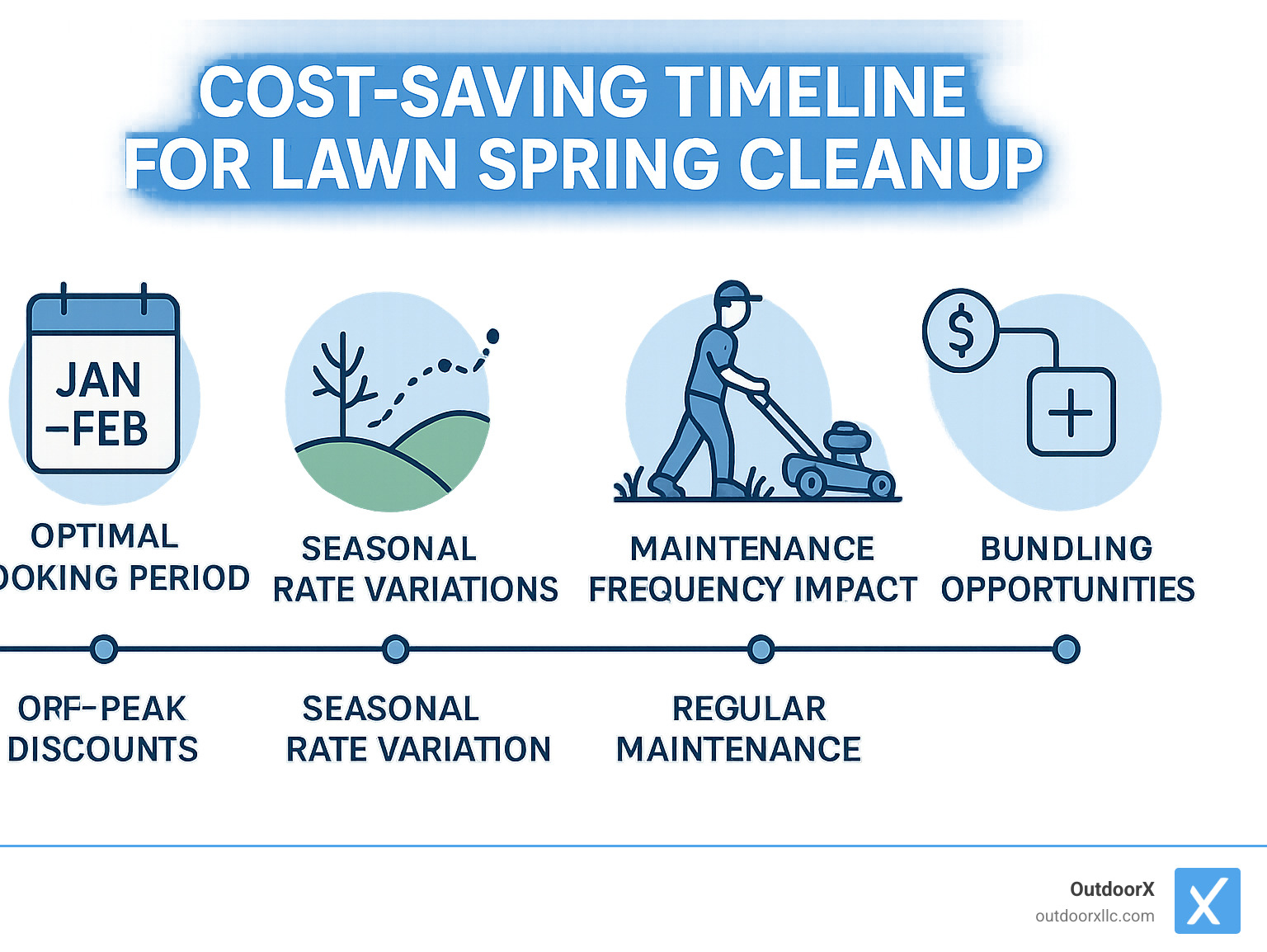
Package deals and annual contracts often provide the best value. Instead of paying full price for individual services, bundling spring cleanup with other seasonal work typically saves 15-25%. It’s like buying in bulk – the per-unit cost drops significantly.
Budgeting Checklist
Creating a realistic budget for lawn spring clean up cost starts with understanding your actual needs and market rates. Most Essex County homeowners should set aside $300-600 annually for combined spring and fall cleanup, but your specific costs depend on property size and service scope.
Always compare at least three quotes before making a decision. Pricing can vary dramatically – sometimes by 50-100% between contractors for identical work. This isn’t just about finding the lowest price; it’s about understanding what fair market value looks like in your area.
Confirm all fees upfront to avoid surprise charges. Ask specifically about disposal costs, fuel surcharges, and minimum service fees. Some contractors include everything in their quoted price, while others add fees that can bump your total cost by $50-150.
Understanding payment terms can also save money. Some contractors offer 5-10% discounts for upfront payment or early booking. Others provide payment plans for larger projects. Know your options before signing anything.
Build weather flexibility into both your timeline and budget. Spring weather in Essex County can be unpredictable, and delays might affect pricing if contractors need to reschedule multiple times.
Questions to Ask Before You Sign
Getting clear answers upfront prevents misunderstandings and surprise costs later. Scope clarification should be your first priority. Ask exactly what tasks are included, how disposal and hauling work, and what happens if weather delays the project. A good contractor will have clear policies for these common situations.
Business verification protects your investment. Confirm the contractor is properly licensed and insured, and don’t hesitate to ask for local references. A reputable company will gladly provide this information and may even offer to show you recent work in your neighborhood.
Cost transparency is crucial for budget planning. Ask about any additional fees not mentioned in the initial quote, how the contractor handles unexpected cost overruns, and what payment methods they accept. The best contractors will give you a detailed breakdown and stick to their quoted prices unless you request additional work.
Frequently Asked Questions About Spring Cleanup Pricing
How often should I schedule a spring clean up for my lawn?
Most Essex County homeowners get the best value with twice-yearly cleanup – once in spring and again in fall. But your property might need different timing based on its unique characteristics.
If you’ve got heavy tree coverage (think those beautiful old maples and oaks common in our area), you might need an extra cleanup session. Properties near the coast also deal with salt damage and storm debris that can require additional attention throughout the year.
The timing of your spring cleanup matters more than you might think. Wait for soil temperatures to consistently hit 50-60°F after the last hard freeze. This usually happens in March or April around here. Jump the gun, and you’ll be working in muddy conditions that slow everything down and bump up your lawn spring clean up cost.
For well-maintained properties, annual spring cleanup does the job. But if you’re dealing with a yard that’s been neglected (maybe you just bought the house, or life got in the way), expect to invest more initially. The good news? Once you get caught up, regular maintenance keeps costs predictable.
What’s the difference in cost between spring and fall clean ups?
Here’s something that surprises many homeowners: fall cleanup typically costs more than spring cleanup for the same property. We’re talking $200-$500 for fall versus $100-$300 for spring on a typical quarter-acre lot.
These are average costs based on internet data and not actual costs for OutdoorX LLC.
Fall cleanup is the heavy-lifting season. You’re dealing with massive leaf removal, cutting back perennials, winterizing garden beds, and protecting plants from harsh New England winters. It’s labor-intensive work that takes time.
Spring cleanup focuses more on damage assessment and fresh starts – clearing winter debris, evaluating what survived the cold, and preparing for new growth. Generally less backbreaking than fall’s leaf mountains.
But here’s the catch: spring cleanup on a neglected property can actually cost more than fall cleanup. Winter damage, accumulated debris, and the careful precision needed to avoid damaging emerging plants can drive up labor hours significantly.
How can I lower my lawn spring clean up cost without sacrificing quality?
Smart bundling is your best friend for saving money. When you combine spring cleanup with other services like aeration, overseeding, or mulching, most contractors offer package discounts of 10-20%. It’s a win-win – you save money, and they get more efficient work scheduling.
Regular maintenance prevents those budget-shocking surprise costs. Properties that get consistent care throughout the year need less intensive spring work. Think of it like car maintenance – regular oil changes cost less than engine rebuilds.
Timing your booking can save serious money. Schedule your service in early March instead of waiting for peak April demand. Many contractors offer off-season discounts because they prefer steady work over feast-or-famine scheduling.
Handle the simple prep work yourself before the crew arrives. Gathering loose debris, clearing pathways, and basic tidying can reduce billable hours. You’re not trying to do their job – just making their work more efficient.
Focus professional expertise where it matters most. Let the pros handle complex tasks like pruning, aeration, and plant care while you tackle straightforward cleanup work. This selective approach maximizes your investment in professional lawn spring clean up cost while keeping total expenses reasonable.
Conclusion
Planning your lawn spring clean up cost doesn’t have to feel overwhelming. Whether you’re caring for a charming cottage garden in Topsfield or maintaining expansive grounds in Manchester-by-the-Sea, the secret is finding the sweet spot between your vision and your wallet.
Here’s what we’ve learned: timing is everything, bundling saves money, and regular maintenance beats emergency cleanup every single time. A homeowner who invests $300 in spring cleanup annually will always spend less than someone who lets their property go for three years then faces a $1,200 overhaul.
At OutdoorX, we’ve seen it all in Essex County – from coastal properties battling salt spray damage to inland yards dealing with heavy clay soil challenges. That’s why we don’t believe in one-size-fits-all pricing or cookie-cutter solutions. Your property has unique needs, and your cleanup plan should reflect that.
The smartest homeowners start planning in February. They avoid the April rush, secure better pricing, and get first choice of service dates. Plus, there’s something satisfying about having your yard ready while your neighbors are still making phone calls.
Winter’s tough on New England landscapes, but spring cleanup done right sets you up for months of outdoor enjoyment. Whether that means hosting summer barbecues on a perfectly manicured lawn or creating quiet garden spaces where you can actually relax after work, the investment pays dividends all season long.
Ready to skip the stress and get straight to the beautiful results? Our Spring & Fall Cleanup services take the guesswork out of pricing with transparent quotes custom to your property’s specific needs.
Bottom line: Plan early, invest wisely, and choose a team that understands Essex County’s unique landscape challenges. Your future self – and your outdoor space – will thank you for it.