


Lawn Spring Clean Up: 12 Proven Steps for an Effortless 2025
Breathing New Life Into Your Yard
Lawn spring clean up is the essential seasonal reset your outdoor space needs after winter dormancy. If you’re looking to revitalize your yard without becoming a gardening expert, here’s what you need to know:
Quick Lawn Spring Clean Up Essentials:
1. Timing: Wait until soil temperatures reach 50-55°F (typically when forsythia blooms)
2. Basic Tasks: Rake debris, remove thatch, clean beds, prune damaged branches
3. Soil Care: Aerate compacted areas, add light fertilizer, apply pre-emergent herbicide
4. Finishing Touches: Edge beds, apply fresh mulch, inspect irrigation systems
5. Professional Cost: $300-2,000+ depending on yard size and condition
Just as your home needs spring cleaning after being shuttered up all winter, your lawn requires similar attention to thrive in the growing season.
Winter leaves behind a mess of debris, compacted soil, and sometimes damaged plants that can prevent your lawn from reaching its full potential. A thorough spring clean up removes these obstacles and gives your grass the best possible start.
“Spring is a time of growth and change. It’s also the perfect opportunity to tidy up your property after the long winter and ensure your yard is healthy and beautiful,” notes lawn care experts.
You don’t need a green thumb to perform a basic lawn spring clean up—just a weekend, some basic tools, and this guide. Whether you’re planning to tackle the job yourself or hire professionals, understanding the essentials will help you make informed decisions about your landscape’s health.
For busy homeowners in Essex County, knowing when and how to approach spring lawn care can make the difference between struggling with maintenance all season and enjoying a lush, low-maintenance yard.
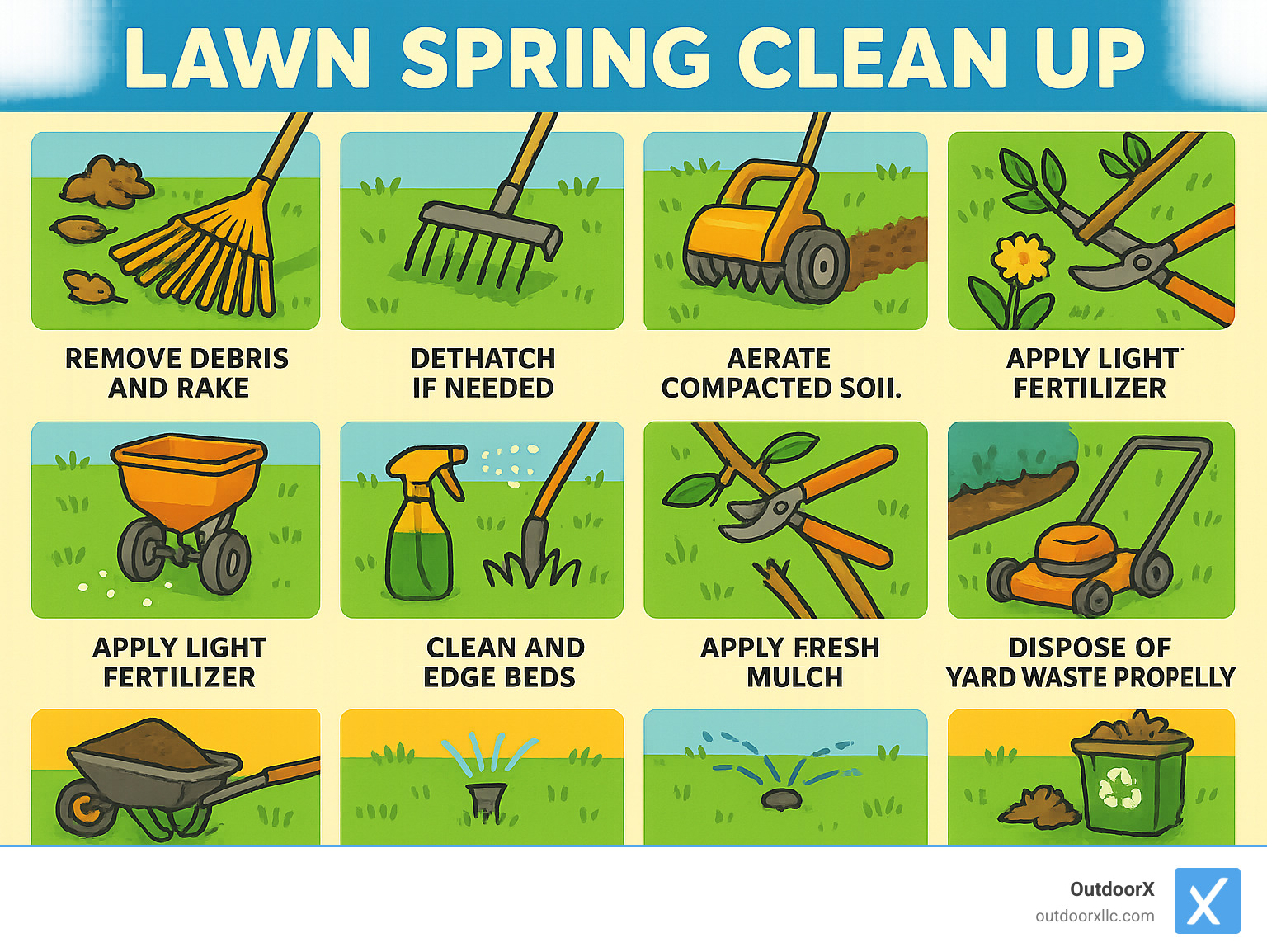
What Is a Lawn Spring Clean Up and Why It Matters
A lawn spring clean up is your yard’s fresh start after a long winter nap. It’s not just about making things look pretty—it’s a complete health makeover for your outdoor space.
Winter leaves behind quite the mess in your yard. Fallen branches, dead leaves, and sometimes even random trash blown in by those fierce New England winds can create problems. This layer of debris acts like a smothering blanket over your grass, blocking sunlight and trapping moisture that leads to disease.
“The money I spend on spring clean up is my happiest money spend,” one Essex County homeowner told us. “It sets up the entire season for success and reduces headaches later.”
When you perform a proper lawn spring clean up, you’re addressing several crucial aspects of lawn health. Removing matted grass and debris allows precious sunlight and air to reach the soil, giving your turf the revival it desperately needs. Breaking up compacted soil through aeration helps roots access oxygen and nutrients that fuel healthy growth.
Disease prevention is another major benefit. All that dead plant material creates perfect breeding grounds for fungi and pests if left untreated. By clearing it away, you’re eliminating many potential health problems before they start.
Of course, there’s also the immediate boost to your property’s curb appeal. A clean, well-maintained yard instantly improves your home’s appearance and value—something particularly important if you’re in Essex County where property standards tend to be high.
Perhaps most overlooked is how a thoughtful lawn spring clean up supports your local ecosystem. When done with proper timing and techniques, you’re actually protecting beneficial insects and creating shelters for important pollinators.
For us in New England, especially here in Essex County, these seasonal resets are particularly important. Our significant seasonal changes—including heavy snow and ice—can leave lawns matted and vulnerable to snow mold and other diseases if not properly addressed.
Lawn Spring Clean Up vs Regular Mowing
Many homeowners ask us if their weekly mowing routine is enough. While regular mowing maintains appearance, a spring clean up addresses deeper seasonal needs that regular maintenance simply can’t touch.
| Aspect | Lawn Spring Clean Up | Regular Mowing |
|---|---|---|
| Frequency | Once annually (spring) | Weekly during growing season |
| Depth | Comprehensive (soil to canopy) | Surface-level maintenance |
| Tools Required | Rakes, aerators, dethatchers, pruners, edgers | Primarily mower |
| Primary Focus | Rejuvenation and health reset | Maintaining appearance |
| Timing | Temperature/soil dependent | Growth-dependent |
| Results | Sets foundation for season-long health | Maintains established appearance |
| Professional Cost | $300-2,000+ (one-time) | $30-75 per visit |
Think of it this way: regular mowing is like brushing your teeth, while a lawn spring clean up is your annual dental checkup with cleaning. Both are necessary, but they serve different purposes.
A proper spring cleanup addresses your entire landscape from the soil up to the tallest plant tips. It’s a comprehensive health intervention that sets the stage for a thriving outdoor space all season long. Regular mowing, while important, primarily keeps things looking tidy on the surface.
Perfect Timing: When to Start Your Lawn Spring Clean Up
Knowing exactly when to begin your lawn spring clean up is a bit like waiting for the perfect wave at the beach – jump too early and you’ll miss it, too late and the opportunity has passed.
Here in Essex County, Mother Nature gives us specific signals that tell us when it’s time to grab our rakes and gloves. Rather than circling a date on your calendar, watch for these natural indicators:
The soil needs to consistently warm to 50-55°F before you start working. This usually happens when we reach about 180-200 Growing Degree Days (GDD) from March 1st. If that sounds too technical, just keep an eye on the forsythia bushes in your neighborhood – when those bright yellow blooms appear, it’s nature’s way of giving you the green light.
“I made the rookie mistake of rushing out on the first 60-degree day in March,” laughs Essex County resident Maria Thompson. “My soil was still soggy, and I ended up with footprints all over my lawn that took weeks to recover.”
The ground condition matters too – it should be firm but not frozen or muddy. And while it might be tempting to get a head start, waiting until after the last hard frost will protect your tender new growth.
Different grass types have their own timelines too:
For our New England cool-season grasses, early to mid-spring works best, specifically when soil temperatures consistently reach 50°F. If you’re one of the few in our area with warm-season grasses, you’ll want to wait until soil temperatures climb to about 65°F in late spring.
For most of us in Essex County, this sweet spot typically falls between mid-April and early May, though your specific property’s microclimate might shift this window slightly.
Protecting Pollinators While You Wait
While you’re anxiously waiting to tidy up those messy garden beds, what looks like debris to you might be a cozy winter home to beneficial insects and pollinators.

Fascinating research from Michigan State University shows that many beneficial insects remain in a hibernation-like state called diapause until specific temperature thresholds are reached. Clean up too early, and you might accidentally vacuum up next summer’s pollinators before they’ve had a chance to wake up and move out.
While you wait for the perfect timing, you can create insect-friendly zones in your yard:
Reserve a corner of your property as an undisturbed refuge where leaves and plant debris can remain. Leave hollow stems of last year’s perennials standing until temperatures consistently reach 50°F. When you do apply mulch, keep it thin (just 1-2 inches) in areas where ground-nesting bees might make their homes. Consider establishing a small “no-mow zone” that can serve as a pollinator paradise through spring.
When you do begin cleanup, consider a gradual approach rather than clearing everything at once. This gives sleepy insects time to relocate.
“I was amazed when I spotted woolly bear caterpillars active on snow patches warmed by the sun,” shares entomologist Dr. Lisa Coleman. “It really demonstrates how temperature-sensitive these creatures are, and why timing your cleanup with their natural cycles makes such a difference.”
By patiently waiting for the right environmental signals, your lawn spring clean up will not only refresh your grass but also support the tiny creatures that keep your garden ecosystem thriving all season long.
Essential Steps for a Flawless Lawn Spring Clean Up
A thorough lawn spring clean up isn’t just about making your yard look pretty—it’s about building health from the ground up. After years of changing Essex County properties, we’ve developed a sequence that works beautifully for our New England lawns.
Deep Raking & Thatch Removal – The Lawn Spring Clean Up Kick-Off
Think of that first deep rake as your lawn’s wake-up call after a long winter’s nap. You’re not just removing leaves and sticks—you’re assessing the thatch situation too.
What’s thatch? It’s that layer of dead grass and roots sitting between your soil and green grass. A little thatch (less than ½ inch) actually protects your lawn, but too much blocks water and nutrients.
“I always tell homeowners to feel their lawn before going thatch-crazy,” says Thomas Rivera, a lawn specialist we work with. “If your lawn feels spongy underfoot, you’ve likely got excessive thatch that needs addressing.”
For most Essex County lawns, a good spring-tine rake works perfectly for moderate thatch. Work when the soil is dry enough that it doesn’t stick to your tools, and rake in different directions to really loosen things up. For serious thatch issues, consider renting a power rake—it’ll save your back and do a more thorough job.
Don’t waste that thatch, by the way! Unless it contains diseased material, it makes excellent compost fodder.
Core Aeration: Breathing Life Into Soil
After a New England winter of frozen ground and heavy snow, your soil likely needs to breathe again. Core aeration—removing small plugs of soil—creates pathways for air, water, and nutrients to reach hungry grass roots.
The clay-rich soils common in Essex County particularly benefit from annual aeration. When we aerate a client’s property, we often make multiple passes in different directions for heavily compacted areas like pathways and play zones.
Here’s a pro tip: Leave those soil plugs on your lawn. They look a bit messy for a few days, but they’ll break down naturally and return nutrients to your soil. Mother Nature’s recycling at its finest!
Overseeding & Spot Repair
Those bare patches from winter snow mold, salt damage, or where Fido did his business? Spring is perfect for fixing them up.
First, remove any dead grass and loosen the soil surface with a rake. Add a thin layer of compost or topsoil, then sprinkle grass seed appropriate for our region—typically cool-season varieties like Kentucky bluegrass or fescue blends. Lightly rake again to ensure good seed-to-soil contact, then keep the area consistently moist until you see green sprouts.
One important caution: herbicides and new grass seed don’t mix well. If you’re applying pre-emergent herbicides for crabgrass control, they’ll prevent your grass seed from germinating too. Either overseed first and wait 60 days before applying herbicides, or apply herbicides now and save your overseeding for fall.
First Mow & Edge Like a Pro
That first mowing of the season feels so satisfying, doesn’t it? But timing is everything. Wait until your grass reaches about 3-4 inches in height, and make sure your mower blade is sharp—dull blades tear grass rather than cutting cleanly, leaving it vulnerable to disease.
For our Essex County cool-season grasses, set your mowing height to 3-3½ inches. Taller grass develops deeper roots and naturally crowds out weeds. And remember the one-third rule: never remove more than one-third of the grass height in a single mowing.
Want that crisp, professional look? Edge your beds and borders with a sharp spade or mechanical edger, and hold string trimmers at a 90° angle to prevent scalping the edges of your lawn. These small details make a massive difference in your yard’s overall appearance.
Light Spring Feeding & Smart Weed Control
Spring is the time for a light feeding—think of it as a gentle breakfast for your lawn after winter hibernation. Wait until after your first few mowings, then apply a slow-release nitrogen fertilizer.
“The great thing about using compost is that you never have to worry about burning plants with it,” shares Maria Chen, an organic landscaping expert we admire. “It acts as a slow-release fertilizer that improves soil structure too.”
For weed control, timing is crucial. Apply pre-emergent herbicide when soil temperatures consistently reach 55°F—typically when forsythia blooms in our area. Rather than blanket-treating your entire lawn for broadleaf weeds, consider spot-treating only where needed. Your beneficial plants and insects will thank you.
Pruning, Bed Prep & Mulch Refresh
Now for the finishing touches that make your yard truly shine. Remove winter debris from your landscape beds, then address your woody plants.
With pruning, patience pays off. For spring-flowering shrubs like lilacs and forsythia, wait until after they bloom to prune. For summer-flowering shrubs, trim before new growth emerges. Cut back ornamental grasses to 2-3 inches height, and trim perennials to about 4-5 inches above ground.
A fresh edge on your beds creates that clean separation between lawn and garden that makes everything look intentional. Follow up with 2-3 inches of fresh mulch, keeping it away from direct contact with stems and trunks (that dreaded “mulch volcano” can actually damage plants).

“Edging makes your garden look more important, attractive, and well maintained,” notes landscape designer James Wilson. “It’s a simple step that dramatically improves the overall appearance of your property.”
For more comprehensive information about ongoing landscape maintenance, check out our landscape maintenance services page.
Tools & Materials Checklist
Every successful lawn spring clean up starts with having the right tools on hand. Think of this as your spring arsenal—the equipment that will make your yard work efficient rather than exhausting.
For Essex County homeowners, we’ve compiled the essentials that will help you tackle everything from winter debris to preparing for fresh growth:
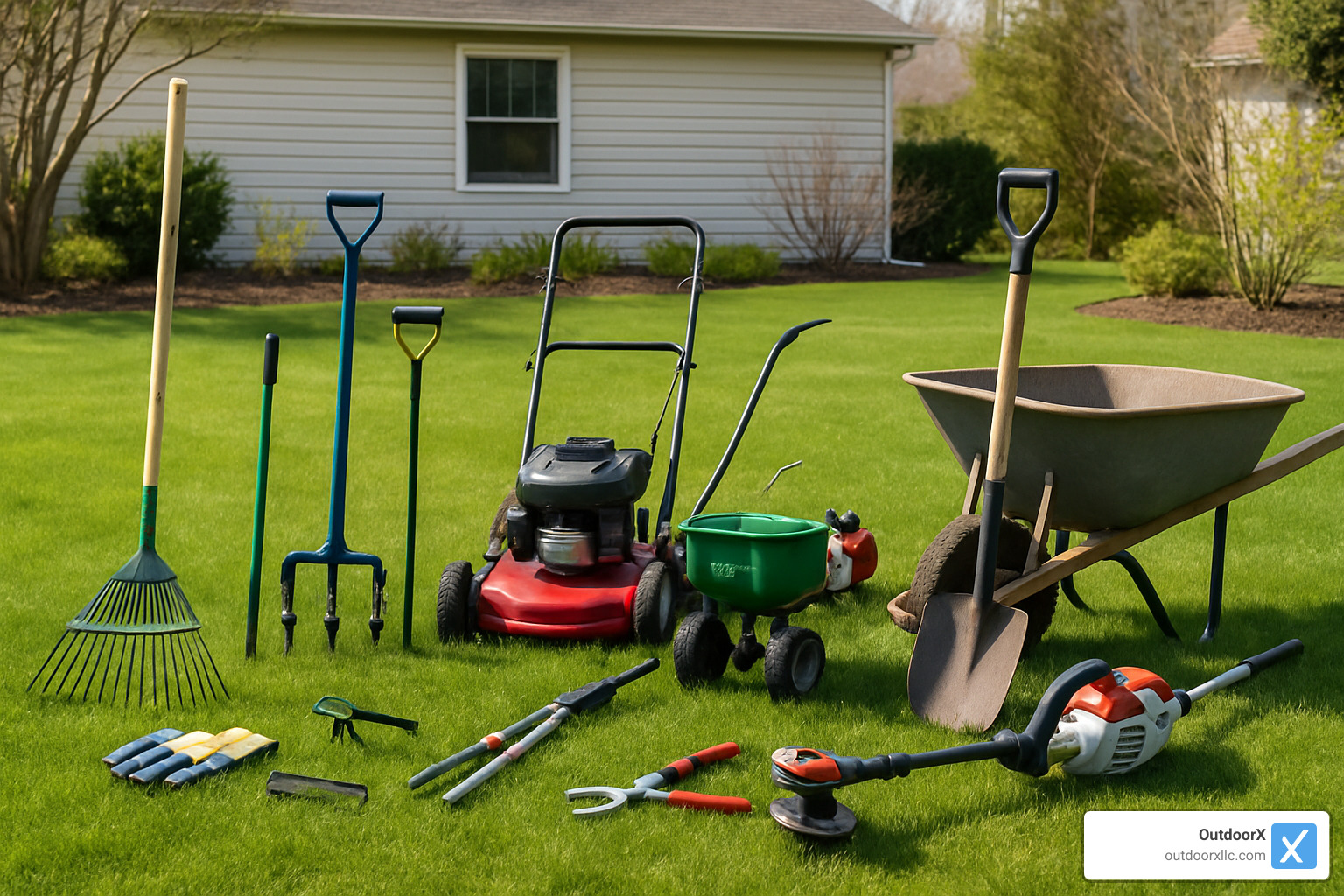
The backbone of your cleanup toolkit includes a good spring-tine rake for gathering leaves and light debris without damaging new growth. For tackling thatch, you’ll want a specialized thatch rake with sharp tines or consider a power dethatcher for larger areas.
When it comes to soil health, a core aerator (either manual or power) is invaluable for creating those essential pathways for air, water, and nutrients. Pair this with a broadcast spreader for evenly distributing seed and fertilizer across your lawn.
“Having the right tools doesn’t just make the job easier—it makes the results better,” notes veteran landscaper Mark Thomas. “I’ve seen too many homeowners struggle with inappropriate equipment when a simple tool upgrade would have saved hours.”
Don’t forget the basics: a mower with freshly sharpened blades (dull blades tear grass rather than cut it cleanly), a reliable string trimmer for those edges and tight spots, and quality pruners and loppers for handling branches and woody growth. A square-edge spade creates those crisp bed lines that really make a landscape pop.
For your safety and comfort, invest in good garden gloves and safety glasses—especially when using power equipment. And a sturdy wheelbarrow will save your back when moving debris, mulch, and soil.
The materials you’ll need include grass seed appropriate for our New England climate (typically a cool-season mix for Essex County), slow-release fertilizer or quality compost, and if desired, pre-emergent herbicide for weed control. Don’t forget to grab a soil test kit to understand what your lawn truly needs—this small investment prevents wasteful guessing games with fertilizers.
For refreshing beds, you’ll need fresh mulch that’s properly aged and low in salt content. Avoid mulch with fillers—quality matters here. You might also want some topsoil or compost for repairing bare spots in your lawn.
If you’re looking for eco-friendly alternatives to plastic weed barriers, consider materials like newspaper (5-8 sheets thick), cardboard (without glossy printing), coconut coir mats, burlap, or biodegradable landscape fabric. These break down naturally while suppressing weeds and eventually enriching your soil.
Renting vs Buying Lawn Gear
The eternal question for many Essex County homeowners: should I rent or buy? The answer depends on your specific situation.
Renting makes perfect sense when you’re dealing with equipment that you’ll only use once a year, like core aerators or power dethatchers. These machines are expensive, require maintenance, and take up valuable garage or shed space. For many of our clients in towns like Beverly and Marblehead, renting proves more economical and practical.
“I spent $300 on a dethatcher that I used exactly twice before it started collecting dust,” admits long-time Ipswich resident Tom Brennan. “Now I just rent one for a weekend each spring—much smarter decision.”
Consider buying equipment you’ll use frequently throughout the season—items like rakes, pruners, and basic lawn care tools. The investment pays off when you use them multiple times yearly, and they typically don’t require significant storage space or complicated maintenance.
Your budget obviously plays a role—quality lawn equipment isn’t cheap. So does your storage situation—do you have space to properly store larger equipment? Consider frequency of use and whether the rental costs would exceed the purchase price after just a few uses. Some homeowners also enjoy maintaining their own equipment, which might tip the scales toward buying.
A trend we’ve noticed gaining popularity across Essex County is neighborhood tool-sharing. Several communities have established formal tool libraries or informal sharing arrangements where neighbors pool resources. This approach reduces costs for everyone while solving the storage dilemma—plus, it builds community connections.
“Our neighborhood in Hamilton started a tool-share group three years ago,” shares local resident Sarah Miller. “Between the ten families, we have everything from aerators to leaf vacuums, and nobody has to store everything. It’s been a game-changer.”
Whether you choose to rent, buy, or share, having the right tools at the right time makes all the difference in achieving that professionally maintained look without the professional price tag.
Budget Breakdown: DIY vs Professional Service
Deciding whether to tackle your lawn spring clean up yourself or call in the professionals comes down to both budget and time considerations. Let’s break down the real costs so you can make an informed choice that works for your wallet and lifestyle.
DIY Approach: The True Investment
When going the DIY route, your expenses typically fall into a few main categories:
For a standard Essex County yard, expect to invest between $200-$600 for a complete spring cleanup, depending on your yard’s condition and what you already own. The biggest variable? Equipment rentals and debris disposal fees.
Many homeowners start enthusiastically but underestimate the time commitment. As one Beverly resident told us: “I thought I’d knock it out in a weekend, but three weekends later, I was still working on it. By then, I’d missed the optimal window for pre-emergent treatment.”
Beyond the monetary cost, consider the value of your weekends. For busy professionals, surrendering multiple spring Saturdays might not be worth the savings.
Professional Service: What You’re Really Paying For
Based on internet data for average costs (not actual OutdoorX pricing), professional spring cleanup services typically range from $300 to $2,000+ for residential properties in Essex County.
Why such a wide range? Professional pricing reflects several key factors:
Property size matters, but not as much as you might think. A small, severely neglected yard can actually cost more to clean up than a larger, well-maintained property. What professionals are really measuring is labor hours, not square footage.
The current condition of your landscape dramatically impacts pricing. That neglected corner where leaves have been accumulating for three seasons? That’s going to require significant manual labor to restore.
One Ipswich homeowner shared: “After getting three quotes ranging from $400 to $1,200, I realized the higher-priced companies were actually addressing problems the cheaper quote ignored completely.”
Debris volume and disposal fees vary significantly across Essex County municipalities. Properties with mature trees generate substantially more debris, and disposal costs can add up quickly.
Lawn Spring Clean Up: When to Call in the Pros
While many homeowners can handle basic spring cleanup tasks, certain situations make professional help the smarter choice:
Safety should always come first. If your property has steep slopes or requires ladder work for tree pruning, the risk of injury might not be worth the savings.
Physical limitations or seasonal allergies can turn a spring cleanup into a miserable experience. As one Gloucester client told us: “I tried doing it myself for years before realizing my two weeks of allergy suffering afterward wasn’t worth saving a few hundred dollars.”
Heavy thatch that requires specialized equipment often tips the scales toward hiring help. When rental costs for dethatchers and aerators approach $150-200 for a weekend, the financial gap between DIY and professional service narrows considerably.
Time constraints matter too. Spring in New England offers a relatively narrow window for optimal lawn care. Professionals can complete in hours what might take a homeowner multiple weekends, ensuring treatments happen at the ideal time for maximum effectiveness.
“What I’ve learned after serving Essex County for years,” notes our OutdoorX team leader, “is that homeowners consistently underestimate the time required for a proper spring cleanup. When they calculate the value of their weekends plus equipment costs, many realize professional help is actually the more economical choice.”
For more details about our approach to spring and fall cleanup services, visit our spring & fall cleanup page.
Sustainable & Safe Clean Up Practices
Creating a truly effective lawn spring clean up goes beyond just making your yard look pretty. It’s about nurturing environmental health while keeping you and your family safe throughout the process.
Today’s environmentally conscious homeowners are embracing sustainable approaches that benefit both their yards and the planet. Switching to electric or battery-powered tools significantly reduces emissions compared to gas-powered alternatives. These tools have come a long way in recent years, with battery life and power that can handle most residential needs.
“I made the switch to all-electric tools last spring,” shares Ipswich homeowner Mark Stevens. “Not only is my yard cleaner, but I don’t miss the headaches from gas fumes or the struggle to start cold engines on chilly mornings.”
Consider composting your yard waste instead of sending it to landfills. Those leaves, grass clippings, and small twigs can transform into nutrient-rich soil amendments right in your backyard. Many Essex County communities also offer municipal composting programs if you don’t have space for your own bin.
Organic fertilizers might work more slowly than synthetic options, but they improve soil health long-term by feeding beneficial microorganisms. For irrigation, smart controllers that adjust watering based on weather conditions can reduce water waste by up to 30%—a win for both your water bill and conservation efforts.
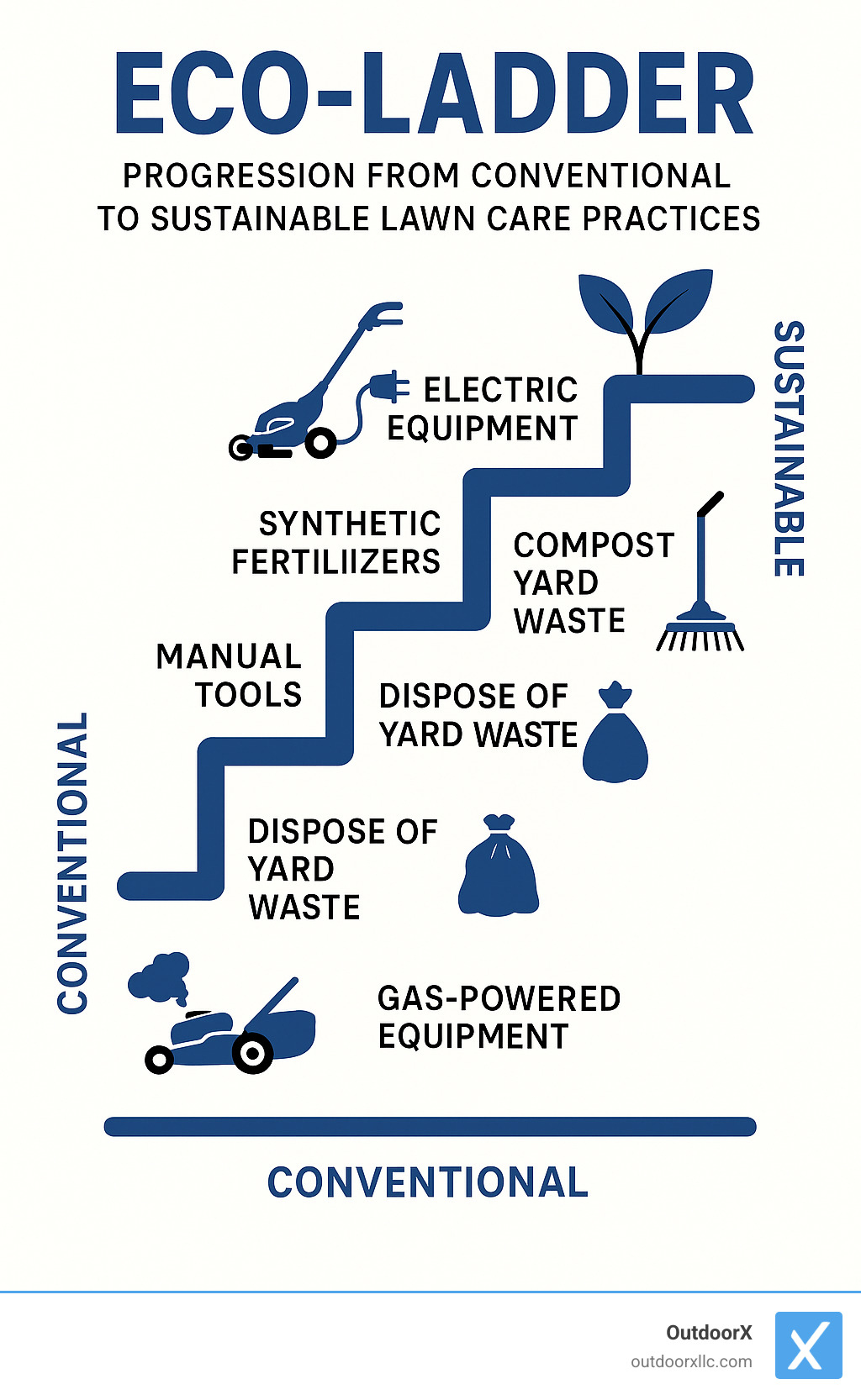
Safety should never take a backseat during your lawn spring clean up. Wear appropriate personal protective equipment—gloves to protect against thorns and chemicals, eye protection from flying debris, and hearing protection when using loud equipment. Always lift heavy materials with your legs rather than your back, and stay hydrated throughout your work sessions.
“The most overlooked aspect of spring cleanup is the opportunity it presents to make sustainable improvements,” explains environmental landscaper Elena Rodriguez. “Each year, you can convert a small section of traditional lawn to native plantings or install a rain garden to manage runoff.”
Creating small wildlife corridors and pollinator-friendly zones doesn’t mean letting your yard go wild. Even leaving a small 3×3 foot area of leaf litter in an inconspicuous corner provides crucial habitat for beneficial insects that help control garden pests naturally.
Tackling Overgrown or Neglected Yards
If you’ve just purchased a home with a severely overgrown yard—a common challenge for new homeowners in Essex County—don’t panic. A thoughtful, staged approach works best rather than trying to transform everything in a single weekend.
Start with an assessment phase to identify valuable plants worth saving versus invasives that should be removed. You might find ornamental shrubs or perennials hidden beneath overgrowth. This reconnaissance work saves you from accidentally removing plants that could become landscape highlights once properly maintained.
Next comes the clearing phase, where you’ll remove large debris and cut back excessive growth. For severely overgrown areas, specialized tools like brush cutters can handle thick stems and heavy growth that would overwhelm standard equipment.
“We tackled a property in Manchester-by-the-Sea that hadn’t been maintained in three years,” recalls our OutdoorX crew leader. “The change was remarkable—we uncovered beautiful specimen shrubs that had been completely hidden by invasive growth.”
After clearing, address soil issues through aeration, compost addition, or other remediation techniques. Once the soil is healthy again, you can move to the restoration phase—replanting desirable elements and establishing new landscape features.
The final and most crucial step is creating a maintenance plan to prevent future overgrowth. Even simple routines, when followed consistently, can keep a previously neglected yard looking beautiful year-round.
For slopes or areas where soil erosion might be a concern after clearing, consider erosion control mats that hold soil in place while new plants establish themselves. These biodegradable options provide temporary protection while allowing your landscape to naturalize over time.
Breaking an overwhelming cleanup into smaller, manageable sections makes the project less daunting, whether you’re doing it yourself or hiring professionals. The change might take longer, but you’ll avoid burnout and be able to adjust your approach as you learn what works best for your specific property.
Maintaining Momentum After the Initial Lawn Spring Clean Up
A successful lawn spring clean up is just the beginning of your yard’s journey through the growing season. Think of it as setting the stage—now comes the ongoing performance that keeps your landscape looking its best.
“The difference between a good lawn and a great lawn is consistent maintenance after the initial spring cleanup,” says turf specialist Robert Williams. “Just 30 minutes of weekly attention prevents small issues from becoming big problems.”
For those of us in Essex County, our unique New England climate creates specific challenges throughout the season. Summer drought can stress even well-established lawns, while our humid conditions sometimes invite unwelcome fungal visitors. Coastal properties face the additional challenges of salt exposure and persistent winds that can dry out turf.
The good news? A simple maintenance routine keeps your spring efforts from going to waste:
Weekly lawn care becomes your rhythm—mowing at the proper height (remember that 3-3½” sweet spot for our cool-season grasses), scanning for early signs of pest activity, and spot-watering any areas showing stress. This consistent attention prevents small issues from becoming expensive problems.
Every other week, take a few minutes to touch up those crisp edges you created during spring cleanup and pull any weeds that have managed to sneak in. Hand-pulling when weeds are small is far easier than battling established invaders later.
Monthly equipment checks pay dividends in performance and longevity. Mark your calendar to clean air filters and sharpen those mower blades—a dull blade tears grass rather than cutting it cleanly, creating entry points for disease.
Seasonal tasks like fertilization, targeted overseeding, and occasional soil testing round out your maintenance calendar. These bigger jobs typically only happen 2-3 times per year but make a dramatic difference in lawn health.

Mid-Season Touch Points
As summer progresses, a few specific checkpoints help maintain your lawn’s resilience through the challenging heat:
A quick soil moisture audit prevents both wasteful overwatering and damaging drought stress. The simplest test? Insert a screwdriver into your lawn—if it enters easily, your soil moisture is adequate. When you do water, deep, infrequent watering encourages roots to grow downward, creating more drought-resistant turf. Early morning watering (think 5-7am) reduces both evaporation and the risk of fungal issues that come with wet evening turf.
Your blade-sharpen calendar might seem like a small detail, but it makes a visible difference. Mark your calendar to sharpen those mower blades every 25 hours of use—for most homeowners, that’s roughly once a month during peak growing season. Many of our clients keep a spare blade on hand that can be swapped in while the primary blade is being sharpened, ensuring they never mow with a dull edge.
An irrigation tune-up ensures your watering system works efficiently. Check sprinkler heads for proper alignment (you’d be surprised how often they get bumped and start watering sidewalks instead of grass), adjust schedules based on actual rainfall rather than calendar dates, and consider upgrading to smart controllers that automatically adjust to weather conditions. These small adjustments can save substantial amounts of water while improving your lawn’s health.
For many of our clients in towns like Ipswich and Newburyport, we recommend a mid-summer “mini-cleanup” that refreshes your landscape’s appearance and reduces the work needed come fall. This light touch-up includes trimming perennials that have finished their show, lightly pruning fast-growing shrubs, refreshing mulch in high-visibility areas, and addressing any weeds before they can set seed.
“I used to think my spring cleanup would keep everything looking great all season,” shares Wendy, an Essex County homeowner. “But I’ve learned that a few hours of mid-summer attention saves me days of work in the fall. Plus, I get to enjoy a beautiful yard all summer long.”
With these consistent touch points, the results of your lawn spring clean up continue to shine throughout the growing season, creating an outdoor space that’s both beautiful and enjoyable.
Frequently Asked Questions about Lawn Spring Clean Up
What tools do I truly need for a small yard?
For a typical small yard in Essex County (under 5,000 square feet), you don’t need to break the bank on equipment to complete a thorough lawn spring clean up.
Most homeowners can accomplish great results with just a handful of essential tools: a sturdy leaf rake for debris removal, quality hand pruners for trimming, a dethatcher (which you can easily rent for a day rather than purchase), a simple broadcast spreader for applying seed and fertilizer, and basic safety gear like garden gloves and eye protection.
“For my small yard in Salem, I invested in quality hand tools that last years rather than power equipment that needs maintenance,” shares local homeowner Sarah Thompson. “I rent the aerator for one day each spring, and that system works perfectly for me.”
If your budget allows for a few upgrades, consider adding a battery-powered string trimmer for precise edging, a soil core aerator (another great rental option), and a wheelbarrow to make debris collection less of a back-breaking task. These additions won’t revolutionize your process, but they’ll certainly make the work more efficient and less physically demanding.
Can I perform lawn spring clean up during No-Mow May?
The growing popularity of No-Mow May—a conservation initiative encouraging homeowners to let their lawns grow throughout May to support early-season pollinators—has many Essex County residents wondering how to balance conservation with necessary yard maintenance.
The good news is that you can adapt your lawn spring clean up to support this eco-friendly movement while still maintaining a healthy yard. Consider completing debris removal, dethatching, and aeration work in April before the No-Mow period begins. You can then delay your first mowing until June 1st, giving pollinators a full month of beneficial habitat.
Another practical approach is to focus your spring cleanup efforts on non-lawn areas like flower beds and borders while designating only portions of your yard as no-mow zones. This creates a balanced landscape that supports both aesthetics and ecology.
“The benefits of No-Mow May include providing early-season nectar sources for pollinators, allowing native flowers to bloom, and reducing emissions from lawn equipment,” explains environmental scientist Dr. James Peterson. “You can still perform most spring cleanup tasks while participating.”
How soon after overseeding can I use herbicides?
One of the most common timing mistakes homeowners make during lawn spring clean up involves the conflict between overseeding and weed control. After overseeding your lawn, patience is essential—you should wait approximately 60 days before applying any herbicides. This waiting period allows new grass seedlings to establish sufficiently to withstand herbicide application without damage.
Pre-emergent herbicides present a particular challenge since they work by preventing seed germination. This means they can’t distinguish between weed seeds and your newly applied grass seed. If you must use pre-emergent herbicides in spring, apply them only to areas where you aren’t overseeding, and consider spot-treating existing weeds with targeted applications rather than broadcast spraying.
“The dilemma many Essex County homeowners face is choosing between spring overseeding and crabgrass prevention,” notes our OutdoorX turf specialist. “For most situations, we recommend addressing bare spots with overseeding in spring, then planning a more comprehensive overseeding in early fall when weed pressure is lower.”
This strategic approach allows you to repair winter damage in spring while taking advantage of fall’s ideal growing conditions for a more thorough lawn renovation, giving you the best of both worlds without compromising on weed control or grass establishment.
Conclusion
Wrapping up a thorough lawn spring clean up is like putting the finishing touches on a masterpiece—it sets the stage for months of outdoor enjoyment ahead. Throughout this guide, we’ve walked through the essential steps that transform winter-weary yards into vibrant green spaces ready for the growing season.
Timing your cleanup efforts makes all the difference. Here in Essex County, waiting until mid-April to early May when soil temperatures consistently reach that 50-55°F sweet spot ensures your efforts yield maximum results while protecting the beneficial insects that call your yard home.
The beauty of spring cleanup is that it’s both corrective and preventive. You’re not just fixing winter damage—you’re laying groundwork that will pay dividends throughout the entire growing season. Those hours spent raking, aerating, and edging translate directly into less maintenance and more enjoyment as summer unfolds.
Your lawn does more than just look pretty. A healthy, well-maintained yard actively filters rainwater, prevents soil erosion, naturally cools your property, and provides essential habitat for pollinators and beneficial organisms. Your spring cleanup efforts contribute to this entire ecosystem while creating a space your family loves spending time in.
At OutdoorX, we’ve seen how diverse Essex County properties can be. The coastal conditions facing homes in Gloucester and Rockport present different challenges than the more sheltered landscapes in North Andover and Boxford. That’s why we tailor our approach to each property’s unique characteristics, working with nature rather than against it.
Whether you’re looking to completely revitalize a neglected yard that came with your new home or simply maintain an already beautiful landscape, our team brings the expertise and care needed to achieve your vision. We focus on sustainable practices that improve both appearance and environmental health—because we believe beautiful spaces and ecological responsibility go hand in hand.
Not everyone has the time, tools, or inclination to tackle their own spring cleanup, and that’s perfectly okay! Our professional team can handle every aspect of your property’s seasonal needs, from basic debris removal to comprehensive rejuvenation services that set you up for a beautiful year ahead.
Ready to make your lawn spring clean up effortless this year? We’d love to help! Contact OutdoorX today to schedule a consultation or service appointment, and let us transform your outdoor space into the beautiful, functional landscape you’ve been dreaming of—custom-custom to your preferences and lifestyle.
