
How to get commercial snow removal contracts: Top 5!
Why Commercial Snow Removal Contracts Are Your Winter Goldmine
Securing profitable commercial snow removal contracts requires strategic planning long before winter arrives.
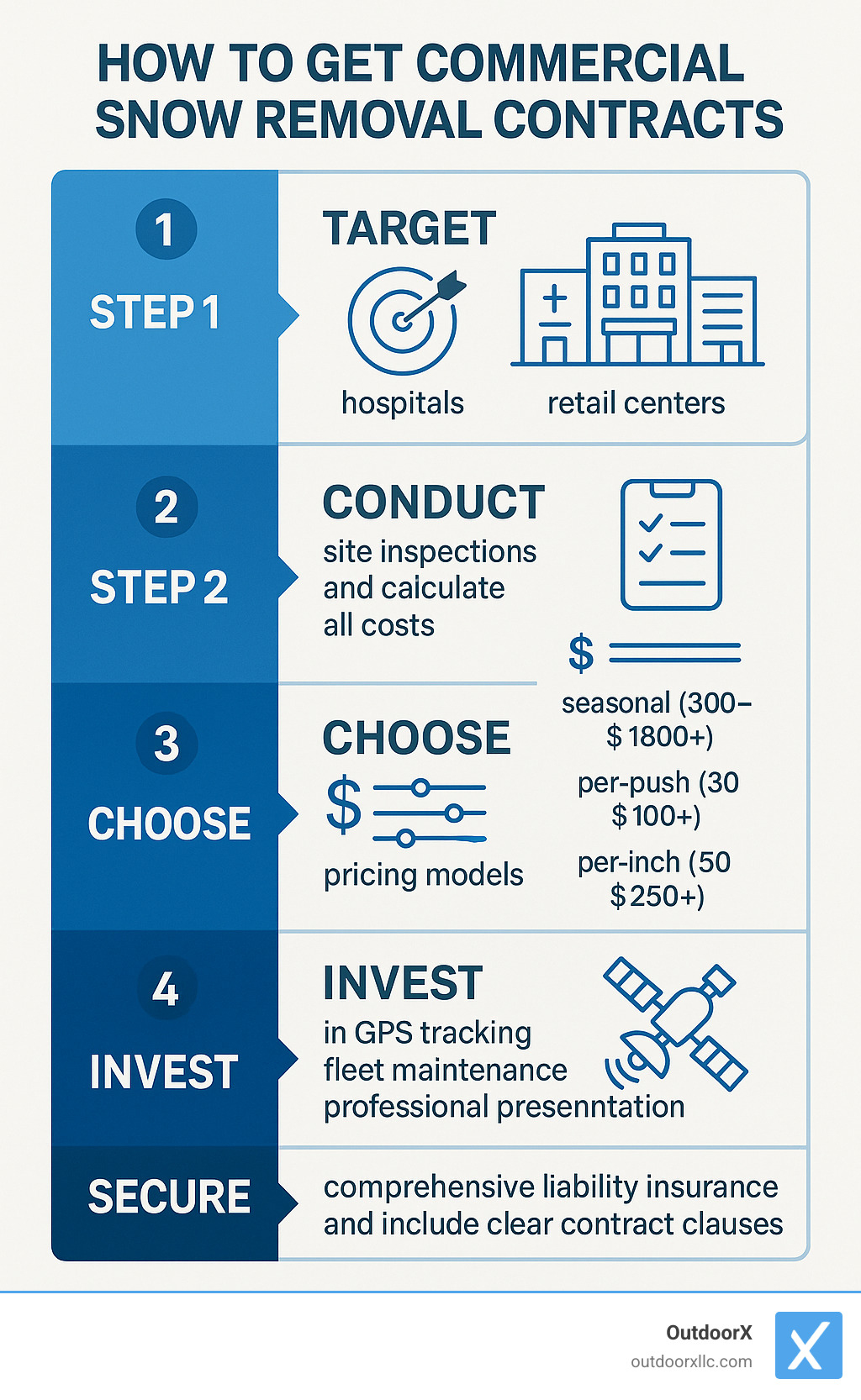
Here’s how to get commercial snow removal contracts in 5 key steps:
- Target the right clients – Focus on hospitals, shopping centers, office parks, and property management companies
- Create professional proposals – Include detailed site inspections, accurate cost calculations, and clear service definitions
- Price competitively – Research local rates and offer seasonal, per-push, or per-inch pricing models
- Differentiate your business – Invest in reliable equipment, GPS tracking, and preventative maintenance
- Manage risk properly – Secure comprehensive insurance and include liability protection in contracts
Commercial snow removal differs dramatically from residential work. You’ll need more equipment, larger crews, and faster response times. The payoff is worth it, as commercial contracts typically last multiple years and generate significantly higher revenue per client.
The key challenge is that most contracts are signed in late summer or early fall. Property managers plan ahead to avoid inaccessible parking lots and unsafe walkways when winter hits.
This guide covers the entire process, from finding prospects to crafting winning bids that protect your business and maximize profit.
How to get commercial snow removal contracts terms to remember:
Understanding the Commercial Snow Removal Landscape
Picture this: six inches of snow blankets a hospital parking lot at 3 AM. By 7 AM, staff and patients need safe access. This isn’t just about moving snow – it’s about keeping critical operations running and people safe.
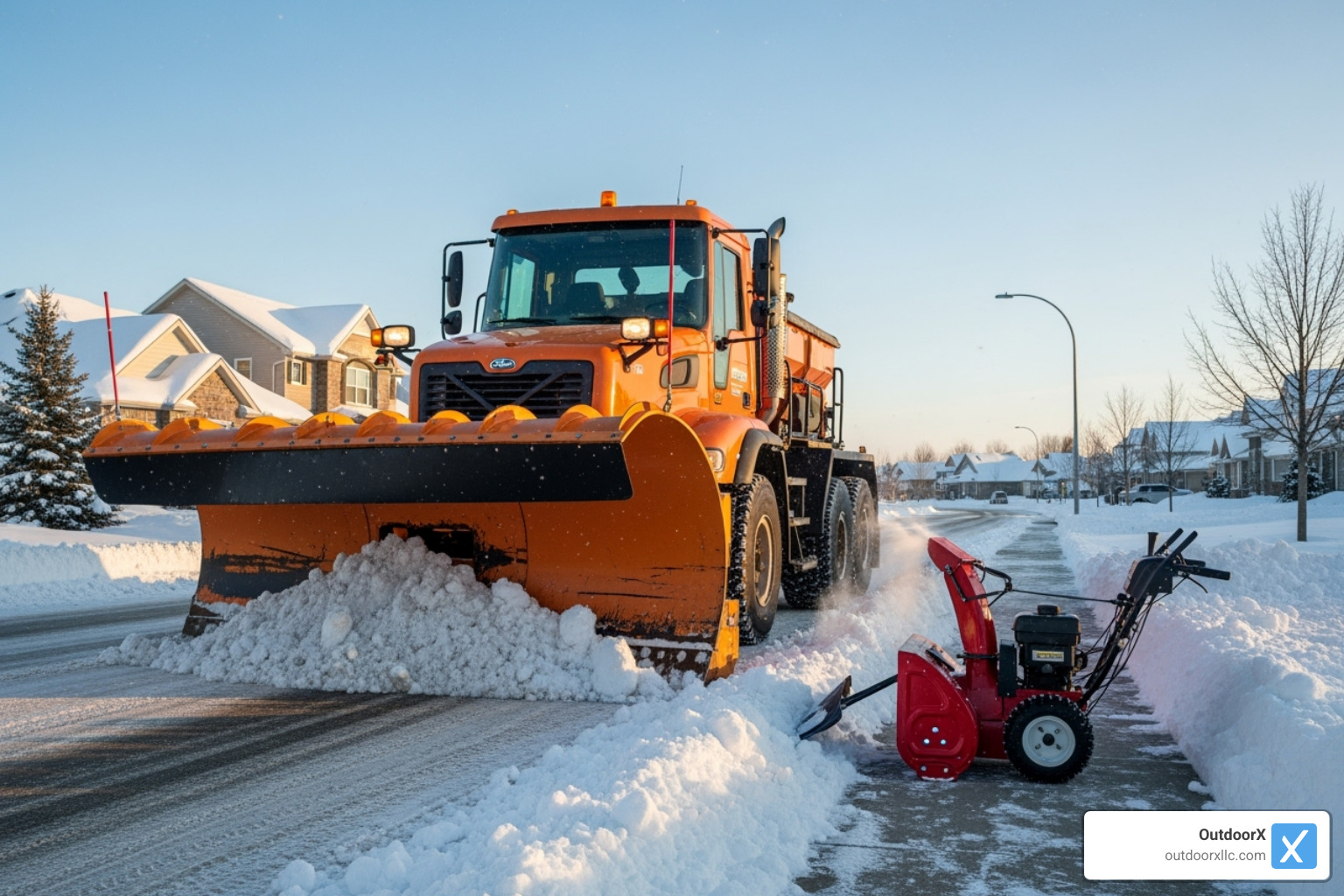
When you’re learning how to get commercial snow removal contracts, understanding this urgency is crucial. For properties like hospitals, retail centers, and office parks, every hour of inaccessible parking or unsafe walkways means lost revenue and increased liability risk.
The stakes are higher than residential work. Property owners face serious legal exposure from slip-and-fall accidents. A shopping center that can’t clear its lots during the holidays loses thousands in sales per hour.
This reality creates demand for professional, reliable snow and ice management services that can respond immediately. Our expertise in Commercial Snow and Ice Management is built on understanding these critical business needs.
Key Differences: Commercial vs. Residential Contracts
Commercial work requires a fleet of heavy equipment, and the differences from residential jobs go beyond scale.
Liability is the biggest game-changer. Commercial properties face massive exposure to lawsuits from injuries. One slip-and-fall accident can cost tens of thousands. Residential work involves lower risk.
Equipment requirements jump significantly. Instead of a pickup truck with a plow, you’ll need multiple trucks, loaders, and specialized de-icing spreaders.
Staffing needs multiply too. Large properties need multiple crews working in shifts to maintain continuous clearing during storms.
| Feature | Commercial Snow Removal | Residential Snow Removal |
|---|---|---|
| Liability | High exposure to costly lawsuits from injuries | Lower risk, typically single-family properties |
| Equipment Requirements | Heavy-duty trucks, loaders, specialized spreaders | Pickup trucks with plows, snow blowers |
| Staffing Needs | Multiple crews, potentially 24/7 coverage | Small teams, flexible scheduling |
| Contract Duration | Multi-year seasonal contracts (3-5 years) | Often single-season or per-occurrence |
| Service Expectations | Immediate response, often within hours | More flexible timing |
| Profit Potential | Higher per contract due to scale and complexity | Lower individual contract values |
Contract duration is much longer for commercial work, with properties preferring multi-year seasonal agreements for stability and guaranteed service.
Service expectations are also more demanding, often requiring 24/7 availability and response within hours of snowfall.
The good news? Profit potential is significantly higher per contract, justifying the increased investment in equipment and staffing.
Types of Commercial Snow Removal Contracts
Understanding contract structures is essential. Offering multiple options helps you win more bids by meeting different client needs.
Seasonal contracts are often ideal. The client pays a flat fee for the season, ensuring predictable budgets for them and guaranteed revenue for you. Multi-year contracts (3-5 years) balance out heavy and light snow years.
Per-occurrence contracts (or “per-push”) charge clients each time you clear their property, which works well for areas with unpredictable snowfall. Most include a trigger depth, such as 2 inches of snow.
Per-inch contracts scale payment with snow depth. Rates increase for deeper snow, ensuring fair compensation for the extra time and effort required.
Time and material contracts charge for actual hours and materials used. They are ideal for extra services like hauling snow piles or extensive de-icing outside the standard scope.
Multi-year agreements provide stability. Clients get locked-in rates and priority service, while you avoid annual bidding cycles.
Combination contracts let you mix structures, such as a seasonal contract with per-occurrence rates for heavy snowfalls. This flexibility helps you tailor proposals and win more competitive bids.
How to Get Commercial Snow Removal Contracts: A Step-by-Step Guide
Landing commercial snow removal contracts requires a proven system of careful planning, professional outreach, and smart execution. It’s about building trust and proving your value. The process involves finding opportunities, creating compelling bids, and securing profitable agreements. When approached systematically, you’ll find clients eager to work with contractors who understand their needs. Our experience with Commercial Snow Removal Services shows that success comes from being thorough and client-focused. Let’s walk through each step.
Step 1: Identifying and Targeting the Right Commercial Clients
The secret to how to get commercial snow removal contracts is knowing where to look. Not all businesses have the same needs, and some are better clients.
- Property management companies are a great starting point. They manage multiple properties, so one relationship can lead to several contracts. They value reliable service to keep properties safe and accessible.
- Hospitals and healthcare facilities are critical accounts. They must stay open 24/7, requiring clear access for emergency vehicles and staff. They often pay premium rates because failure is not an option.
- Retail centers and shopping malls lose money from snowy parking lots, especially during busy seasons. They need fast, efficient clearing and will pay for it.
- Office parks house many employees who need safe access. They have large parking areas and multiple access roads requiring professional crews.
- Industrial properties like warehouses and distribution centers depend on clear access for deliveries and commutes, often with unique challenges like loading docks.
- Government facilities consistently need snow removal. The bidding process can be complex, but contracts are often large and stable.
Finding these opportunities takes detective work. Networking is a powerful tool, as word-of-mouth referrals can open doors. For government contracts, websites like SAM.gov list federal opportunities, while city and county websites post their own requests. Also, pay attention during snowstorms to which properties receive poor service—that’s your opening.
Step 2: Crafting a Winning Bid and Proposal
Your proposal is your most important sales tool. It’s not just a price quote; it’s a complete solution that builds client confidence.

Site inspections are critical. Walk the property to measure lot size and note obstacles like hydrants, curbs, and landscaping. This ensures an accurate bid and shows your professionalism.
Accurate cost calculation is key. Account for all expenses: labor (wages, taxes, overtime), equipment and fuel (operation, maintenance), materials (salt, sand), and overhead (insurance, office costs). Finally, include a healthy profit margin.
Presenting your bid professionally makes a huge difference. Try to present quotes in person to explain your approach, answer questions, and build a personal connection.
Your proposal should include a clear scope of services, site-specific maps, an equipment list, and committed response times. Including testimonials from other commercial clients provides powerful social proof.
Step 3: Financial Considerations and Pricing Your Services
Pricing your services correctly is crucial for profitability. Be competitive, but never underprice your work, as it can lead to cutting corners and damaging your reputation.
Pricing disclaimer: The following pricing information represents average costs based on internet data and not actual costs for OutdoorX LLC. Prices vary widely based on location, property size, service requirements, and site-specific challenges.
Per-push pricing typically ranges from $30 to $100+ for smaller commercial properties, but larger properties can command $100 to $500+ per occurrence. This model works well in areas with unpredictable snowfall.
Per-inch pricing usually runs $50 to $250+ per event for average properties, scaling up to $100 to $750+ for larger commercial sites depending on total accumulation. This approach ensures fair compensation based on the actual work required.
Seasonal contracts provide the most stability. For commercial properties, these typically range from $300 to $1,800+ per month, or $1,500 to $10,000+ for an entire winter season. Multi-year contracts balance out variations between heavy and light winter seasons.
When researching your local market, your expertise and reliability have value. Clients will pay more for contractors who deliver consistent results.
For comprehensive winter solutions custom to business needs, explore our Winter Maintenance for Businesses services.
Standing Out and Managing Risk in a Competitive Market
The commercial snow removal market is crowded. To win contracts, you must demonstrate professionalism, reliability, and trustworthiness. Clients aren’t just buying a service; they’re buying peace of mind, knowing their property will be cleared before the morning rush. Our approach to Commercial Snow Removal Best Practices is built on this principle.
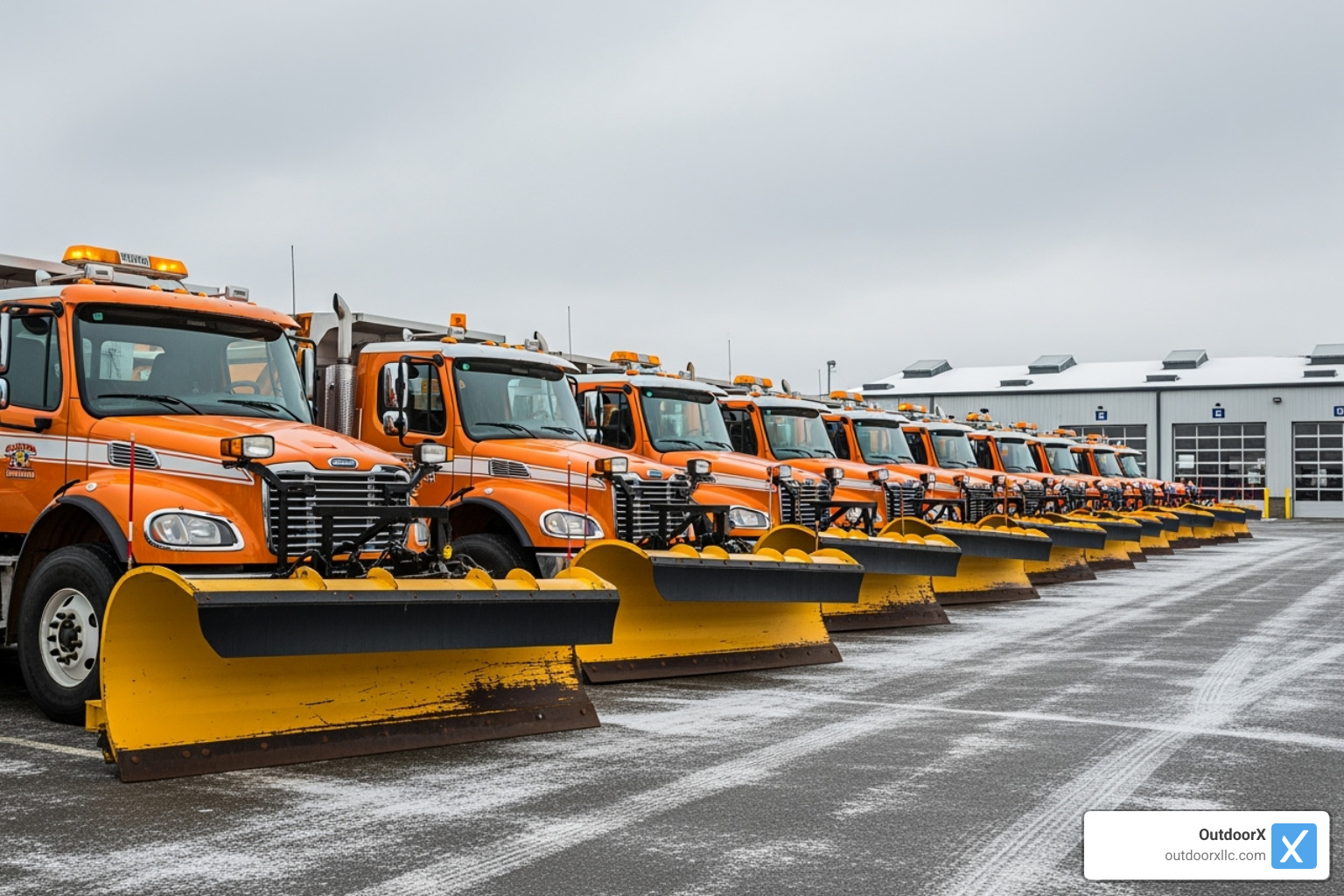
How to get commercial snow removal contracts by differentiating your business
Standing out isn’t just about having the biggest truck; it’s about proving you’re a reliable contractor who won’t let clients down.
Preventative fleet maintenance is your first line of defense. A breakdown during a storm can kill your reputation. Schedule regular maintenance before winter to avoid costly emergency repairs and keep bids competitive.
Technology adoption can set you apart. GPS Vehicle Tracking systems like GPS Vehicle Tracking provide clients with proof of service, showing arrival times and cleared areas. Route optimization software improves efficiency across Essex County, from Beverly to Newburyport.
Proactive communication is a game-changer. Don’t wait for clients to call. Send updates before, during, and after each service. Property managers appreciate knowing the job is done without having to ask.
Excellent customer service means going beyond just moving snow. When crews know each property’s unique challenges, it translates to faster, more thorough service.
We also invest in upskilling our crew. Trained operators work more efficiently and safely, completing jobs faster and with fewer mistakes. Our team’s expertise with different types of Commercial Snow Plow equipment means we can handle any property size.
How to get commercial snow removal contracts by managing liability
Snow removal has serious liability risks. Smart risk management is essential and separates professional contractors from amateurs.
Insurance requirements are non-negotiable. Comprehensive general liability insurance and commercial auto insurance must specifically cover snow and ice management. Property managers will not consider contractors without proof of adequate coverage. We can help clients get a quote for coverage if they need to update their own policies.
Essential contract clauses protect everyone and prevent misunderstandings. Include clear service definitions (what, where, when), limitation of liability clauses, and indemnification provisions. Smart contracts also include clauses for force majeure (extreme weather), dispute resolution, and termination.
Contingency planning separates professional operations from amateur ones. We maintain backup equipment, have detailed emergency response plans, and keep spare parts and extra fuel on hand during active weather periods.
Frequently Asked Questions about Commercial Snow Contracts
We often hear the same questions from businesses looking to secure reliable winter maintenance. The process of how to get commercial snow removal contracts can feel overwhelming, so let’s tackle the most common questions to help you move forward with confidence.
What are the most common mistakes to avoid when bidding on snow removal contracts?
Many contractors make the same avoidable mistakes. Knowing what to watch for can save you from common pitfalls.
- Underpricing your services is the biggest trap. Lowballing a bid to win a contract often leads to losing money or cutting corners, which hurts your reputation and business sustainability.
- Skipping the site inspection is a costly shortcut. Every property has unique challenges like tight corners or obstacles not visible on a map, which can affect your time and costs.
- Forgetting to account for all costs is another common error. Beyond fuel and labor, you must factor in insurance, equipment depreciation, overhead, and a buffer for heavy snow seasons.
- Vague service descriptions lead to disputes. Be specific about what you will service (lots, sidewalks), trigger points, and response times to avoid unhappy clients.
- Ignoring weather variability can sink your profits. Your pricing must account for both mild and severe winters.
What essential elements should be in every snow removal contract?
A solid contract protects everyone and prevents misunderstandings about the scope of work.
- Scope of services must be crystal clear. Detail what gets plowed, shoveled, or salted, and include services like snow hauling.
- Service triggers eliminate guesswork. Specify the snow depth that initiates service (e.g., 2 inches) and protocols for ice-only events.
- Response times are critical for commercial clients. Define when your crew will arrive after a trigger is met.
- Payment terms should cover billing schedules, payment methods, and late fees.
- Proof of insurance is non-negotiable. Clients need to see current certificates for general liability and commercial auto coverage.
- Termination clauses protect both parties by outlining clear conditions for ending the agreement.
How do you estimate the time required for a snow removal job?
Accurate time estimates are crucial for fair pricing and efficient scheduling. We use a systematic approach based on several variables.
- Property size is the foundation, but larger lots can sometimes allow for more efficient plowing.
- Layout complexity significantly impacts timing. A simple rectangular lot is much faster to clear than one with tight corners, multiple levels, or many obstacles.
- Equipment type makes a huge difference. Larger plows are fast, but tight spaces may require smaller equipment or hand tools.
- Snow characteristics vary. Light, fluffy snow is easier to move than wet, heavy snow. Ice storms add significant time for de-icing.
- Historical data from similar properties helps refine estimates and create reliable benchmarks.
Conclusion: Secure Your Winter Revenue Stream
Learning how to get commercial snow removal contracts isn’t just about having the biggest plow. Success is built on strategic planning, professional execution, and a commitment to keeping clients’ businesses running smoothly.
While competitors scramble after the first snowfall, preparation ensures you’ll have contracts signed, routes planned, and equipment ready to roll.
Successful contractors know that professional bidding wins contracts. Thorough site inspections, accurate cost calculations, and expert proposals show property managers you offer peace of mind, not just snow removal.
Managing risk protects your business and builds the trust that leads to multi-year contracts. Comprehensive insurance and clear contract clauses show clients you are a reliable, professional partner they can count on year after year.
Winning contractors build relationships, not just transactions. When a hospital administrator or retail manager knows they can count on you for safe access, you become an essential part of their operation.
At OutdoorX, we bring this same commitment to excellence to all aspects of property management. Our expertise extends beyond winter to custom landscaping and hardscaping that improves your property’s appeal year-round. We are your partner through every season.
For commercial property owners across South Hamilton, MA, and throughout Essex County – including Andover, Beverly, Boxford, and Ipswich – we understand the unique challenges of New England winters. We’ve built our reputation on reliability and professionalism, keeping businesses running when the snow starts flying.
Don’t wait for the first winter storm. The best contracts are signed months in advance. Contact us for your commercial snow removal needs and let’s discuss how we can help you win winter, year after year.