


Garden Stairs Design: Top 5 Essential Steps for Success
Garden stairs design is an art that seamlessly merges functionality with aesthetics, changing outdoor spaces into beautiful landscapes. Whether you’re aiming to improve a garden’s visual appeal or manage challenging terrain, garden stairs offer a practical and artistic solution. Here’s a quick look at the essence of effective garden stairs design:
- Functionality: Ensures safe and easy access across different garden levels.
- Aesthetics: Improves the overall beauty of the garden by integrating natural elements and cohesive design.
- Versatility: Suitable for both small gardens and expansive landscapes, providing a creative avenue for expression.
- Durability: Built to withstand the elements, often utilizing materials like stone, wood, or metal.
Creating a stunning outdoor environment can significantly improve the charm of your home, especially for those in Essex County, MA, seeking minimal maintenance and maximum impact. By understanding the basics of garden stairs design, homeowners can transform their properties into captivating oases that reflect both style and functionality.
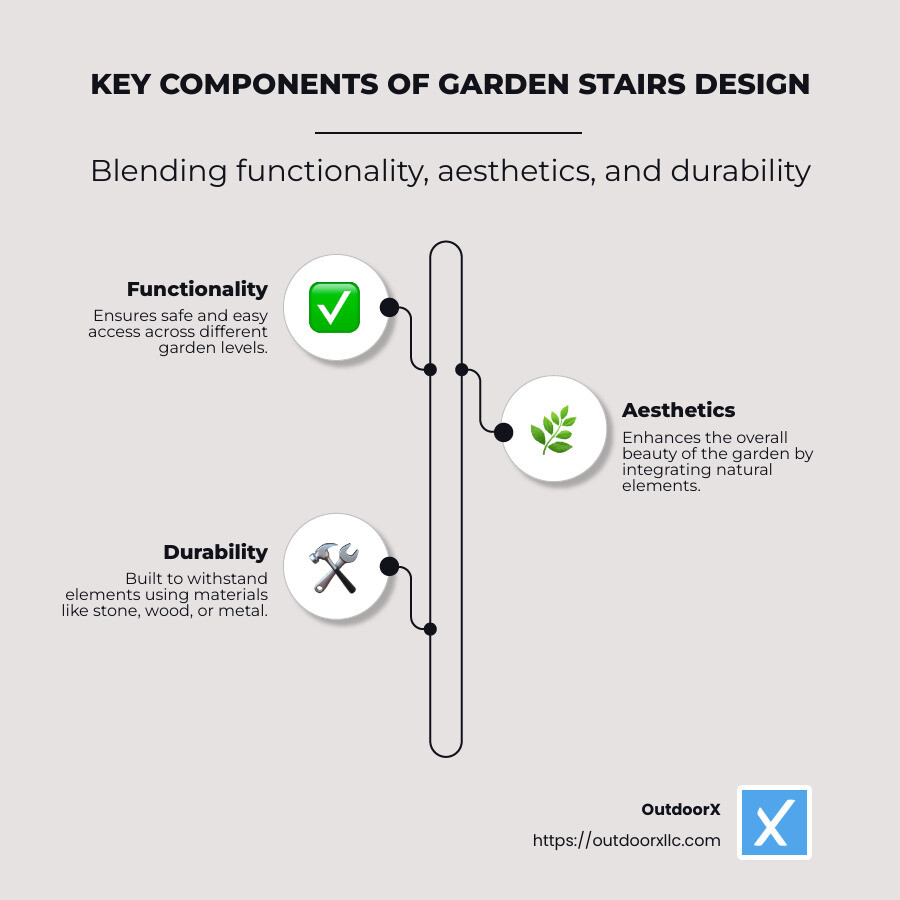
This infographic outlines the key components of garden stairs design: blending functionality, aesthetic appeal, and durability through smart material choices and innovative design strategies.
Understanding Garden Stairs Design
When it comes to garden stairs design, understanding the fundamentals is key to creating a space that’s both beautiful and functional. Let’s dig into the core elements that make these stairs not just a pathway, but a feature of your outdoor space.
Standard Measurements
Standard measurements play a crucial role in ensuring the safety and comfort of your garden stairs. Typically, the rise (the vertical part of the step) is between 4 and 6 inches, while the run (the horizontal part of the step) should be around 12 to 18 inches. This ratio helps maintain a natural walking rhythm and reduces the risk of tripping.
Comfortable Steps
Comfort is paramount in garden stairs design. Steps that are too steep or too shallow can be uncomfortable and unsafe. A good rule of thumb is the “2R + T = 26 inches” formula, where R is the rise and T is the tread (run). This formula helps ensure a comfortable stride. For instance, a step with a 5-inch rise and a 16-inch tread fits well within this guideline.
Outdoor Steps
Outdoor steps need to withstand elements like rain, snow, and sun. Therefore, choosing the right materials is essential. Stone and concrete are popular choices due to their durability and low maintenance. However, wood can also be used for a more rustic look, though it may require more upkeep.
Incorporating garden stairs into your landscape not only improves accessibility but also improves the overall aesthetic appeal. By adhering to standard measurements and focusing on comfort, you can create garden stairs that are both functional and visually pleasing.
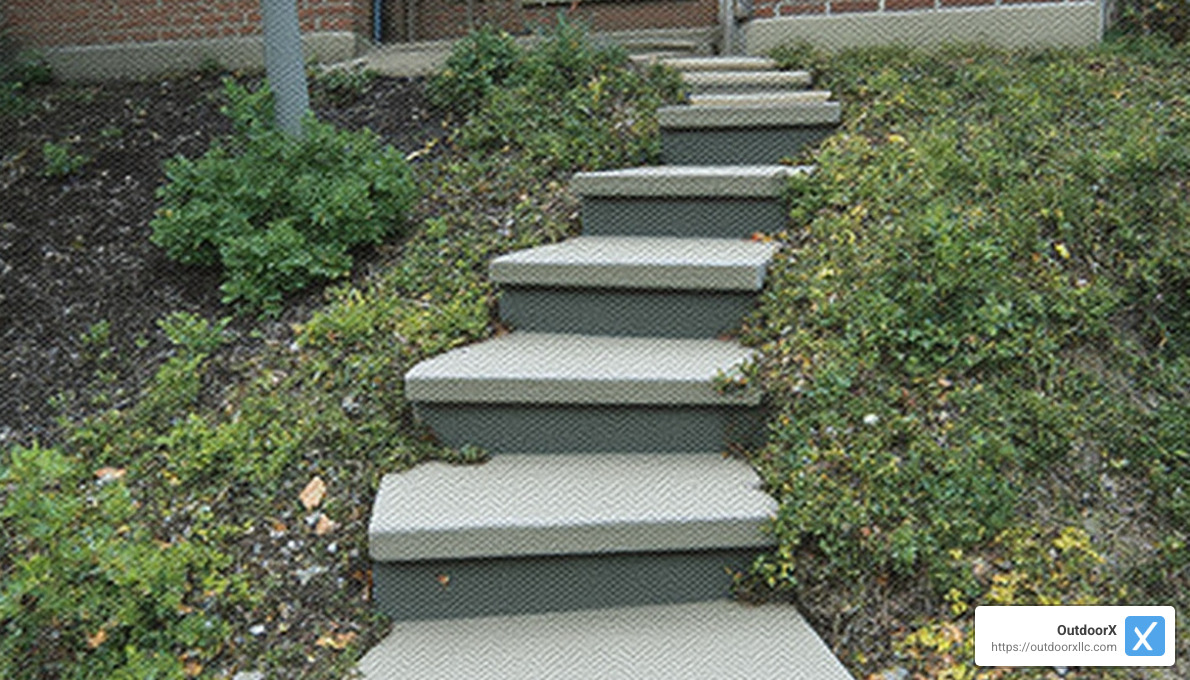
As you plan your garden stairs, each garden is unique. Tailoring your design to fit the specific needs and style of your landscape will ensure a harmonious and inviting outdoor space.
Materials for Garden Stairs
Choosing the right materials for your garden stairs design is crucial for both aesthetics and durability. Let’s explore some popular options: concrete and metal, known for their robust qualities.
Concrete
Concrete is a favorite for garden stairs thanks to its strength and versatility. It offers a modern, sleek look that fits various landscape styles. Concrete stairs are not only durable but also low-maintenance, making them ideal for outdoor use. They withstand weather conditions like rain and snow, ensuring longevity.
Concrete’s adaptability allows for creative designs, including floating steps that give a contemporary feel. According to research, using concrete slabs can create a “floating” effect, making the steps appear to hover above the ground, adding a modern touch to your garden.
Metal
Metal, particularly weathered steel, adds an industrial edge to garden stairs. Its bold appearance makes it a standout feature in any garden. The contrast between aged metal and soft greenery creates a unique blend of rugged and refined elements.
Metal stairs are incredibly durable, resisting wear and tear over time. They require minimal maintenance compared to other materials, making them a practical choice for busy homeowners. Incorporating metal into your garden stairs can transform your outdoor space into a modern, stylish haven.
Robust Qualities
Both concrete and metal offer robust qualities essential for outdoor stairs. They provide the strength needed to support weight and resist environmental factors. These materials ensure that your garden stairs remain safe and functional for years to come.
When selecting materials for your garden stairs design, consider the overall look and feel you want to achieve. Whether you prefer the sleekness of concrete or the industrial charm of metal, both options promise durability and style. Tailoring your choice to your garden’s unique character will improve its beauty and functionality.
Step-by-Step Guide to Building Garden Stairs
Creating garden stairs involves several key steps to ensure they are both functional and visually appealing. Let’s explore the process, focusing on site preparation, concrete foundations, step treads, and risers.
Site Preparation
Before you start building your garden stairs, prepare the site properly. Start by assessing the slope and any obstacles in the area. Clear any debris, rocks, or plants that might interfere with the construction. Use a measuring tape to determine the length and width of your stairs.
Mark the area with stakes and string to outline where the stairs will go. This step helps visualize the project and ensures accuracy when you begin construction. Ensuring the ground is level is crucial for a stable foundation.
Concrete Foundations
A solid foundation is the backbone of any lasting stair design. For garden stairs, concrete is often the go-to choice due to its strength and durability. Begin by digging trenches where the stairs will sit. These should be deep enough to support the weight of the stairs and any foot traffic.
Pour concrete into the trenches to create a sturdy base. Allow it to cure for at least 24 hours before proceeding to the next steps. Concrete foundations provide the necessary support to keep your stairs level and secure over time.
Step Treads
Step treads are the horizontal surfaces where you walk. They should be wide enough to comfortably accommodate a foot, typically ranging from 10 to 14 inches. Concrete, wood, or stone are popular materials for treads, each offering a different aesthetic appeal.
For a modern look, consider using recycled broken concrete as treads. This approach not only gives a rustic charm but also promotes eco-friendly building practices. Arrange the concrete pieces to create a stepping stone effect, adding texture and interest to your garden.
Risers
Risers are the vertical elements between each step. They determine the height of each step, which is crucial for comfort and safety. The standard height for risers is around 6 to 7 inches, but this can vary based on personal preference and design.
Ensure that risers are consistent in height to prevent tripping hazards. Using materials like brick or wood can add a unique touch to the overall design. If you’re aiming for a natural look, consider using tree trunks as risers, which blend seamlessly into wooded areas.
By following these steps, you can create garden stairs that improve your landscape’s beauty and functionality. Whether you opt for a modern or rustic design, the key is in the preparation and choice of materials. With careful planning and execution, your garden stairs will be a stunning addition to your outdoor space.
Enhancing Your Garden with Stairs
Garden stairs are more than just a functional element; they can transform your outdoor space into a breathtaking landscape. Let’s explore how modern design, sensory landscapes, and rooftop gardens can lift your garden stairs design.
Modern Design
Modern garden stairs often emphasize clean lines and minimalistic aesthetics. Materials like concrete and metal are popular choices for their sleek appearance and durability. Incorporating elements such as random plank custom concrete stairs can add a contemporary flair to your garden. This approach not only looks stylish but also offers exceptional strength and longevity.
To achieve a modern look, consider integrating lighting into the stair design. Garden stairs lights can guide your way and improve the ambiance of your outdoor space at night. The combination of modern materials and strategic lighting can make your garden stairs a striking focal point.
Sensory Landscape
Creating a sensory landscape involves engaging multiple senses through thoughtful design. Garden stairs can be a part of this experience by utilizing various textures and sounds. For instance, using materials like tree trunks or gravel can add tactile and auditory elements to your garden.
Incorporating water features near your stairs can introduce calming sounds, enhancing the sensory experience. The idea is to create an environment that not only looks beautiful but also feels and sounds inviting. Sensory landscapes can provide a retreat from the hustle and bustle of daily life, offering a peaceful sanctuary in your backyard.
Rooftop Gardens
Rooftop gardens are an innovative way to maximize space and bring nature into urban settings. Stairs play a crucial role in accessing these liftd gardens. When designing stairs for a rooftop garden, consider materials that are lightweight yet sturdy, such as metal or composite decking.
The integration of plants along the stairway can soften the look and blend the stairs seamlessly with the garden. Using vertical gardening techniques, you can create a lush, green pathway leading to your rooftop oasis. This not only improves the aesthetic appeal but also contributes to environmental benefits like improved air quality and insulation.
By incorporating modern design, sensory elements, and rooftop gardens into your garden stairs design, you can create a landscape that is both beautiful and functional. These improvements offer a unique opportunity to express creativity and make the most of your outdoor space.
Frequently Asked Questions about Garden Stairs Design
What is the standard height for garden steps?
When designing garden stairs, it’s important to consider the standard height for each step, known as the “rise.” For outdoor stairs, a comfortable rise is typically between 4 to 7 inches. This range ensures ease of use while accommodating various terrain and design preferences.
The depth of each step, or “run,” should ideally be between 10 to 18 inches. This provides enough space for secure footing and improves safety. Consistency is key: keeping the rise and run uniform throughout your garden stairs will make them comfortable and easy to steer.
Do you need foundations for garden steps?
Yes, establishing a solid foundation is crucial for the longevity and stability of garden stairs. Proper foundations prevent shifting and settling, especially in areas with varying soil conditions. Concrete is a popular choice for step bases due to its robust qualities and ability to provide a level surface.
When preparing the site, ensure the ground is compacted and leveled before pouring concrete. This creates a stable base for your garden stairs, reducing the risk of uneven steps or structural issues over time. Using concrete foundations not only improves durability but also supports a wide range of materials for the stair treads and risers.
What is the best type of outdoor stairs?
Choosing the best type of outdoor stairs depends on your design goals and environmental conditions. Concrete and metal are two popular materials due to their modern appearance and durability. Concrete stairs offer a sleek, minimalistic look and can be customized with textures and colors to suit your garden’s aesthetic.
Metal stairs, often made from materials like steel or aluminum, provide a contemporary and industrial feel. They are lightweight yet sturdy, making them ideal for areas with limited space or weight restrictions, such as rooftop gardens.
Both concrete and metal stairs can withstand harsh weather conditions, ensuring your garden stairs remain beautiful and functional for years. Integrating these materials into your design not only improves the visual appeal but also provides a practical solution for any outdoor space.
Conclusion
At OutdoorX, we believe in the transformative power of custom landscaping. Our expert craftsmanship ensures that every project is not just a set of garden stairs, but a seamless blend of beauty and functionality.
Our team specializes in creating outdoor spaces that reflect your personal style while enhancing the natural landscape. Whether you envision sleek, modern concrete steps or rustic wooden paths, we tailor each design to meet your needs and preferences.
We understand that garden stairs are more than just a way to steer your garden. They’re an opportunity to add character and depth to your outdoor space. By choosing the right materials and design, you can create a unique focal point that improves your garden’s overall aesthetic.
Garden stairs design is an art, and with our expertise, we ensure that every detail is carefully planned and executed. From site preparation to the final installation, our focus is on delivering exceptional quality and lasting value.
If you’re ready to transform your outdoor space with beautiful, functional garden stairs, explore our landscape design and build services. Let us help you bring your vision to life with our commitment to excellence and passion for creating stunning landscapes.
