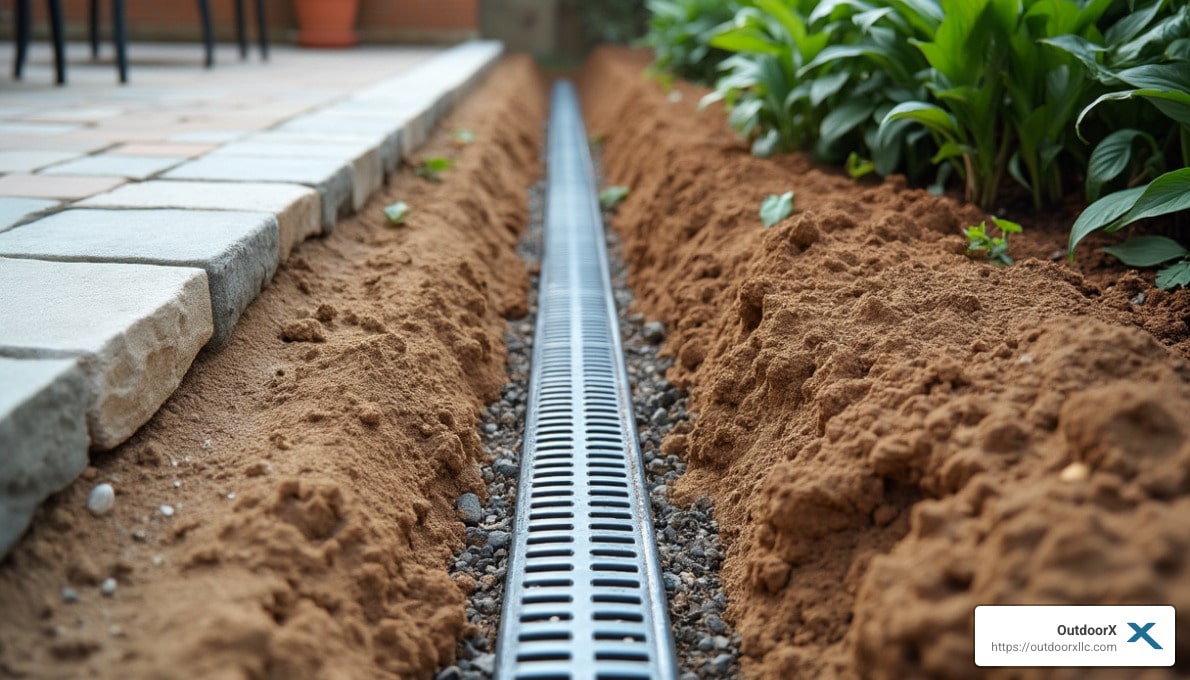
French Drain Around Patio: Top Benefits & Challenges 2025
French drain around patio is an essential solution for homeowners seeking to keep their outdoor spaces dry and attractive. When rainy weather strikes, water often pools around patios, causing damage and frustrating maintenance issues. Installing a French drain effectively diverts water away from these areas, offering both patio protection and a beautiful, functional landscape.
To quickly ensure your patio remains a dry and inviting space:
- Install a French drain between the patio and surrounding yard areas.
- Use 4-inch perforated pipe, gravel, and landscape fabric to efficiently redirect water.
- Ensure the trench is sloped correctly to carry water away from the patio.
Maintaining the ideal look and longevity of your patio demands understanding and utilizing effective drainage solutions. Whether dealing with existing water woes or planning a new patio project, incorporating a French drain can significantly improve your outdoor experience.
Creating a charming outdoor space that improves your lifestyle shouldn’t be a hassle. Understanding the role of a French drain can help keep water at bay and protect your investment in patio perfection.
Understanding French Drains
A French drain around your patio is more than just a trench; it’s a smart solution for managing water flow. At its core, a French drain consists of three main components: a perforated pipe, gravel, and a trench. Together, they work to channel water away from your patio, keeping it dry and intact.
Perforated Pipe
The heart of a French drain is the perforated pipe. This pipe has small holes along its length, allowing water to enter from the surrounding soil. As water seeps into the trench, it fills the pipe and is carried away to a designated outlet.
- 4-inch diameter pipes are commonly used for patios.
- The pipe should be laid with the holes facing down to maximize water intake.
Gravel
Gravel is a crucial component that surrounds the pipe within the trench. It acts as a filter, preventing soil and debris from clogging the pipe while allowing water to reach it.
- Use clean, coarse gravel to ensure efficient drainage.
- Gravel also stabilizes the pipe, keeping it in place during heavy rains.
Trench
The trench is the pathway that guides water away from your patio. Proper trench preparation is key to a successful French drain installation.
- Slope the trench at least 1% (or 1 inch drop per 10 feet) to ensure gravity helps water flow away.
- The trench should be about 18 inches deep and 9-12 inches wide to accommodate the pipe and gravel.

Understanding these components and their roles can help you install an effective French drain around your patio. This knowledge not only protects your patio but also improves the overall appeal and functionality of your outdoor space.
Installing a French Drain Around Your Patio
Step-by-Step Installation Process
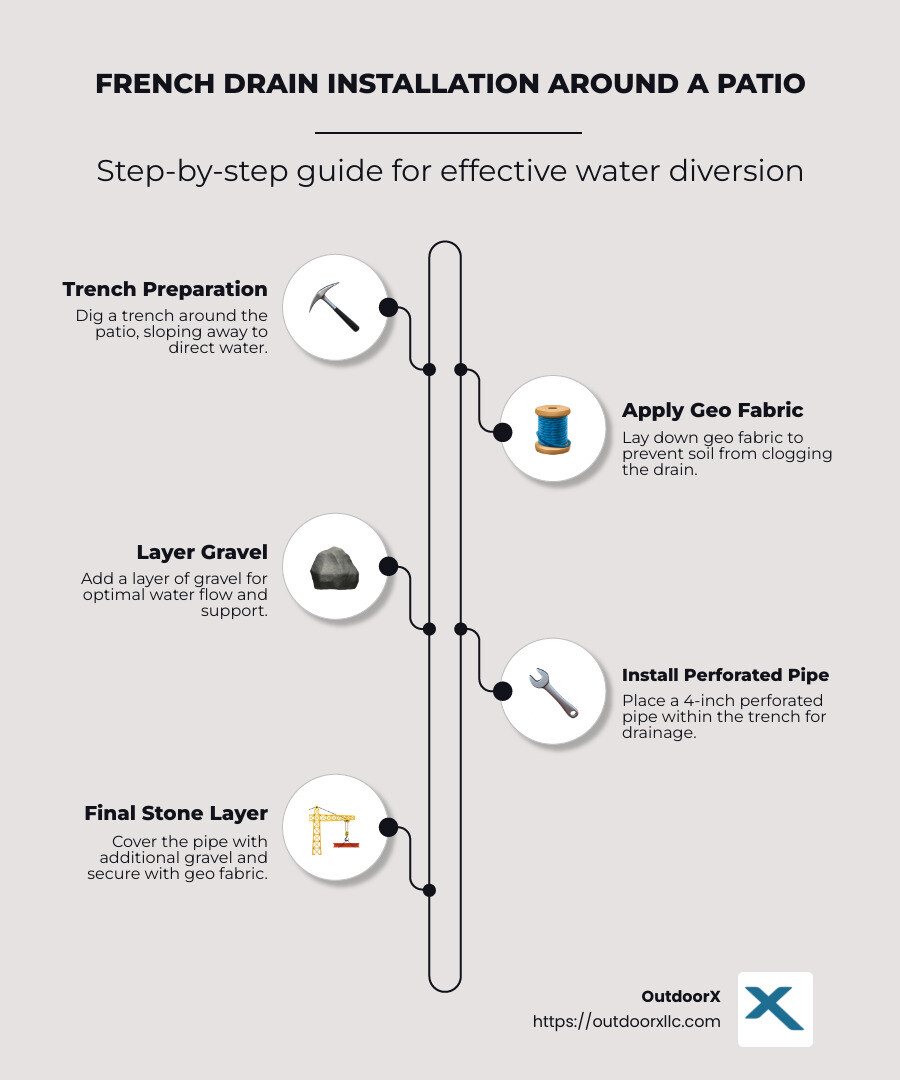
To install a French drain around your patio, you need to follow a series of steps that ensure proper water diversion and patio protection.
- Trench Digging
Begin by marking the path of your trench using spray paint or stakes. The trench should run along the patio where water tends to pool and extend to a suitable drainage outlet. Make sure to check for any underground utility lines before you dig. The trench should be about 18 inches deep and 9-12 inches wide.
- Trench Preparation
Ensure the trench slopes at least 1% to allow gravity to guide the water away. This means a 1-inch drop for every 10 feet of trench. You can use a level to check the slope as you dig.
- Geo Fabric Lining
Line the trench with geo fabric, leaving at least 10 inches of excess on each side. This fabric acts as a barrier to prevent soil from entering and clogging the drain.
- Stone Layers
Pour about 2-3 inches of coarse gravel or landscaping stone into the trench. This will form the base layer that supports the pipe.
- Fabric Roll
After placing the pipe, cover it with additional gravel, ensuring it is completely surrounded. Fold the excess geo fabric over the top to create a “fabric roll.” This wrap keeps the gravel and pipe secure while filtering out debris.
- Stone Placement
Add more gravel on top of the fabric roll to stabilize the setup. This additional layer should be about 2 inches thick.
Materials Needed for Installation
Here’s a quick list of materials you’ll need to install a French drain around your patio:
- Geo Fabric: To line the trench and wrap around the pipe and stones.
- Perforated Pipe: Typically a 4-inch diameter pipe with holes facing downward.
- Stone (Gravel): Coarse gravel for both the bedding and covering of the pipe.
- Sand: After securing the fabric roll, add about 1 inch of sand on top to prepare for the pavers.
- Pavers: These will be placed on top of the sand layer to finish the patio surface.
By following these steps and using the right materials, you can effectively install a French drain that will keep your patio dry and functional. This setup not only protects your patio from water damage but also improves the overall landscape design.
Benefits and Downsides of French Drains
French drains are a popular solution for managing water around patios, but like any home improvement project, they come with both advantages and challenges.
Benefits
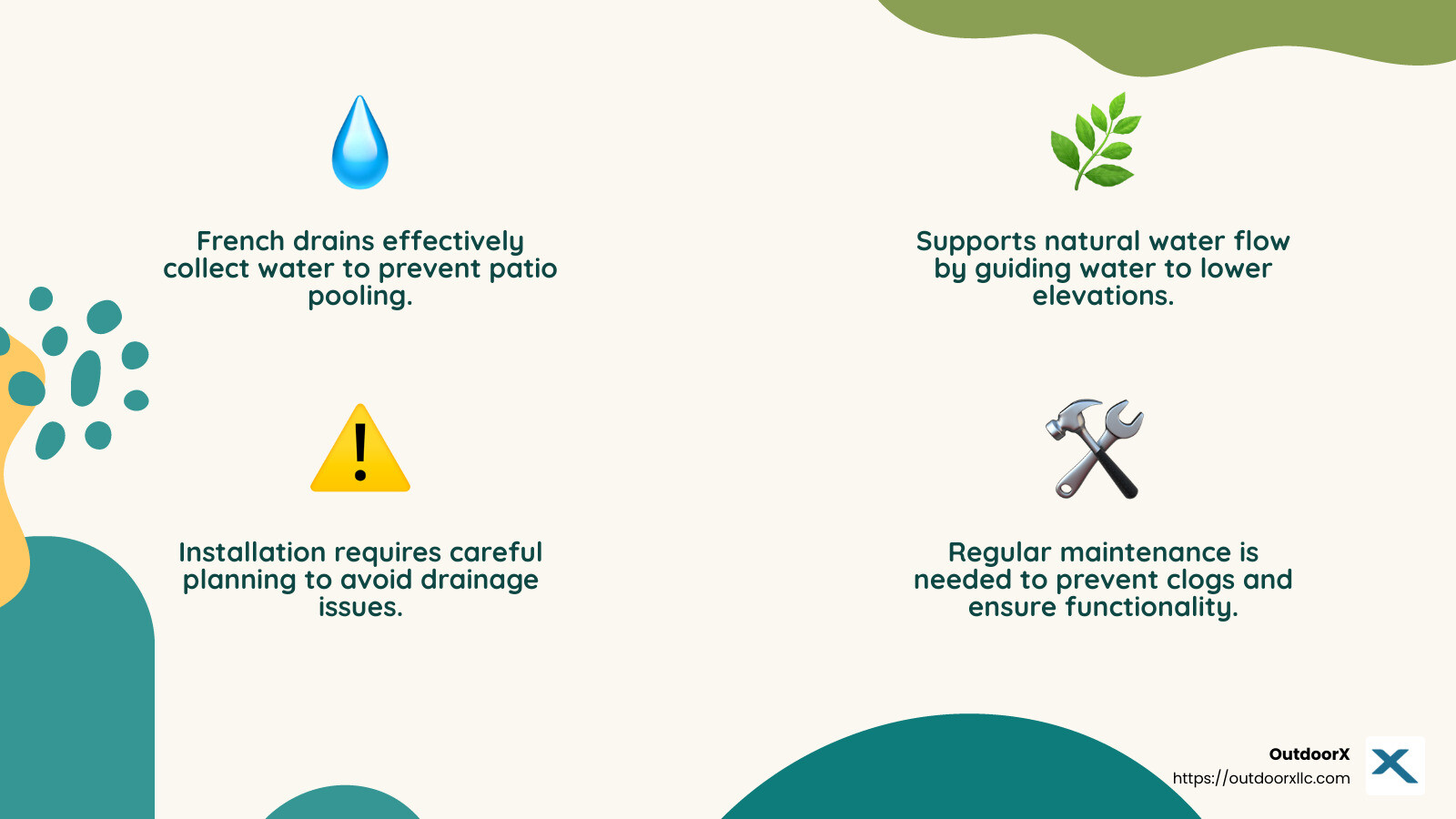
1. Effective Water Collection
French drains are designed to collect water efficiently. The perforated pipe and gravel system allows water to flow naturally through the trench, away from your patio. This prevents pooling and helps protect your patio from water damage.
2. Supports Natural Water Flow
By using gravity, French drains guide water to a lower elevation. This natural flow reduces the risk of water backing up towards your home. It’s a simple, yet effective method that works with the landscape rather than against it.
Downsides
1. Installation Challenges
Installing a French drain requires careful planning and execution. You need to ensure the trench is dug at the correct depth and slope. Any mistakes during installation can lead to ineffective drainage or even damage to your patio.
2. Maintenance Needs
While French drains are generally low maintenance, they can get clogged by sediment or roots over time. Regular checks are necessary to ensure the system remains functional. If clogged, it may require professional cleaning.
When French Drains Might Not Be Ideal
French drains should not be installed near utility lines or where they might disrupt natural water flow patterns. Always check local regulations and consult with experts if you’re unsure.
By weighing these benefits and downsides, you can decide if a French drain around your patio is the right choice for your water management needs. This solution offers a blend of practicality and effectiveness, but it’s important to plan carefully and maintain the system for optimal results.
Next, let’s explore some frequently asked questions about French drains to further guide your decision-making.
Frequently Asked Questions about French Drains
Where Not to Put a French Drain?
When considering the installation of a French drain around your patio, location is crucial. Avoid placing a French drain near utility lines. Before digging, always call 811 to have utility companies mark underground lines. This step prevents accidental damage to electric, gas, or water lines, ensuring safety and compliance with local regulations.
Additionally, be mindful of natural water flow patterns. French drains should work with the landscape, not against it. Installing a drain that disrupts these patterns can lead to unintended water pooling or erosion elsewhere in your yard.
How to Divert Water Away from a Patio?
Diverting water away from a patio can be achieved with a few smart landscaping solutions. A French drain around your patio is an effective method, but it’s not the only option. Consider using water channels or swales to guide water away from your patio and towards a suitable outlet, like a retention pond or storm drain.
For added protection, ensure your patio has a slight slope away from your home. This simple adjustment helps prevent water from collecting near your foundation.
What Are the Downsides of a French Drain?
While French drains are effective, they do come with some challenges. Installation can be complex, requiring precise trench preparation and proper slope to ensure effective drainage. Mistakes during this process can lead to poor performance or even damage to your patio.
Maintenance is another consideration. Over time, French drains can become clogged with sediment or invaded by tree roots. Regular inspections and maintenance are necessary to keep the system functioning efficiently. If issues arise, professional cleaning might be required to restore proper water flow.
By understanding these potential downsides, you can better prepare for the installation and upkeep of a French drain. This knowledge will help you make an informed decision about whether a French drain is the right solution for your patio’s water management needs.
Next, we’ll wrap up with some final thoughts on how OutdoorX can help bring your landscaping vision to life.
Conclusion
At OutdoorX, we take pride in changing outdoor spaces with our custom landscaping and expert craftsmanship. Whether you’re dealing with water woes or dreaming of a stunning new patio, our team is here to help. Installing a French drain around your patio is just one of the many ways we ensure your outdoor area is both beautiful and functional.
Our approach is personalized to meet your specific needs, preferences, and budget. We use only the highest quality materials to guarantee durability and longevity. From design to installation, we pay close attention to every detail, ensuring your project exceeds expectations.
If you’re ready to improve your outdoor space with a French drain or any other landscaping solution, visit our Patio Design and Installation page to learn more about our services. Let’s work together to create a space you’ll love for years to come.