


fire pits installer: 7 Must-Know Powerful Tips for 2025
Transform Your Outdoor Space with Professional Fire Pit Installation
Fire pits installers are specialized contractors who design, build, and maintain outdoor fire features for residential and commercial properties. Here’s what you need to know:
- Services Offered: Design consultation, custom fabrication, professional installation, gas line connection, safety compliance, and maintenance
- Cost Range: $1,500-$15,000+ depending on size, materials, and complexity
- Timeline: Typically 1-7 days from consultation to completion
- Benefits: Expert compliance with local codes, proper material selection, safe fuel system installation, and warranty protection
A well-designed fire pit transforms an ordinary backyard into a captivating gathering space. Whether you’re roasting marshmallows with family or entertaining friends on cool evenings, a professionally installed fire pit adds both value and enjoyment to your outdoor living area.
“My backyard was a dull, flat space that had no character,” shares one homeowner. “After finding a professional fire pit installer, I knew a stone fire pit would be the perfect addition. The worst part? Trying to get my kids to come inside for bed! Needless to say, we love our fire pit!”
When considering a fire pit installation, working with experienced professionals ensures safety, compliance with local regulations, and a final product that seamlessly integrates with your landscape design. Professional installers bring specialized knowledge about material selection, proper drainage, gas line installation, and placement considerations that DIY approaches often miss.
While portable options exist, built-in fire pits installed by professionals offer greater durability, improved safety features, and custom design possibilities that lift your outdoor space from ordinary to exceptional.
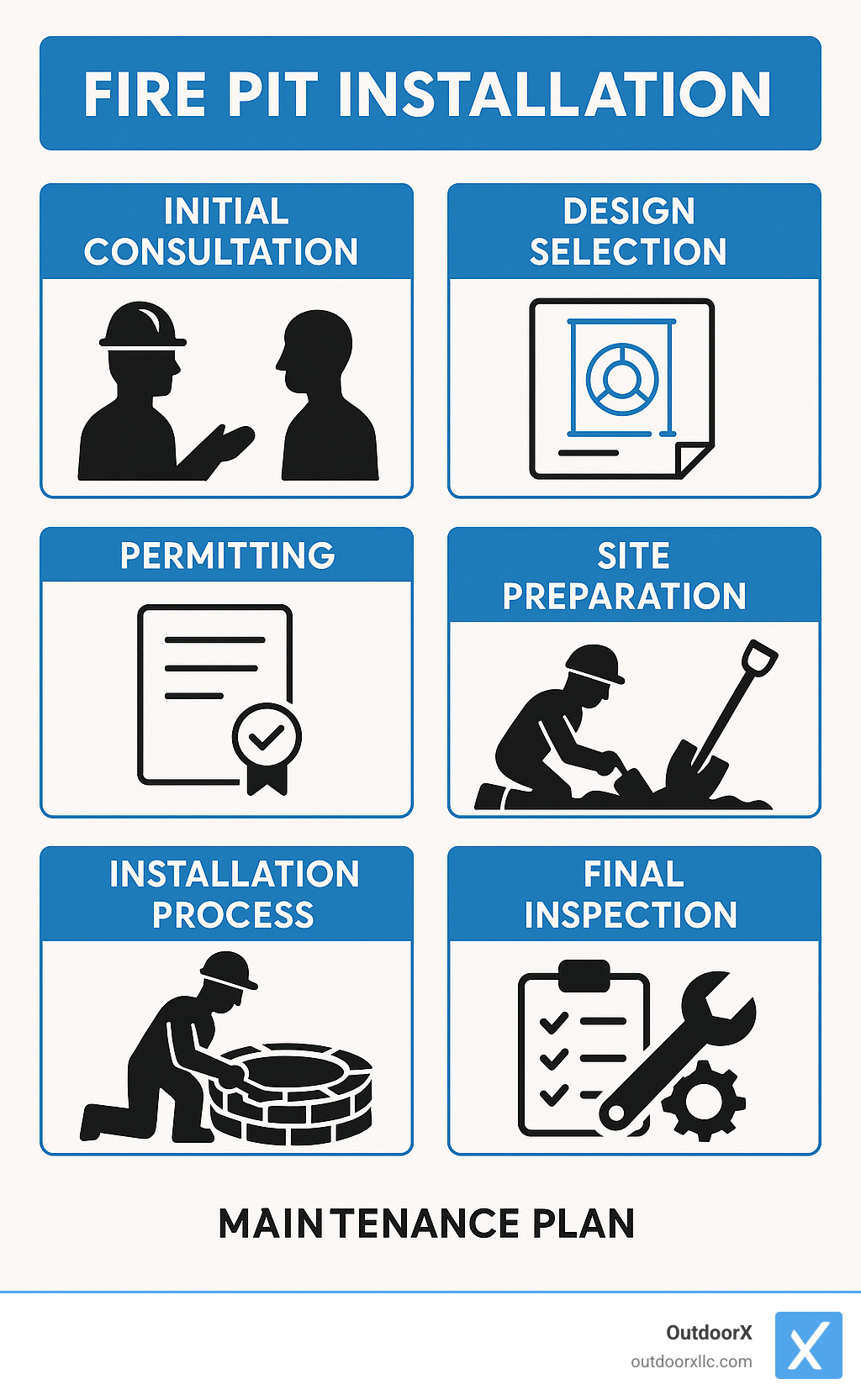
Fire pits installer terms simplified:
– Backyard Firepits
– Fire pit seating arrangements
– Fire pits with seating
Fire Pit Styles & Fuel Choices Explained
Before diving into the installation process, understanding the different types of fire pits available will help you make an informed decision about what’s best for your outdoor space. Fire pits installers typically work with several different styles and fuel types, each with unique benefits.
Wood-Burning Fire Pits
There’s something magical about gathering around a crackling wood fire on a cool evening. Wood-burning fire pits create that authentic campfire experience many homeowners crave – the natural sounds, the pleasant woody aroma, and the significant heat output that keeps everyone cozy.
“Wood-burning fire pits give you complete control over your fire’s size and intensity,” explains our resident fire feature expert at OutdoorX. “Just add more logs for a bigger blaze or let it burn down for a more intimate setting. Plus, there’s a hidden benefit many people don’t realize – the smoke naturally keeps mosquitoes at bay during your outdoor gatherings!”
Gas and Propane Fire Pits
If convenience is your priority, gas and propane fire pits deliver instant ambiance with the flip of a switch. Natural gas models connect directly to your home’s gas line, providing uninterrupted enjoyment without refueling. Propane versions offer flexibility with portable tanks that can be replaced when empty.
“My clients who choose gas fire pits love the clean burning and precise temperature control,” shares our design team leader. “There’s no ash to clean up, no wood to store, and no worries about smoke bothering the neighbors. They’re particularly popular in neighborhoods with strict air quality regulations or seasonal fire restrictions.”
Material Options
Your fire pit’s material doesn’t just affect how it looks – it determines durability, heat retention, and maintenance needs. Metal fire pits in steel or cast iron offer sleek, modern styling and excellent heat distribution. Stone fire pits provide a timeless, natural look that blends beautifully with most landscape designs. Concrete options offer incredible durability and can be customized into unique shapes and sizes, while brick delivers classic appeal with excellent heat retention properties.
Installation Types
When talking with a fire pits installer, you’ll generally discuss two main approaches. Built-in fire pits become permanent fixtures integrated into your landscape design, creating a focal point that looks like it was always meant to be there. Portable fire pits offer flexibility, allowing you to reconfigure your outdoor space or store the unit during off-seasons.
| Fuel Type | Pros | Cons | Average Cost Range |
|---|---|---|---|
| Wood | Natural ambiance, higher heat output, mosquito deterrent, no fuel costs | Requires wood storage, smoke, ash cleanup, spark concerns | $1,500-$5,000 |
| Natural Gas | Convenient, clean burning, consistent flame, no refueling | Requires gas line installation, less heat than wood, higher installation cost | $2,000-$8,000 |
| Propane | Portable options available, clean burning, precise control | Tank replacement, less heat than wood, higher fuel cost | $1,800-$7,000 |

Heat Source 101
Understanding heat output helps you choose the right fire pit for your space and comfort needs. Fire pits installers measure heating capacity in BTUs (British Thermal Units), and the differences between fuel types are significant.
Wood-burning fire pits are the champions of heat production, often exceeding 100,000 BTUs. This makes them perfect for larger gathering areas or our chilly New England evenings. The radiant heat from wood combustion effectively warms both people and objects around it, creating that cozy atmosphere we all love.
Gas fire pits typically deliver between 30,000-60,000 BTUs – plenty for most residential settings. What they lack in raw power, they make up for in consistency and control. You can adjust the flame height and heat output with precision, something you can’t easily do with wood.
“Here in Essex County, we design fire pit areas with our local climate in mind,” explains our OutdoorX design team. “Those beautiful fall evenings can get pretty nippy, so we often recommend higher BTU outputs to keep everyone comfortable during extended outdoor gatherings.”
Design Materials That Last
New England’s freeze-thaw cycles and coastal conditions can be tough on outdoor features. That’s why material selection is crucial for longevity. Our fire pits installers carefully choose components that can withstand our unique climate challenges.
For metal elements, we prefer marine-grade stainless steel that resists rust and corrosion even with salt exposure. Cast iron offers exceptional heat retention but needs regular maintenance to prevent oxidation – something we discuss honestly with our clients.
For masonry fire pits, we don’t cut corners. We use concrete pavers specifically engineered for high-heat applications, natural stone like bluestone or granite that stands the test of time, and proper fire brick lining for wood-burning pits to withstand direct flame contact.
“I’ve seen too many DIY fire pits fail after just a couple of seasons,” one of our senior installers often tells clients. “Using regular landscape blocks instead of heat-rated materials is a common mistake. They can literally crack and crumble when exposed to high temperatures over time.”
At OutdoorX, we’re committed to using only commercial-grade materials specifically rated for fire features. It might cost a bit more upfront, but it ensures your investment will provide enjoyment for many years to come – through countless s’mores sessions and starlit conversations.
The Fire Pit Installation Process: Consultation to First Spark
Ever wonder what actually happens when you hire professionals to install a fire pit? The journey from dreaming about cozy backyard evenings to actually enjoying your first flame is quite fascinating. Our fire pits installers at OutdoorX have refined this process to ensure your outdoor change goes smoothly.
The installation process typically follows a thoughtful sequence that combines technical expertise with creative vision. We start with a thorough site assessment of your outdoor space, examining everything from existing landscaping to drainage patterns. This helps us identify any potential challenges before they become problems.
“The site assessment is really where the magic begins,” says our lead designer. “We’re not just looking at where to put a fire pit—we’re envisioning how this new feature will transform how you experience your entire outdoor space.”
Next comes the permitting phase, which is particularly crucial for gas installations. Our team handles all the paperwork with local authorities, saving you the headache of navigating building codes and safety regulations.
Once permits are secured, we develop detailed designs that harmonize with your landscape’s aesthetic. This isn’t just about the fire pit itself—it’s about creating a cohesive outdoor environment that feels intentional and inviting.
The physical work begins with excavation and base preparation, creating a stable foundation that will ensure your fire pit stands the test of time. For gas fire pits, we carefully install properly sized gas lines from your home to the pit location, adhering to strict safety protocols.
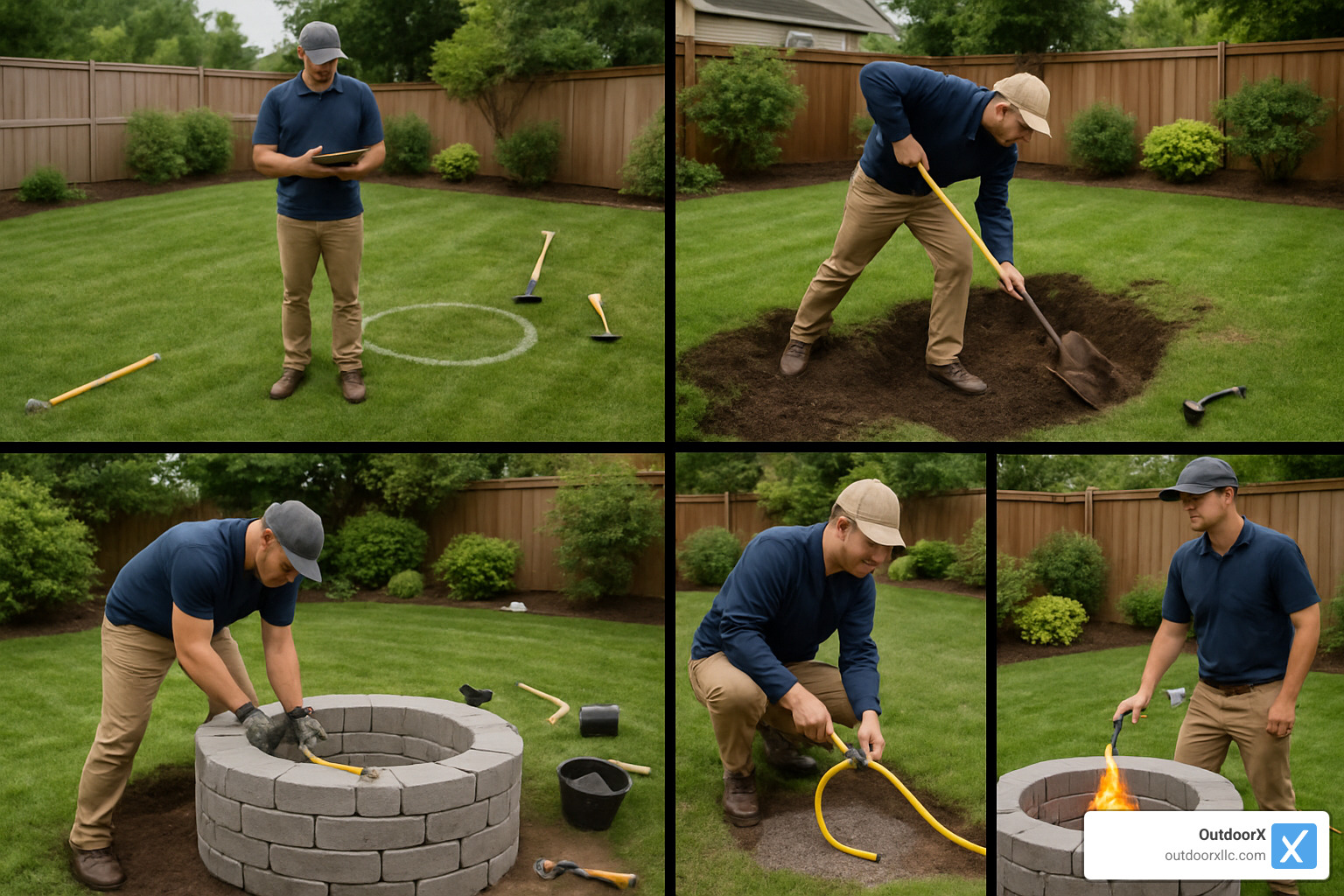
The construction phase brings your vision to life as we build the fire pit structure according to precise specifications. This is followed by installing the ignition system—a critical component that ensures safe, reliable lighting every time you want to enjoy your fire pit.
Before we consider the job complete, we conduct thorough testing to verify everything works perfectly. The process culminates with a final walkthrough where we demonstrate proper usage and explain maintenance requirements.
One Essex County homeowner shared their experience: “We had a fireplace that wouldn’t ignite despite changing the batteries and having the gas company check it. The professional installer diagnosed the issue in minutes and had it working perfectly the same day. That expertise is worth every penny.”
What to Expect in Your Initial Meeting
The consultation is where your fire pit journey truly begins. When you sit down with our fire pits installers, we conduct a comprehensive needs analysis that goes far beyond basic design preferences.
“During the initial consultation, we’re not just designing a fire pit – we’re creating an outdoor experience,” explains our design team. “We want to understand how this feature will improve your lifestyle, not just how it will look in your yard.”
This conversation typically covers how you plan to use the space—whether for intimate family gatherings or larger entertainment events. We discuss your style preferences, from rustic to modern, and establish budget parameters to ensure the project meets your financial comfort zone.
We also explore practical considerations like existing landscape elements to complement, fuel preferences, seating requirements, lighting options, and plans for all-season usage. This meeting usually takes 60-90 minutes and includes walking your property to identify optimal placement options while discussing safety considerations and code requirements specific to your site.
The goal is to gather all the information needed to create not just a beautiful fire pit, but an outdoor space that improves your daily life in meaningful ways.
Average Project Timelines & Milestones
Planning a fire pit installation for a special occasion? Understanding the typical timeline helps set realistic expectations. The complexity of your project largely determines how long installation will take.
For simple kit installations, our fire pits installers can often complete the work in just 1-2 days. Day one focuses on site preparation and base construction, while day two covers assembly, testing, and cleanup.
Standard custom installations typically require 3-5 days to complete. The process begins with excavation and base preparation, followed by gas line installation if applicable. Days three and four focus on fire pit construction and ignition system installation, with the final day reserved for finishing touches and landscape restoration.
More complex custom projects with integrated seating or multiple features might extend to 1-2 weeks. The first week encompasses site preparation, foundation work, and utility connections, while the second week focuses on building the structure, integrating features, testing systems, and finishing the surrounding landscape.
“Our timelines are weather-dependent,” notes our installation team. “In Essex County, we typically schedule projects during the April-November window when ground conditions are optimal, though we can accommodate winter installations with proper planning.”
The beauty of working with professionals is the efficiency that comes from experience. What might take a DIY enthusiast several weekends to complete, our team can often finish in a matter of days—with professional results that stand the test of time.
Choosing the Right Fire Pits Installer
Finding the perfect person to build your dream fire pit isn’t just about hiring someone with a truck and some tools. The right fire pits installer can make the difference between years of cozy outdoor enjoyment and a project that fizzles out before it ever truly ignites.
Must-Have Credentials for a Fire Pits Installer
When you’re inviting someone to install what’s essentially a controlled fire feature on your property, credentials matter. Here in Essex County, we’ve seen plenty of “weekend warriors” attempt installations that later required professional intervention.
Proper licensing should be your first checkpoint. Any reputable fire pits installer will have appropriate contractor licenses for your area. In our neck of the woods, that means home improvement contractor registration at minimum, and for gas installations, proper plumbing and gas fitting licenses.
Insurance coverage isn’t just paperwork—it’s your protection. Make sure your installer carries both liability insurance and workers’ compensation. Don’t be shy about asking for certificates that name you as an additional insured during your project. This simple step can save you from tremendous headaches if something unexpected happens.
For gas fire features, NFI certification (National Fireplace Institute) is worth its weight in gold. As one of our certified technicians puts it, “NFI certification isn’t just a piece of paper—it represents hundreds of hours learning the intricacies of safe gas appliance installation and operation.”
If your project includes hardscaping elements, look for ICPI or NCMA certification from the Interlocking Concrete Pavement Institute or National Concrete Masonry Association. These credentials ensure your installer knows how to properly prepare bases and build structures that won’t shift or crack when exposed to heat cycles.
“We’ve been crafting custom fire features throughout Essex County since 2008,” shares our team at OutdoorX. “That experience means we’ve probably already solved whatever challenge your property might present—before it ever becomes a problem for you.”
Safety & Code Compliance Checklist
A professional fire pits installer doesn’t just build something that looks pretty—they create a feature that’s safe for years of enjoyment. Here’s what separates the professionals from the amateurs:
Proper setback requirements ensure your fire pit sits at a safe distance from structures, trees, and property lines. This typically ranges from 10-25 feet depending on local codes, and a good installer knows exactly what your town requires.
Your fire pit needs proper ventilation for both combustion and smoke dispersal. This isn’t just about comfort—it’s about preventing dangerous build-up of gases, especially with enclosed fire features.
Sometimes fire barriers or heat shields are necessary to protect nearby structures or landscaping. A knowledgeable installer will identify these needs before they become obvious problems.
For gas installations, precise gas line specifications are critical. This includes using appropriate materials, correct sizing, and professional installation methods. As one client finded after hiring us to fix a poorly installed pit: “The previous contractor used indoor gas line materials outside—a disaster waiting to happen.”
Electrical safety matters tremendously for ignition systems. Weather-resistant components and proper wiring protect both your investment and your family.
Smart drainage considerations prevent water from pooling around your fire feature, which can damage components and create unsafe conditions.
The structural integrity of your fire pit depends on proper foundations. Nothing ruins outdoor enjoyment faster than a tilting or collapsing fire feature.
“At OutdoorX, safety isn’t something we check off a list—it’s woven into every step of our process,” our installation team emphasizes. “We apply the latest safety standards for landscaping to every project we tackle.”
Local fire departments often have specific requirements for outdoor burning features. Our team handles all necessary permits and inspections, ensuring your installation not only meets but typically exceeds all safety standards. This attention to detail explains why so many of our new clients come from referrals by delighted existing customers throughout South Hamilton and Essex County.
Professional vs. DIY: Why Hire a Fire Pits Installer?
The allure of DIY fire pit kits is understandable—they promise savings and the satisfaction of building something yourself. But before you grab that shovel, let’s explore why professional fire pits installers might be your better option.
When John from Ipswich decided to build his own fire pit last summer, he was confident his weekend warrior skills would suffice. “I watched some YouTube videos and thought, ‘How hard can this be?'” he recalls with a laugh. “Three weekends, two trips to the emergency room for minor burns, and one very unhappy wife later, I called OutdoorX to rescue my project.”
Cost of Mistakes in DIY Builds
DIY fire pit projects often become money pits due to common mistakes that professionals know how to avoid. That perfectly level base you think you’ve created? New England’s notorious freeze-thaw cycles will quickly reveal any compaction errors, leaving you with a tilted, cracked fire pit by spring.
Gas line installations present even greater challenges—and dangers. Improper sizing or connections can lead to dangerous leaks or disappointing flames that never reach their full potential. One Essex County homeowner learned this lesson the hard way: “I thought I’d save a few hundred dollars doing it myself. Instead, I ended up paying twice—once for my materials and again for the professional to fix my mistakes.”
Material selection proves equally tricky. That beautiful decorative stone from the garden center? It might look perfect until it literally explodes when exposed to high heat. Fire pits installers understand which materials can withstand thermal stress and which will fail catastrophically.
Perhaps most concerning are code violations that DIYers often unknowingly commit. Placing a fire pit too close to structures or property lines can result in fines or forced removal—after you’ve already invested time and money.
Value Added by Pros
Professional installation brings peace of mind that simply can’t be measured in dollars. When our team at OutdoorX installs your fire feature, we’re bringing years of specialized experience to your backyard. We understand how to create designs that blend seamlessly with your existing landscape rather than appearing as afterthoughts.
Our material knowledge ensures your fire pit will withstand Essex County’s challenging coastal climate. While DIY kits might use standard components, we select materials specifically rated for fire applications and local environmental conditions.
The technical precision we bring to gas line sizing, ventilation, drainage, and ignition systems requires specialized tools and knowledge that most homeowners simply don’t possess. “Getting the gas pressure just right makes the difference between a disappointing flicker and a beautiful, robust flame,” explains our installation team.
With professional installation from OutdoorX, you receive warranty protection—our standard 3-year workmanship warranty means we stand behind our work long after the project is complete. Our comprehensive insurance coverage protects you from liability should anything unexpected occur during installation.
Perhaps most valuable is the time you’ll save. What might consume several weekends of your precious free time, our teams can accomplish efficiently in days. As one client noted, “The time I saved not struggling with this project was worth every penny of professional installation.”
When you choose OutdoorX for your Outdoor Fire Pits, you’re investing in expertise that ensures your fire feature is built correctly, safely, and beautifully from day one. Instead of worrying about technical details, you can focus on what matters—creating memories around your new fire pit with family and friends.
Budget, Customization & Trend Watch
Understanding cost factors and current trends helps you plan a fire pit that fits both your budget and lifestyle. Professional fire pits installers can guide you through options at various price points while ensuring you get the most value for your investment.
Cost Considerations
Fire pit installation costs vary widely based on several factors, much like any custom outdoor feature. At OutdoorX, we work with clients across the full spectrum of budgets.
Basic pre-fabricated kits typically run $1,500-$3,000 installed, offering a straightforward solution for homeowners seeking simplicity. For those wanting something more personalized, mid-range custom stone fire pits generally fall between $3,000-$7,500, allowing for more design flexibility and material choices.
If you’re dreaming bigger, high-end custom designs start around $7,500 and can exceed $20,000 depending on complexity. For the ultimate outdoor entertainment space, luxury integrated outdoor living features with fire elements might range from $20,000 to $50,000+.
These prices reflect average costs based on internet data and not actual costs for OutdoorX LLC.
“We find that most homeowners in Essex County fall somewhere in the middle range,” notes our design team. “They want something custom and beautiful that will last for years, but not necessarily with all the bells and whistles.”
The main factors affecting your investment include the size and scale of your fire feature, the materials you select (natural stone typically costs more than concrete pavers), your chosen fuel type (gas installations require additional components), any challenging site preparation needs, and additional features like built-in seating or lighting.
“We work with clients to prioritize what matters most to them,” our team explains. “Often, phasing a project over time allows homeowners to achieve their dream outdoor space while managing costs effectively. Maybe we start with the fire pit this year and add the surrounding patio or seating wall next season.”
Popular Custom Features in 2024
Fire pit design continues to evolve, with several exciting trends emerging this year that blend beauty, function and technology.
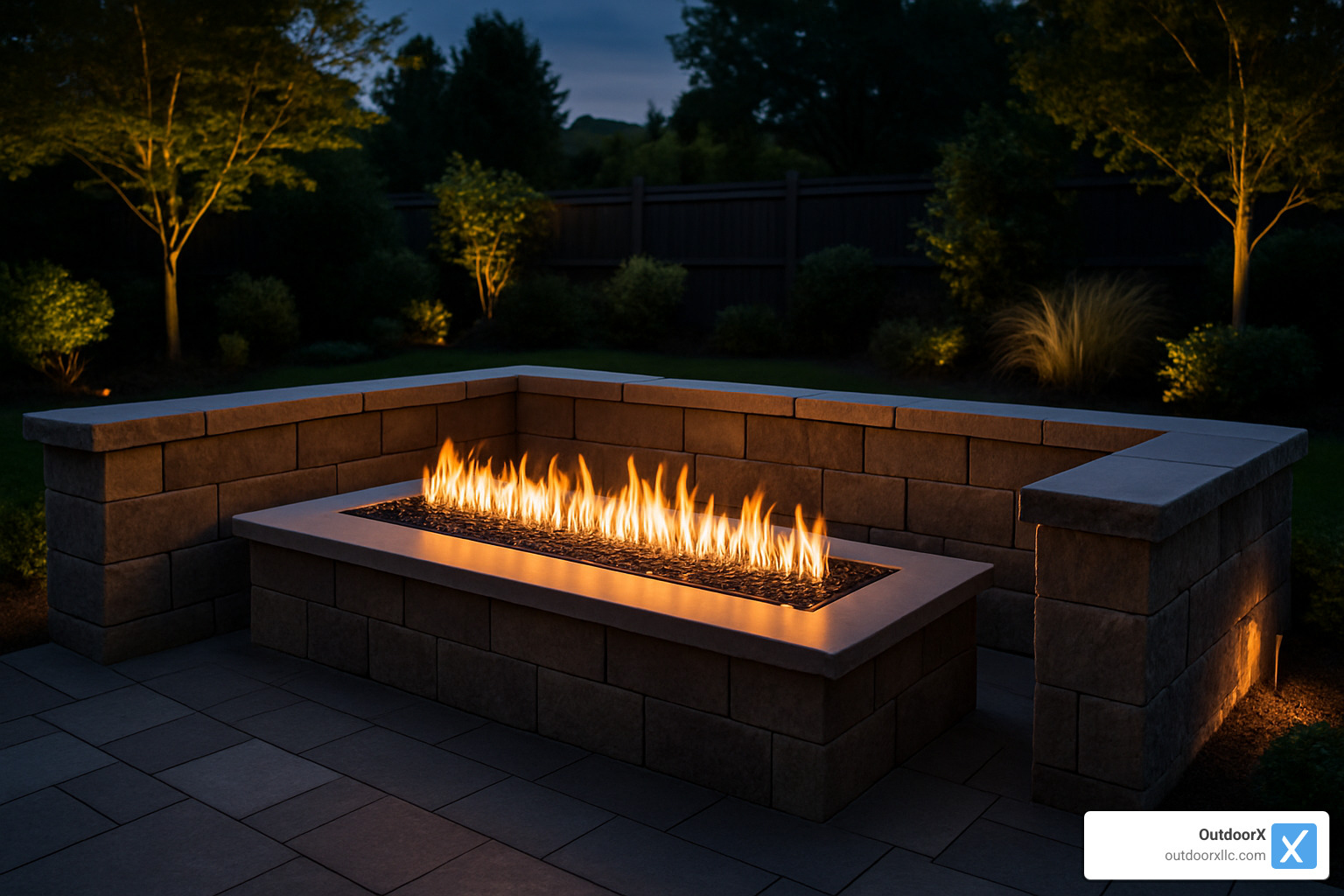
Linear fire features have become the must-have design element for modern homes, creating dramatic focal points with their elongated flames. These rectangular fire pits offer a contemporary aesthetic that complements today’s architectural styles.
“Our clients love the visual impact of a 6-foot linear fire feature,” shares our design specialist. “It creates this amazing ribbon of flame that transforms an ordinary patio into something truly special.”
We’re also seeing increased demand for mixed materials in fire pit construction. Combining metal accents with natural stone creates textural interest, while fire glass adds a contemporary touch that sparkles beautifully when lit.
Technology integration continues to advance with LED lighting systems that can be synchronized with flame patterns and smart controls allowing operation from smartphones. Imagine adjusting your fire pit’s flame height with a tap on your phone while relaxing with guests!
“One Essex County client recently had us install a system where they can turn on their fire pit from inside the house before heading out to the patio,” our installation team recalls. “Those little conveniences make a big difference in how often people actually use their outdoor spaces.”
Other popular trends include fire and water combinations that incorporate both elements for multi-sensory appeal, eco-friendly options featuring high-efficiency burners, and integrated seating that defines the gathering space while maximizing comfort.
“The most requested feature we’re seeing locally is multi-seasonal functionality,” shares our design team. “Homeowners in South Hamilton want their outdoor spaces usable from early spring through late fall, and a properly designed fire feature extends that season significantly.”
At OutdoorX, our Landscape Design Build approach ensures your fire pit integrates seamlessly with other outdoor elements like patios, plantings, and lighting.
How Installers Help You Choose the Perfect Fit
Professional fire pits installers do more than just build – we help guide your selection process by considering how you actually live.
“We start by asking clients about their typical evenings outdoors,” explains our design consultant. “Are you hosting large gatherings where people need to circulate, or are you creating an intimate space for your family to unwind? These answers fundamentally shape our recommendations.”
Your usage patterns heavily influence design decisions. A family that entertains frequently might benefit from a larger fire pit with ample surrounding space, while a couple seeking a quiet retreat might prefer a more intimate setup with comfortable, conversation-friendly seating.
We also consider your maintenance preferences. Some homeowners enjoy the ritual of tending a wood fire, while others prefer the convenience of pushing a button for instant ambiance. Being honest about your willingness to perform regular upkeep helps us recommend the right solution.
Your yard layout presents both opportunities and constraints. We evaluate optimal placement considering views, wind patterns, and natural traffic flow. A fire pit should feel like a natural destination within your landscape, not an awkward afterthought.
“We take the time to understand your existing aesthetic and long-term plans,” our team notes. “A cottage garden calls for different materials than a contemporary landscape. And if you’re planning additional outdoor features in the future, we ensure today’s fire pit will complement tomorrow’s outdoor kitchen or pool area.”
Our process includes showing you material samples, 3D renderings, and even visiting completed projects to help visualize your options. This collaborative approach ensures the final installation aligns perfectly with your expectations and improves your outdoor living experience for years to come.
Maintenance, Repairs & Long-Term Care
Your beautiful fire pit is an investment worth protecting. With proper care, your outdoor fire feature can provide warmth and ambiance for many years to come. As professional fire pits installers, we’ve seen how regular maintenance dramatically extends the lifespan of outdoor fire features.
“I tell all my clients that maintaining their fire pit is like changing the oil in their car,” says our service manager at OutdoorX. “Do it regularly, and you’ll avoid costly repairs down the road.”
For wood-burning fire pits, regular ash removal prevents moisture buildup that can damage materials over time. We recommend cleaning out ash after each use once the fire pit has completely cooled. Annually, check for any mortar cracks or loose stones that might need attention.
Gas fire pit maintenance focuses more on keeping components clean and functioning properly. Before each season, inspect burner ports for spider webs or debris that can block gas flow. Clean fire glass or lava rock annually to remove soot buildup that can affect flame appearance.
“The most common issue we see with gas fire pits is simply dirty burner ports,” explains our service technician. “A quick cleaning with compressed air can solve most ignition problems in minutes.”
At OutdoorX, we offer seasonal maintenance packages that include comprehensive inspections, cleaning, and minor repairs. Many of our Essex County clients schedule these services in spring and fall to ensure their outdoor living spaces are ready when they need them.
Troubleshooting Common Issues
Even well-maintained fire features occasionally develop problems. Here are the issues we see most frequently:
Ignition failures typically stem from moisture in electronic components or depleted batteries in spark ignition systems. For gas fire pits, check that the gas supply is turned on and that no debris is blocking the burner ports.
Uneven flames or soot buildup usually indicates an improper air-to-fuel ratio. This might require professional adjustment of the air shutter on your burner system.
Cracked pavers or stones often result from extreme temperature fluctuations, particularly in New England’s climate. Professional installation with proper heat shields and expansion joints helps prevent this issue.
“Last fall, a client called about their gas fire pit suddenly producing yellow flames instead of blue,” shares our service team. “It turned out that autumn leaves had partially blocked the air intake. After a quick cleaning, the flames returned to their proper color and height.”
For wood-burning fire pits, we recommend applying a stone sealer every 1-2 years to protect against moisture penetration that can lead to freeze-thaw damage. This simple step can dramatically extend the life of your fire feature.
When to Call for Professional Repair
While some maintenance tasks are perfect for DIY-minded homeowners, certain situations require professional attention from experienced fire pits installers:
If you detect any gas odor around your fire feature, turn off the gas supply immediately and call a professional. Gas leaks pose serious safety hazards and should never be ignored.
Structural shifts in your fire pit warrant immediate professional inspection. Even small movements can damage gas lines or create unsafe conditions. This is particularly important after harsh winters or periods of heavy rainfall.
Persistent pilot light problems often indicate issues with thermocouples or gas regulators that require specialized knowledge to diagnose and repair. Our technicians bring specialized testing equipment to pinpoint these issues quickly.
“One of our clients in South Hamilton noticed water pooling in their fire pit after rainstorms,” our service manager recalls. “We finded a minor settlement issue that was causing water to collect instead of drain away. A simple adjustment to the drainage system solved the problem before it could cause damage to the burner components.”
For commercial properties with Fire Pits with Seating, we offer comprehensive maintenance programs that include regular inspections, priority service calls, and seasonal cleanings. These programs are particularly valuable for restaurants, hotels, and apartment complexes where fire features see heavy use.
Off-season protection is equally important for extending your fire pit’s lifespan. We recommend high-quality covers specifically designed for your fire feature to protect electronic components and finishes during periods of non-use.
“Think of your fire pit maintenance like caring for any other valuable outdoor feature,” our team likes to say. “A little attention goes a long way toward preserving both function and beauty.”
At OutdoorX, we’re not just fire pits installers – we’re partners in helping you enjoy your outdoor living space for years to come. Our maintenance services ensure your investment continues to bring warmth and joy to your outdoor gatherings through every New England season.
Frequently Asked Questions about Fire Pit Installation
Do I need a permit for a backyard fire pit?
Permit requirements are one of the most common questions we hear from Essex County homeowners considering a fire pit. The short answer? It depends on your specific town and the type of fire pit you’re planning.
In most Essex County communities, permanent installations – especially those with gas connections – do require permits. The specific requirements vary quite a bit by municipality:
In Beverly, both building and gas permits are typically required for permanent installations. Gloucester requires not just zoning approval but also a fire department inspection before you can light that first fire. Meanwhile, Salem has specific rules about how far your fire pit needs to be from structures and property lines.
“We handle all permitting as part of our installation process,” explains our project management team. “This includes submitting plans, scheduling inspections, and ensuring compliance with local regulations.”
The good news is that portable fire pits typically don’t require permits – though they may still be subject to local burning ordinances and seasonal restrictions. We always recommend checking with your local fire department for specific guidelines, but when you work with our fire pits installer team, we handle all that paperwork headache for you!
How far should a fire pit sit from my house or deck?
Safety first! The required clearances between your fire pit and nearby structures aren’t arbitrary suggestions – they’re based on serious fire safety research and local regulations.
For wood-burning fire pits, you’ll generally need at least 20-25 feet of clearance from structures, trees, and any overhead obstructions. Gas fire pits have slightly more flexibility, with typical minimums of 10-15 feet from structures (though this distance can sometimes be reduced with proper heat barriers). All types of fire pits should typically be at least 10 feet from property lines.
“These distances aren’t just about following codes – they’re about keeping your family and property safe,” notes our design team. “We sometimes incorporate heat shields or special barriers to allow placement in tighter spaces while maintaining that essential safety margin.”
When our fire pits installer experts design your outdoor space, we also consider other important factors beyond the minimum distances: the direction your local winds typically blow (to minimize smoke exposure), proximity to any combustible materials, overhead clearance (no fire pits under tree canopies or covered structures!), and convenient access for maintenance and fuel delivery.
What is the lifespan of a professionally installed fire pit?
With proper installation and regular maintenance, a professionally installed fire pit is a long-term investment in your outdoor enjoyment. Here’s what you can typically expect:
Stone or masonry fire pits are the marathon runners, often lasting 15-20+ years when properly built. The metal fire pit inserts typically need replacement sooner, with lifespans of 8-15 years depending on the quality of materials used. Gas components generally provide 10-15 years of reliable service before potential replacement becomes necessary, while ignition systems typically last 5-10 years depending on usage patterns and weather exposure.
“The key to longevity is quality materials and proper installation,” explains our construction team. “We’ve seen our installations last well beyond these timeframes with appropriate care.”
Several factors can significantly impact how long your fire pit will last. Material quality and suitability for your specific application is paramount. Equally important is the installation technique and foundation preparation – which is why working with an experienced fire pits installer makes such a difference. Climate exposure, weather protection measures, maintenance frequency, and your usage patterns all play important roles too.
At OutdoorX, we specifically select materials that can handle New England’s challenging climate conditions – from summer humidity to winter freeze-thaw cycles. This attention to detail ensures maximum durability and longevity for your investment. After all, we want your evenings around the fire to continue for many years to come!
Conclusion
There’s something magical about gathering around a fire on a cool evening, isn’t there? The dancing flames, the warm glow, the way conversation seems to flow more easily—these are the moments that make a professionally installed fire pit worth every penny.
Throughout this guide, we’ve explored everything from fuel types to design materials, installation processes to maintenance considerations. Armed with this knowledge, you’re now ready to make choices that will transform your outdoor space into something truly special.
Fire pits installers like our team at OutdoorX bring more than just technical skills to your project—we bring vision, experience, and a genuine passion for creating outdoor spaces that families will enjoy for years to come. Our custom hardscape features aren’t just beautiful additions to your landscape; they’re carefully crafted gathering spaces designed specifically for your lifestyle and preferences.
We understand Essex County’s unique challenges—from the salty coastal air to our famous New England freeze-thaw cycles. Every fire pit we design accounts for these factors, ensuring durability while still achieving the aesthetic you desire. And of course, we handle all those pesky code requirements and safety considerations that can trip up DIY enthusiasts.
The beauty of working with professionals is the peace of mind that comes with it. From your first design consultation through the final ignition test (and beyond into seasonal maintenance), our comprehensive approach means you’ll never be left wondering “what now?” We’re with you every step of the way.
Whether you’re picturing intimate family s’mores sessions or planning to host the neighborhood’s most coveted summer soirées, a well-designed fire feature becomes the heart of your outdoor living space. It extends your outdoor season, creates a natural gathering point, and yes—it adds significant value to your property.
The warmth of a fire pit isn’t just physical—it creates warmth in your home life, too. It’s where stories get told, where laughs are shared, where memories are made. That’s something worth investing in.
Ready to bring that warmth and ambiance to your outdoor space? Start Your Fire Pit Project with OutdoorX today, and let’s create something beautiful together.
