


Concrete Retaining Wall Contractors Near Me: Top 5 Expert Picks 2025
Why Finding the Right Concrete Retaining Wall Contractor Matters
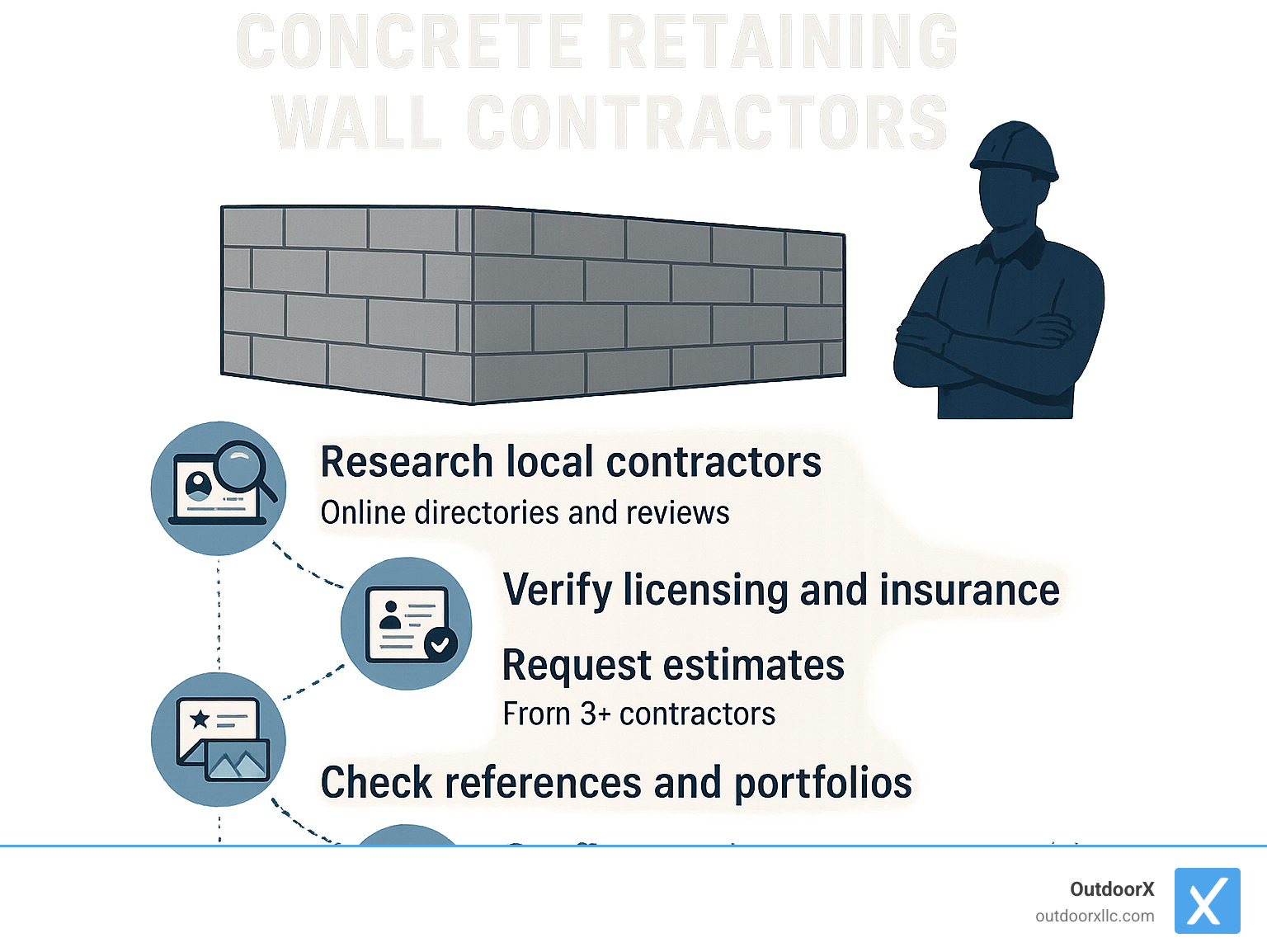
When searching for concrete retaining wall contractors near me, you need professionals who understand both structural engineering and local soil conditions. Here’s what to look for:
Quick Contractor Selection Guide:
- Licensed & Insured: Verify general liability and workers’ compensation coverage
- Local Experience: 5+ years in your area with similar projects
- Engineering Partners: Access to structural engineers for walls over 4 feet
- Portfolio Review: Photos of completed projects with clean edges and proper drainage
- Written Estimates: Detailed quotes from at least 3 contractors
Your sloped yard doesn’t have to stay unusable. Whether you’re dealing with soil erosion after heavy rains or dreaming of level garden terraces, concrete retaining walls solve both problems while boosting your property value.
Concrete walls offer best benefits over wood or stone alternatives:
- Durability: 50-100 year lifespan with proper maintenance
- Strength: Handle greater soil loads and height requirements
- Low Maintenance: No rot, pest damage, or frequent repairs
- Cost-Effective: Average $20-75 per square foot (based on internet data, not OutdoorX pricing)
But here’s the catch – poor installation leads to expensive failures. Walls without proper drainage crack and lean. Inadequate foundations cause settling and structural damage.
The key is finding contractors who understand Massachusetts soil conditions, frost heave challenges, and local permit requirements. In Essex County, walls over 3 feet typically need engineering approval and building permits.
Learn more about concrete retaining wall contractors near me:
What You’ll Learn
In this guide, we’ll walk you through selecting the best concrete retaining wall contractors in your area. You’ll understand different concrete wall types, learn our proven vetting process, get detailed pricing insights, and find essential maintenance tips to maximize your wall’s lifespan.
Concrete Retaining Walls 101: Function, Types & Benefits
Think of concrete retaining walls as the strong, silent guardians of your landscape. These engineered structures do much more than just hold back soil – they transform steep, unusable slopes into beautiful, functional outdoor spaces.
Unlike decorative garden walls, retaining walls are serious structural elements designed to resist thousands of pounds of soil pressure while dealing with water forces. Here in Massachusetts, where Mother Nature throws everything from nor’easters to deep freezes at our landscapes, concrete retaining wall contractors near me know that choosing the right wall type makes all the difference.
The main players include gravity walls (which use their mass to stay put), cantilever walls (engineering marvels with concrete footings), precast concrete blocks (building blocks of success), and poured-in-place concrete walls (custom-formed on your property).
More info about Retaining Walls
Main Purposes & Structural Science
Retaining walls are soil whisperers – they convince tons of earth to stay put when gravity wants to send it sliding downhill. The science involves understanding lateral earth pressure, which increases with wall height and varies with soil types.
Hydrostatic force separates pros from weekend warriors. When water builds up behind a wall without proper drainage, it creates pressure that can crack even the strongest concrete. Experienced contractors always install drainage systems with weep holes, French drains, and geotextile fabric.
Frost heave is New England’s special challenge. When water in soil freezes, it expands and pushes against walls. Quality contractors account for this through proper reinforcement and drainage design.
Popular Concrete Wall Types & When to Use Each
| Wall Type | Best Use | Typical Height | Lifespan | Cost Range* |
|---|---|---|---|---|
| Poured Concrete | Tall walls, complex shapes | 4-20+ feet | 50-100 years | $25-75/sq ft |
| Precast Blocks | DIY-friendly, quick install | 3-8 feet | 50-75 years | $20-60/sq ft |
| Concrete Blocks | Versatile, customizable | 3-12 feet | 50-100 years | $15-60/sq ft |
*Average costs based on internet data, not OutdoorX pricing
Poured concrete walls offer maximum strength and can be shaped to fit any design vision. Precast concrete blocks are like adult building blocks with standardized sizes for faster installation. Concrete masonry units (CMUs) provide the sweet spot between flexibility and strength.
Why Concrete Beats Wood, Stone & Gabion
When concrete retaining wall contractors near me recommend concrete, they’re highlighting genuine performance advantages for Essex County homeowners.
Strength and longevity make concrete the champion. While wood walls last 5-20 years, concrete walls serve reliably for 50-100 years. Low maintenance means more time enjoying your landscape instead of fixing it. Pest and fire resistance eliminate headaches that plague other materials.
Local climate adaptation is crucial in Massachusetts, where freeze-thaw cycles destroy wood faster and shift stone walls. Properly designed concrete walls handle these conditions without structural compromise.
Choosing the right materials for your local conditions ensures your investment performs as expected for decades.
Finding and Evaluating Concrete Retaining Wall Contractors Near Me
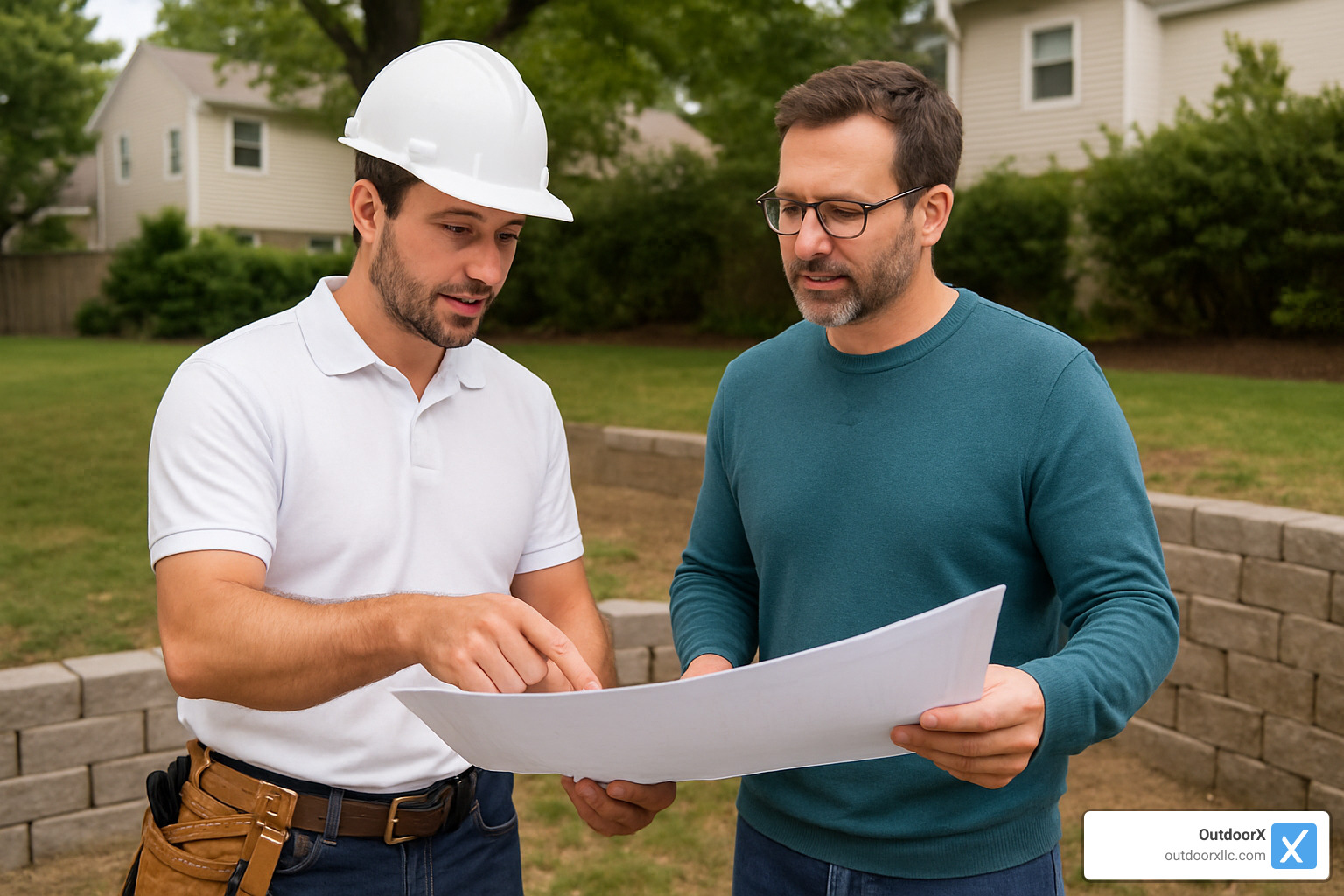
Finding the right concrete retaining wall contractors near me requires a systematic approach. You’re investing thousands in a structure that needs to last decades, so getting it right matters.
The best contractors understand Massachusetts winters, Essex County soil conditions, and local permit processes. They carry proper insurance, maintain engineering relationships, and provide detailed written estimates with solid warranties.
More info about Landscape Design & Build
Searching for Concrete Retaining Wall Contractors Near Me
Google Maps reveals contractors in your area with customer reviews and ratings. Focus on contractors with 4+ star ratings and recent reviews. Professional associations like the Better Business Bureau maintain complaint records, while local landscaping associations often require member standards.
Word-of-mouth referrals remain the gold standard. Your neighbors have already vetted contractors and have no reason to steer you wrong. Online platforms like Angi provide verified customer reviews with detailed project descriptions.
Service radius matters – contractors who regularly work in Essex County understand our unique soil conditions, permit requirements, and weather challenges.
Interviewing Concrete Retaining Wall Contractors Near Me
Licensing and insurance verification protects you from liability. Request specific license numbers and verify them with state boards. Confirm general liability insurance with at least $1 million coverage plus workers’ compensation.
Engineering partnerships become crucial for walls over 4 feet, since most municipalities require stamped drawings. Project timeline and availability help set realistic expectations – quality contractors often book 4-8 weeks in advance during peak season.
Permit handling experience separates professionals from amateurs. Experienced contractors handle applications and coordinate inspections as part of their service.
Red Flags & Quality Assurance Checks
Vague or incomplete bids suggest inexperience or corner-cutting. Quality contractors provide detailed written estimates including materials, labor breakdown, permit costs, and timelines.
No drainage plan represents fundamental misunderstanding of retaining wall engineering. Requests for full payment upfront indicate cash flow problems. Lack of local references suggests inexperience or poor performance.
High-pressure sales tactics often mask poor value. Quality contractors provide information, answer questions, and give you time for informed decisions.
Budgeting & Compliance: Costs, Permits & Step-By-Step Build Process

When searching for concrete retaining wall contractors near me, costs vary dramatically based on your specific needs. Based on internet research, concrete retaining walls typically range from $20-75 per square foot for standard installations, with premium designs reaching $150+ per square foot. These represent average market costs, not OutdoorX pricing.
Labor typically accounts for 30-50% of total cost. Wall height is the biggest factor – taller walls need more materials and engineering. Site accessibility matters since difficult access increases hand-digging charges. Soil conditions affect excavation time, while drainage requirements add complexity but prevent failures.
Review wall examples and permit requirements to understand local requirements.
Estimating Your Project Budget
Basic concrete blocks start around $15-45 per square foot for materials. Poured concrete walls typically run $25-75 per square foot including labor. Decorative concrete systems range from $40-120+ per square foot with premium finishes.
Labor costs depend on crew size and project complexity. Research shows typical crews charge $50-100 per hour. Most residential walls require 2-5 days of work.
Smart budgeting includes a 10-20% contingency for unexpected conditions like poor soil or underground utilities.
Navigating Local Permits & Codes
Most Massachusetts municipalities require permits for retaining walls over 3-4 feet. Zoning setback requirements dictate distance from property lines. Stamped engineering drawings become necessary for taller walls, adding $1,000-3,000 to project cost.
The inspection process requires scheduling at key milestones. Call Dig Safe (811) before excavation to mark utilities.
From Design to Pour: Typical Timeline
Week 1: Site survey and design development
Weeks 2-3: Permit processing (2-4 weeks typical)
Week 4: Excavation and foundation work
Week 5: Forms and reinforcement placement
Week 6: Concrete pour and curing
Week 7: Backfill and finishing touches
Long-Term Care: Maintenance, Lifespan & Sustainability
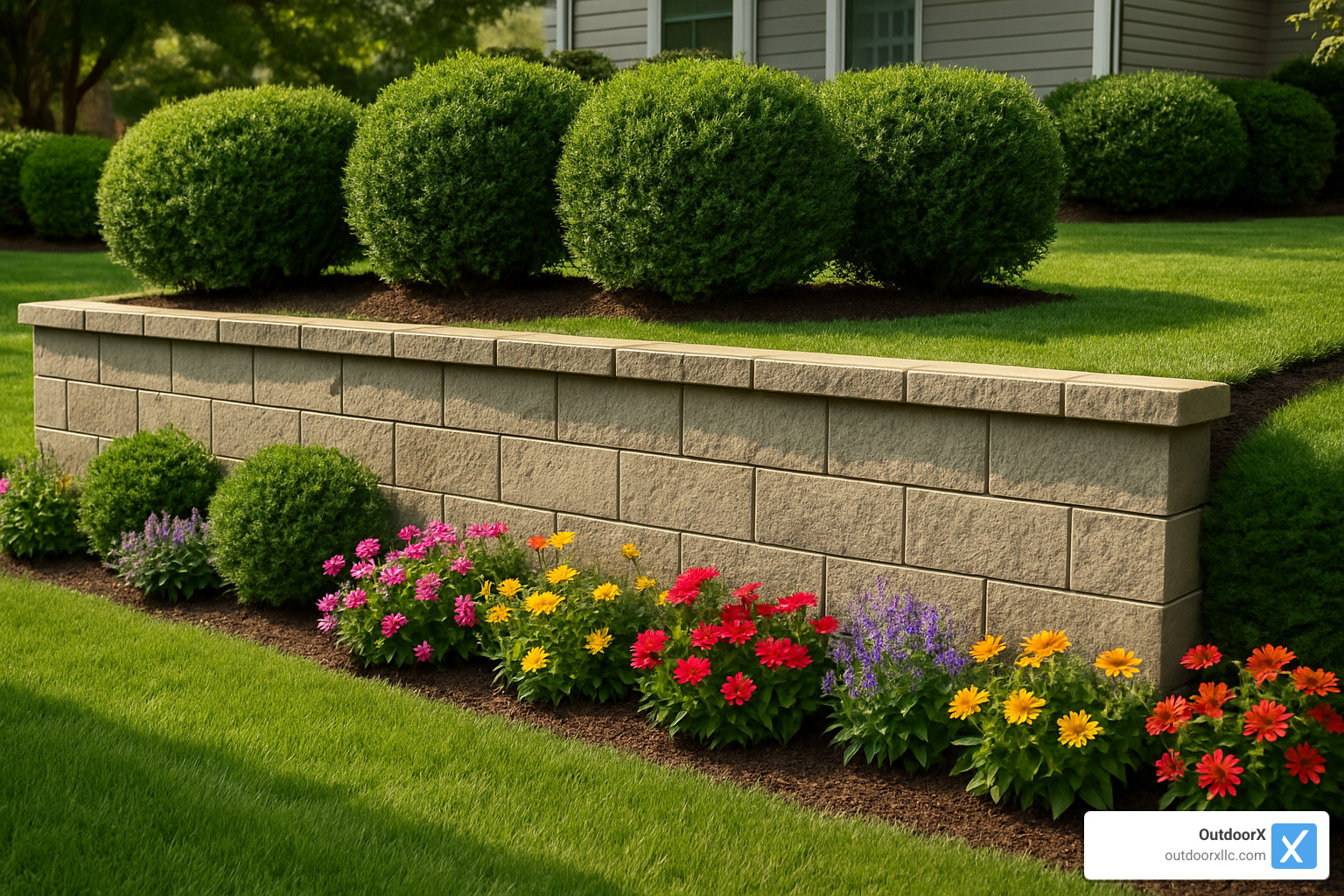
Choosing concrete retaining wall contractors near me means investing in a 50-100 year lifespan with basic maintenance. Think of your wall like good boots – with care, they’ll serve faithfully for decades.
Most maintenance tasks are surprisingly simple. You don’t need special tools or contractor skills. A weekend warrior with a pressure washer can handle 90% of what your wall needs.
Modern concrete construction includes recycled aggregates, low-VOC sealers, and carbon-reduced cement that reduce environmental impact without sacrificing performance.
More info about Landscape Installation
DIY Upkeep Checklist
Annual inspection should happen every spring. Walk along your wall looking for changes from the previous year. Cleaning once yearly with a pressure washer removes dirt, algae, and efflorescence (white chalky deposits).
Weep holes are crucial drainage openings. Flush them annually with a garden hose or clear with a wire brush. Crack sealing prevents water penetration – use quality concrete crack filler for hair-thin cracks.
Vegetation control keeps walls healthy. Remove plants growing against the surface and trim shrubs that trap moisture. Sealant application every 5-7 years protects from moisture like sunscreen for concrete.
Green Building Upgrades
Permeable backfill using graded gravel improves drainage while reducing storm runoff. Rain garden integration creates natural water management systems that capture and filter stormwater.
Native plantings reduce maintenance while supporting local wildlife. Recycled materials in concrete mixes reduce environmental impact while maintaining structural performance.
Frequently Asked Questions about Concrete Retaining Wall Contractors Near Me
What qualifications, licenses, and insurance should my contractor carry?
When you’re searching for concrete retaining wall contractors near me, you want professionals who carry the right credentials to protect both your project and your peace of mind. In Massachusetts, contractors should hold appropriate state licenses – typically construction supervisor licenses or home improvement contractor licenses, depending on your project’s size and complexity.
Insurance coverage is absolutely critical and non-negotiable. Your contractor should carry general liability insurance with at least $1 million in coverage, workers’ compensation insurance for all employees, and vehicle insurance for company equipment. If they’re providing design services, professional liability insurance adds another layer of protection.
Don’t just take their word for it – always verify insurance coverage by requesting certificates directly from the insurance company, not copies from the contractor. This simple step ensures their coverage is current and adequate for your specific project.
Look for contractors with professional certifications like Master Builders Association membership, manufacturer certifications for specific wall systems, and OSHA safety training. These credentials show they’re committed to staying current with industry best practices and safety standards.
How much does a concrete retaining wall cost and what drives the price?
Understanding retaining wall costs helps you budget realistically and spot proposals that seem too good to be true. Based on internet research data, concrete retaining walls typically range from $20-50 per square foot for standard installations, while premium materials and complex designs can reach $150+ per square foot. These represent average market costs and not OutdoorX pricing.
Wall height makes the biggest difference in your final cost. Taller walls need more materials, often require engineering approval, and take longer to build. Site accessibility comes next – if crews can’t get equipment close to your project area, expect higher labor costs for hand-digging and material transport.
Your soil conditions matter more than you might think. Poor soil may require additional foundation work, better drainage systems, or even soil replacement. That’s why experienced contractors always evaluate soil conditions before providing final estimates.
A typical cost breakdown based on internet data shows materials accounting for 40-50% of total cost, labor taking 30-40%, and equipment plus permits making up the remaining 10-20%. Smart homeowners also budget an additional 10% contingency for unexpected conditions like underground utilities or weather delays.
The lowest bid isn’t always the best value. Quality materials, proper installation techniques, and solid warranties provide much better long-term value than cheap construction that needs replacement in just a few years.
How long will my wall last and what maintenance will it need?
Here’s the great news about concrete retaining walls – they can last 50-100 years with proper care. That exceptional lifespan makes them one of the smartest long-term investments you can make in your landscape.
Most maintenance tasks are surprisingly simple. Annual cleaning with a power washer removes dirt and that white chalky residue called efflorescence. Keep an eye on any cracks – hairline cracks are normal, but anything wider than 1/4 inch or cracks that seem to be growing deserve professional attention.
Drainage maintenance is probably the most important thing you can do. Clear weep holes of debris using a wire brush or compressed air, and make sure your gutters and downspouts don’t dump water directly against the wall. Poor drainage causes more retaining wall failures than any other factor.
Every 5-7 years, applying a concrete sealer helps protect against moisture penetration and extends your wall’s life. Don’t forget about vegetation control either – remove any plants growing in joints or tree roots that might push against the wall.
Watch for warning signs that need professional attention: wall movement or tilting, significant cracks, drainage problems causing water buildup, or settlement around the wall base. Catching these issues early prevents small problems from becoming expensive disasters.
The beauty of concrete retaining walls is that regular attention prevents most major problems. A little maintenance goes a long way toward protecting your investment for decades to come.
Conclusion
Finding the right concrete retaining wall contractors near me doesn’t have to feel overwhelming. With the right approach—thorough research, careful vetting, and clear communication—you’ll find contractors who can transform your challenging slopes into beautiful, functional outdoor spaces that last for decades.
The investment in quality construction truly pays for itself. A well-built concrete retaining wall not only solves your erosion and drainage problems but also adds significant value to your property. More importantly, it gives you back usable outdoor space where your family can create memories for years to come.
At OutdoorX, we’ve been helping homeowners throughout South Hamilton and Essex County tackle their toughest landscape challenges. We understand that every sloped yard tells a different story—maybe yours floods every spring, or perhaps you’re tired of watching your topsoil wash away after heavy rains. Whatever your situation, our design-build approach means you work with one team from concept to completion.
Here’s what makes us different: We don’t just build walls; we create outdoor rooms. Our deep knowledge of Essex County’s unique soil conditions, from the clay-heavy areas near the coast to the rocky terrain inland, helps us design walls that work with your specific site conditions rather than against them.
We’re proud to serve homeowners throughout Essex County, including Andover, Beverly, Boxford, Danvers, Essex, Georgetown, Gloucester, Ipswich, Lynnfield, Manchester-by-the-Sea, Marblehead, Newburyport, North Andover, North Reading, Peabody, Rockport, Rowley, Salem, Swampscott, Topsfield, and Wenham. Each community has its own character, and we love helping homeowners create outdoor spaces that reflect their personal style while working within local regulations.
Ready to reclaim your sloped yard? Your journey starts with a free consultation where we’ll walk your property together, discuss your vision, and explore what’s possible. No pressure, no sales pitch—just honest advice from people who genuinely love what they do.
Here’s how we make it happen: First, we’ll assess your site and listen to your goals during our free consultation. Then we’ll develop a custom design that solves your problems while creating the outdoor space you’ve always wanted. We handle all permits and approvals so you don’t have to steer the bureaucracy alone. Our experienced crews bring decades of expertise to every project, ensuring quality construction that stands the test of time. Finally, we complete the change with appropriate landscaping that ties everything together beautifully.
Don’t let steep slopes keep you from enjoying your outdoor space. With proper planning and quality construction, your retaining wall project becomes the foundation for outdoor living you never thought possible. Whether you’re dreaming of terraced gardens, level play areas for kids, or simply want to stop worrying about erosion, we’re here to help make it happen.
More info about Retaining Walls
