


Commercial Snow Plow: Conquer Winter 2025
Gearing Up for Winter’s Worst
A commercial snow plow is a heavy-duty attachment for trucks and other vehicles used to clear snow from large areas like parking lots and roads. When winter hits, maintaining access to your property is essential for keeping your business running. Choosing the right plow means matching the equipment to your vehicle, property, and budget for smooth, efficient operations.
Key Commercial Snow Plow Types & Price Ranges:
Please note that the prices provided below are average costs based on internet data and not actual costs for OutdoorX LLC. These figures are for general budgeting purposes, as market prices can fluctuate.
- Straight Blade Plows: Best for long runs and basic clearing ($4,000 – $12,000+)
- V-Plows: Versatile for breaking drifts and carrying snow ($6,000 – $18,000+)
- Winged/Extendable Plows: Maximum clearing width for large areas ($8,000 – $25,000+)
- Snow Pushers: High-volume containment for stacking snow ($5,000 – $15,000+)
Reliable equipment is the difference between an effective operation and costly downtime. Modern plows from brands like Meyer and BOSS offer advanced features that boost efficiency and performance, making them indispensable tools for conquering winter’s worst.

Commercial snow plow helpful reading:
Decoding the Different Types of Commercial Plows
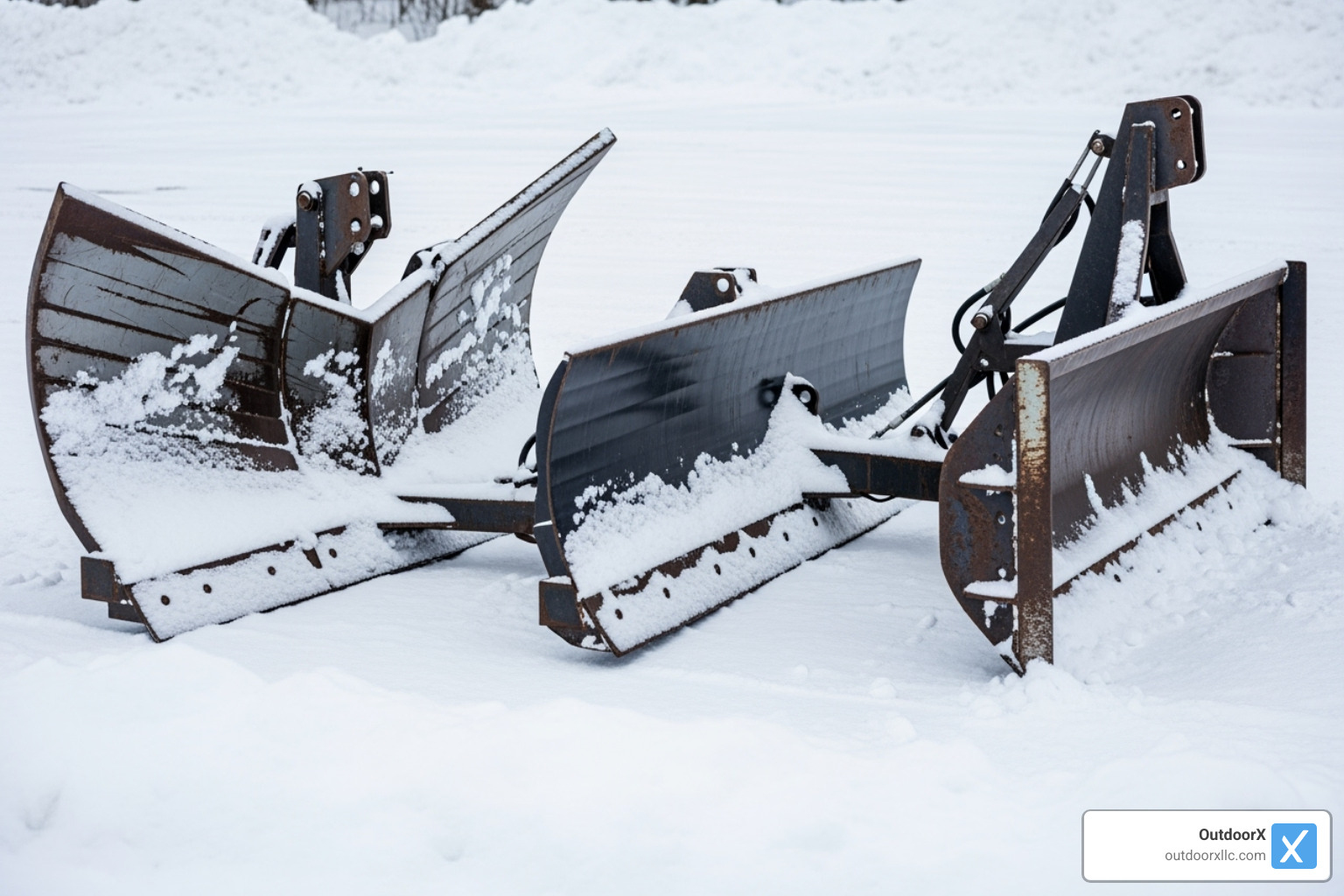
The world of commercial snow plow equipment is diverse, with specialized tools for different conditions and properties. Understanding these categories is the first step to selecting the right tool for the job.
Straight Blade Plows
The straight blade plow is the no-nonsense workhorse of snow removal. Simple, tough, and effective, it excels at clearing long, straight stretches like commercial parking lots and roadways where snow can be easily pushed to the side into “windrows.” Their straightforward design makes them a durable and cost-effective choice for reliable clearing. Brands like SnowDogg are known for building strong, high-performing straight blade plows.
V-Plows
The V-plow is a versatile superstar, featuring two separate, adjustable wings. This flexibility allows it to adapt to various snow conditions.
- “V” Position: Breaks through deep snow drifts by funneling snow away from the center.
- “Scoop” Position: Acts like a snow pusher to carry large amounts of snow for stacking.
- Straight Position: Functions like a standard straight blade for regular clearing.
This adaptability makes V-plows ideal for properties with diverse challenges. Manufacturers like Meyer, BOSS, and Sno-Way offer advanced V-plows with features like Sno-Way’s Ground Hugger™ blade design for a cleaner scrape. For more tips, see our guide on commercial snow and ice management.
Winged & Extendable Plows
For massive areas, winged and extendable plows are the go-to solution. These plows expand to create a much wider clearing path, dramatically boosting efficiency on large commercial lots. Extendable plows can change width with the push of a button, while winged plows like Meyer’s WingMan use hydraulic sides. The primary benefit is making fewer passes, which saves time, fuel, and labor. They are perfect for wide-open spaces, though maneuverability in tight spots should be considered.
Snow Pushers & Containment Plows
For moving and stacking enormous volumes of snow, snow pushers and containment plows are essential. Their tall, curved walls “contain” snow, allowing for efficient clearing of vast areas. They excel at stacking snow high, which is critical for properties with limited space. Often attached to skid-steers and loaders, they transform these machines into high-capacity snow movers. Commercial-grade models from brands like Kage and Metal Pless are built for the heaviest work. You can see an example of a snow pusher in action to appreciate their effectiveness.
Key Factors for Choosing the Right Commercial Snow Plow
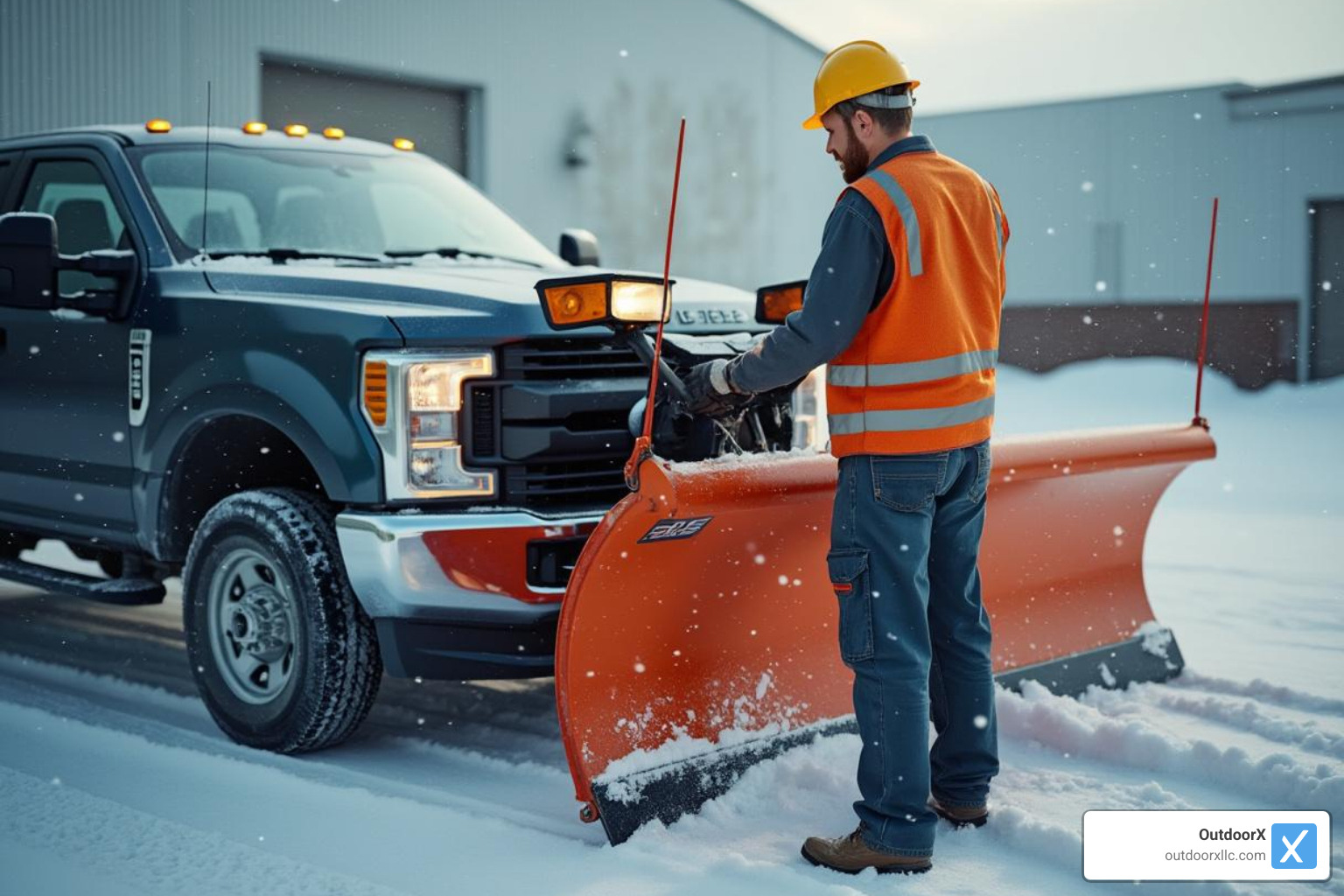
Selecting the right commercial snow plow requires a careful assessment of several critical factors to ensure optimal performance and longevity.
Match the Plow to Your Vehicle
Your plow must be properly matched to its host vehicle. Overloading a truck leads to premature wear, safety issues, and poor performance. Always check your truck’s specifications, particularly its class (e.g., 1/2-ton, 1-ton), Gross Vehicle Weight Rating (GVWR), and Front Gross Axle Weight Rating (FGAWR). A heavy plow can easily exceed the FGAWR, especially when lifted. For example, a 1/2-ton truck like a Chevy Silverado 1500 requires a lighter-duty plow than a 1-ton truck. Always consult the plow manufacturer’s vehicle compatibility guide and your truck’s owner’s manual.
LIST of key vehicle specs to check before buying a commercial snow plow:
- Gross Vehicle Weight Rating (GVWR): Total allowable weight of the vehicle including payload.
- Front Gross Axle Weight Rating (FGAWR): Maximum weight the front axle can support.
- Payload Capacity: Maximum weight a truck can carry in its cab and bed.
- Suspension Type and Condition: Ensures the truck can handle the added weight and stress.
- Tire Load Rating: Tires must be rated to carry the additional weight of the plow.
- Alternator Output: Sufficient power for the plow’s hydraulic and electrical systems.
- Battery Cold Cranking Amps (CCA): Critical for starting in cold weather with electrical demands.
Assess Your Plowing Area
The properties you service will influence your plow choice.
- Size and Type: Small lots with obstacles may need an agile V-plow, while vast, open areas are better suited for a large straight blade or winged plow.
- Obstacles: Properties with tight corners or curbs require a maneuverable plow with protective features.
- Snowfall Volume: Areas with heavy, frequent snow demand a high-capacity plow like a V-plow or snow pusher to move large volumes quickly.
What to Look for in a Commercial Snow Plow
Beyond matching the plow to your vehicle and environment, consider these features:
| Feature Category | Poly Moldboards | Steel Moldboards | Stainless Steel Moldboards |
|---|---|---|---|
| Material Choice | Corrosion-proof, dent-resistant, low friction. | Durable, strong, traditional choice. | Corrosion-resistant, slicker than steel. |
| Blade Design | Often lighter, smooth, non-stick surface. | Can be heavier, but very robust. | Smoother surface for snow shedding, appealing look. |
| Trip Mechanisms | Full-trip or trip-edge designs common. | Full-trip or trip-edge designs common. | Full-trip or trip-edge designs common. |
| Hydraulic Systems | Compatible with standard hydraulic systems. | Compatible with standard hydraulic systems. | Compatible with standard hydraulic systems. |
| Lighting/Electrical | No direct impact on lighting, standard electrical. | No direct impact on lighting, standard electrical. | No direct impact on lighting, standard electrical. |
| Key Benefit | Snow sheds easily, less wear on truck, low maintenance. | Maximum strength for heavy-duty applications. | Excellent corrosion resistance, aesthetic appeal. |
Also consider blade curvature for efficient snow rolling, trip mechanisms to protect from obstacles, responsive hydraulics, and reliable lighting for safe operation.
Essential Features and Modern Innovations
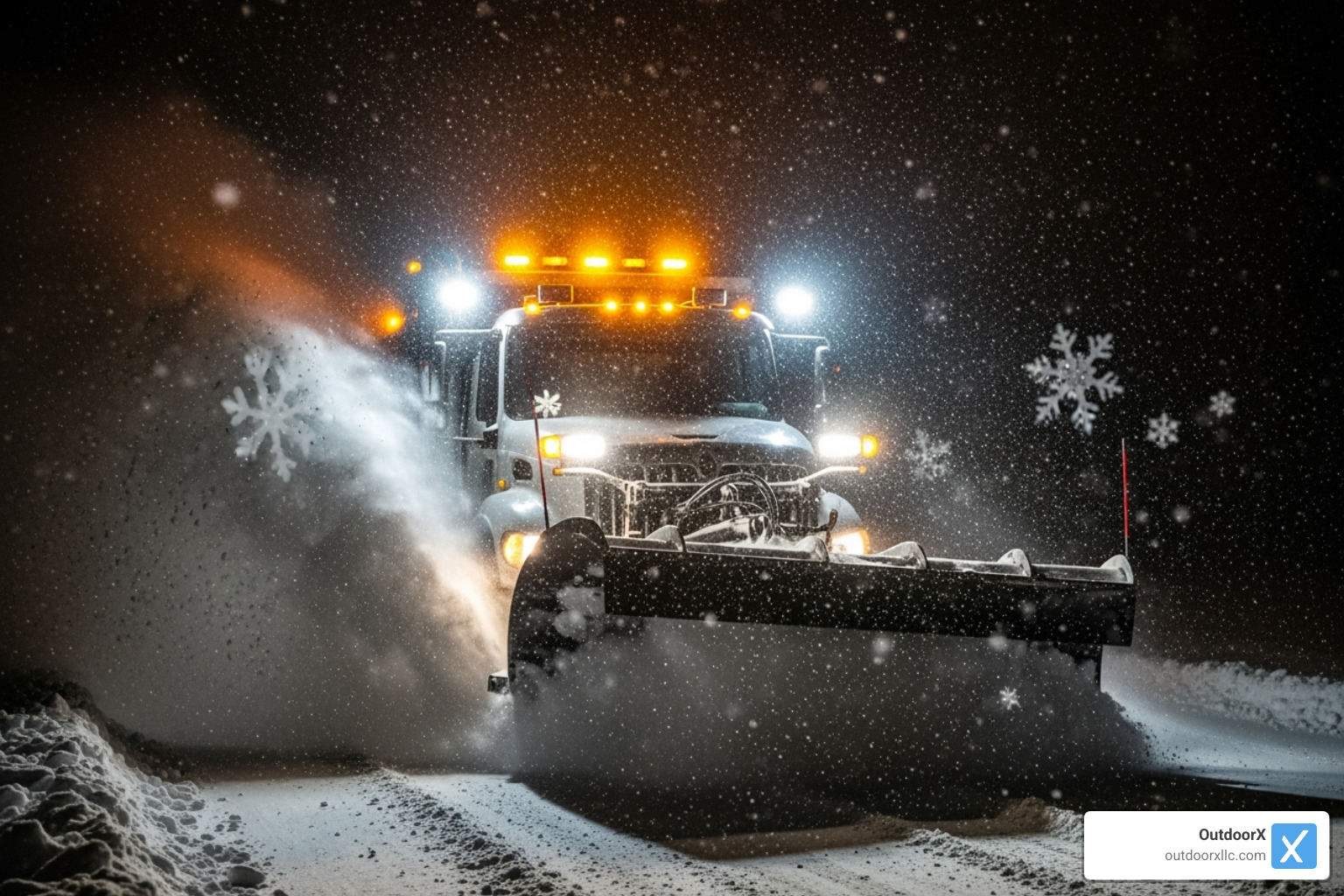
A modern commercial snow plow is a sophisticated tool with features designed for performance, durability, and operator convenience.
Blade Materials and Design
The blade material is fundamental to performance.
- Steel: The traditional choice, valued for its durability and strength, especially with reinforced designs.
- Stainless Steel: Offers superior corrosion resistance and a slick surface for better snow shedding, ideal for heavy salt use.
- Poly (Polyethylene): A popular lightweight option that is corrosion-proof, dent-resistant, and has a non-stick surface. This reduces drag and wear on the truck.
Blade curvature and reinforcement ribs are also key design elements that add strength and help roll snow efficiently.
Trip Mechanisms: Protecting Your Investment
Hitting a hidden obstacle can cause major damage. Trip mechanisms absorb the impact, protecting your plow and vehicle.
- Full-Moldboard Trip: The entire blade pivots forward to absorb impact.
- Trip-Edge Design: Only the bottom cutting edge trips back, keeping the rest of the blade upright and containing the snow load.
These systems, often using torsion springs, are vital for minimizing damage and downtime. Some advanced plows also feature a mechanical “true float” to follow road contours without hydraulic pressure.
Hydraulics and Electrical Systems
Sophisticated hydraulics and electrical systems provide seamless control.
- Hydraulic Systems: Power the lift, lower, and angling functions. Innovations like Sno-Way’s Down Pressure® Hydraulics apply downforce for a cleaner scrape and improved vehicle handling.
- Electrical Systems & Controllers: User-friendly handheld controllers and streamlined wiring systems (like those from BOSS and Sno-Way) are essential for reliable, intuitive operation.
Lighting and Safety
Visibility is paramount during snow removal. High-quality lighting is non-negotiable for safety. Look for high-intensity LED headlights mounted on the plow, like those offered by BOSS and Blizzard, which provide superior illumination in storms and low-light conditions and comply with all road safety standards.
Beyond the Blade: Essential Accessories and Attachments
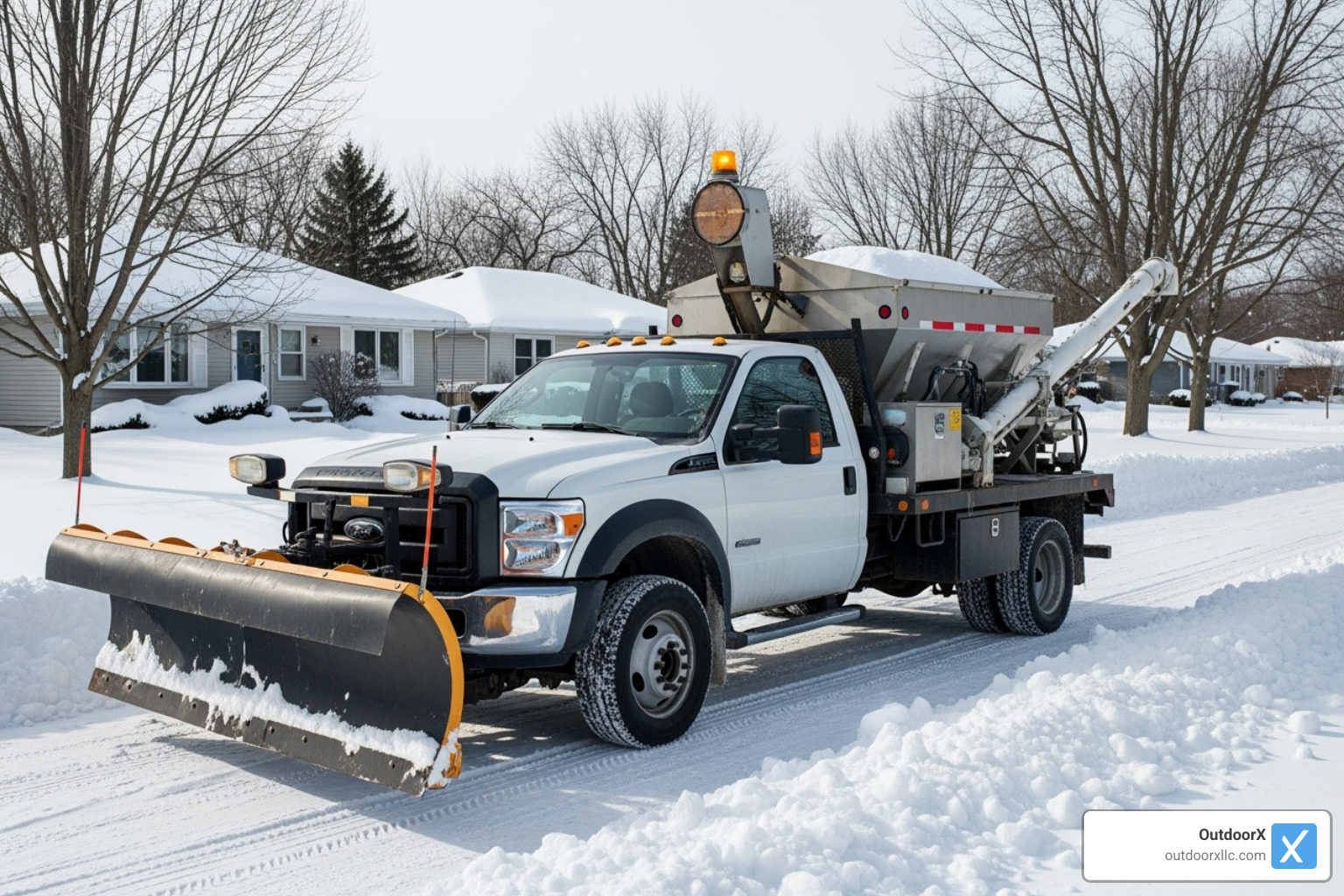
A complete snow management system requires more than just a commercial snow plow. The right accessories and attachments are essential for efficiency, safety, and a thorough job. For more on our services, see More info about our snow removal services.
Salt and Sand Spreaders
After clearing snow, tackling ice is the next challenge. Salt and sand spreaders are crucial for keeping surfaces safe.
- Tailgate Spreaders: These units attach to a truck’s tailgate and are ideal for smaller lots and driveways. Brands like SaltDogg and Sno-Way offer various sizes.
- In-bed V-box Spreaders: These large-capacity spreaders sit in the truck bed and are designed for extensive commercial properties, reducing trips for refills.
Look for models with adjustable spreading patterns to ensure even coverage and minimize material waste.
Liquid De-Icing Systems
Liquid de-icing systems are a popular, precise method for ice control. Anti-icing involves applying a liquid brine before a storm to prevent snow and ice from bonding to the pavement, making plowing easier. De-icing is the application of liquid to melt existing ice. This precision uses less salt, which is better for your budget and the environment, and reduces wear on infrastructure.
Other Helpful Tools
- Snow Blowers for Loaders: For deep snow or when you need to move snow a significant distance, a powerful snow blower attachment is invaluable.
- Back-Drag Edges: These allow you to pull snow away from buildings or out of tight spots, a task difficult for a standard front plow.
- Curb Guards: These protective extensions attach to the ends of the plow blade to prevent scrapes and damage to both the plow and curbs.
- Plow Shoes: These adjustable pieces control the plowing height, protecting the cutting edge and the surface, especially on gravel or uneven ground.
Maximizing Longevity: Maintenance and Care
A commercial snow plow is a significant investment that requires regular maintenance to ensure it’s ready for every storm, season after season. Proactive care is key to its longevity and reliability.
Pre-Season Inspection Checklist
Before the first snowfall, perform a thorough inspection to prevent downtime when you need the plow most.
- Fluids and Hoses: Check hydraulic fluid levels and inspect hoses for cracks or leaks.
- Cutting Edges and Shoes: Ensure they are not overly worn and are adjusted correctly.
- Electrical and Lights: Test all lights and check for frayed wires or loose connections.
- Hardware and Welds: Inspect all welds and tighten any loose bolts or nuts.
- Grease Moving Parts: Lubricate all pivot points and moving components for smooth operation.
In-Season and Post-Season Maintenance for Your Commercial Snow Plow
Ongoing care throughout the winter and proper off-season storage are critical.
In-Season:
- Inspect for Damage: Do a quick check for any bends or dents after each use.
- Clean After Use: Wash off corrosive salt and grime to prevent rust.
- Touch-Up Scratches: Immediately cover any paint chips with rust-inhibiting paint to protect the metal.
Post-Season:
- Give the plow a final, thorough cleaning and make any necessary repairs.
- Apply a rust-preventative coating.
- Store the plow in a dry, covered location, preferably off the ground, to protect it from the elements until next winter.
Frequently Asked Questions about Commercial Snow Plows
Investing in a commercial snow plow is a major decision. Here are answers to some of the most common questions we receive.
How much does a commercial snow plow cost?
The cost of a commercial snow plow varies significantly based on its type, size, material, and features. Please note that the prices provided below are average costs based on internet data and not actual costs for OutdoorX LLC. These figures are for general budgeting purposes, as market prices can fluctuate.
- Entry-Level Straight Blades: Might range from $4,000 to $12,000+.
- Versatile V-Plows or Snow Pushers: Can range from $8,000 to $25,000+.
- High-End, Heavy-Duty V-Plows or Winged Plows: Can cost $15,000 to $45,000 or more.
Remember to also budget for professional installation, potential truck modifications, and accessories like salt spreaders, which can add several thousand dollars to the total cost.
What is the best material for a snow plow blade?
There is no single “best” material; the ideal choice depends on your needs, conditions, and budget.
- Steel: The traditional choice, valued for its strength and durability. It’s often the most cost-effective upfront but requires maintenance to prevent rust.
- Poly (Polyethylene): Lightweight, corrosion-proof, and dent-resistant. Its slick surface sheds snow easily, reducing drag on your vehicle.
- Stainless Steel: Offers a great balance of steel’s strength and poly’s slick, corrosion-resistant properties. It has a premium look but comes at a higher price point.
The best material is the one that matches your plowing environment and maintenance preferences.
Can I put a commercial plow on a half-ton truck?
Yes, you can equip a half-ton truck with a commercial snow plow, but with critical limitations. Manufacturers like Meyer and Sno-Way offer lighter-duty commercial models specifically designed for these vehicles to stay within their weight limits.
Before proceeding, you must:
- Check Your FGAWR: The Front Gross Axle Weight Rating is the most important factor. The combined weight of the plow and snow cannot exceed this rating, as doing so can damage your truck and compromise safety.
- Consider Suspension Upgrades: Heavier springs or airbags may be necessary to handle the additional weight.
- Understand Plowing Capacity: A half-ton setup is best for lighter snow and small-to-medium lots. For heavy, wet snow or large properties, a 3/4-ton or 1-ton truck is more efficient and durable.
- Check Your Vehicle’s Warranty: Installing a plow may affect your truck’s warranty. Always consult your dealer first.
For larger commercial operations, a heavier-duty truck is the recommended path for long-term performance. For insights into comprehensive snow management, explore our services on commercial snow management.
Conclusion: Your Partner in Conquering Winter
Selecting the right commercial snow plow is an investment in your business’s continuity and safety during winter. The key is to match the equipment to your specific needs: your vehicle’s capabilities, the properties you service, and your local snow conditions. A lightweight poly blade on a half-ton truck may be perfect for small lots, while a heavy-duty steel V-plow on a one-ton truck is necessary for larger municipal jobs.
Modern plow technology, from advanced hydraulics to powerful LED lighting, has made snow removal more efficient than ever. However, even the best equipment requires diligent maintenance. Pre-season inspections, regular cleaning, and proper off-season storage are what ensure a plow will last for many seasons.
At OutdoorX, we understand that beautiful outdoor spaces require year-round care. Just as we design and install stunning landscapes in the warmer months, we know that protecting those investments through winter requires the right approach. Having a reliable commercial snow plow and snow removal plan keeps your operations running smoothly and safely.
Winter doesn’t have to be a roadblock. With the right tools and a solid maintenance routine, you can conquer whatever Mother Nature throws your way. Learn more about our professional commercial snow removal solutions and let us help you keep your properties accessible all year long.
