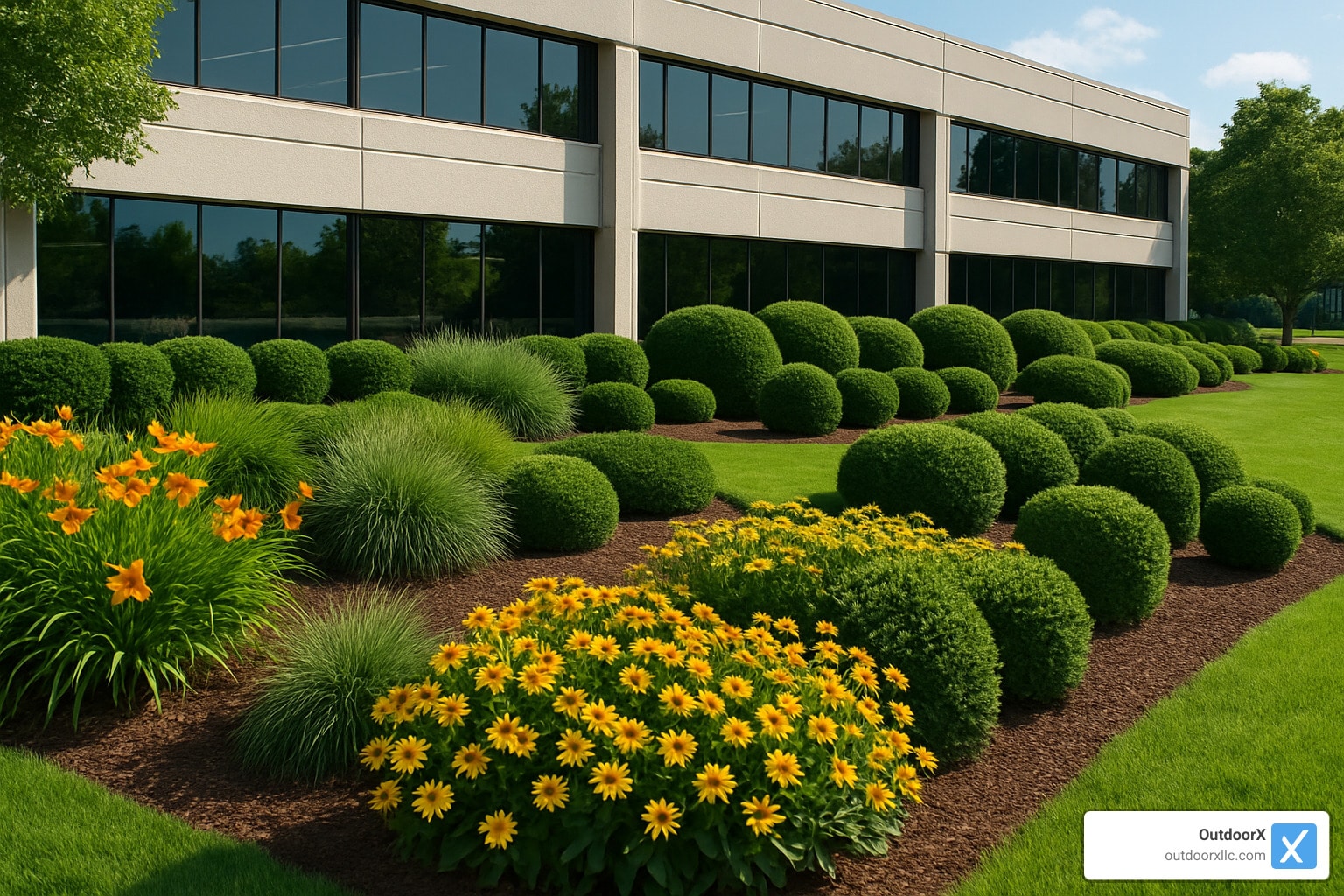
Commercial Landscaping Plants: 25 Best Proven Choices 2025
Why Smart Plant Selection Makes or Breaks Commercial Landscapes
Commercial landscaping plants are the foundation of any successful business property – they create first impressions, reduce long-term maintenance costs, and can even boost property values by up to 17%. But choosing the wrong plants can lead to costly replacements, constant upkeep, and poor curb appeal that reflects badly on your business.
Top Commercial Landscaping Plant Categories:
- Low-Maintenance Perennials: Daylilies, coneflowers, black-eyed Susan (bloom yearly, minimal care)
- Structural Shrubs: Abelia, barberry, hydrangea paniculata (year-round interest)
- Ornamental Grasses: Karl Foerster, fountain grass, switchgrass (drought-tolerant, seasonal texture)
- Native Trees: Serviceberry, redbud, red maple (climate-adapted, wildlife-friendly)
- Foot-Traffic Tolerant: Creeping thyme, liriope, blue oat grass (handle occasional trampling)
The secret to commercial landscaping success isn’t about picking the prettiest plants – it’s about matching the right plant to the right place. As research shows, perennial plants can significantly reduce long-term landscaping costs by eliminating annual replanting, while native species typically need less water and are less susceptible to pests and diseases once established.
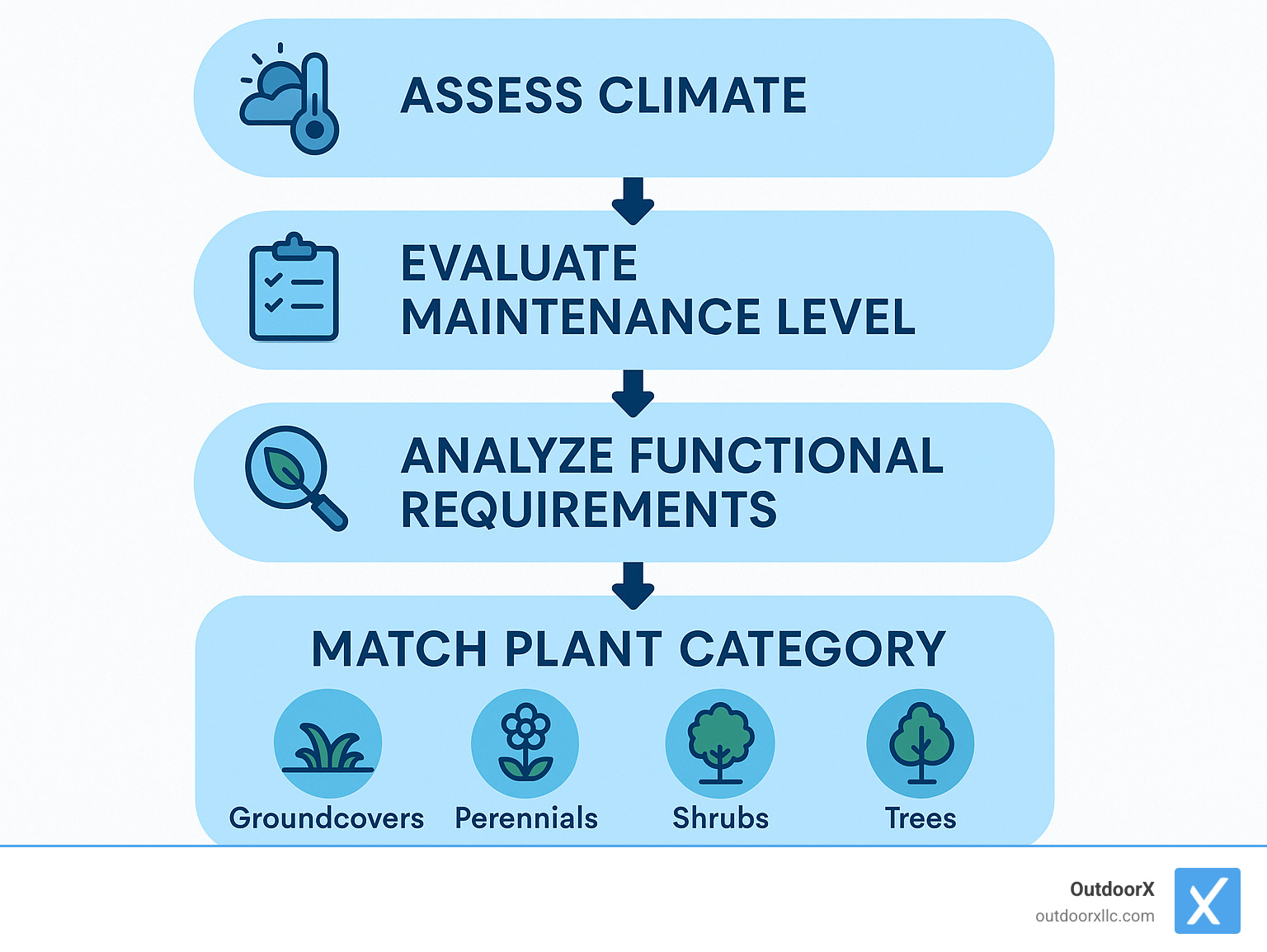
Smart commercial property owners focus on three key factors: climate compatibility (matching USDA hardiness zones), maintenance requirements (spring and fall check-ups versus weekly care), and functional needs (foot traffic tolerance, seasonal color, screening purposes).
The best commercial landscapes combine structural elements like ornamental grasses and evergreen shrubs with seasonal color from perennials and strategic annual plantings. This approach delivers professional appearance year-round while keeping maintenance costs predictable and manageable.
Terms related to commercial landscaping plants:
- commercial garden maintenance
- commercial hardscaping near me
- commercial landscaping for office buildings
Why Low-Maintenance Matters for Commercial Properties
Picture this: you’re running a busy office building, and every week your landscaping crew shows up to water, prune, and fuss over finicky plants. The bills keep climbing, and somehow the plants still look stressed half the time. Sound familiar?
Low-maintenance commercial landscaping plants are game-changers for smart property managers. The difference always comes down to choosing the right plants from the start.
The magic happens when you select plants that actually want to thrive in your specific conditions. Native plants are the superstars here because they’ve spent thousands of years adapting to your local climate. Once they’re established (usually after their first growing season), they typically need 50% less water than non-native species and rarely require fertilizer treatments.
Drought tolerance isn’t just a nice-to-have anymore – it’s becoming essential. With water restrictions popping up more frequently and utility costs rising, plants like ornamental grasses and native perennials can maintain their professional appearance even during dry spells when traditional lawns turn brown and crispy.
Many of the best commercial landscaping plants actually provide pollinator support while requiring minimal care. Plants like native asters and black-eyed Susan deliver 4-6 weeks of vibrant color while supporting local ecosystems. It’s a win-win that shows your business cares about environmental responsibility.
Stormwater compliance is another area where smart plant choices pay off. Many municipalities now require commercial properties to manage runoff, and deep-rooted native plants naturally help with water absorption and filtration – without any extra effort on your part.
Key Benefits at a Glance
The cost-cutting advantages speak for themselves. Properties with well-chosen plants see dramatic reductions in irrigation needs, minimal fertilizer requirements, and fewer pest control treatments. Plus, when plants are naturally suited to their environment, they live longer and need replacing far less often.
Brand image improvement happens almost automatically when your landscape looks consistently professional. There’s something about well-maintained outdoor spaces that tells visitors your business pays attention to details and cares about quality.
Tenant satisfaction gets a real boost too. Employees love having attractive outdoor spaces for breaks and informal meetings, and they definitely appreciate fewer maintenance disruptions during the workday.
Climate & Region: Right Plant, Right Place
A beautiful planting fails fast if the climate is wrong. Confirm your USDA hardiness zone, run a quick soil test, and note rainfall and sun patterns before you buy a single shrub. Those three steps tell you which plants will thrive with the least irrigation, fertilizer, and replacement cost.
• Hardiness zone = winter survival
• Soil pH & drainage = root health
• Rain & sun = irrigation needs
• Micro-climates = fine-tune each bed
Need technical data? The Scientific research on hardiness zones map is the gold standard. Our Landscape Design Build service folds that data into every plan.
Regional Stars (Quick Picks)
Northeast (Zones 4-7)
• Eastern Redbud – vivid spring bloom
• Winterberry – red winter berries
• Switchgrass ‘Shenandoah’ – burgundy fall color
• Serviceberry – four-season native interest
Southeast (Zones 7-9)
• Live Oak – classic shade
• Bald Cypress – adapts to wet or dry
• Loropetalum ‘Crimson Fire’ – compact, colorful foliage
Midwest (Zones 3-7)
• Red Maple – reliable fall show
• Korean Spice Viburnum – fragrant spring flowers
• Coneflower – months of drought-proof color
Southwest & West (Zones 6-10)
• Mexican White Oak – low-water shade
• Texas Ranger – purple after summer rains
• Butterfly Bush ‘Miss Molly’ – pollinator magnet, non-invasive
Use these as starting points, then layer in perennials and grasses that echo your local palette. Matching plants to place is the single best way to cut long-term maintenance costs.
Commercial Landscaping Plants: 25 Low-Maintenance Superstars
The best commercial landscaping plants look great without weekly pampering. Below are proven performers that combine long bloom windows, drought tolerance, and deer resistance. Mix a few from each category for a four-season display that practically cares for itself.
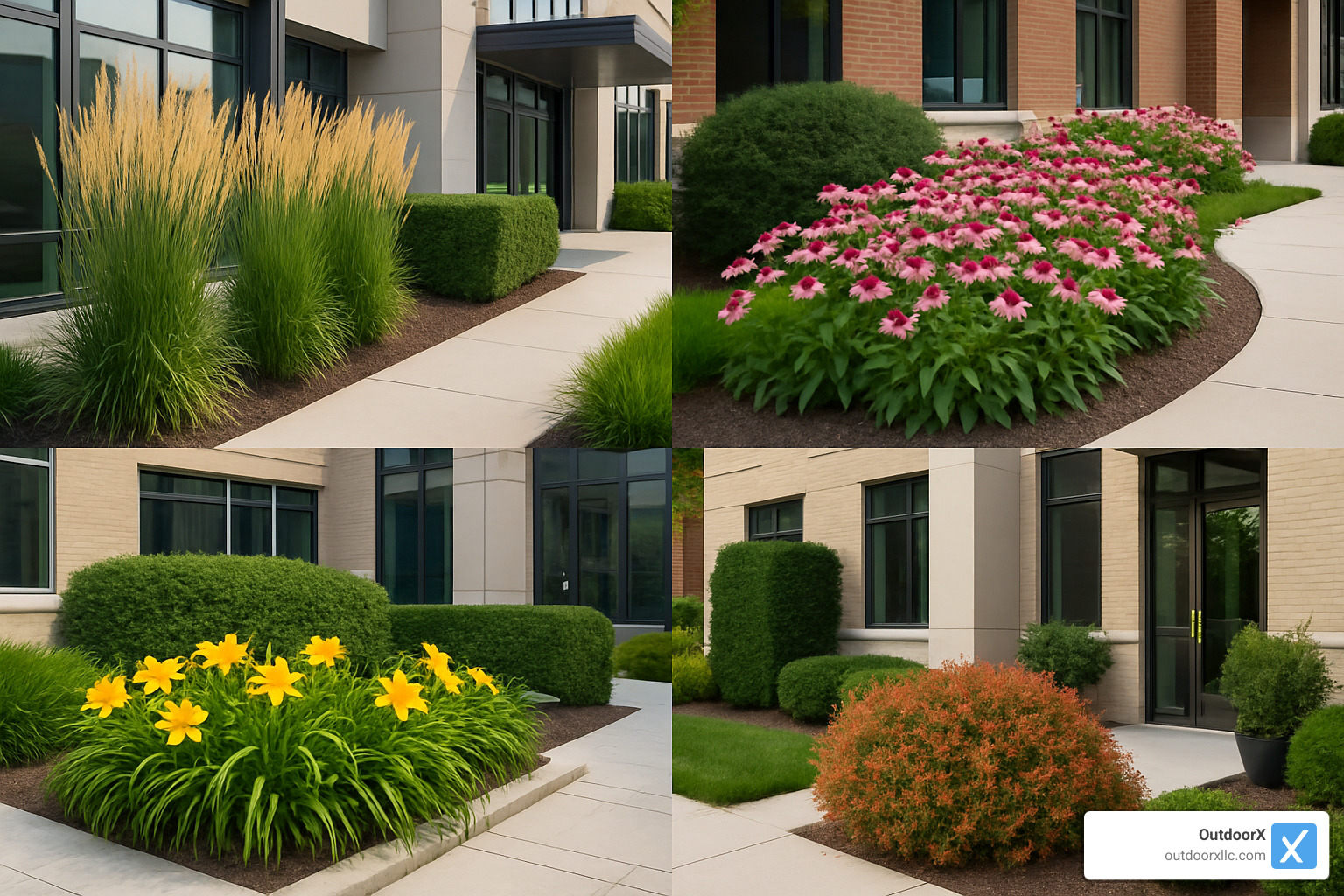
• Karl Foerster Grass – upright, zero flop
• Fountain Grass – graceful movement
• Switchgrass ‘Shenandoah’ – red fall tones
• Blue Oat Grass – steel-blue accent
• Daylily (countless cultivars) – foolproof color
• Coneflower – months of blooms, pollinator friendly
• Black-Eyed Susan – gold summer carpets
• Shasta Daisy – classic white, deer resistant
• Hellebore – flowers in late winter
• Salvia – aromatic, drought tough
• Abelia ‘Kaleidoscope’ – ever-changing foliage
• Barberry ‘Sunjoy Tangelo’ – orange punch, thorn security
• Hydrangea paniculata – giant summer cones
• Serviceberry – spring flowers, edible summer fruit
• Winterberry – red winter berries
• Eastern Redbud – pink spring display
• Red Maple – dependable shade + fall show
• Live Oak – century-long investment
• Bald Cypress – handles wet or dry
• Liriope – indestructible groundcover
• Creeping Thyme – fragrant path filler
• Creeping Periwinkle – erosion control
• Gro-Low Sumac – drought-proof shrub
• Korean Spice Viburnum – scented spring
• Butterfly Bush ‘Miss Molly’ – sterile, hardy (see latest research on butterfly bush cultivars)
Groundcovers & Foot-Traffic Fighters
Liriope and creeping thyme top the list where people stray off paths. Both knit into dense mats that shrug off weeds and light trampling, saving you hours of weeding and re-seeding.
Perennials, Shrubs & Grasses
Think of perennials as your color engine, shrubs as structure, and ornamental grasses as the architectural link between the two. Combined, they create layers of interest that don’t require constant replacement.
Design Essentials: Foot Traffic, Containers & Curb Appeal
Great design keeps plants where they belong and people where they need to walk.
• Hardscape first – pavers or gravel routes stop constant plant damage.
• Tough edges – liriope, blue oat grass, or creeping thyme outline paths and rebound from occasional steps.
• Containers for flexibility – large planters concentrate high-impact color at entrances without root conflicts.

Planters & Root Management
Oversized commercial planters solve root problems before they start, especially near sidewalks and utilities. Our Landscape Installation team pairs proper drainage with compact trees (think serviceberry) and dwarf shrubs that stay happy in confined soil.
Strategic Seasonal Color
Reserve annuals for prime views – lobby entrances, monument signs, or the main employee patio. Pansies shine in winter, tulips announce spring, petunias carry the summer, and chrysanthemums close out the year. A few square feet of annuals in the right spot make the whole property feel curated.
Planting & Maintenance Best Practices
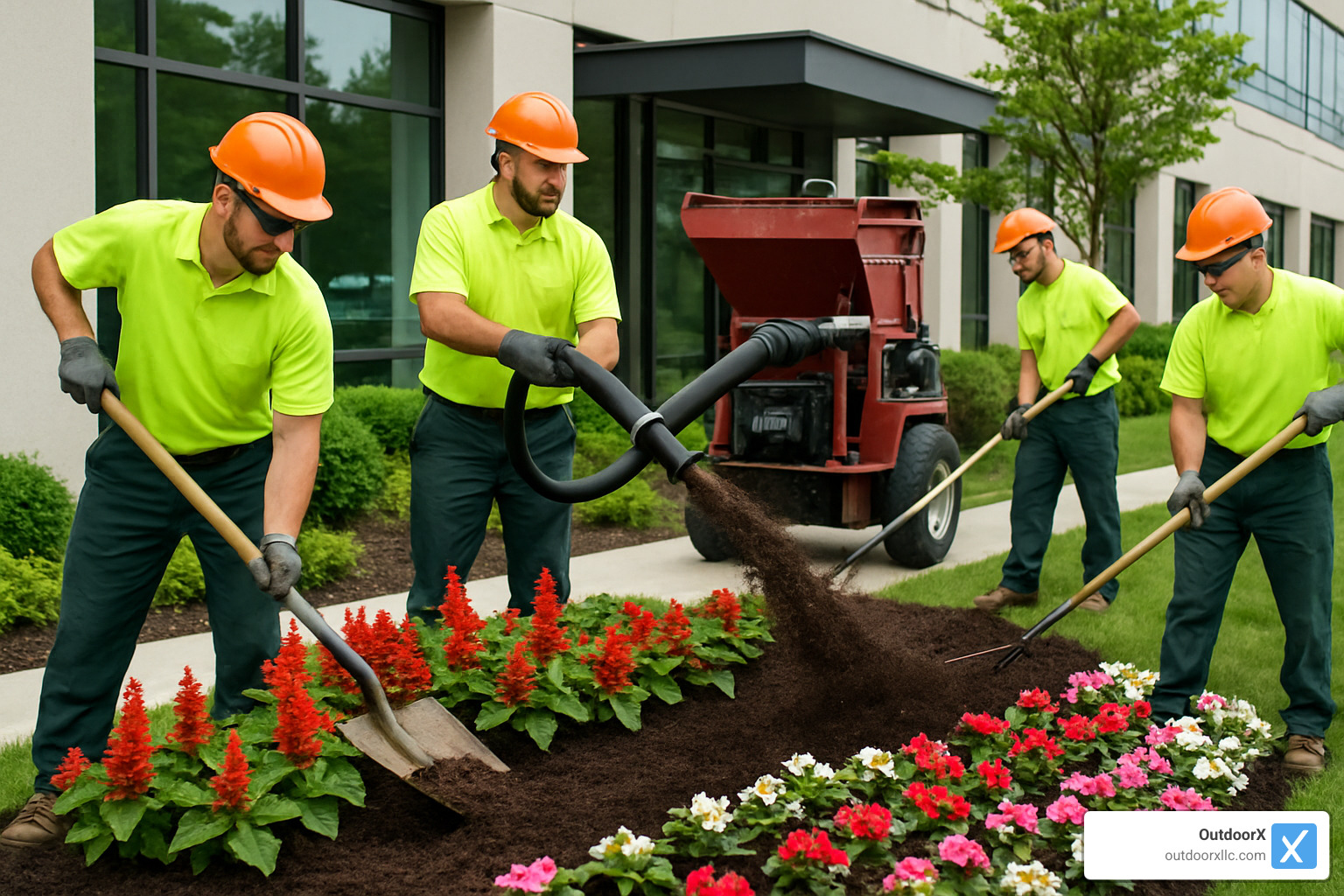
Soil prep, smart spacing, and drip irrigation remain the big three for low-stress landscapes. Two inches of mulch, twice-yearly pruning, and an integrated pest-management mindset keep crews productive and budgets predictable.
Sustainability & Cost-Saving Tips
Rain gardens reduce storm-water fees, while smart controllers cut water use by up to 50%. Average Pricing Ranges (internet data, not OutdoorX pricing):
- Basic perennial bed: $3–15 / sq ft
- Shrub install: $50–300 / plant
- Shade tree install: $200–2,000 / tree
- Annual color rotation: $2–12 / sq ft per year
- Irrigation system: $2,500–15,000
High-end numbers are 3× the average to reflect complex sites and premium materials.
When to Call the Pros
A maintenance contract locks in predictability, warranty protection, and safety compliance so your staff can focus on running the business.
Frequently Asked Questions about Commercial Landscaping Plants
How do I pick plants that survive neglect?
The secret to commercial landscaping plants that thrive with minimal attention is matching them to your site’s natural conditions. Think of it as finding plants that actually want to live in your specific environment rather than forcing high-maintenance specimens to survive where they don’t belong.
Native and adapted species are your best friends here. They’ve evolved to handle your local climate, soil, and rainfall patterns without constant human intervention. Ornamental grasses like Karl Foerster and fountain grass are true “set-and-forget” champions – they literally require only one annual cutting and handle everything else Mother Nature throws at them.
Perennials like daylilies and black-eyed Susan have earned their reputation as foolproof performers. These workhorses tolerate drought, poor soils, and general neglect while still delivering beautiful seasonal color.
When shopping for plants, look for descriptions that include “drought-tolerant,” “deer-resistant,” and “low-maintenance.” These aren’t just marketing buzzwords – they’re genuine indicators that the plant can handle less-than-perfect care.
Can I get year-round color in cold climates?
You absolutely can create stunning year-round interest even in harsh northern climates! The trick is thinking beyond just flowers and embracing the beauty of four-season design.
Winter structure comes from evergreen shrubs like yews and hollies, but don’t overlook ornamental grasses for their golden winter color and graceful movement in snow. These grasses catch frost beautifully and add life to otherwise dormant landscapes.
Spring awakening starts with early bulbs and tough perennials like hellebores that actually bloom through snow. These brave early bloomers signal that your landscape is alive and ready for the growing season.
Summer and fall bring the traditional color we all love – summer perennials, strategic annuals, and spectacular fall foliage from trees like red maple and serviceberry. Late-blooming perennials like asters and chrysanthemums extend the show well into autumn.
The real magic happens when you find winter interest beyond evergreens. Persistent berries from winterberry and serviceberry feed birds and add color against snow. Even bare deciduous plants contribute through interesting bark textures and architectural branching patterns.
Which species handle occasional trampling?
Ornamental grasses lead the pack when it comes to bouncing back from foot traffic. Karl Foerster grass, blue oat grass, and fountain grass are remarkably resilient – they bend rather than break and spring back quickly from occasional trampling.
Creeping thyme actually gets better with light foot traffic! Walking on it releases a wonderful minty fragrance and helps keep the plants compact and dense. It’s perfect for areas between pavers or along informal pathways.
Liriope deserves special mention as the tough guy of groundcovers. It handles heavier traffic than most plants and requires only annual cutting in early spring.
Here’s the reality check though: even the toughest plants aren’t meant for constant foot traffic. For areas where people regularly walk, hardscape solutions like stepping stones, gravel paths, or mulched walkways work better than expecting any plant to handle daily trampling.
Conclusion
Choosing the right commercial landscaping plants isn’t just about creating a pretty entrance – it’s about making smart business decisions that pay dividends for years to come. The most successful commercial landscapes blend beautiful aesthetics with rock-solid practicality, using plants that thrive in your specific conditions while requiring minimal fuss.
At OutdoorX, we’ve seen how the right plant choices can transform a property’s maintenance requirements from weekly headaches to seasonal check-ups. Our approach goes beyond simply picking attractive plants – we analyze your site’s unique conditions, understand your business needs, and select species that will actually thrive in your specific environment.
What sets us apart is our comprehensive understanding of Essex County’s growing conditions and commercial property challenges. We know which plants handle the salt spray from winter road treatments, which species bounce back from occasional foot traffic, and which varieties provide that professional appearance your business deserves year-round.
Our one-stop design-build-maintain approach means you’re not juggling multiple contractors or wondering if your maintenance crew understands the original design intent. From initial site analysis through ongoing seasonal care, our team stays with your project to ensure long-term success.
Whether you’re dealing with a tired-looking office complex in Andover, planning a welcoming entrance for your Beverly business, or need drought-tolerant solutions for a Newburyport industrial site, we bring decades of local experience to every project. We understand that your landscape needs to work as hard as you do – looking professional, staying within budget, and requiring minimal disruption to your daily operations.
The bottom line: investing in properly selected and professionally installed commercial landscaping plants reduces long-term costs while enhancing your property’s value and curb appeal. It’s not just about plants – it’s about creating outdoor spaces that support your business goals.
Ready to see what the right plant choices can do for your commercial property? Let’s talk about creating a landscape that works as hard as your business does.
For comprehensive solutions custom to your specific needs, explore our Commercial Landscaping Services to find how we can transform your property into a true business asset.