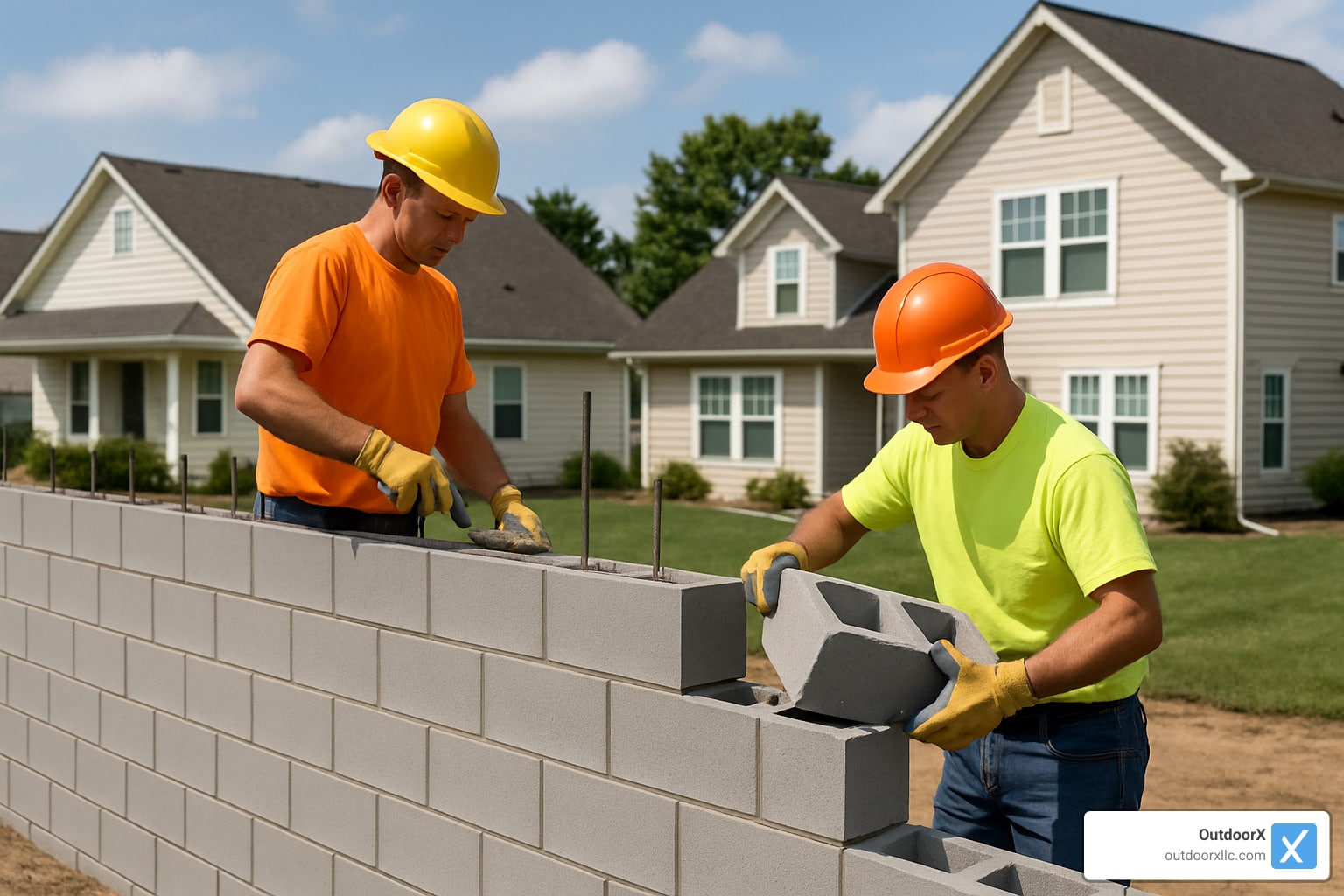
Block Wall Contractors Near Me: 7 Top-Rated Choices 2025
Block Wall Basics: Strength, Durability, and Security
If you’re searching for block wall contractors near me, here’s a quick guide to finding reliable professionals:
- Check licensing and insurance – Verify contractors have proper credentials
- Read online reviews – Look for 4+ star ratings on Google, Yelp, and BBB
- Get multiple quotes – Compare at least 3 estimates for fair pricing
- View completed projects – Ask for a portfolio of similar work
- Verify warranties – Ensure they offer at least a 1-year workmanship guarantee
- Confirm proper drainage plans – Essential for retaining walls
- Check permit knowledge – They should understand local building codes
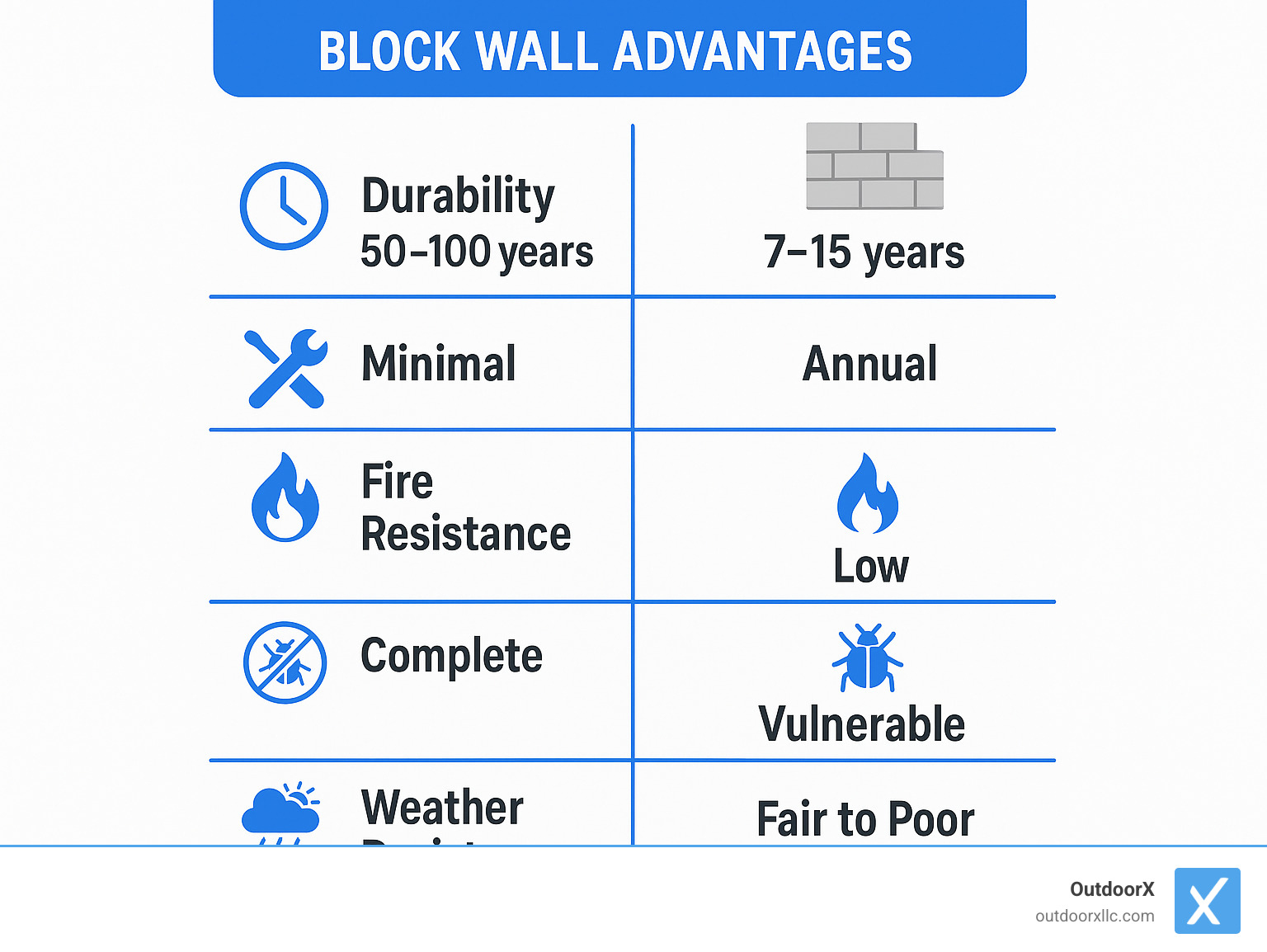
Block walls offer exceptional durability with a lifespan of 50-100 years when properly installed. They provide robust security, improved privacy, and superior resistance to fire, pests, and extreme weather conditions.
The upfront investment pays dividends through minimal maintenance requirements and property value improvement. While costs typically range from $60 to $240 per linear foot depending on materials and design, the return on investment is substantial considering their longevity.
Unlike temporary fencing, block walls can be customized with various finishes including stucco, paint, stone veneers, and decorative caps. They can incorporate planters, lighting elements, and wrought iron accents to complement your home’s aesthetic.
Whether you need a retaining wall for sloped terrain, a privacy barrier, or a decorative boundary, professional installation ensures critical elements like proper foundation work, drainage systems, and reinforcement are addressed correctly.
Block wall contractors near me definitions:
– Garden retaining wall design
– Retaining wall concrete design
– Retaining wall landscape design
Understanding Block Walls: Types, Uses & Benefits
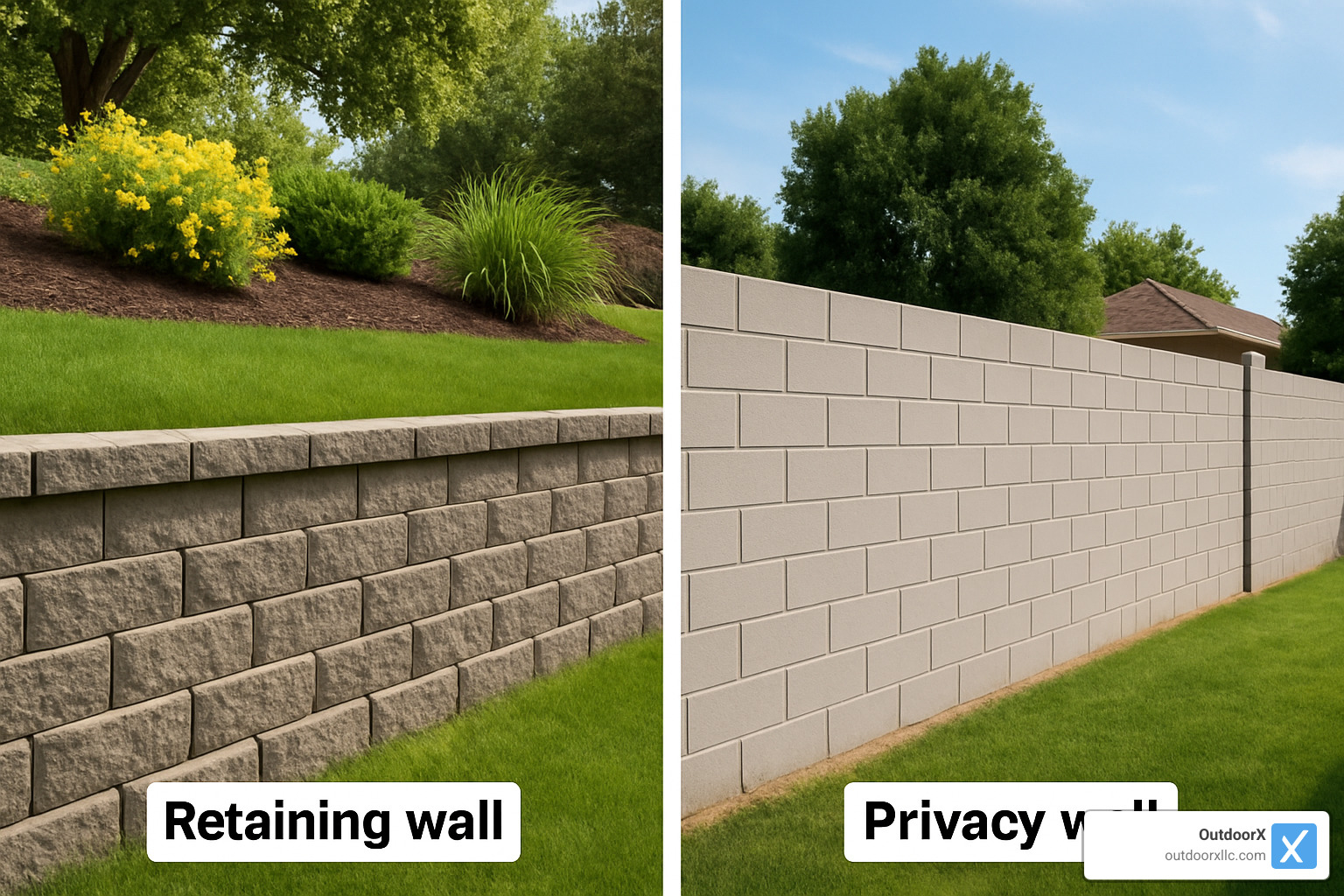
When searching for block wall contractors near me, understanding what these structures can do for your property is essential.
Retaining Walls
Retaining walls hold back soil and prevent erosion on sloped properties, creating usable flat areas from hillsides. In Essex County’s varied terrain, these walls are particularly valuable. When built correctly with proper backfill and drainage systems, they’ll stand strong for decades against natural forces.
Privacy Walls
Privacy walls typically stand 6-8 feet tall, creating both a visual screen and sound buffer. They’re especially popular in densely populated Essex County communities like Salem, Peabody, and Beverly. Beyond privacy, these walls add security while defining outdoor living spaces, creating intimate outdoor rooms perfect for entertaining.
Decorative and Garden Walls
Lower decorative walls (2-4 feet high) define garden spaces, create visual interest, and establish gentle boundaries without blocking views. In upscale communities like Marblehead and Swampscott, these walls often incorporate planters, built-in seating, or water features, changing flat yards into dynamic, multi-level landscapes.
Sound Barriers
For properties near highways or busy streets, block walls provide significant noise reduction. The mass of concrete blocks absorbs and reflects sound waves, often reducing noise levels by 50% or more, depending on the wall’s height and construction.
Comparing Block Materials
| Material Type | Weight | Strength | Cost Range (per sq ft) | Finish Options |
|---|---|---|---|---|
| Cinder Block | Lighter | Good | $10-$30 | Limited, requires facing |
| Concrete Block | Heavier | Excellent | $15-$45 | Multiple textures, colors |
| Stone Block | Heaviest | Superior | $25-$75 | Natural variations, premium look |
Cinder Block walls are budget-friendly, using lightweight aggregate. While affordable, they typically need additional finishing for aesthetic appeal.
Concrete Block (CMUs) offer excellent structural integrity and come in various styles including split-face, slump blocks, and standard smooth-faced blocks.
Stone Block provides a premium, timeless look with natural variations in color and texture, though at a higher price point.
Professional block wall contractors near me incorporate essential reinforcement elements:
- Hollow-core blocks filled with grout for added strength
- Strategic vertical and horizontal rebar placement
- Proper foundation systems scaled to the wall’s height
- Wind load calculations for taller privacy walls
Permit & Code Essentials
Local regulations typically restrict fences to 6 feet in backyards and 3-4 feet in front yards throughout Essex County without special permits. Setbacks require walls to be positioned certain distances from property lines, streets, and utilities.
Always call 811 before digging to mark underground utilities. For walls over 4 feet tall, engineered plans with structural calculations are usually required, and multiple inspections during construction are standard.
Finding the Best Block Wall Contractors Near Me
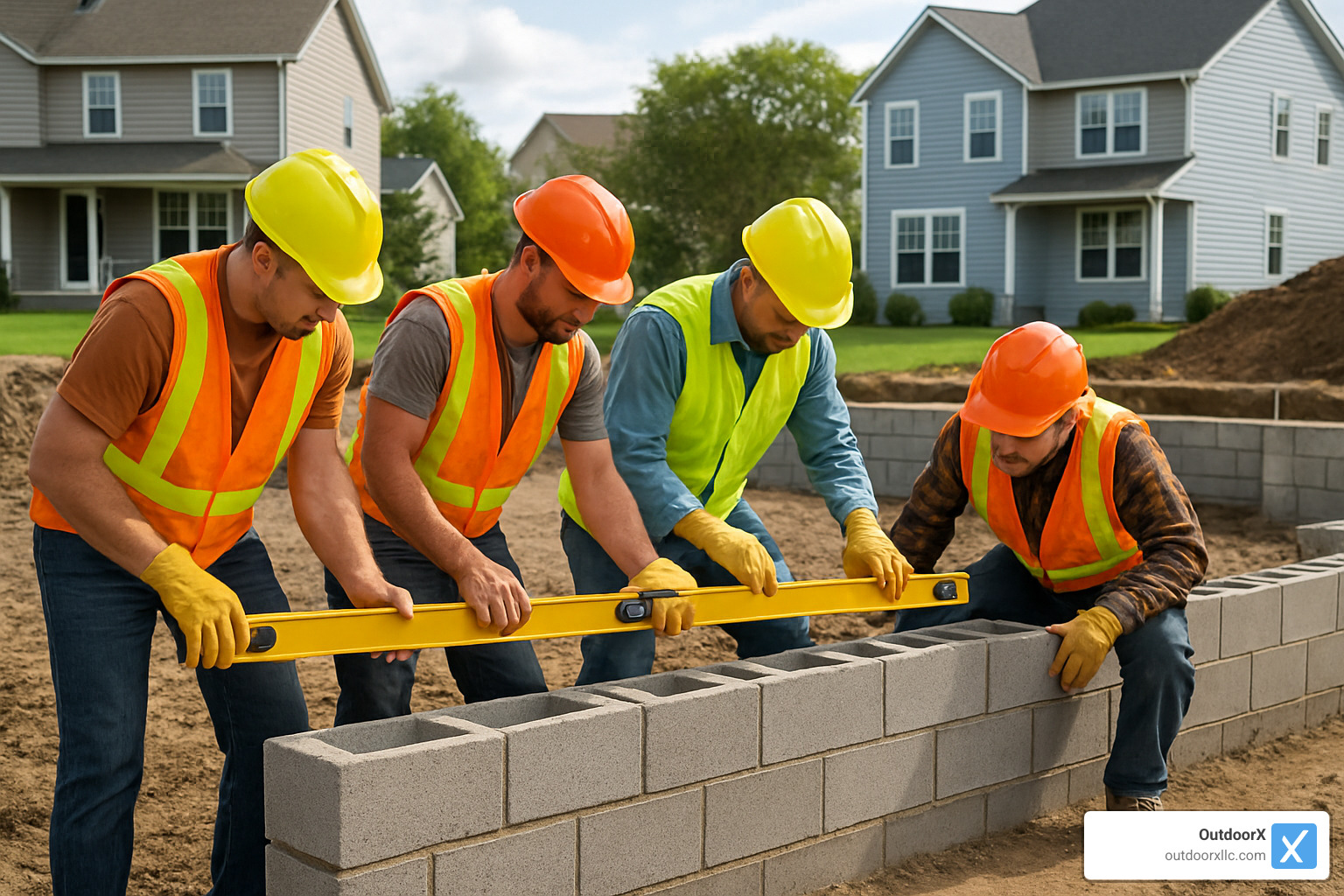
When searching for block wall contractors near me, you’re seeking a partner who’ll build a structure that lasts generations. The quality of installation directly impacts everything from curb appeal to structural integrity.
Block Wall Contractors Near Me: 7-Point Vetting Checklist
First, verify proper licensing. Massachusetts contractors should hold valid Home Improvement Contractor (HIC) registration and, for larger projects, a Construction Supervisor License (CSL). Check these credentials through the Massachusetts Office of Consumer Affairs and Business Regulation.
Next, confirm insurance coverage. A reputable contractor should carry general liability insurance (at least $1 million) and workers’ compensation. Request certificates and verify they’re current.
When evaluating experience, ask to see their portfolio of completed block wall projects. Look for level courses, precise corners, and professional finishing.
Don’t skip checking references. Speaking with recent clients reveals volumes about a contractor’s reliability, communication style, and problem-solving abilities.
A professional will always provide a detailed written estimate breaking down materials, labor, equipment, permits, site prep, drainage solutions, and cleanup procedures.
During consultation, assess the contractor’s technical knowledge about foundations, drainage design principles, reinforcement techniques, and local soil conditions. A good contractor will explain these elements without prompting, showing they understand the science behind proper drainage design.
Finally, ensure your contract includes clear terms covering scope of work, materials specifications, timeline, payment schedule (never pay more than 30% upfront), change order procedures, and warranty information.
Red Flags to Avoid When Hiring Block Wall Contractors Near Me
Watch for warning signs that could save you from a costly mistake.
Permit-dodging promises should immediately raise concerns. Legitimate contractors never suggest bypassing required permits.
Be wary of suspiciously vague estimates without line-item details. These often mask future surprise charges or indicate inferior materials.
Requests for large upfront payments (more than 30%) often signal cash flow problems or worse intentions.
Watch out for high-pressure sales tactics. Good contractors give you time to review proposals and compare options.
Unmarked vehicles or lack of proper business identification often indicates a fly-by-night operation.
If a contractor can’t provide references or seems reluctant to share past client contacts, there’s usually a reason.
Be concerned if contractors demonstrate limited knowledge about drainage systems. Proper drainage is critical for wall longevity, especially for retaining walls.
Cost & Timeline Breakdown: What to Expect
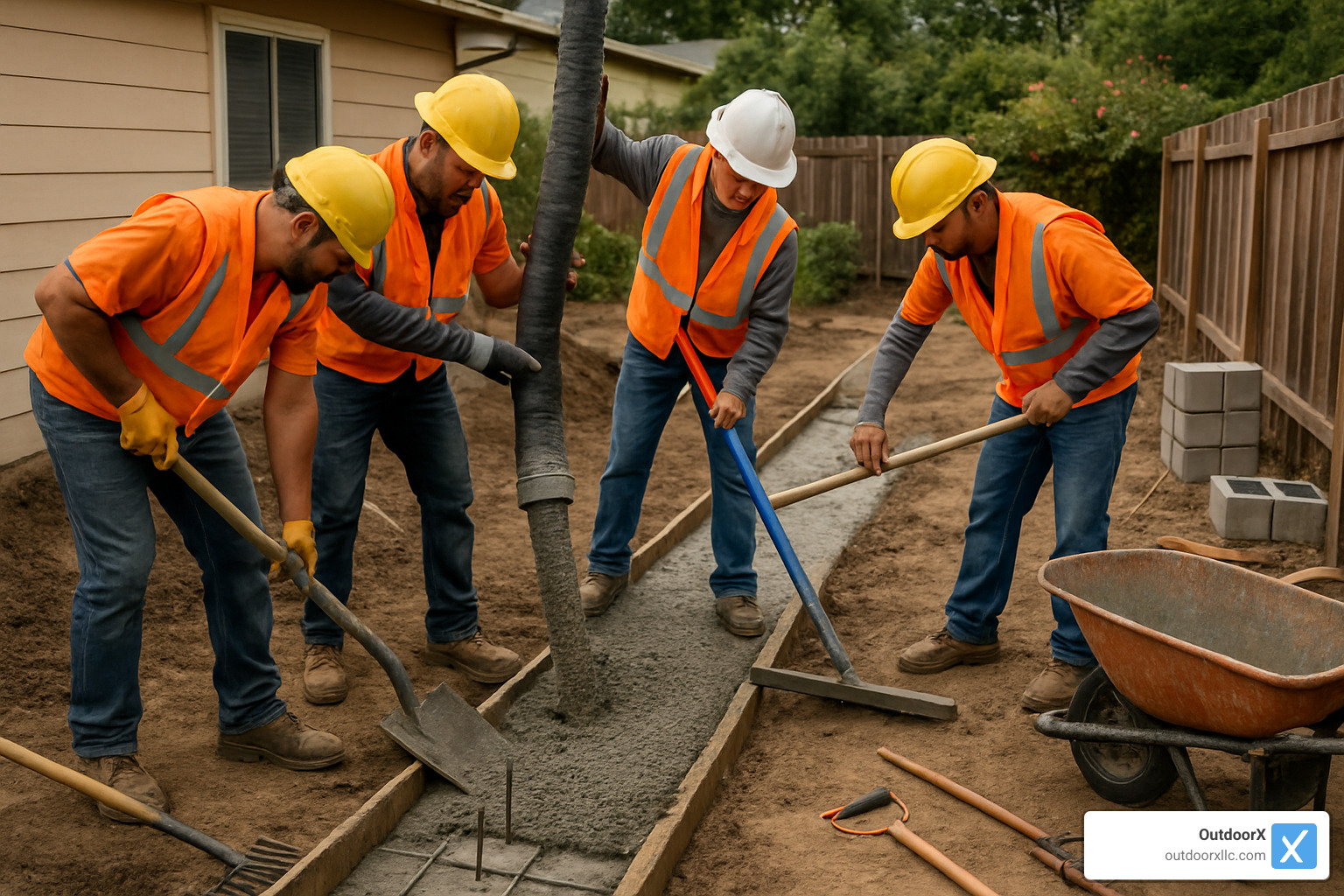
Understanding both cost and timeline helps you prepare mentally and financially for your block wall project.
Cost Factors
Your investment depends on several key elements. The height and type of wall serves as your starting point. A standard 4-foot privacy wall costs considerably less than an 8-foot security wall or a complex retaining wall. Taller walls require deeper foundations and often need engineered plans.
Material selection plays a huge role in your budget. While standard concrete blocks are economical, decorative options like split-face or slump blocks can increase material costs by 30-50%.
Your property’s characteristics matter too. Steep slopes, difficult access, or problematic soil conditions can add 15-25% to your project cost.
For retaining walls, proper drainage is essential. While drainage systems add cost upfront, they protect your investment by preventing water pressure buildup.
Based on research and experience in Essex County, here’s what homeowners typically invest:
| Wall Type | Average Cost (per linear foot) | High-End Cost (per linear foot) |
|---|---|---|
| Basic Block Wall (4ft) | $60-$120 | $180-$360 |
| Decorative Block Wall (4ft) | $80-$160 | $240-$480 |
| Retaining Wall (4ft) | $100-$240 | $300-$720 |
| Security Wall (6-8ft) | $120-$280 | $360-$840 |
Note: These are average costs based on internet data and not actual costs for OutdoorX LLC. Prices may vary significantly based on specific project requirements.
For repairs, you’ll typically spend between $100-$500 for minor crack repairs, $500-$2,000 for structural issues, and $200-$800 for waterproofing and sealing services.
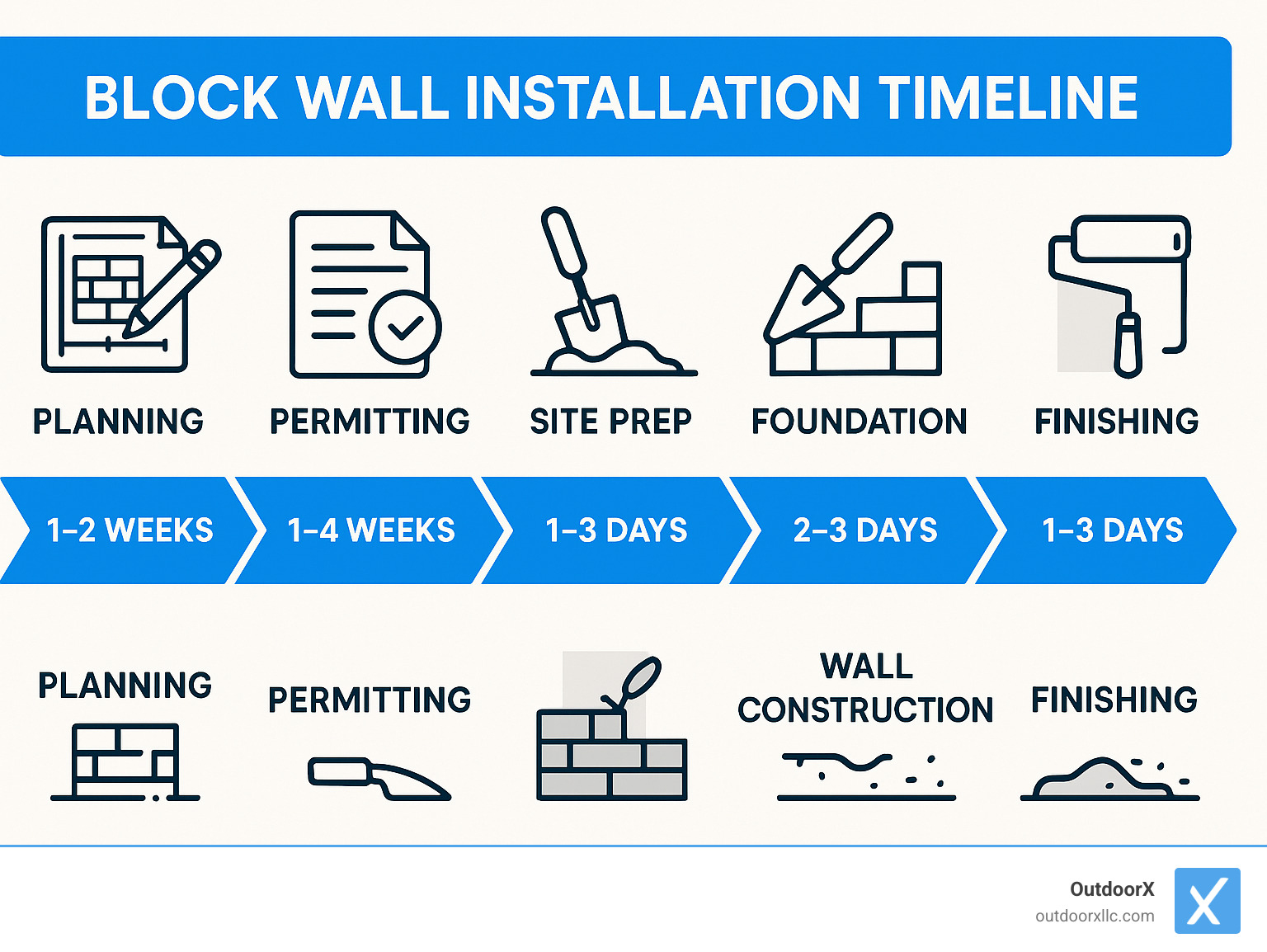
Budgeting Tips & Quote Comparison
When reviewing quotes from different contractors, look beyond the bottom-line number. A detailed quote breaks down costs for materials, labor, equipment, permits, site prep, drainage, and cleanup.
Make sure you’re comparing similar scopes of work across different contractors. One quote might seem cheaper until you realize it doesn’t include important elements like drainage or proper reinforcement.
Pay attention to “allowances” in your quotes. These are estimated amounts for certain materials or features that may change based on your final selections.
Always set aside a contingency fund of 10-15% beyond your quoted price for unexpected issues.
Consider timing your project strategically. Many Essex County contractors offer off-season discounts during late fall or winter months when demand is lower.
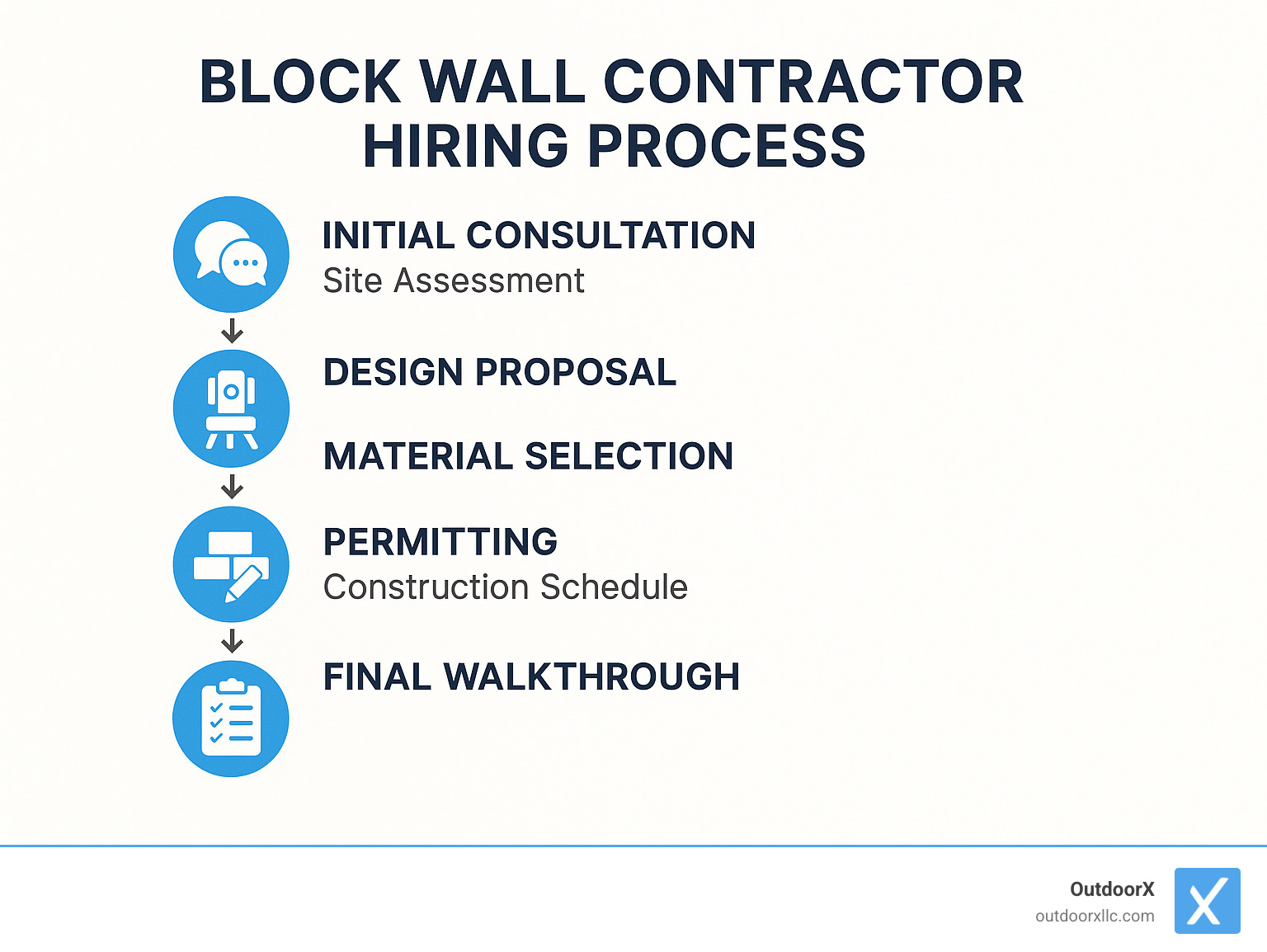
Project Timeline Milestones
Block wall construction follows a logical sequence:
The consultation and design phase usually takes 1-2 weeks, during which your contractor will assess your site, develop a design, and help you select materials.
Permitting often becomes the longest waiting period, typically taking 1-4 weeks depending on your local building department.
Once permits are in hand, site preparation takes 1-3 days as crews mark utilities, excavate, and grade the area. Foundation installation follows (2-3 days), including digging trenches, setting forms, pouring concrete, and allowing proper curing time.
The block installation itself typically takes 2-5 days depending on your wall’s length and complexity. Finishing touches require another 1-3 days for cap installation, applying finishes, site cleanup, and final inspection.
From start to finish, most residential block wall projects in Essex County take 3-8 weeks, with the actual construction phase lasting 1-2 weeks.
Step-by-Step Block Wall Construction Process
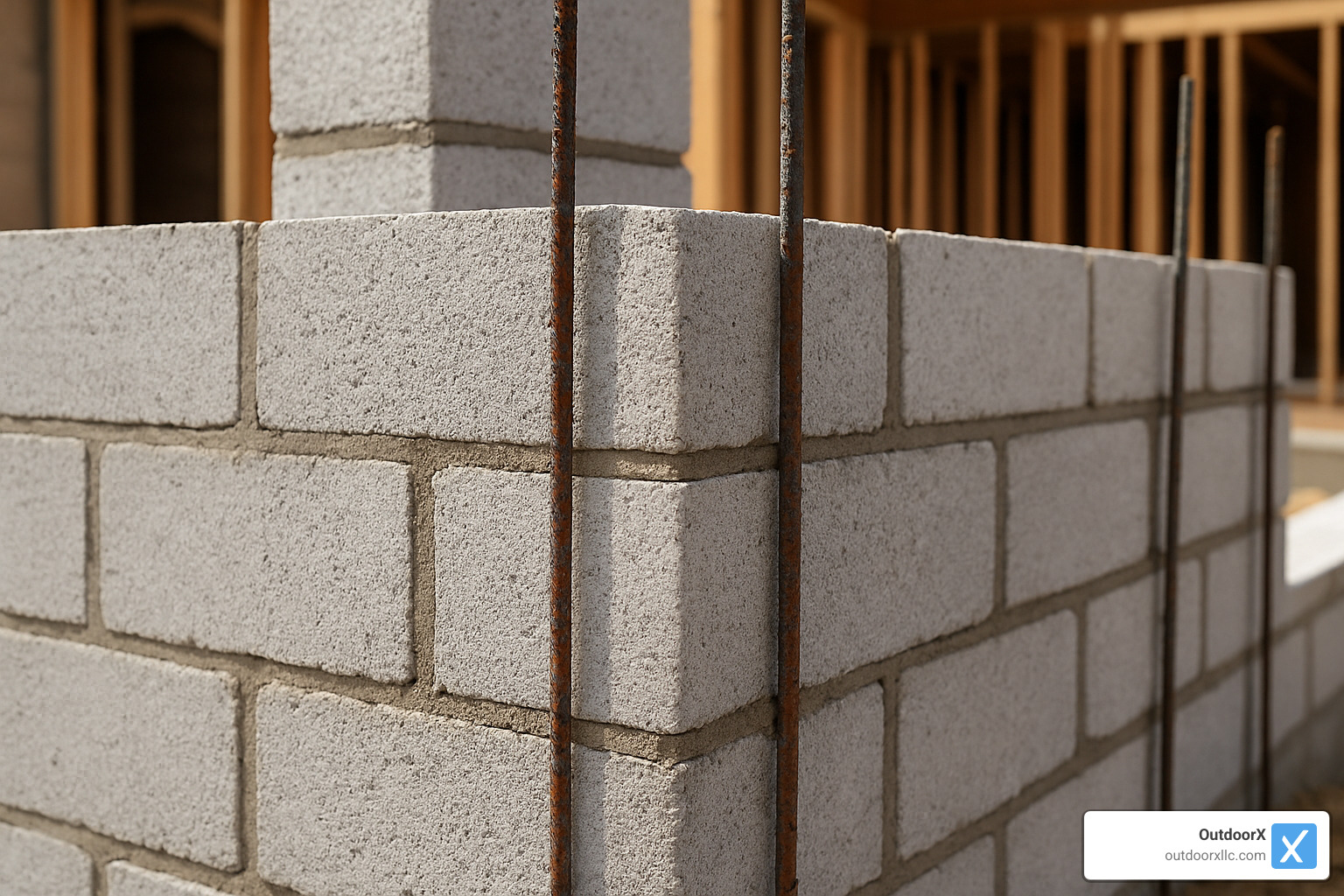
Understanding the construction process helps you recognize quality craftsmanship and follow your project’s progress with confidence.
Site Prep & Foundation
The foundation is the unsung hero of any block wall. It bears the entire weight of the structure and must be perfectly level and appropriately reinforced.
We begin with a thorough site survey to verify property lines, mark the wall’s exact location, and identify underground utilities. This is particularly important in Essex County, where soil conditions vary significantly between coastal and inland areas.
Next comes excavation – digging a trench typically 12 inches below the frost line, with width about twice the wall thickness. The soil gets thoroughly compacted to create a stable base, with careful attention to slope for proper drainage.
For the foundation construction, we build forms, place reinforcement bars according to engineering specifications, and pour concrete (minimum 2500-3000 PSI). We ensure it’s perfectly level and allow it to cure for at least 24-48 hours.
A properly constructed foundation might not be visible in the finished product, but it’s what will keep your wall standing strong through decades of New England weather cycles.
Stacking, Reinforcement & Drainage
With a solid foundation in place, we begin the visible portion of your wall. The first course installation is critical – we lay a mortar bed on the foundation and place the first row of blocks with meticulous attention to level and alignment.
As we build subsequent courses, we stagger the blocks in a running bond pattern so joints don’t align vertically. Our mortar joints maintain a consistent 3/8-inch thickness, and we check for level frequently.
Reinforcement installation happens concurrently with stacking. We place vertical rebar in block cores according to engineering specifications and install horizontal bond beams at prescribed intervals. The cores containing rebar get filled with grout or concrete to create a unified structure.
The drainage system is critical, especially in Essex County’s rainy springs and snowy winters. We install weep holes or drainage pipes near the base, use filter fabric to prevent soil from clogging the drainage, and add gravel backfill to create a drainage channel behind the wall.
Finishing & Customization Options
This is where your wall transforms from functional to fabulous! Once the structural elements are complete, we can finish your wall in countless ways.
We typically begin with cap installation, mortaring decorative caps to the top course. These caps often overhang slightly to create a drip edge that protects the wall face from water staining.
For surface treatments, options include stucco application for a smooth finish, paint in complementary colors, or stone/brick veneer for a premium appearance. Some homeowners opt to leave split-face or textured blocks exposed for a more rustic aesthetic.
Decorative elements can include built-in planters, integrated lighting fixtures, wrought iron accents, or even custom murals. Many clients also request functional additions like gates, built-in seating areas, or fire pit surrounds.
For more information about our expertise with retaining walls, visit our retaining walls page or explore our hardscaping services for additional outdoor structure options.
Maintenance, Repairs & Eco-Friendly Upgrades
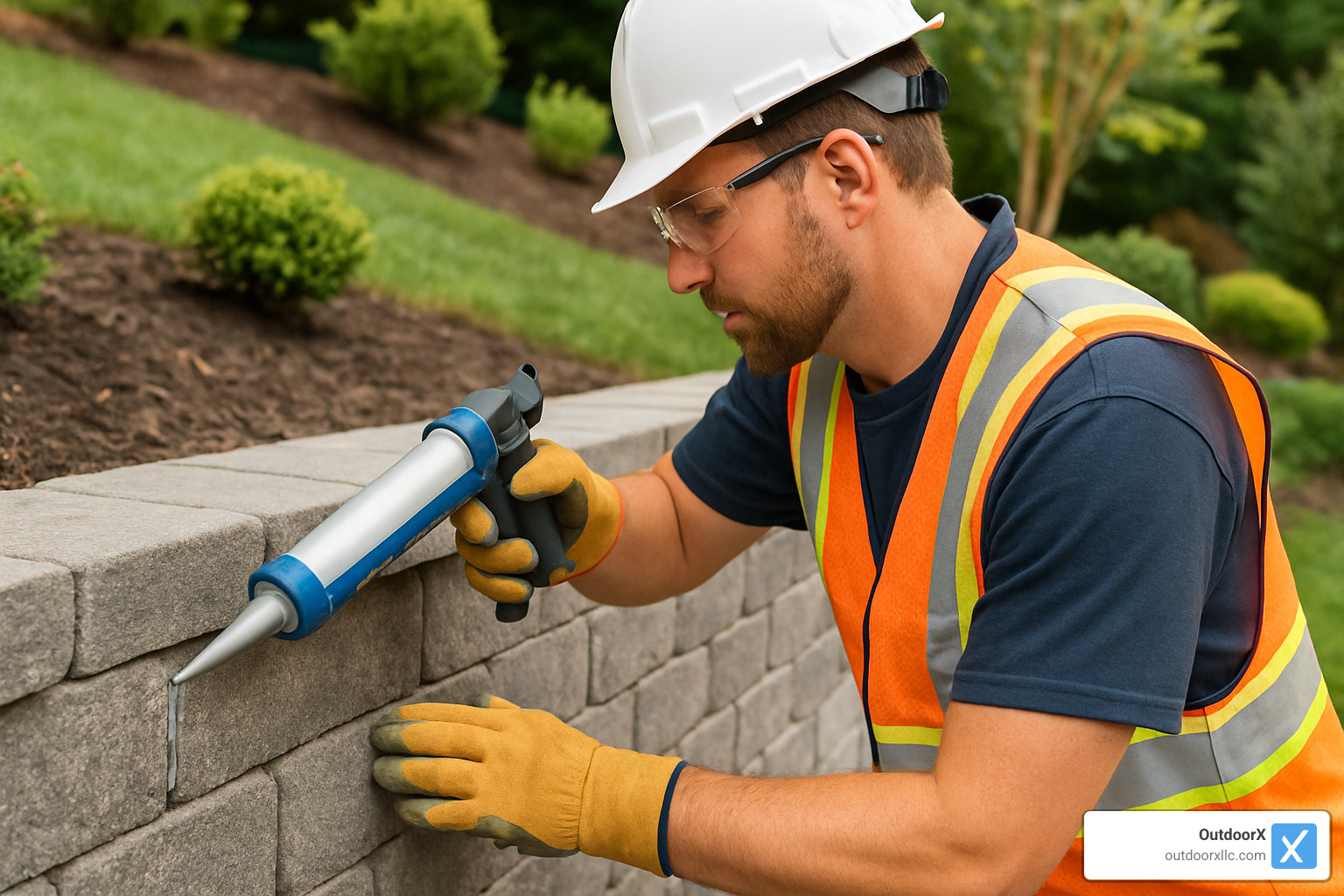
A well-built block wall isn’t just a “set it and forget it” investment. With proper care, these structures can truly become generational assets.
Routine Maintenance
Your block wall deserves an annual check-up. Each spring, inspect for cracks, leaning sections, or bulging areas that need immediate attention. Pay special attention to mortar joints, as these are often the first places to show deterioration after freeze-thaw cycles.
Cleaning your block wall requires just a stiff brush and garden hose. Avoid pressure washers, which can force water into the porous surface. For stubborn dirt or efflorescence (chalky white deposits), a simple vinegar solution works well.
Applying a quality masonry sealer every 3-5 years prevents moisture penetration, which is crucial in our New England climate where water can seep in, freeze, expand, and crack your wall from the inside out.
Common Block Wall Repairs
Hairline cracks (under 1/8″) are usually cosmetic and can be filled with a masonry crack filler for $100-$300. These minor imperfections often result from normal settling.
Mortar joint deterioration is common in older walls. Tuck-pointing (replacing damaged mortar) costs between $200-$500 for typical residential sections and prevents water infiltration.
When a wall begins leaning or bulging, call professionals immediately. These symptoms suggest potential structural issues that could lead to collapse. Repairs typically range from $500-$2,000+ depending on severity.
Water damage is the silent enemy of block walls. If your wall wasn’t built with proper drainage, retrofitting drainage systems or applying waterproof membranes costs between $300-$1,500 depending on accessibility and wall size.
Sustainability & Energy Efficiency
Modern walls can incorporate recycled content blocks, low-carbon concrete mixes, and locally sourced materials that reduce environmental impact. Materials like fly ash can be incorporated into concrete mixes, diverting waste from landfills.
Block walls offer surprising energy benefits. Their substantial thermal mass helps regulate temperature by absorbing heat during the day and releasing it slowly at night, potentially reducing heating and cooling costs. They also create effective windbreaks for outdoor living spaces.
Water management features can transform your wall from a simple boundary into an eco-friendly asset. Rainwater harvesting systems collect runoff for garden irrigation, while permeable backfill materials allow groundwater to recharge naturally. Rain gardens at the base of retaining walls can naturally filter runoff.
Finishing touches can further improve sustainability: solar-powered lighting, native plant integration in wall planters, and non-toxic sealers protect both your wall and the environment.
For more comprehensive information about our hardscaping services, including eco-friendly options, visit our hardscaping page.
Frequently Asked Questions about Block Wall Contractors Near Me
How long will a block wall last with proper care?
With proper construction and maintenance, a concrete block wall typically lasts 50 to 100 years. Quality materials, proper reinforcement with rebar, good drainage systems, and regular maintenance including sealing every few years all contribute to this impressive longevity.
Here in Essex County, our walls face unique challenges from freeze-thaw cycles and coastal salt exposure. That’s why at OutdoorX, we build with these local conditions in mind.
Do I need a permit for a 4-foot privacy wall?
It depends on your specific town, but probably yes for a 4-footer. Throughout Essex County, walls under 3 feet tall often don’t require permits, but 4-foot walls typically do. For retaining walls over 4 feet, you’ll usually need engineered plans that verify structural integrity.
Location matters too. Walls near property lines face setback requirements, and special areas like conservation zones trigger additional approvals. At OutdoorX, we handle all permitting legwork for our clients.
Can block walls be built on a steep slope or uneven terrain?
Absolutely! Challenging terrain requires a more specialized approach. Instead of a single level foundation, we often create stepped foundations that follow the natural contour of your land. We incorporate improved drainage systems, stronger reinforcement to counter lateral pressure, and deeper footings for stability.
For very steep inclines, we might recommend a terraced approach with multiple smaller walls rather than one tall structure, changing unusable slopes into functional garden spaces.
What’s the difference between cinder block and concrete block?
Traditional cinder blocks contained coal cinders as aggregate, making them lighter but less strong. These true cinder blocks are rarely used in modern construction.
Today’s concrete blocks (CMUs – Concrete Masonry Units) are made with portland cement, sand, gravel, and water, offering superior strength and durability.
What many people call “cinder blocks” today are actually lightweight concrete blocks made with a lighter aggregate mix.
How do I know if my existing block wall needs repair?
Watch for these warning signs: cracks wider than 1/8 inch, leaning or bulging sections, crumbling mortar between blocks, water seepage, efflorescence (white powdery residue), movement at the base, or separation from adjoining structures.
Most of these problems can be successfully addressed if caught early. Our team offers professional wall inspections throughout Essex County.
What maintenance does a block wall require?
Block walls need relatively little maintenance, but not zero. An annual visual inspection takes just minutes but can save thousands in repairs. Occasional cleaning with appropriate masonry cleaners keeps your wall looking fresh, while resealing every 3-5 years provides crucial protection against moisture.
Check and clear drainage systems yearly, address small repairs promptly, and remove any vegetation growing on the wall, as roots can cause surprising damage over time.
Conclusion
Finding the right block wall contractors near me isn’t just about getting a job done—it’s about creating a structure that improves your property for generations. A professionally installed block wall adds lasting value, functionality, and beauty to your home.
At OutdoorX, we’ve spent over ten years perfecting the art and science of custom block wall construction throughout Essex County. We understand that each project is unique—whether you need a robust retaining wall for a challenging slope or a garden wall to define outdoor living spaces.
What makes our approach different is our deep understanding of New England’s North Shore environment. We design and build walls specifically to withstand our region’s freeze-thaw cycles, coastal conditions, and seasonal challenges while complementing the architectural character of the area. When you work with us, you’re getting:
Thoughtful planning that begins with a thorough site assessment and results in a custom design for your property’s unique needs.
Complete compliance with all local building codes and permit requirements—we handle the paperwork so you don’t have to.
Superior materials selected for both performance and aesthetics, ensuring your wall stands strong while looking beautiful.
Expert installation by skilled masons who take pride in their craft and understand the technical aspects of proper wall construction.
Personalized finishing touches that make your wall uniquely yours, from custom caps to integrated lighting or planters.
Ongoing support with maintenance recommendations to protect your investment for decades.
Ready to start your block wall project? Contact OutdoorX today for a free, no-obligation consultation and estimate. For more inspiration and information about our approach to retaining walls and block construction, visit our retaining walls page to explore our portfolio of completed projects.
A beautiful, durable block wall is an investment that pays dividends in enjoyment, functionality, and property value for decades to come—and we’re here to make the entire process smooth and stress-free from start to finish.