


Building a paver patio on uneven ground: Easy Guide 2025
Why Building a Paver Patio on Uneven Ground Is Achievable with the Right Approach
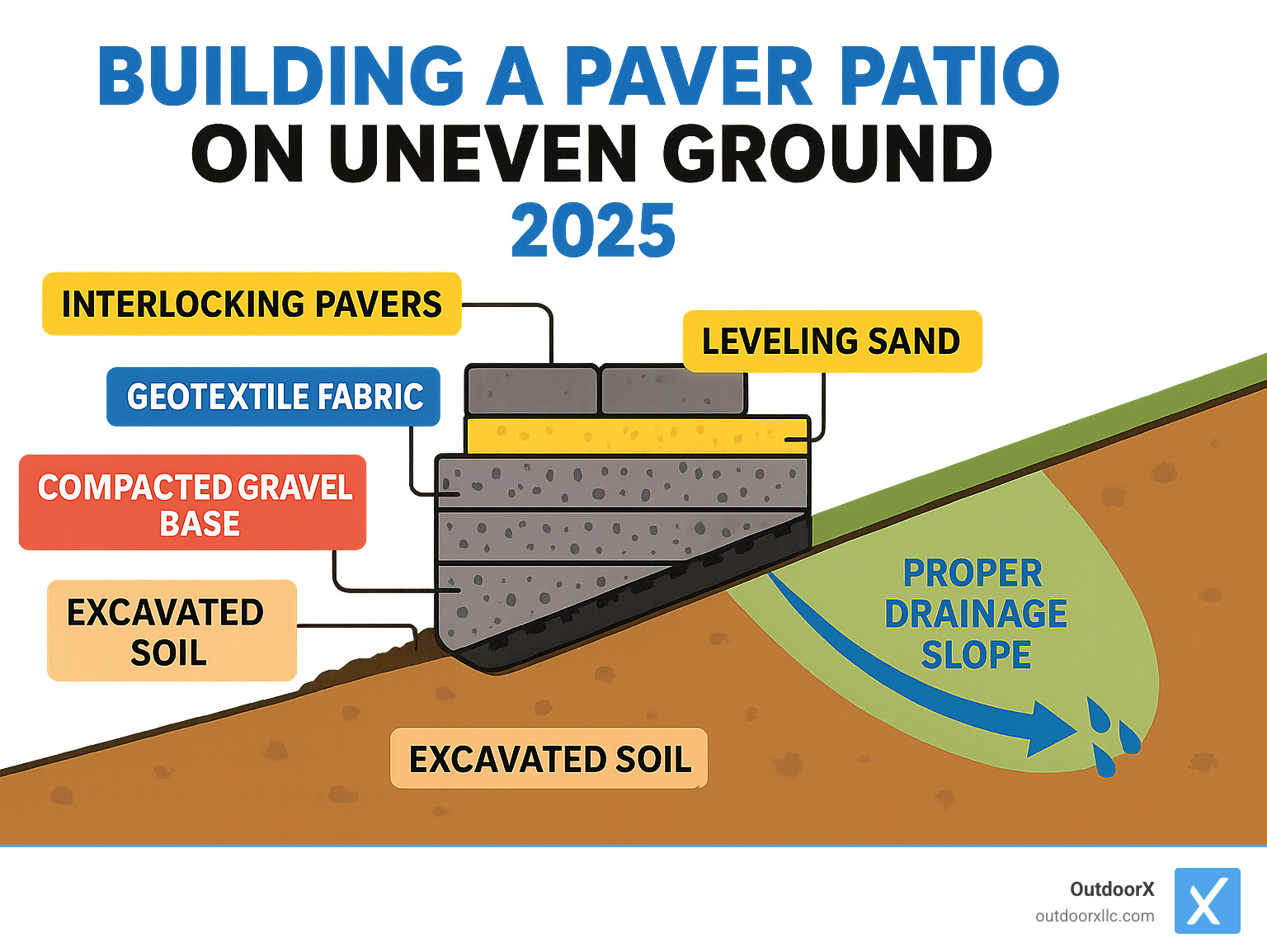
Building a paver patio on uneven ground requires careful planning and proper technique, but it’s absolutely doable with the right approach. The key steps include:
- Assess the slope – Measure your yard’s grade to determine if you need a retaining wall
- Plan drainage – Ensure water flows away from structures with a 1-2% slope
- Excavate strategically – Dig deeper on the high side, build up the low side
- Create a stable base – Use compacted gravel in layers with geotextile fabric
- Install pavers systematically – Work from the lowest point upward
- Secure the edges – Use proper edge restraints to prevent shifting
There’s something magical about changing a sloped, unusable yard into a functional outdoor space. But uneven terrain presents unique challenges that flat ground simply doesn’t have.
The main obstacles include managing water drainage, preventing soil erosion, and creating a stable foundation that won’t shift over time. Without proper preparation, pavers on slopes can sink, separate, or create tripping hazards.
The rewards are worth the effort. A well-built paver patio on uneven ground can actually be more interesting and functional than a basic flat installation. You can create multiple levels, incorporate natural drainage solutions, and work with your landscape’s existing contours rather than fighting them.
Professional installation typically costs $20-60+ per square foot, while DIY materials range from $8-30+ per square foot depending on slope severity and materials chosen.
This guide will walk you through every step, from measuring your slope to laying the final paver, so you can confidently tackle this challenging but rewarding project.
Handy building a paver patio on uneven ground terms:
Assessing Your Slope and Planning the Project
Getting to know your yard’s personality is the first step in building a paver patio on uneven ground. Think of it as having a conversation with your landscape – you need to understand what you’re working with before you can create something beautiful and lasting.
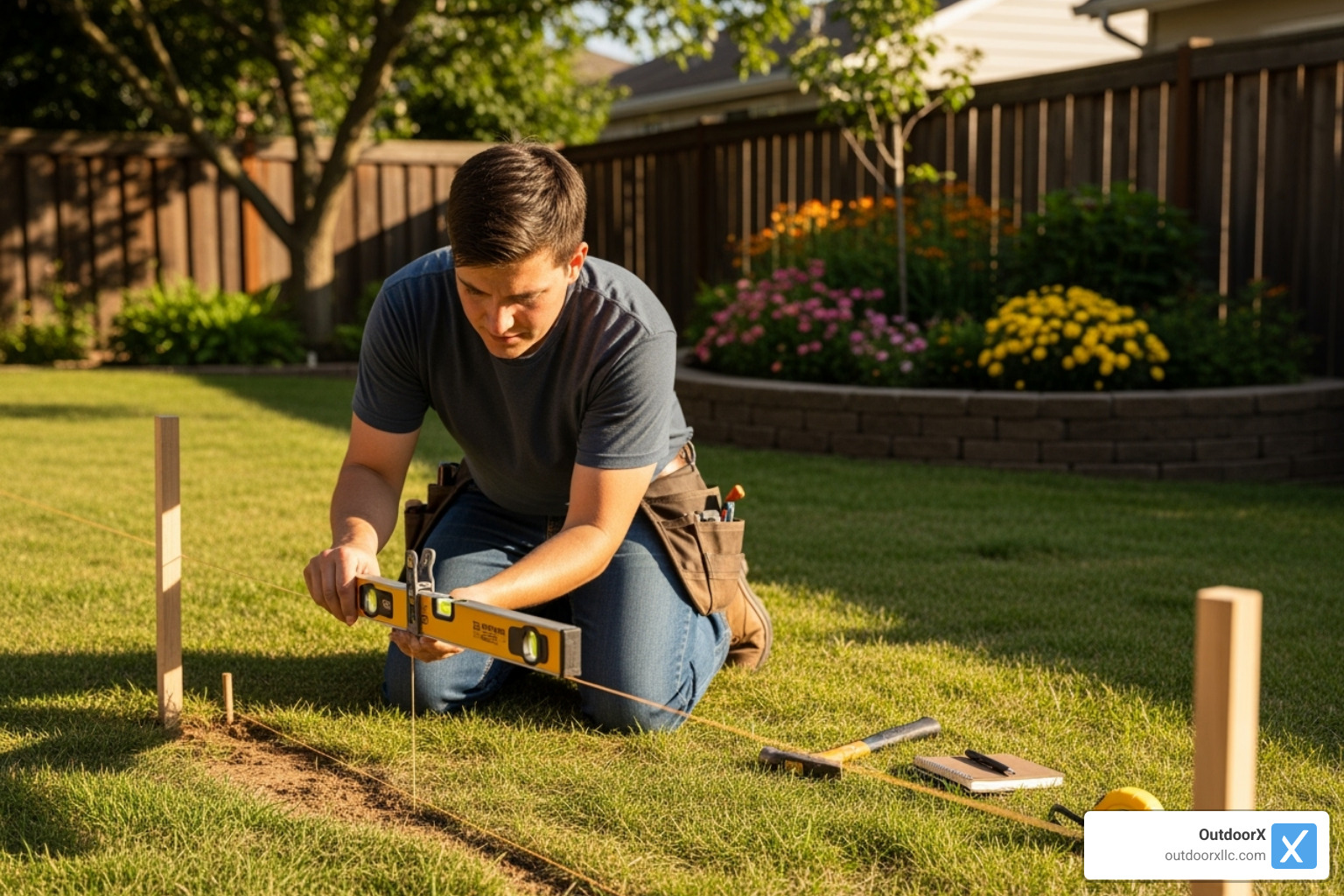
Measuring your slope doesn’t require fancy equipment – just some basic tools and patience. Drive stakes at the highest and lowest points of your planned patio area. Stretch a string line between them and use a line level to make sure it’s perfectly horizontal. Now measure the vertical distance from the string down to the ground at several points along the slope.
This gives you the “rise over run” measurement that’s essential for calculating your slope percentage. For complex terrain, you might want professional surveying, but for most backyard projects, this method works perfectly. You can plug your measurements into online slope calculators to get exact percentages and plan your project accordingly.
Understanding these numbers helps you decide whether you can work with the existing grade or need more dramatic interventions like retaining walls. More importantly, it helps you understand where water will naturally want to go – and that’s crucial information for any patio project.
Understanding Patio Slope and Drainage
Here’s where things get interesting – your finished patio needs just enough slope to shed water, but not so much that your coffee table slides downhill! The sweet spot is a 1-2% grade away from your house. In practical terms, that’s about 1/4 inch of drop per foot of patio.
This gentle slope might seem insignificant, but it’s your first line of defense against water problems. Rain needs somewhere to go, and if it can’t flow off your patio naturally, it’ll find creative ways to cause trouble – like washing out your carefully prepared base or pooling against your foundation.
When building a paver patio on uneven ground, drainage becomes even more critical. The existing slope can either work with you or against you, depending on how you plan your project. Sometimes we need to get creative with solutions like French drains that collect and redirect water away from problem areas. Permeable pavers are another smart option – they let water filter through the surface instead of running off, reducing erosion and runoff issues.
The key is thinking about water flow from day one. Where does it come from during heavy rain? Where do you want it to end up? Answer these questions early, and you’ll save yourself headaches later. For more detailed drainage solutions, check out our guide on french drain around patio options.
When is a Retaining Wall Necessary?
If your slope drops more than 1/8 inch per foot, you’re entering retaining wall territory. Don’t panic – this isn’t necessarily a bad thing! Retaining walls can transform a challenging slope into an opportunity for a truly spectacular multi-level patio.
Think of retaining walls as the supporting cast that makes the star (your patio) look amazing. They create level tiers where you can actually use outdoor furniture without everything sliding downhill. More importantly, they provide the structural support needed to prevent soil erosion and keep your patio stable for decades.
A well-designed retaining wall system can turn a steep, unusable slope into distinct outdoor rooms – maybe a dining area on one level and a fire pit area on another. The walls themselves can become design features, especially when built with materials that complement your pavers.
Soil erosion prevention is another crucial benefit. Without proper retention, the base materials under your pavers can wash away during heavy rains, leading to settling, shifting, and an uneven surface that’s both ugly and potentially dangerous.
For comprehensive patio design that incorporates retaining walls seamlessly into your landscape, explore our Patio Design Installation services. The right design can make retaining walls look like they’ve always belonged in your yard, rather than like an afterthought.
Retaining walls aren’t just functional – they’re an opportunity to add visual interest and create the kind of outdoor space that makes your neighbors wonder how you got so lucky. When done right, they’re an investment in both beauty and long-term stability. Learn more about integrating walls and patios through our Hardscaping expertise.
The Step-by-Step Guide to Building a Paver Patio on Uneven Ground
Here’s where the rubber meets the road – or should I say, where the paver meets the slope! Building a paver patio on uneven ground is definitely more challenging than working on flat terrain, but it’s also more rewarding. You’re essentially sculpting your landscape into something both beautiful and functional.
The key to success lies in understanding that gravity is both your friend and your challenge. We want water to flow away from structures, but we don’t want our base materials washing away with it. Think of it as creating a controlled landslide that stays exactly where you want it!
Essential Preparation for building a paver patio on uneven ground
Getting your prep work right is like laying the foundation for a house – mess this up, and everything else suffers. When building a paver patio on uneven ground, preparation becomes even more critical because you’re fighting against natural forces.
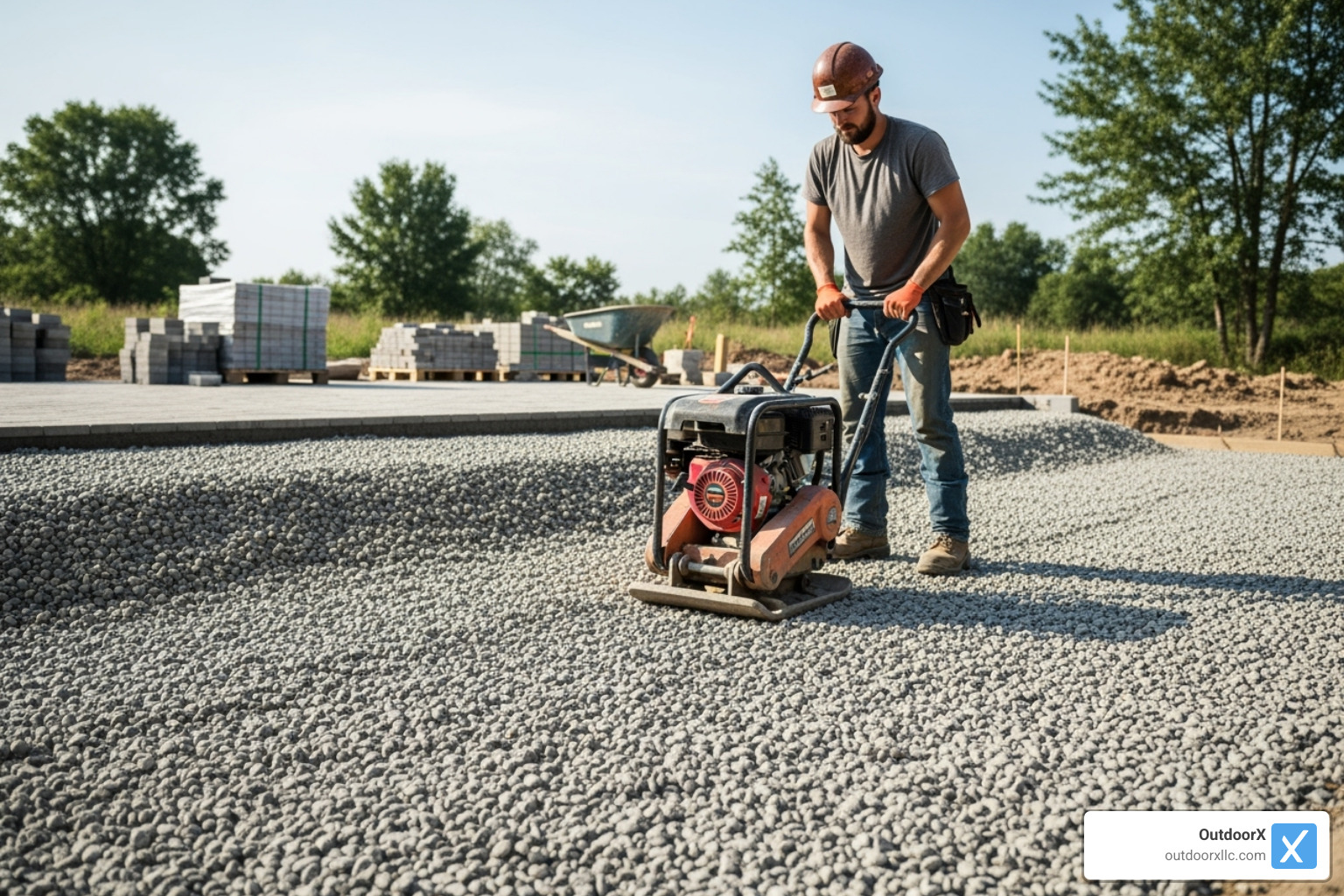
First, let’s talk tools and materials. You’ll need the basics like landscaping rakes, shovels, and measuring tape, but also some heavy-duty equipment. A plate compactor isn’t optional – it’s essential. Hand tampers simply won’t give you the compaction you need on slopes. You’ll also want mason lines, steel stakes, and a good level to keep everything aligned as you work uphill.
For materials, concrete pavers are often your best bet for sloped installations because of their durability and slip resistance. Don’t forget high-quality geotextile fabric – this is your insurance policy against future settling. You’ll need leveling sand (about one 50-pound bag per 12 square feet) and crushed stone for your base layer.
Now comes the tricky part – excavation depth. On flat ground, this is straightforward. On slopes? Not so much. You’ll need to dig deeper on the high side to establish your desired grade, while building up the low side using compacted base material. For a typical 2.5-inch paver, plan on excavating about 7.5 inches below your guide strings, but remember this varies significantly across your sloped area.
The geotextile fabric installation is crucial here. This fabric prevents your expensive base gravel from disappearing into the softer soil below – something that’s especially problematic on slopes where everything wants to migrate downhill. Make sure seams overlap by at least 6-8 inches and secure everything with garden staples. This step supports the same principles we use for a solid Base for Paver Walkway.
Creating a Rock-Solid Base Layer
Your base layer is doing the heavy lifting – literally. On uneven ground, it’s working overtime to create stability where nature didn’t provide it. We start with crushed stone (Class 5 crushed limestone works great) and install it in 2-3 inch lifts.
Here’s where patience pays off. Compacting in layers might seem like extra work, but it’s the difference between a patio that lasts decades and one that starts sinking after the first heavy rain. Each lift gets thoroughly compacted with your plate compactor before adding the next layer.
After your gravel base is rock-solid, comes the leveling sand layer – about 1 inch deep. This is where screeding techniques for slopes come into play. We use pipes or rails as guides, setting them at exactly the right depth and slope. Then we pull a straight 2×4 along these guides to create a perfectly even sand bed that maintains our drainage slope.
Pro tip: Only screed as much sand as you can cover with pavers in one day. Mother Nature has a way of messing with uncovered sand!
| Base Option | Traditional Gravel | Modern Paver Panels |
|---|---|---|
| Installation | Heavy excavation, layering, compacting | Less digging, lighter panels |
| Labor Intensity | Very high (lots of heavy lifting) | Much easier (less back-breaking work) |
| Material Cost | Lower upfront cost | Higher initial investment |
| Stability | Excellent when done right | Excellent with less effort |
While modern paver base panels can save your back and speed up installation, traditional compacted gravel remains the gold standard for challenging slopes.
Laying Techniques for building a paver patio on uneven ground
Choosing interlocking pavers is smart strategy for slopes. These pavers lock together like puzzle pieces, creating a unified surface that resists the downhill pull of gravity. Think of them as a team working together rather than individual soldiers fighting alone.
Starting from the lowest point and working uphill might seem counterintuitive, but it makes perfect sense when you think about it. Gravity wants everything to slide downhill anyway, so you’re working with natural forces rather than against them.
String lines are your best friend for maintaining alignment as you work up the slope. Stretch them tautly between stakes to keep your rows straight and properly spaced. As you place each paver, tap it gently with a rubber mallet – you want them snug but not so tight that you can’t get jointing sand between them.
Edge restraints become absolutely critical on slopes. These rigid barriers prevent your beautiful patio from slowly creeping downhill over time. Secure them with long landscaping spikes – don’t skimp here, because gravity never takes a day off.
Finally, you’ll need to cut pavers for edges and curves. A wet tile saw gives you clean, precise cuts, especially important when you’re creating flowing lines that follow your slope’s natural contours. Always wear safety gear – a beautiful patio isn’t worth a trip to the emergency room!
Finishing, Maintenance, and Troubleshooting
You’ve conquered the challenging part – the excavation, base preparation, and paver installation are complete! Now comes the satisfying finale where your building a paver patio on uneven ground project truly comes together. These finishing touches aren’t just about aesthetics; they’re what will keep your beautiful patio stable and gorgeous for decades to come.
Finishing Touches and Preventing Soil Erosion
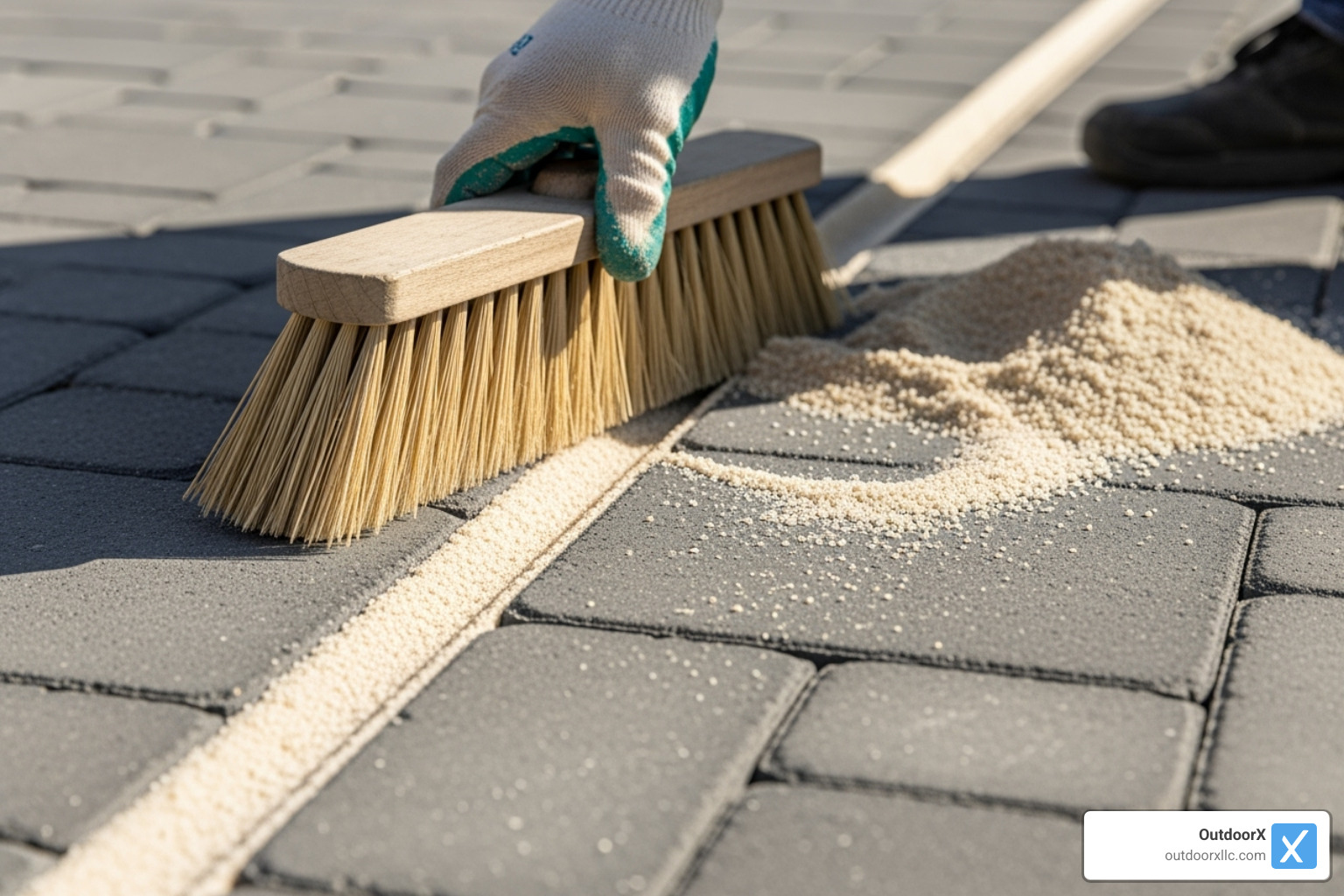
The magic happens when we fill those joints with polymeric sand. Think of it as the glue that holds everything together – literally! Unlike regular sand that washes away with the first heavy rain, polymeric sand contains special binding agents that create a semi-flexible, hardened joint when activated with water.
We start by sweeping the polymeric sand across the entire patio surface, making sure it fills every joint completely. Don’t rush this step – it’s worth taking time to get it right. After sweeping, we use a plate compactor with a protective pad to gently vibrate the pavers. This settles the sand deeper into the joints and ensures tight contact between pavers.
Next comes the activation process. Following the manufacturer’s instructions carefully, we lightly mist the patio with water. Too much water can wash out the sand, while too little won’t activate the binding agents properly. Within hours, you’ll have joints that resist washout, prevent weed growth, and keep ants from making highways between your pavers.
Sealing your pavers adds another layer of protection that’s especially valuable on sloped installations. A quality sealer protects against stains, UV damage, and helps lock that joint sand in place even more securely. It also improves the natural colors of your pavers, making them look richer and more vibrant.
The area around your patio edge deserves attention too. Landscaping around the perimeter isn’t just for looks – it’s your first line of defense against soil erosion. We ensure surrounding garden beds slope away from the patio, directing water where we want it to go. Low-maintenance plantings or decorative stone borders can stabilize the soil while complementing your new outdoor space beautifully.
Common Problems and How to Fix Them
Even the best-installed patios can develop quirks over time, especially when gravity is constantly at work on a slope. The good news? Most issues have straightforward fixes when caught early.
Soil shifting is probably the most common culprit behind uneven pavers. Natural ground movement from freeze-thaw cycles, settling, or even just seasonal moisture changes can create voids beneath your pavers. Poor compaction during installation shows up later as settling – this is why we’re so insistent on proper base preparation!
Water damage from inadequate drainage can slowly erode base material, creating those annoying low spots. And if you have mature trees nearby, aggressive tree roots can push up pavers, creating both tripping hazards and drainage problems.
When we spot sunken or uneven pavers, the fix involves carefully removing the affected areas, adding and compacting base material as needed, and re-laying the pavers. It sounds more complicated than it is – think of it as patio surgery rather than major reconstruction.
For recurring problems or widespread unevenness, we dig deeper to find the root cause. Drainage issues might call for a French drain installation or slope adjustment. Tree root problems could require root barriers or professional pruning. The key is addressing what’s causing the problem, not just treating the symptoms.
Long-Term Maintenance for a Sloped Patio
Your sloped patio will reward you with years of enjoyment when you give it a little regular attention. The maintenance routine is surprisingly simple – no special skills required!
Regular cleaning keeps your patio looking its best. A weekly sweep removes leaves and debris before they can stain or create slip hazards. For deeper cleaning, a pressure washer on a gentle setting works wonders, but be careful not to blast out your joint sand. We’ve learned this lesson the hard way!
Joint sand maintenance is your most important annual task. After winter or heavy rain seasons, inspect the joints and sweep in additional sand where needed. This keeps your pavers locked tightly together and maintains that professional appearance.
Keep an eye out for erosion around the edges of your patio, especially after storms. Small erosion issues are easy to fix with some backfill soil and maybe a few strategically placed plants. Ignore them, and they become much bigger headaches later.
If your project included retaining walls, checking their integrity should be part of your routine. Look for any signs of shifting, cracking, or bulging. Retaining walls work hard to support your patio, so catching problems early prevents major repairs down the road.
Tree root monitoring becomes second nature once you know what to look for. Those innocent-looking surface roots can turn into patio-heaving monsters faster than you’d expect. A little proactive root management beats re-leveling pavers any day.
With this simple maintenance routine, your investment in building a paver patio on uneven ground will continue paying dividends for years to come. For comprehensive maintenance support and expert advice, our Landscape Installation team is always here to help keep your outdoor spaces in peak condition.
Frequently Asked Questions about Sloped Patio Installations
Let’s tackle the most common questions we hear about building a paver patio on uneven ground. These are real concerns from homeowners just like you, and having clear answers helps you make informed decisions about your project.
What are the biggest challenges of installing a paver patio on a slope?
The truth is, gravity doesn’t make it easy for us! The primary challenge is creating a stable foundation that won’t wash away or shift over time. When you’re working on flat ground, water drainage is straightforward. On a slope, water wants to rush downhill, potentially taking your carefully prepared base materials with it.
Managing water drainage effectively becomes our biggest priority. Without proper drainage planning, you’ll face washouts that can undermine your entire patio. We’re essentially creating a controlled water management system while building a beautiful outdoor space.
Achieving a level, usable surface on uneven terrain often requires significant excavation or retaining walls. Think of it like creating flat terraces on a hillside – sometimes we need to cut into the high side and build up the low side considerably. The steeper your slope, the more complex this becomes.
The complexity really ramps up with slope steepness. A gentle grade might just need careful base preparation, while a steep slope could require multiple retaining walls and extensive engineering. We’re basically fighting nature to create the flat, stable surface your family deserves.
How much does it cost to build a paver patio on uneven ground?
This is the million-dollar question – well, hopefully not literally! Costs vary dramatically based on your slope’s severity, the materials you choose, and whether you tackle it yourself or hire professionals.
For DIY material costs, you’re looking at anywhere from $8 to $30+ per square foot. This covers your pavers, base materials, sand, edge restraints, and geotextile fabric. The wide range reflects the difference between basic concrete pavers on a gentle slope versus premium materials on challenging terrain.
Professional installation tells a different story entirely. Expect $20 to $60+ per square foot for most projects, especially when retaining walls enter the picture. For complex projects involving significant excavation, multiple retaining walls, and elaborate designs, costs can soar beyond $100 per square foot.
What drives these higher costs? Steep slopes require more excavation, more base material, retaining walls, and specialized equipment. You might need a mini-excavator instead of hand digging, or multiple tons of gravel to create a stable foundation. It’s not just about the pavers anymore – you’re essentially doing landscape engineering.
When should I hire a professional for this project?
We love DIY enthusiasm, but some projects are better left to the pros. Safety and long-term stability should guide your decision here.
Definitely call in the professionals if your yard has a steep slope – generally anything greater than a 1-foot drop over 10 feet of horizontal distance. At this point, you’re moving from “challenging DIY project” into “specialized construction” territory.
Retaining walls over 3-4 feet high require engineering expertise and specific construction techniques. Taller walls deal with significant soil pressure, and mistakes can be costly – or even dangerous. Professional contractors understand proper footing depths, drainage behind walls, and structural requirements.
Existing drainage problems in your yard signal the need for professional assessment. A pro can design comprehensive drainage solutions that work with your entire landscape, not just your patio. We’re talking French drains, proper grading, and water management systems.
Heavy equipment needs often tip the scales toward professional installation. Proper excavation and compaction require plate compactors, mini-excavators, or skid steers. Renting this equipment plus learning to use it safely might cost more than hiring someone who owns it and uses it daily.
Sometimes, peace of mind is worth the investment. Professional installation ensures your patio will be durable, safe, and beautiful – plus it adds significant value to your home. For complex projects, expert craftsmanship pays dividends for years to come.
Transform Your Sloped Yard into a Stunning Oasis
Building a paver patio on uneven ground is one of those projects that truly transforms not just your yard, but how you experience your outdoor space. What once seemed like an unusable slope becomes the centerpiece of your backyard – a place where family gathers for barbecues and friends linger over evening conversations.
The journey we’ve taken together through this guide highlights just how achievable this project really is. We started by assessing your slope and understanding the critical importance of proper drainage planning. Then we dove deep into the step-by-step process, from strategic excavation and creating that rock-solid base to the satisfying moment when you lay that final paver.
The value of proper preparation cannot be emphasized enough – it’s truly the foundation that everything else builds upon. When you take the time to measure your slope correctly, install quality geotextile fabric, and compact your base materials in proper lifts, you’re investing in a patio that will serve you beautifully for decades.
While many homeowners successfully tackle gentler slopes as DIY projects, steeper terrain and complex drainage challenges often call for professional expertise. The difference between a good patio and a great one often comes down to having the right equipment, experience with challenging terrain, and the ability to foresee potential issues before they become problems.
For homeowners in the South Hamilton, MA, and Essex County areas, our team at OutdoorX has spent years mastering the art of changing challenging landscapes into stunning outdoor retreats. We understand the unique soil conditions, drainage patterns, and weather challenges of New England. Every patio we design and build is carefully custom to work with your specific landscape, ensuring it not only looks beautiful but performs flawlessly through our region’s freeze-thaw cycles and heavy spring rains.
Ready to turn that sloped backyard into your personal outdoor sanctuary? Contact us for your patio design and installation needs. Let’s work together to create the outdoor oasis you’ve been dreaming of – one that’s built to last and perfectly suited to your lifestyle.
