Building a Bluestone Patio: #1 Ultimate Guide
Why Bluestone Patios Are the Gold Standard for Outdoor Living
Building a bluestone patio creates one of the most durable and beautiful outdoor spaces you can add to your home. Here’s what you need to know:
Essential Steps for Building a Bluestone Patio:
- Plan and Design – Choose size, location, and pattern
- Excavate – Dig 7-12 inches deep depending on your climate
- Build the Base – Layer geotextile fabric, 4-8 inches of compacted gravel, and 1 inch of sand
- Lay the Stone – Place bluestone pavers using a rubber mallet and level
- Finish – Fill joints with polymeric sand or stone dust
Bluestone is a natural sedimentary stone that’s been the go-to choice for premium patios for good reason. This stunning material offers a unique blue-gray color that complements virtually any home style, from colonial to contemporary.
What makes bluestone special? Its natural properties create a non-slip surface that stays cool in summer heat and handles freeze-thaw cycles without cracking. Unlike manufactured pavers, each piece of bluestone is unique, giving your patio character that improves with age.
The project involves significant excavation and precise base preparation, but the results last decades with minimal maintenance. Whether you choose the rustic texture of natural cleft or the smooth finish of thermal bluestone, you’re investing in a patio that can outlast the house itself.
Building a bluestone patio glossary:
Understanding Bluestone: The Perfect Patio Material
Building a bluestone patio begins with understanding the material. Bluestone is a durable sedimentary stone formed millions of years ago, with the finest varieties quarried in Pennsylvania and New York.
What makes bluestone the perfect patio material?
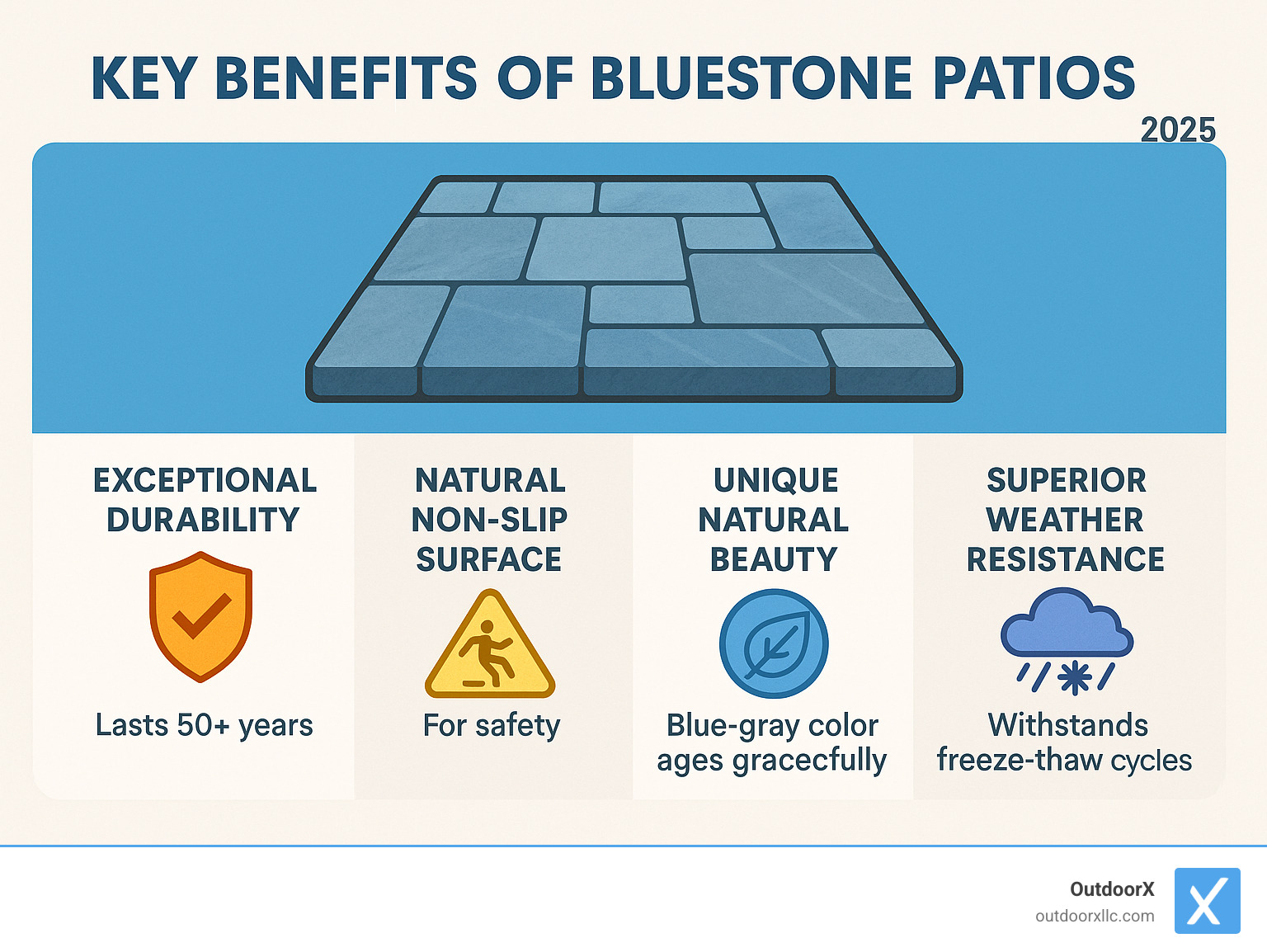
- Natural Non-Slip Surface: It provides excellent traction, making it safer for wet areas like pool surrounds.
- Unique Thermal Qualities: It stays relatively cool in summer and retains warmth as temperatures drop, extending its usability.
- Exceptional Durability: This dense stone resists breaking and chipping. A properly installed bluestone patio can outlast the house itself with minimal maintenance.
For more information about changing your outdoor space with durable materials, check out our Hardscaping Services.
To help you make an informed decision, here’s an honest look at what you’re getting into:
| Pros of Bluestone Patios | Cons of Bluestone Patios |
|---|---|
| Exceptional durability and longevity (decades) | Higher initial cost compared to some alternatives |
| Naturally non-slip surface, great for wet areas | Can absorb heat and get hot in direct, intense sunlight |
| Unique natural beauty, character, and color variations | Porous, so it can stain if spills are not cleaned promptly |
| Handles temperature changes and freeze-thaw cycles well | May require periodic sealing to prevent staining and weathering |
| Minimal upkeep and easy to clean | Irregular bluestone can have divots, potentially uneven for furniture |
Bluestone Types and Finishes
Choosing the right finish affects your patio’s texture, appearance, and slip resistance.
Natural cleft is the most rustic option. Stone blocks are split along their natural layers, creating a textured surface with incredible character and color variation. This natural charm means the surface can be slightly uneven, which may cause patio furniture to wobble.
Thermal or flamed bluestone offers a more refined, uniform finish. Intense heat is applied to the stone’s surface, causing it to flake and creating a smooth yet textured surface. This process improves weather resistance while maintaining good traction.
Honed bluestone provides a very smooth, matte finish for a sleek, modern aesthetic. The surface is ground to a uniform flatness, but this can make it more slippery when wet.
Color variations allow for further customization. Full-color range bluestone includes a natural palette of blues, purples, browns, and greens for an organic feel. Blue-select offers more muted, consistent blue-gray tones for a sophisticated, cohesive look that complements contemporary designs.
Planning Your Project: Key Steps Before Building a Bluestone Patio
Careful planning is the first step to building a bluestone patio that lasts.
- Design and Location: Consider how you’ll use the space. A 10’x20′ (200 sq. ft.) patio can comfortably fit a small dining set and lounge chairs. Position it for convenience, sun exposure, and proper drainage.
- Pattern: Choose a pattern that suits your home’s style. Irregular bluestone offers an organic, cottage feel, while geometric squares and rectangles create clean, modern lines.
- Installation Method: For the New England climate, a dry-laid installation on a gravel and sand base is ideal. It handles freeze-thaw cycles better and is more cost-effective than a wet-laid (mortar and concrete) installation, which can crack.
- Permits: Check with your local building department or HOA. Many medium-to-large patios require a permit to ensure compliance with safety and drainage regulations.
- Tools and Materials: Gather essential tools like a plate compactor, rubber mallet, and level. Materials include bluestone pavers, crushed stone, sand, geotextile fabric, paver edging, and polymeric sand or stone dust for the joints.
Our Patio Design & Installation team can help you steer these choices and create a design that perfectly fits your space and lifestyle.
Estimating Your Bluestone Patio Cost
Building a bluestone patio is a significant investment. Please note: The following figures are based on national averages and are for informational purposes only. They do not reflect OutdoorX LLC’s specific pricing, which can range from $25 to over $75 per square foot depending on project complexity, materials, and site conditions.
- Material Costs: Bluestone pavers typically range from $4 to $15 per square foot, with premium or imported selections costing more. Base materials like crushed stone and sand add approximately $2-$3 per square foot.
- Labor and Installation: Professional installation costs vary widely. A basic installation may range from $17 to $55 per square foot. Custom designs with intricate patterns, curves, or features like seating walls can push the total project cost significantly higher, with large, complex installations sometimes exceeding $75,000.
- Example Project: For a 200-square-foot patio, the total cost could range from $4,200 to $14,000 or more, depending on the factors above.
DIY vs. Professional Installation: While DIY saves on labor, this is a physically demanding project (4/5 difficulty) requiring specialized tools and expertise in base preparation and drainage. Mistakes can be costly and time-consuming to fix. Professional installation ensures longevity and a high-quality result that can last for decades, making it a worthwhile investment.
The Complete Guide to Building a Bluestone Patio
Building a bluestone patio is a challenging but rewarding project. Always prioritize safety by wearing appropriate gear, especially when cutting stone or handling heavy materials.
Step 1: Site Preparation and Excavation
A solid foundation is non-negotiable.
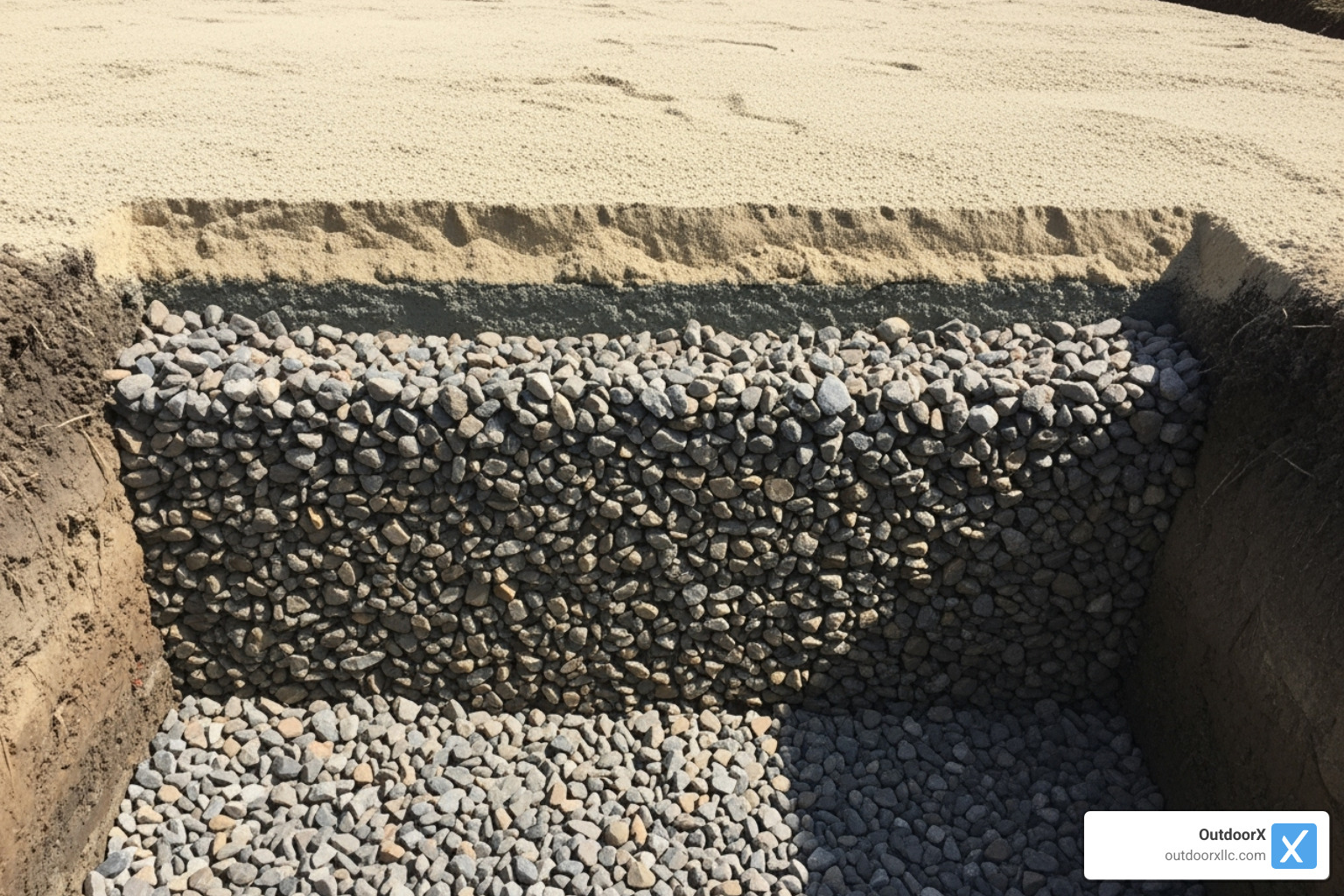
- Mark and Excavate: Outline the patio area with stakes and string. Dig 7-12 inches deep (for pavers, gravel, and sand), extending 6 inches beyond the perimeter for edging. Remove all grass and topsoil.
- Establish Drainage Grade: Ensure the excavated area slopes away from your house foundation—about 1/4 inch per foot—to prevent water issues.
Step 2: Building a Stable Base
This step prevents shifting and settling over time.
- Lay Geotextile Fabric: Cover the excavated area with geotextile fabric, overlapping seams by 6-12 inches. This prevents soil from mixing with your gravel base.
- Add and Compact Gravel: Spread a 4-8 inch layer of crushed stone. Compact it thoroughly with a plate compactor, working in 2-4 inch lifts for best results.
- Add Leveling Sand: Spread a 1-inch layer of leveling sand over the compacted gravel. Screed it to create a smooth, uniform bed for the pavers.
For all your base preparation and outdoor foundational needs, explore our Landscape Installation services.
Step 3: Laying the Bluestone Pavers
This is where your design comes to life.
- Start Laying Stones: Begin from a fixed point, like a corner of the house. Place each stone carefully on the sand bed.
- Level and Set: Use a rubber mallet to gently tap each stone into place. Use a level to check each stone and ensure you maintain the overall drainage slope.
- Maintain Joint Spacing: Keep consistent gaps between stones (e.g., 1/2 inch for polymeric sand, 1.5+ inches for moss).
Step 4: Finishing Touches and Jointing
The final steps lock everything together.
- Install Paver Edging: Secure the patio’s perimeter with metal, plastic, or concrete edging to hold the pavers in place.
- Fill the Joints: Sweep your chosen jointing material into the gaps.
- Polymeric Sand: A popular choice that hardens when misted with water, locking stones in place and resisting weeds.
- Stone Dust: A traditional, compacted filler.
- Moss or Small Pebbles: For wider gaps and a more natural or decorative look.
For a visual guide on designing and sizing your bluestone patio, check out this Video: Bluestone Patio Design & Sizing.
Long-Term Care for Your Bluestone Patio
A key benefit of building a bluestone patio is its low-maintenance nature. With proper care, your investment will provide decades of enjoyment.
- Routine Cleaning: Regularly sweep or blow away debris. For a deeper clean, scrub with a soft brush, water, and a mild, stone-safe detergent. Avoid acidic or harsh chemical cleaners.
- Stain Removal: Bluestone is porous, so wipe up spills like oil or wine immediately. For set-in stains, use a cleaner designed for natural stone. Many organic stains from leaves will fade naturally with sun exposure.
- Sealing: Applying a quality penetrating sealer every 2-3 years is highly recommended. Sealing protects against stains, mold, and moisture damage while making cleaning easier and enhancing the stone’s color.
- Repairs: On dry-laid patios, it’s normal for stones to shift slightly over time. Simply lift the stone, adjust the sand base, and reset it. Re-apply joint filler like polymeric sand as needed.
- Seasonal Care: In the fall, clear leaves promptly to prevent staining and inspect for loose stones. For winter in Essex County, avoid harsh de-icing chemicals. A properly installed dry-laid patio is built to handle New England’s freeze-thaw cycles.
Frequently Asked Questions about Bluestone Patios
Here are answers to common questions about building a bluestone patio.
How does bluestone compare to concrete pavers or brick?
Bluestone offers unique natural beauty and superior durability but comes at a higher initial cost compared to manufactured concrete pavers or brick.
- Aesthetics: Bluestone has unique, natural color variations and textures that manufactured products can’t replicate. It develops a beautiful patina with age.
- Durability: As a dense natural stone, bluestone is exceptionally resistant to chipping and cracking and can outlast the house. Concrete and brick are durable but may fade or show wear over time.
- Cost: While bluestone is a premium investment, its longevity often justifies the cost. As a rough comparison based on national data, a 200 sq. ft. patio might range from $1,500-$5,000 for concrete pavers, while a bluestone patio of the same size could range from $4,200 to $14,000 or more.
How hot does bluestone get in direct sunlight?
Like most natural stones, bluestone can absorb heat and become hot to the touch in direct, intense sunlight, a factor to consider for poolside areas or homes in very hot climates. However, it also retains warmth well into cool evenings. Incorporating shade through umbrellas or pergolas can easily mitigate high temperatures.
Is building a bluestone patio a good DIY project?
It can be a challenging DIY project due to the weight of the stones and the precision required for base preparation. It requires significant physical labor and some specialized tools. Rated a 4/5 in difficulty, the project involves heavy lifting and meticulous work to ensure proper drainage and a stable base. For larger or more complex designs, professional installation is recommended to guarantee a long-lasting, high-quality result.
Conclusion
Building a bluestone patio is a smart investment in your home and lifestyle, creating a durable and beautiful foundation for decades of outdoor memories. Its natural beauty, exceptional durability, and ability to withstand New England’s weather make it the gold standard for patios.
While this guide provides the knowledge to get started, a professionally designed and built patio can completely transform a backyard into the heart of your home’s outdoor living. A professional ensures the project is done right, from the foundation to the finishing touches, guaranteeing a result that lasts.
At OutdoorX, we specialize in custom landscaping and hardscaping services throughout Essex County, bringing expert craftsmanship to communities like Andover, Beverly, Boxford, Danvers, and beyond. We pride ourselves on creating beautiful, functional outdoor areas custom to what you envision.
Ready to transform your backyard into the outdoor oasis you’ve been dreaming of? Transform your backyard with our expert Patio Design & Installation services and let us help you create a bluestone patio that will be the envy of the neighborhood for generations to come.