Fire Pit Installation Near Me: Top 5 Best Experts 2025
Why Professional Fire Pit Installation Makes All the Difference
Finding the right fire pit installation near me can transform your backyard from ordinary to extraordinary, creating a year-round gathering space that boosts both your lifestyle and property value.
Quick Answer for Fire Pit Installation:
– Average Cost: $700-$2,500 (custom builds up to $6,000+) – these are average costs based on internet data and not actual costs for OutdoorX
– Timeline: 1-5 days depending on complexity
– Key Steps: Find licensed contractors → Get 3+ quotes → Check reviews → Verify insurance
– Popular Types: Gas fire pits, wood-burning, custom stone, kit assembly
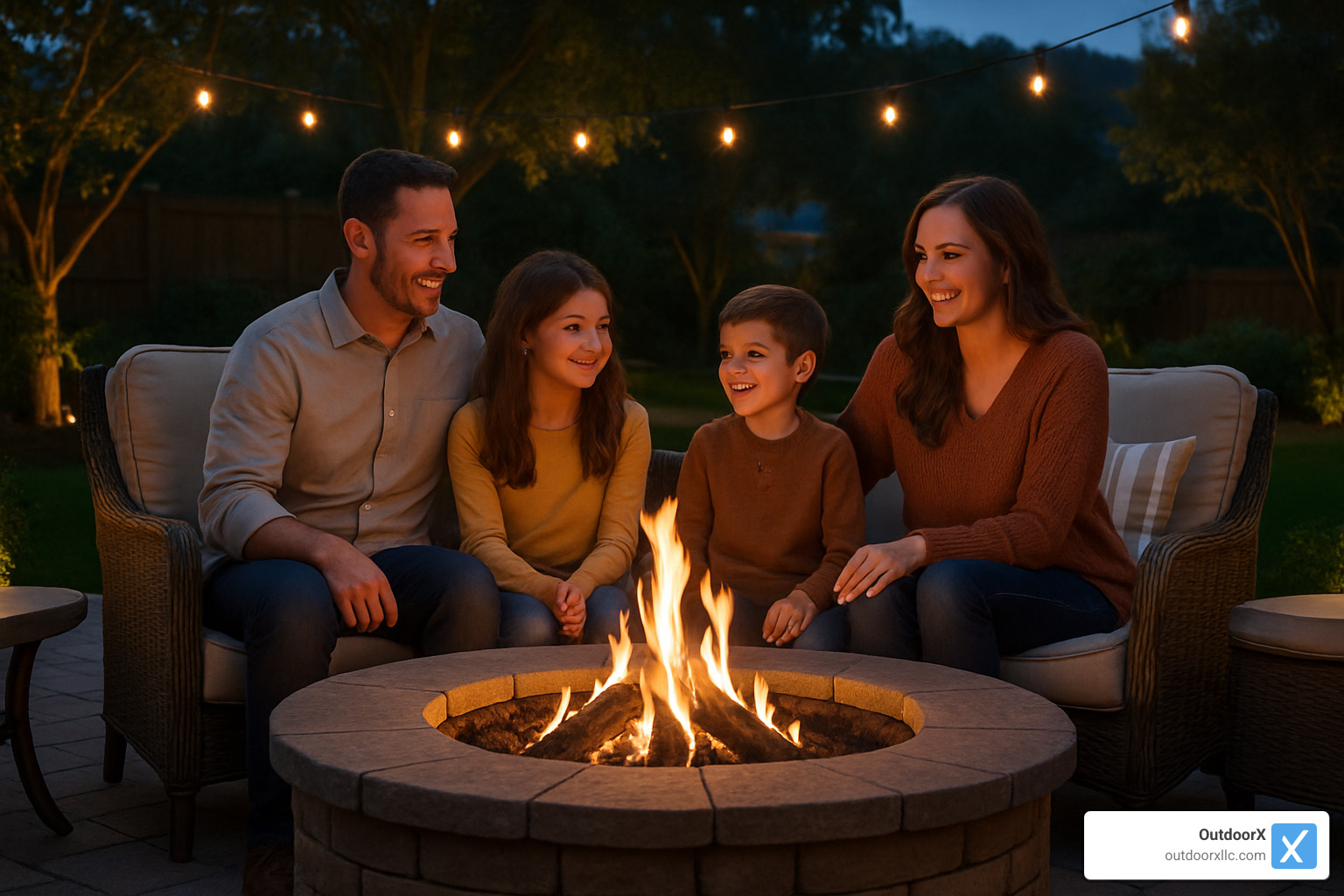
Fire pit installations have become one of the most requested outdoor living upgrades. As one satisfied homeowner shared: “The worst part? Trying to get my kids to come inside for bed!” after their new fire pit became the family’s favorite evening spot.
Why hire a professional instead of DIY? Licensed installers handle gas line connections, obtain permits, ensure proper clearances, and build code-compliant foundations. They also carry insurance if something goes wrong.
Most fire pit installation companies offer both custom builds and kit assembly options. Custom stone fire pits create stunning focal points but require skilled masonry work. Kit installations cost less and install faster but offer fewer design choices.
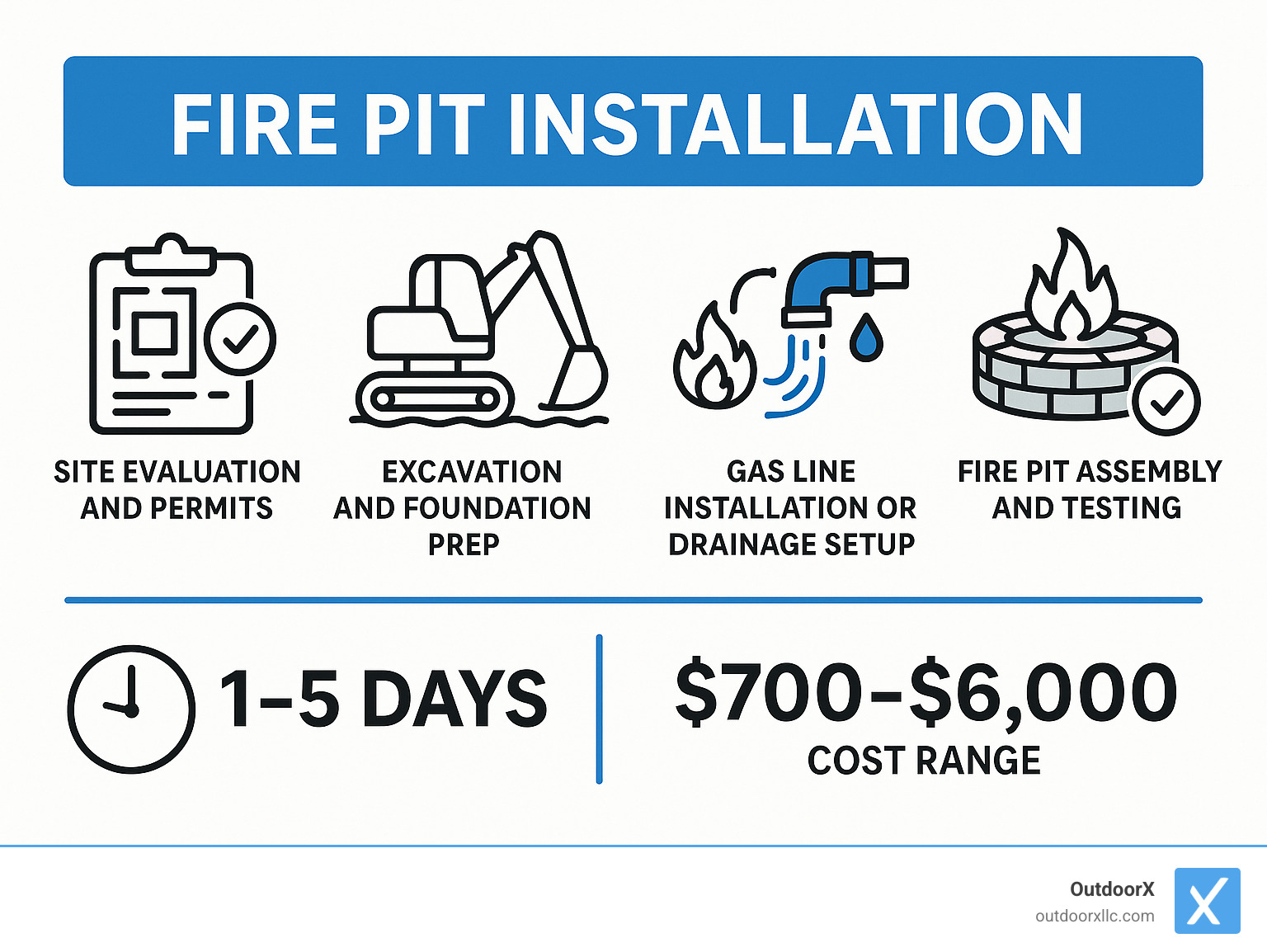
The installation process typically involves site preparation, utility marking, foundation work, and fuel line connections. Gas fire pits need professional gas line installation, while wood-burning options focus on proper drainage and spark containment.
Know your fire pit installation near me terms:
– Backyard Firepits
– Fire pit seating arrangements
– handcrafted fire pits
What You’ll Learn
This comprehensive guide will walk you through everything you need to know about finding and hiring the best local fire pit installers. We’ll cover how to evaluate contractors, understand pricing, steer permits and safety requirements, and ensure your investment delivers years of enjoyment.
Why a Fire Pit? Benefits & Popular Types
There’s something magical about gathering around a flame, which is why searches for fire pit installation near me keep climbing. Beyond cozy vibes, a fire pit delivers real, measurable value:
Top Benefits for Homeowners
- Extend outdoor season with reliable warmth—even on 40 °F nights.
- Instantly create a focal point that encourages conversation.
- Boost resale value; buyers picture themselves entertaining the moment they see the feature.
Gas vs. Wood in a Nutshell
- Gas: flip-of-a-switch convenience, $0.25–$0.75/hr operating cost, minimal cleanup.
- Wood: classic crackle and aroma, lower fuel cost, a bit more prep and ash removal. Modern smokeless designs reduce irritation for you and the neighbors.
More info about outdoor fire pit benefits
Fire Pit Styles That Stand Out
- Sunken conversation pits for wind protection and intimacy.
- Tabletop or bowl units that fit patios with limited space.
- Linear fire walls that add a dramatic, contemporary edge.
- Portable options when flexibility outweighs permanence.
Custom builds allow unlimited creativity, while kits deliver savings and speed. Choose the one that matches your lifestyle and budget.
Fire Pit Installation Near Me: Choosing Your Local Pro
Finding the right fire pit installation near me contractor can make the difference between a backyard feature you’ll love for decades and a costly headache that needs fixing every season. We’ve seen homeowners deal with gas leaks from poorly connected lines, fire pits that smoke out the neighbors because of bad placement, and beautiful stone work that cracks after the first winter freeze.
The secret is finding contractors who specialize in fire pit installation, not just general landscapers who dabble in outdoor features. Fire pit installation requires specific expertise in gas systems, understanding how different materials handle extreme heat, and knowing local safety codes.
Start with the basics: verify licensing and insurance coverage first. A contractor who’s properly licensed will handle permit applications and ensure your installation meets local building codes. Insurance protects you if something goes wrong during installation or if the work causes property damage later.
Check Better Business Bureau ratings and look for A+ rated contractors when possible. More importantly, ask to see photos of recent fire pit projects they’ve completed. A quality installer will proudly show off their work and explain the specific challenges they solved for each project.
Make sure they serve your area consistently. Some contractors will travel for large projects but may not provide the same level of service or warranty support if you’re outside their normal service zone.
Questions to Ask Before Hiring for Fire Pit Installation Near Me
Timeline expectations matter more than you might think. Ask “How long will my installation take?” Most kit installations wrap up in one to two days, while custom stone builds typically require three to five days. Weather delays happen, especially in New England, so understand their backup plans.
Gas line capabilities are crucial if you want a gas fire pit. Ask directly: “Do you handle gas line installation yourself, or do you work with a partner?” Running new gas lines requires specific licensing and involves pressure testing for safety.
Warranty coverage varies dramatically between contractors. Quality installers typically offer at least one year on workmanship, with some extending coverage to materials. Get these terms in writing before signing any contract.
Maintenance planning helps you understand long-term ownership costs. A good contractor will explain seasonal care, cleaning schedules, and when components might need replacement.
Where to Search & Compare
Local building departments often maintain lists of licensed contractors that include specialties and complaint histories. This is particularly valuable because these contractors are already familiar with local permit requirements and building codes.
Neighborhood forums like Nextdoor and local Facebook groups provide honest feedback from neighbors who’ve completed similar projects. You’ll get unfiltered opinions about contractor reliability, cleanup practices, and how well projects held up over time.
Online platforms that let you enter your zip code can help identify contractors in your area, though always verify their information independently. Fixr’s Fire Pit Cost Estimator provides helpful baseline pricing, though actual costs vary significantly based on local labor rates and your specific site conditions.
Watch for red flags that indicate potential problems: door-to-door solicitation, requests for full payment upfront, no local references, unwillingness to pull permits, or bids that seem too good to be true. Quality work costs fair money, and contractors who underbid often cut corners that create problems later.
Budget Breakdown & Cost Factors
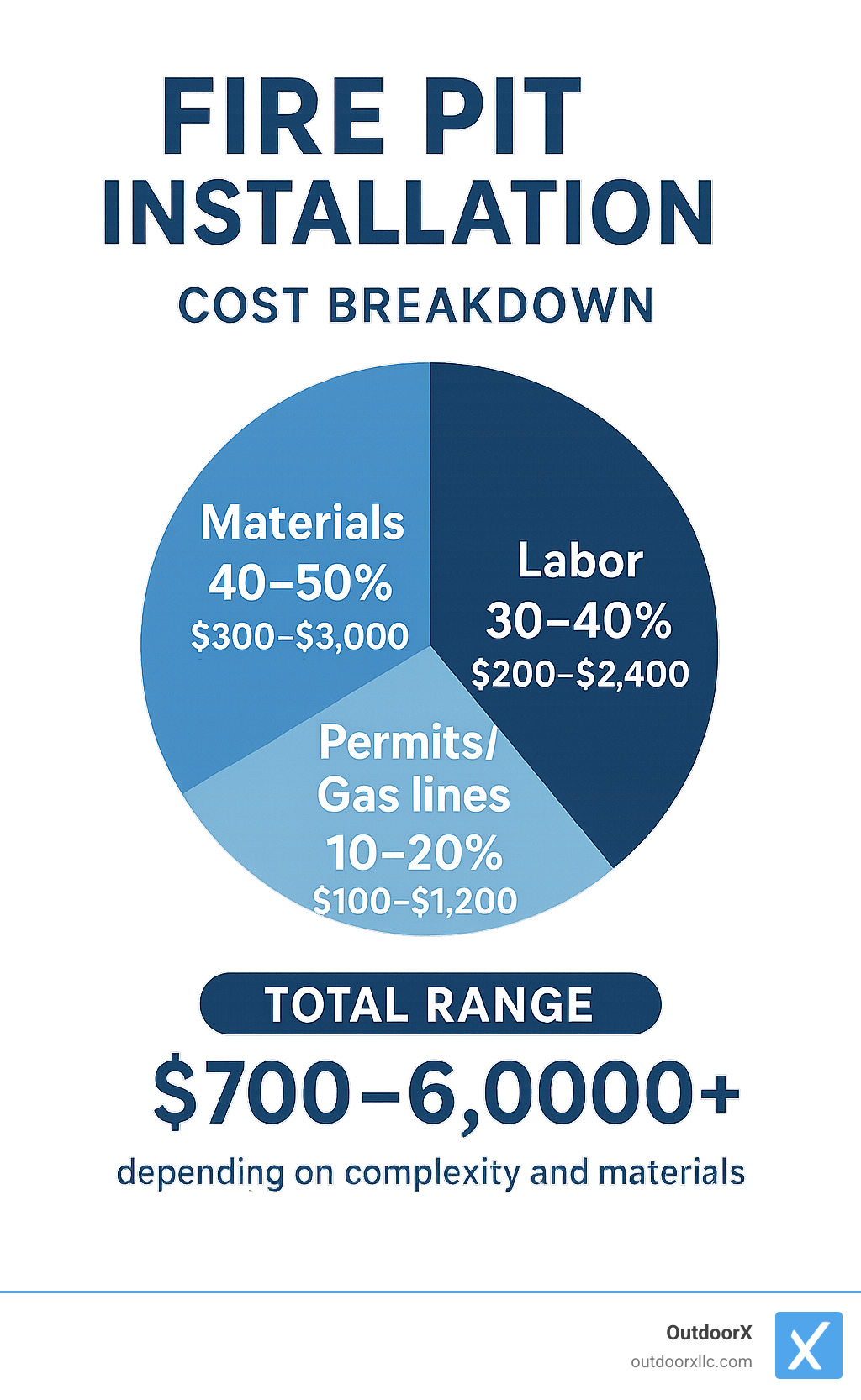
Nobody likes budget surprises. Industry data shows most fire pit installation near me projects fall between $700 and $2,500, while high-end custom builds can exceed $6,000. (All ranges are averages from internet sources, not OutdoorX pricing.)
What Drives Cost?
- Materials: natural stone can double or triple the price of concrete block.
- Size: larger diameters require more stone and labor.
- Fuel: running a new natural-gas line usually adds $500–$1,500.
- Labor: skilled masonry in Essex County runs roughly $50–$100 per crew hour.
Hidden Costs
- Permit fees ($50–$300) and Dig Safe calls.
- Difficult site access that adds labor time.
- Disposal charges for excess soil or old hardscape.
Smart Savings
- Phase the project—start with the pit, add seating or lighting later.
- Consider a high-quality kit to trim 30–50 % off the price.
- Book during slower fall or early-spring periods for possible discounts.
Design, Location, Safety & Regulations
Proper fire pit placement requires balancing aesthetics, safety, and local regulations. We’ve learned through years of installations in Essex County that thoughtful design prevents problems and maximizes enjoyment.
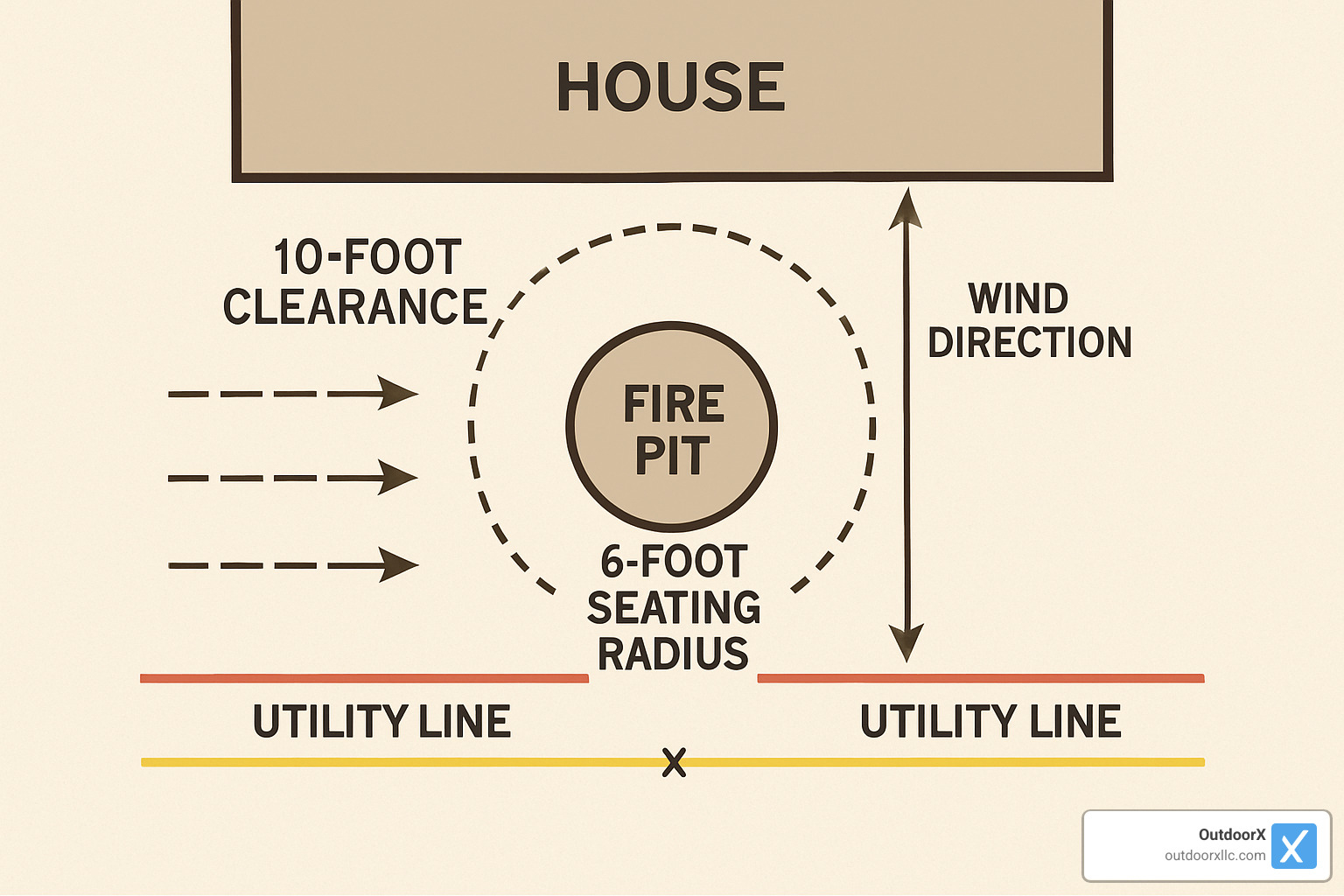
Location Fundamentals: Fire pits need adequate clearance from structures, property lines, and combustible materials. Most codes require 10-25 feet from buildings, though specific requirements vary by municipality.
Wind Pattern Consideration: Observe prevailing wind directions before finalizing placement. Nobody wants smoke blowing toward seating areas or into neighbors’ yards. Strategic placement and windscreens can minimize smoke issues.
Drainage Planning: Fire pits need proper drainage to prevent water accumulation that can damage components and create safety hazards. Slight grading away from the fire bowl prevents standing water.
More info about patio integration shows how fire pits can anchor larger outdoor living spaces.
Fire Pit vs Outdoor Fireplace
Heat Output: Fire pits radiate heat in all directions, warming a larger area but with less focused heat. Outdoor fireplaces direct heat forward, providing more intense warmth for specific seating areas.
Footprint Requirements: Fire pits work in smaller spaces and can be positioned centrally in seating arrangements. Fireplaces require more space and work best against walls or property boundaries.
Cost Comparison: Fire pits generally cost less than fireplaces due to simpler construction and fewer materials. Outdoor fireplaces can cost $2,500-$10,000 or more depending on size and materials.
Materials & Fuel Comparison
Stone Options: Natural stone offers durability and timeless appeal but costs more than manufactured alternatives. Granite and bluestone resist heat damage better than softer stones like limestone.
Metal Inserts: Steel fire rings provide efficient burning and easy replacement. Stainless steel resists corrosion better than painted steel but costs significantly more.
Fire Media: Lava rock provides excellent heat retention and drainage. Fire glass offers contemporary aesthetics and reflects flame light beautifully. Ceramic logs provide realistic wood-burning appearance in gas installations.
Fuel Considerations: Natural gas offers convenience and low operating costs ($0.25-$0.75 per hour) but requires permanent gas line installation. Propane provides flexibility and higher heat output but requires tank refills and storage.
Safety Essentials
Spark Protection: Wood-burning fire pits need spark screens to prevent ember escape. Choose screens that allow easy access for tending fires while providing adequate protection.
Fire Suppression: Keep fire extinguishers or garden hoses readily accessible. Sand or dirt can also smother fires effectively in emergency situations.
Child Safety: Consider barriers or covers for homes with small children. Hot surfaces remain dangerous long after fires are extinguished.
Permit & HOA Checklist
Municipal Requirements: Contact your building department early in the planning process. Some areas prohibit fire pits entirely, while others have specific construction and placement requirements.
HOA Restrictions: Review homeowner association rules before beginning projects. Some HOAs restrict fire pit types, sizes, or require architectural approval.
Utility Marking: Call Dig Safe (811) at least three business days before excavation begins. This free service marks underground utilities to prevent dangerous and expensive accidents.
From Installation Day to Long-Term Care
The big day has arrived! Watching your fire pit installation near me project come to life is exciting, but knowing what to expect helps ensure everything goes smoothly. Professional installers follow a proven process that transforms your backyard vision into reality.
Site preparation kicks off every quality installation. Your crew will carefully mark the exact location and begin excavation. The excavation typically goes 6-12 inches below grade, creating the stable foundation your fire pit needs for years of safe enjoyment.
Foundation work might not look glamorous, but it’s absolutely critical. Depending on your soil conditions and fire pit size, this could involve compacted gravel bases, concrete footings, or reinforced stone foundations. One client joked that his foundation was “more engineered than his deck,” but that attention to detail is exactly why his fire pit still looks perfect after five New England winters.
For gas line installation, licensed technicians handle the technical work of connecting your fire pit to your home’s gas supply. These lines must be properly sized, pressure tested, and inspected – definitely not a DIY project! The good news is that once it’s done, you’ll have instant fire at the flip of a switch.
Masonry construction showcases the real artistry of custom fire pit installation. Skilled craftsmen cut and set each stone with precision, using heat-resistant mortar that can handle our region’s temperature swings.
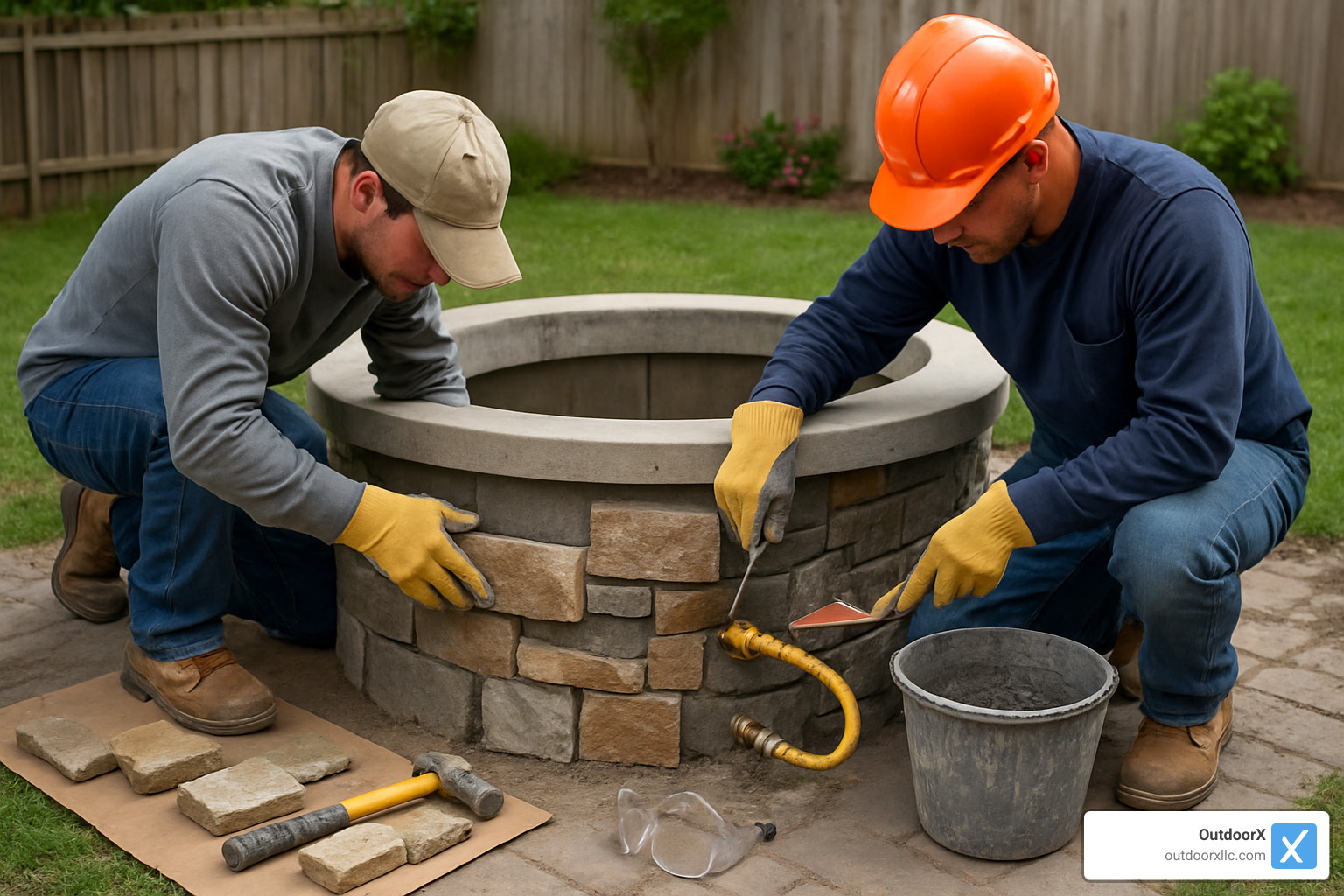
Average Timelines for Fire Pit Installation Near Me
One-day kit installations work great when you’re adding a fire pit to an existing patio. These streamlined projects include basic site prep, assembly, and gas connections if lines are already nearby.
Three to five-day custom builds are more common for stone fire pits with new gas lines. This timeline allows for proper excavation, foundation curing, detailed masonry work, and thorough testing.
Weather delays are part of outdoor construction life, especially in New England. Rain and freezing temperatures can extend timelines because concrete and mortar need specific conditions to cure properly.
Maintenance & Seasonal Care
Good news – fire pits are surprisingly low-maintenance! Gas fire pits need occasional burner cleaning to keep flames dancing properly. A quick check for debris in burner ports and the occasional spider web removal keeps everything running smoothly.
Wood-burning fire pits require regular ash removal, but it’s easier than you might think. Just wait for ashes to cool completely, then store them in metal containers away from anything flammable.
Quality covers protect your investment from weather damage and extend component life. Look for covers that shield the entire burn area while allowing ventilation.
Winterization in our New England climate means draining water from gas lines and shutting off the gas supply. Cover or store any removable components to prevent freeze damage.
Upgrades & Integrations
Your fire pit doesn’t have to stand alone! Built-in seating walls create intimate gathering spaces while maximizing your yard’s efficiency. These stone walls can even incorporate storage for fire tools and accessories.
Outdoor kitchen integration takes entertaining to the next level. Fire pits pair beautifully with cooking areas, creating comprehensive spaces where you can prep, cook, and gather all in one flowing design.
Landscape lighting extends your fire pit’s usability well into the evening hours. Strategic path lighting improves safety, while accent lighting creates magical ambiance.
More info about hardscaping options shows how fire pits can anchor comprehensive outdoor living designs that transform your entire backyard experience.
Frequently Asked Questions about Fire Pit Installation Near Me
When homeowners start planning their fire pit installation near me project, they naturally have questions about space requirements, technical needs, and future flexibility. These are the most common concerns we hear from families in Essex County.
How much space do I need around the pit?
The space around your fire pit determines both safety and comfort for your family gatherings. Most building codes require 10-25 feet of clearance from structures like your house, garage, or shed, though specific requirements vary depending on your town’s regulations.
For the actual seating area, plan for at least 6 feet of radius around the fire pit itself. This gives you adequate space for chairs while keeping everyone at a safe distance from heat and any potential sparks. Think about it this way – you want people close enough to feel the warmth and enjoy conversations, but far enough away that they’re not constantly shifting their chairs to escape the heat.
Don’t forget to look up when choosing your location. Tree branches should be at least 10 feet above your fire pit to prevent any risk of ignition.
If you’re considering built-in seating walls or stone benches, maintain 3-4 feet between the seating and fire bowl. This distance provides comfort for adults while keeping children at a safer distance from the flames.
Do I need a professional gas line installer?
Absolutely yes – gas line installation requires licensed professionals in virtually all areas, and this isn’t a corner you want to cut. Gas work involves serious safety risks that make professional installation not just recommended, but essential for your family’s safety.
Licensed gas technicians understand the technical requirements that most homeowners don’t – proper pipe sizing, pressure requirements, leak testing procedures, and code compliance. They also carry insurance that protects you if something goes wrong during installation.
Attempting DIY gas line work creates multiple problems. It can void your homeowner’s insurance, violate local building codes, and most importantly, create dangerous situations involving gas leaks or improper pressure. The cost of professional installation, typically $500-$1,500 based on internet data, is minimal compared to the risks and potential costs of improper installation.
Most fire pit installation near me contractors either handle gas work themselves or partner with licensed gas technicians to ensure everything is done safely and legally.
Can I convert a wood-burning pit to gas later?
Most fire pits can be converted from wood-burning to gas operation, but the process involves more than just adding a gas burner. Conversion typically requires installing a complete gas burner system, running new gas lines to the location, and adding proper controls and safety features.
The practical reality is that conversion costs often approach the price of installing a new gas fire pit. You’re essentially retrofitting an existing structure, which can be more complex than starting fresh with a gas-designed system.
Not all fire pit designs work well with gas conversion either. The fire pit structure must accommodate gas burners effectively – some stone arrangements or bowl designs don’t provide proper gas flow or drainage that gas systems require.
Before committing to conversion, consult with fire pit professionals who can evaluate your specific situation. They can assess whether your existing fire pit structure is suitable for gas conversion and provide accurate cost estimates.
Conclusion
Finding the right fire pit installation near me isn’t just about adding another backyard feature—it’s about creating a space where memories are made. Whether it’s your kids begging to stay outside “just five more minutes” or friends lingering long after dinner, a well-installed fire pit becomes the heart of your outdoor living space.
The difference between a fire pit that brings joy for years and one that becomes a source of frustration comes down to choosing experienced professionals who understand the details. Licensed contractors know how to handle gas line installations safely, steer local permit requirements, and build foundations that won’t shift or crack over time.
At OutdoorX, we’ve been creating custom fire pit installations throughout South Hamilton and Essex County for years. We understand that every family has different needs—some want the convenience of gas systems for quick evening gatherings, while others prefer the authentic crackle and aroma of wood-burning designs.
Our approach starts with understanding how you’ll actually use your fire pit. Do you host large gatherings or prefer intimate family time? Would you rather flip a switch for instant flames or enjoy the ritual of building a fire? These details shape everything from size and fuel type to seating arrangements and safety features.
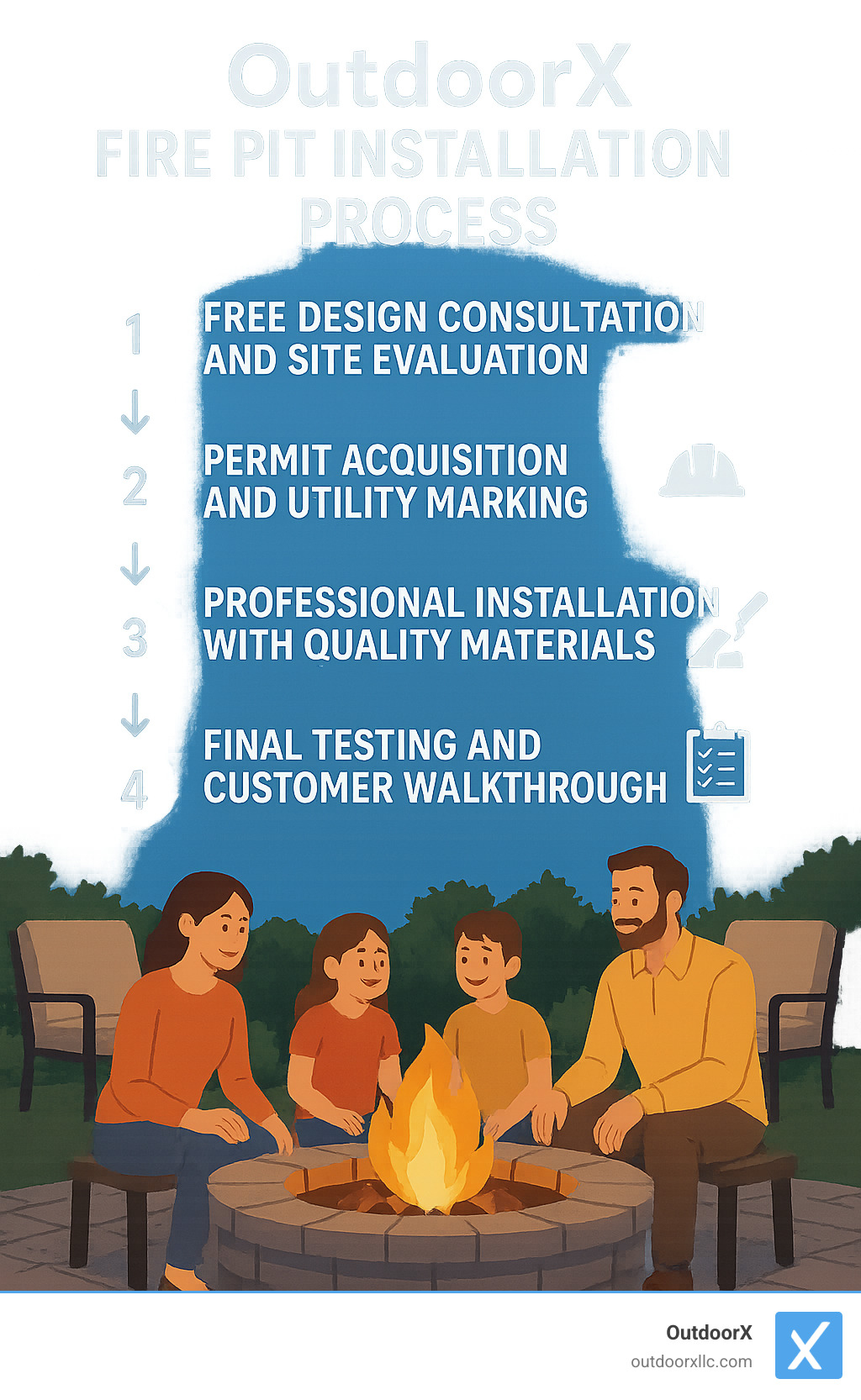
We handle the technical details that make installations successful: proper site evaluation to ensure good drainage and safe clearances, permit coordination with local building departments, utility marking to avoid underground hazards, and quality material selection that stands up to New England weather.
Every installation includes our comprehensive warranty because we stand behind our work. We use materials specifically chosen for durability in our climate, and our installation techniques ensure your fire pit will provide reliable enjoyment for decades.
Ready to transform your backyard into the gathering space you’ve always wanted? Contact our fire pit design team today for a free estimate and 3-D concept design. Let’s create the outdoor living space where your family and friends will love to spend time.