


Landscaping and grounds maintenance: 10 Powerful Success Tips 2025
Why Professional Landscaping and Grounds Maintenance Transforms Your Property
Landscaping and grounds maintenance are two essential services that keep outdoor spaces beautiful, safe, and valuable. While many property owners use these terms interchangeably, they serve distinct but complementary purposes in creating and preserving exceptional outdoor environments.
Quick Overview: What You Need to Know
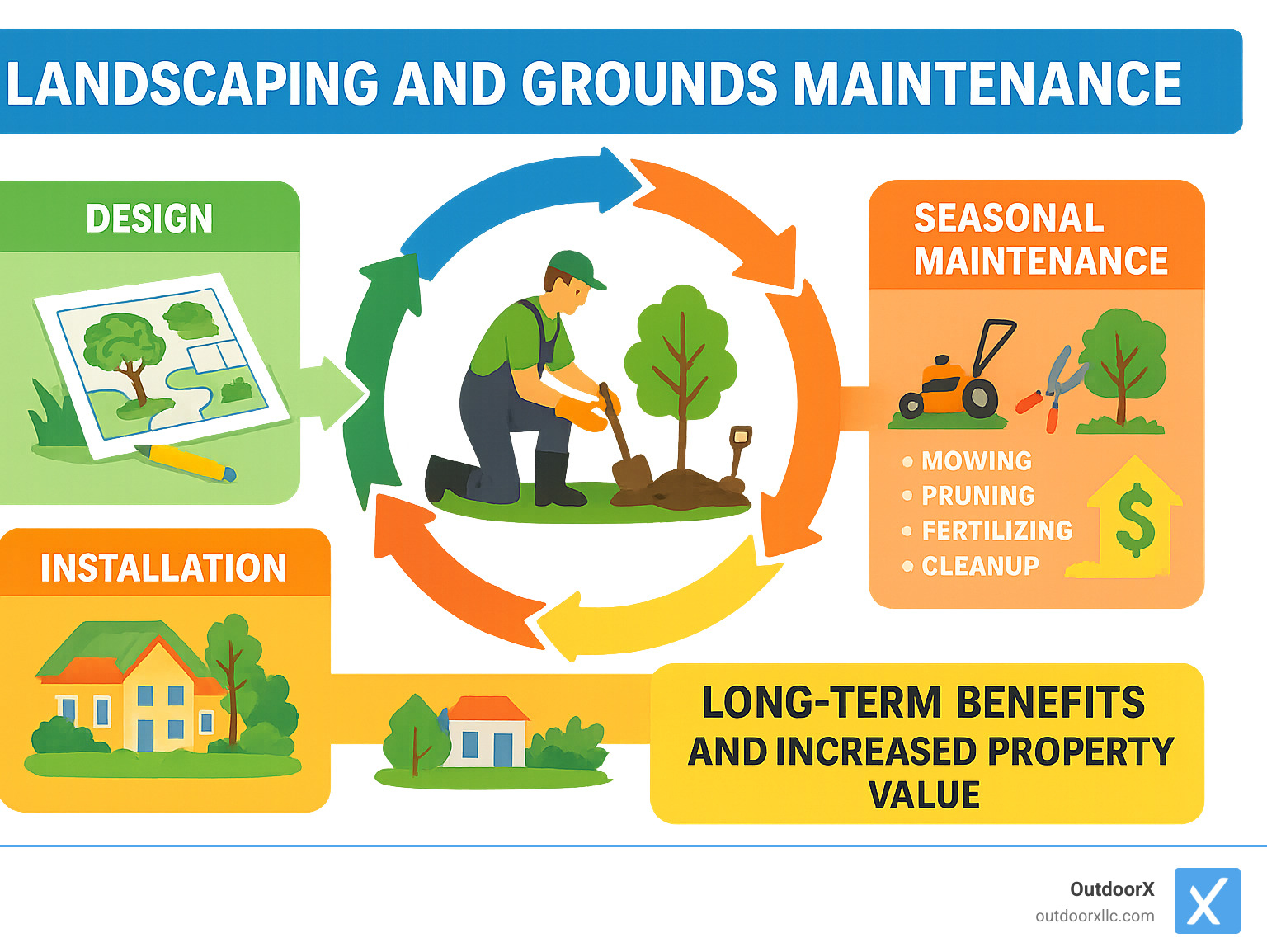
• Landscaping = Design and installation of outdoor features (plants, hardscapes, irrigation)
• Grounds Maintenance = Ongoing care and upkeep (mowing, pruning, fertilizing, repairs)
• Property Value Impact = Up to 12% increase for residential properties
• Commercial Benefits = 7% higher rental rates with attractive landscaping
• Key Workers = Groundskeepers, landscapers, arborists, pesticide handlers
• Average Investment = $50-$150 per hour for professional services (based on internet data, not OutdoorX rates)
Whether you’re managing a residential property in Essex County or overseeing commercial grounds, understanding these services helps you make informed decisions about your outdoor investment.
The landscaping industry has grown to $98.8 billion as of 2019, with over 1.1 million workers nationwide. This growth reflects increasing recognition that well-maintained landscapes aren’t just aesthetic luxuries—they’re strategic investments in property value, occupant satisfaction, and environmental health.
“A green lawn and well-maintained plants promote curb appeal and create a lovely first impression—but these things take time and not everyone has time for that,” notes industry research on residential services.
From basic lawn care to sophisticated irrigation systems, modern grounds management combines traditional horticultural knowledge with cutting-edge technology. Smart sensors, predictive maintenance strategies, and sustainable practices are changing how professionals approach landscape care.
Landscaping and Grounds Maintenance 101 – Definitions, Benefits & Property Value
Here’s something that might surprise you: landscaping and grounds maintenance can boost your property value by up to 12 percent. That’s not just marketing fluff—it’s backed by solid research that shows how outdoor spaces directly impact your bottom line.
Think about it this way: a home valued at $150,000 could be worth up to $19,000 more with sophisticated landscaping featuring colorful plants and mature trees. For commercial property owners, the numbers are equally impressive—attractive tree arrangements can improve rental rates by 7 percent.
The Virginia Tech Extension research dives deep into why these improvements work so well. Beyond the obvious visual appeal, professional landscaping and grounds maintenance delivers functional safety through proper lighting and clear sightlines, plus environmental benefits like air purification and stormwater control.
Many property owners don’t realize that strategic tree placement can actually reduce energy costs through natural shade and wind protection. It’s like getting a return on your investment in multiple ways—higher property values, lower utility bills, and improved quality of life.
Key Differences Between Landscaping and Grounds Maintenance
While people often use these terms interchangeably, they’re actually different phases of creating amazing outdoor spaces. Understanding the distinction helps you plan better and budget more effectively.
Landscaping is all about design and installation—the creative vision phase. This includes master planning and garden design, hardscape installation like patios and retaining walls, plus setting up irrigation systems and outdoor lighting. Think of it as building the foundation for your outdoor dreams.
Grounds maintenance focuses on ongoing care and upkeep. This covers regular mowing and edging, seasonal pruning, fertilization and pest control, plus irrigation maintenance and snow removal. It’s the protective care that keeps your investment looking its best year after year.
Here’s a helpful way to think about it: landscaping creates the vision, while grounds maintenance preserves and improves that vision over time. At OutdoorX, we’ve designed our services so that our installation expertise flows seamlessly into long-term maintenance programs that protect what you’ve invested in.
The beauty of working with professionals who handle both aspects is the continuity. We know exactly how your irrigation system was installed, which plants need special attention, and how to maintain hardscape features properly because we were there from the beginning.
Why Grounds Maintenance Matters for Residential, Commercial & Public Sites
The importance of professional grounds maintenance goes way beyond just looking good—though that certainly matters too. Different property types benefit in unique ways that directly impact their success.
For residential properties, well-maintained grounds mean increased property values and faster sales when it’s time to move. You also get improved privacy and outdoor living spaces, plus the peace of mind that comes from not having to stress about weekend yard work. Your neighbors will thank you too—beautiful properties lift the whole neighborhood.
Commercial properties see even more dramatic benefits. Professional grounds create that crucial first impression that attracts customers and projects a successful brand image. Higher rental rates and better tenant retention follow naturally. There’s also the practical matter of liability reduction through proper maintenance and meeting municipal landscaping requirements.
Public facilities like schools and parks gain community pride and civic engagement when they’re well-maintained. Proper visibility and lighting improve safety, while thoughtful environmental stewardship shows responsible use of public resources. For schools specifically, well-maintained grounds can support educational programs while keeping students safe.
Research consistently shows that tranquil, green workspaces stimulate creativity and improve employee satisfaction. When you consider that occupant morale directly impacts productivity and retention, professional grounds maintenance becomes a smart business investment rather than just an expense.
The stormwater control benefits are increasingly important too, especially here in Essex County where we deal with significant seasonal weather changes. Properly maintained landscapes help manage runoff and prevent erosion—benefits that extend far beyond individual properties.
Core Services & Maintenance Strategies
Think of professional landscaping and grounds maintenance as a symphony of services working together to keep your outdoor spaces thriving. Just like a well-orchestrated performance, each service plays its part in creating something beautiful and functional year-round.
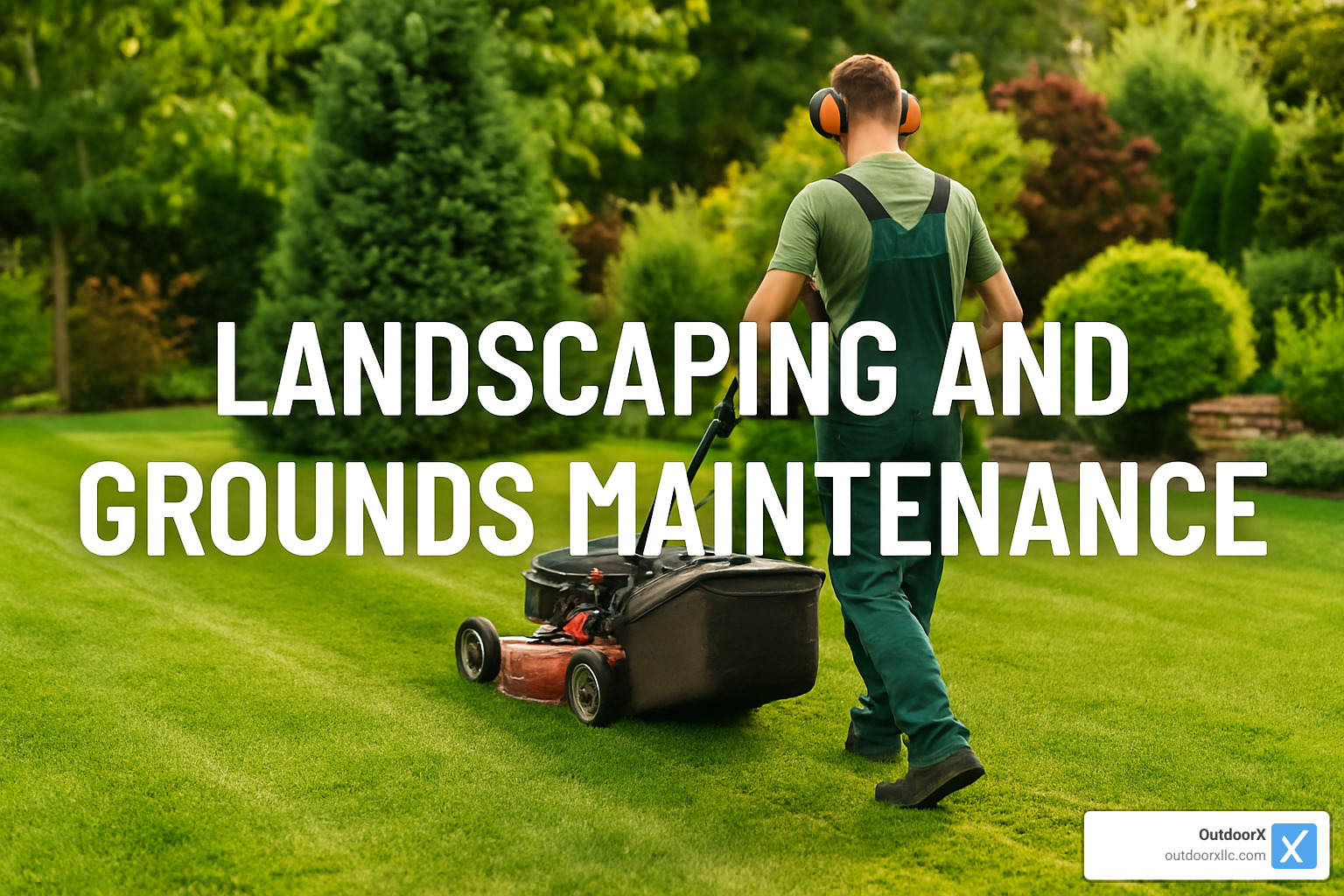
The foundation of any successful grounds program starts with lawn care—regular mowing, edging, fertilizing, aeration, and overseeding that keeps grass healthy and attractive. But that’s just the beginning. Plant care involves careful pruning, trimming, and disease management that ensures your trees and shrubs stay vibrant throughout the seasons.
Irrigation management might not be glamorous, but it’s absolutely critical. This includes system monitoring, repairs, and seasonal adjustments that keep everything properly watered without waste. Pest control uses integrated management techniques to protect plants while being mindful of the environment.
When seasons change, so do your property’s needs. Seasonal services like spring cleanup, fall preparation, and snow removal ensure your landscape looks great and stays safe no matter what Mother Nature throws your way. Don’t forget about hardscape maintenance—cleaning, repairs, and preventive care for patios, walkways, and other built features.
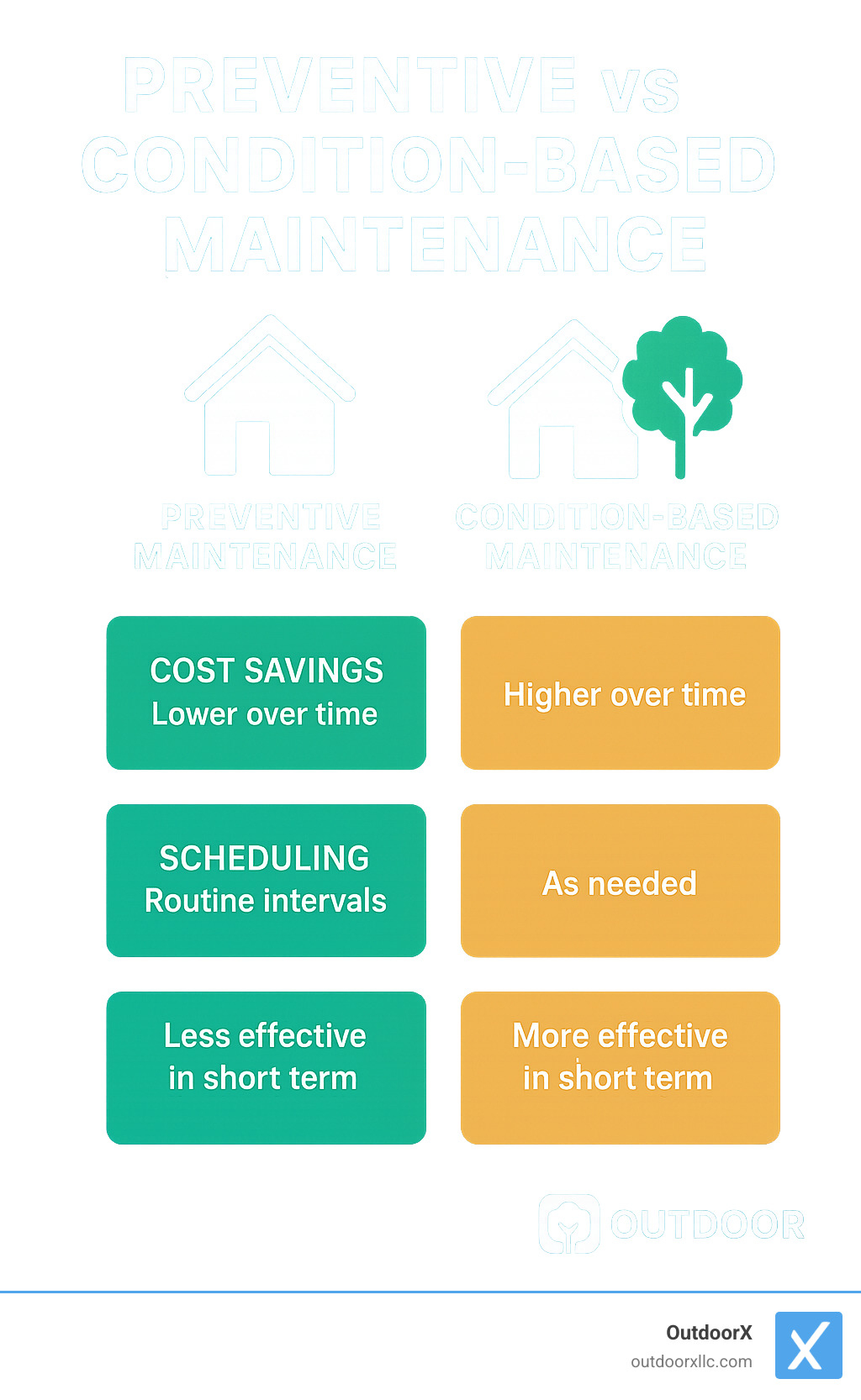
The grounds maintenance industry recognizes four main strategies that smart property owners can use. Corrective maintenance handles problems after they happen, while preventive maintenance follows scheduled routines to prevent issues. Condition-based maintenance responds to actual conditions as they develop, and predictive maintenance uses data to anticipate needs before problems occur.
For comprehensive seasonal care that covers all these bases, including spring and fall cleanup programs, professional providers create customized schedules that match your property’s unique requirements.
Preventive & Corrective Maintenance in Landscaping and Grounds Maintenance
The secret to successful landscaping and grounds maintenance lies in staying ahead of problems rather than chasing them. Preventive maintenance is like getting regular checkups at the doctor—it catches small issues before they become expensive headaches.
Scheduled inspections form the backbone of any good preventive program. These regular assessments check plant health, irrigation systems, and hardscape conditions before problems become visible. Routine tasks like weekly mowing, monthly fertilization, and seasonal pruning keep everything running smoothly.
Smart providers also focus on equipment maintenance to keep tools and systems working properly, plus documentation that tracks activities and spots patterns over time. This attention to detail pays off in the long run.
Here’s a real-world example that shows why prevention matters: One shopping mall skipped routine weed control to save money. The result? A major infestation that required completely replanting all their shrubbery areas—costing far more than the preventive care would have.
Corrective maintenance still has its place, of course. Sometimes you need emergency tree removal after storms, irrigation repairs following equipment failure, or replanting areas damaged by pests or disease. Hardscape repairs due to settling or weather damage also fall into this category.
The best programs blend both approaches, using preventive strategies to minimize corrective needs while staying ready for unexpected challenges.
Condition-Based & Predictive Approaches
Modern landscaping and grounds maintenance is getting smarter every year. Instead of just following rigid schedules, today’s professionals use technology and data to make better decisions about when and how to care for your property.
Condition-based maintenance relies on real-time information to guide decisions. Soil moisture sensors can trigger irrigation adjustments automatically, while plant health monitoring through regular visual inspections helps catch problems early. Weather-based scheduling ensures treatments happen at optimal times, and turf quality assessments guide fertilization decisions.
Predictive maintenance takes things even further by using data analytics to anticipate needs. Historical weather patterns help with seasonal planning, while plant growth models can predict when pruning will be needed. Irrigation efficiency analysis optimizes water usage, and pest lifecycle tracking enables proactive treatments.
These high-tech approaches help property managers get better results while using resources more efficiently. For example, soil moisture sensors prevent both under-watering and over-watering, reducing plant stress while conserving water—a win-win situation.
Specialized Property Examples
Not every property has the same needs, and that’s where specialized landscaping and grounds maintenance approaches really shine. Each type of property brings its own unique challenges and opportunities.
Sports fields require specialized turf management focused on athlete safety, precise field marking and boundary maintenance, careful drainage system management, and proper equipment storage. Golf courses demand precision mowing patterns and heights, specialized fertilization programs, meticulous sand trap and water feature maintenance, plus cart path and signage upkeep.
Cemeteries need respectful maintenance around memorials, specialized equipment for sensitive areas, seasonal flower programs, and thoughtful tree management for long-term planning. Educational campuses focus on high-traffic area management, student safety considerations, educational garden programs, and sustainable practices demonstration.
Public parks require recreational facility maintenance, public safety and accessibility measures, environmental education opportunities, and community event preparation. Each of these specialized environments demands expertise and equipment that general maintenance might not provide.
At OutdoorX, we understand that every property is unique, whether it’s a residential estate in Essex County or a specialized facility with particular requirements.
Workforce, Training & Safety Essentials
The landscaping and grounds maintenance industry is built on the expertise of over 1.1 million dedicated professionals nationwide. These skilled workers bring specialized knowledge to every project, from basic lawn care to complex tree surgery. Understanding the different roles and training requirements helps property owners appreciate the expertise involved in maintaining beautiful outdoor spaces.
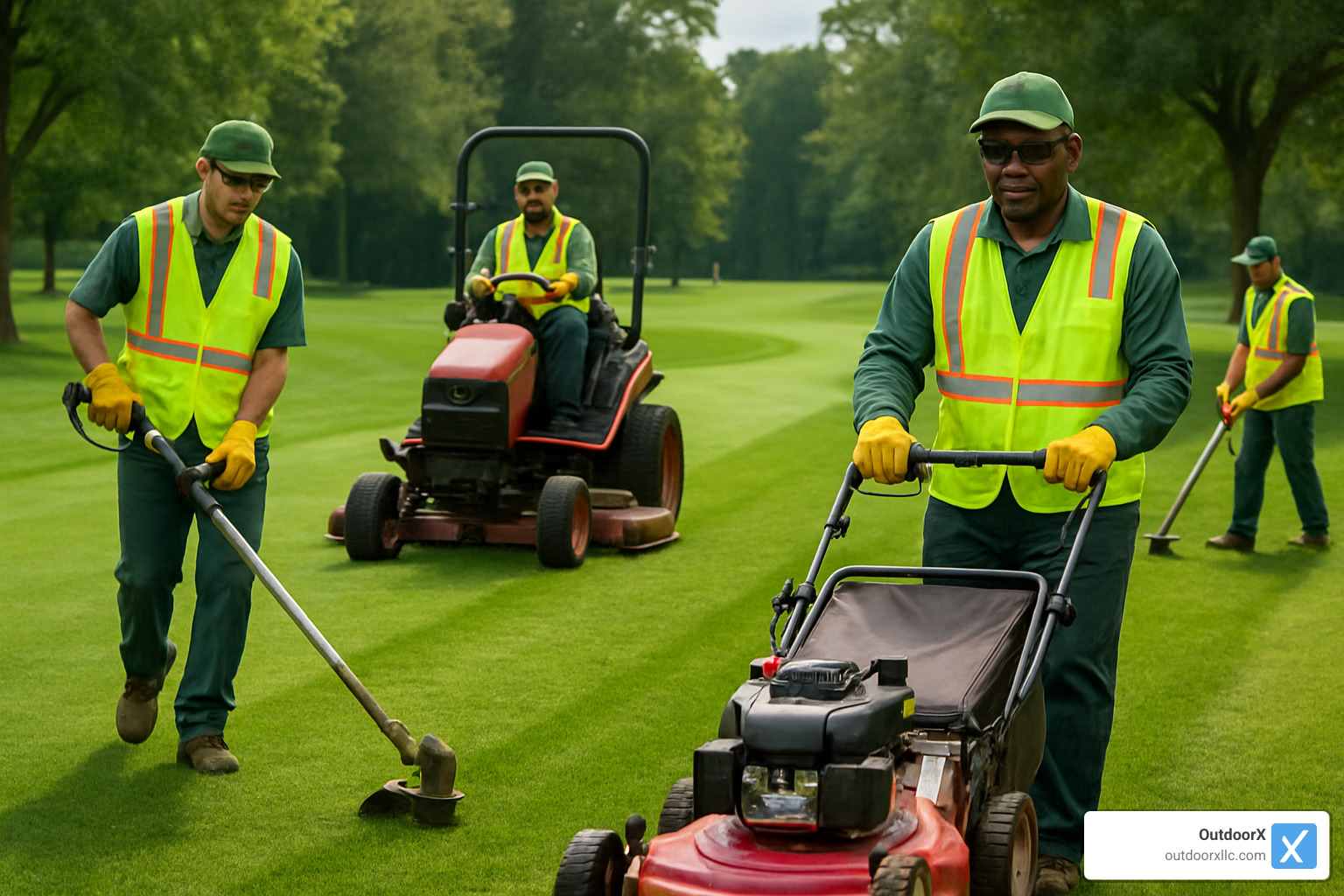
Groundskeepers form the backbone of daily maintenance operations. They handle routine tasks like mowing, edging, and basic plant care that keep properties looking their best. These professionals earn an average of $39,799 annually, with salaries typically ranging from $34,081 to $47,261. Their work might seem straightforward, but it requires deep understanding of plant needs, equipment operation, and seasonal timing.
Landscaping workers focus on the creative and installation side of the business. They transform design plans into reality by planting gardens, installing irrigation systems, and creating beautiful outdoor spaces. These professionals work closely with designers to bring visions to life.
Arborists represent the specialized end of the field. These tree care experts diagnose diseases, perform complex pruning, and handle dangerous tree removals. Their work requires extensive training and certification, as they often work at heights with powerful equipment.
Pesticide handlers carry special responsibility for chemical applications. They must obtain EPA applicator certification and follow strict safety protocols to protect both plants and people. This role combines scientific knowledge with careful attention to environmental protection.
The median hourly wage for grounds maintenance workers reached $18.50 in May 2024. Employment in this field is projected to grow 5 percent from 2023 to 2033, matching the average growth rate for all occupations. This steady growth reflects increasing recognition of professional landscape care’s value.
Career Paths in Landscaping and Grounds Maintenance
The landscaping and grounds maintenance industry offers clear advancement opportunities for motivated professionals. Many successful business owners started as entry-level workers and built their expertise over time.
Entry-level positions provide excellent starting points for newcomers. Grounds maintenance workers, landscape laborers, and equipment operators learn fundamental skills while earning steady wages. Seasonal positions often lead to full-time opportunities for reliable workers.
Professional certifications open doors to better positions and higher pay. The Certified Grounds Technician (CGT) credential requires two years of experience plus passing a comprehensive exam. This certification demonstrates serious commitment to the profession and typically leads to supervisory roles.
The Certified Grounds Manager (CGM) represents the industry’s highest credential. Candidates need either formal education in related fields or eight years of hands-on experience, plus successful completion of a rigorous examination. CGM holders often manage large facilities or run their own businesses.
Advanced roles include grounds supervisors, landscape designers, irrigation specialists, and business owners. These positions combine technical expertise with leadership skills and business knowledge.
Here’s an interesting industry secret: about 80% of landscaping job opportunities never get advertised online. Networking through professional organizations like the Professional Grounds Management Society provides crucial connections for career advancement.
Safety Risks & Mitigation
Working in landscaping and grounds maintenance involves real physical risks that require constant attention and proper training. The industry experiences higher injury rates than many other fields, making safety protocols absolutely essential.
Equipment-related injuries top the list of concerns. Mowers, trimmers, and chainsaws can cause severe cuts or amputations if not operated properly. Workers must receive thorough training on each piece of equipment and follow strict safety procedures.
Chemical exposure presents another significant risk. Pesticides and fertilizers can cause skin irritation, respiratory problems, or more serious health issues without proper protection. All chemical handlers must complete certification training and use appropriate protective equipment.
Fall hazards become serious during tree work or when using ladders and lifts. Professional crews use specialized fall protection gear and follow OSHA regulations for working at heights. Even seemingly simple tasks like cleaning gutters require proper safety equipment.
Weather-related dangers include heat stress during summer months and hypothermia risks during winter operations. Professional crews monitor weather conditions and adjust work schedules to protect worker safety.
OSHA regulations govern workplace safety throughout the industry. Professional providers like OutdoorX maintain comprehensive safety programs that exceed minimum requirements. This includes regular safety training, proper equipment maintenance, and emergency response procedures.
Workers must demonstrate physical fitness, attention to detail, and mechanical aptitude to succeed safely in this field. The combination of physical demands and equipment operation requires people who can stay alert and follow procedures consistently.
Personal protective equipment forms the last line of defense against injuries. Safety glasses, hearing protection, cut-resistant gloves, and steel-toed boots are standard equipment for most tasks. Chemical work requires additional protection including respirators and chemical-resistant clothing.
The industry’s safety record continues improving as companies invest in better training and equipment. Professional providers understand that protecting workers isn’t just the right thing to do—it’s essential for delivering quality service to clients.
Equipment, Technology & Sustainability Trends
The world of landscaping and grounds maintenance has transformed dramatically in recent years. What once relied purely on muscle and basic tools now incorporates sophisticated equipment and smart technology that makes outdoor care more efficient and environmentally friendly.
Modern grounds professionals work with an impressive arsenal of specialized equipment. Mowing and turf care has evolved far beyond the simple push mower—today’s professionals use precision walk-behind mowers for detailed work, powerful riding units for large areas, and specialized aerators that breathe new life into compacted soil. String trimmers provide that crisp edge finish, while overseeding equipment helps renovate tired lawns.
Tree and shrub care requires its own specialized toolkit. Professional arborists wield everything from delicate pruning shears for precise cuts to robust pole saws for reaching high branches safely. When storm damage strikes, chippers quickly process debris, and stump grinders eliminate unsightly remnants completely.
The real game-changers are the heavy equipment pieces that handle major projects. Compact loaders move materials effortlessly around properties, while mini excavators tackle installation work that would take crews days to complete by hand. Skid-steer loaders with specialized attachments can switch from moving mulch to grading soil in minutes, and utility vehicles keep crews moving efficiently across large properties.
Professional equipment manufacturers have revolutionized the industry with compact, versatile machines that pack serious power into manageable sizes. These units handle everything from land clearing to hardscaping with intuitive controls that even reduce training time for seasonal staff—though operating them safely still requires real skill and experience.
For comprehensive design and installation services, explore our landscape design and build capabilities that showcase how proper equipment selection dramatically improves project outcomes and timelines.
Emerging Tech Elevating Landscaping and Grounds Maintenance
Technology is revolutionizing traditional landscaping and grounds maintenance in ways that seemed like science fiction just a decade ago. Smart systems now make decisions that once required constant human oversight.
Smart irrigation systems represent perhaps the biggest leap forward. These intelligent controllers automatically adjust watering schedules based on real-time weather data, while soil moisture sensors prevent the all-too-common problem of over-watering. Property managers can now monitor and control irrigation remotely, and detailed water usage tracking helps optimize consumption—often reducing water bills by 30-50% while keeping landscapes healthier.
Robotic and automated solutions are increasingly common on larger properties. Robotic mowers work tirelessly to maintain consistent lawn height, while automated fertilizer systems deliver precise nutrition exactly when plants need it. Drone technology allows professionals to monitor large properties efficiently, spotting problems before they become expensive disasters. GPS-guided equipment ensures precision work that reduces waste and improves results.
Behind the scenes, data management tools are streamlining operations in remarkable ways. Property mapping software helps plan maintenance efficiently, while scheduling systems ensure nothing gets overlooked. Customer communication platforms keep property owners informed, and equipment monitoring systems predict maintenance needs before breakdowns occur.
The integration of precision agriculture techniques brings scientific accuracy to landscape care. Soil testing guides targeted treatments rather than blanket applications, while digital imaging can detect plant health issues invisible to the naked eye. Mobile apps help identify pests quickly, and growth prediction models enable better long-term planning.
Eco-Friendly Practices & Water Conservation
Sustainability has moved from nice-to-have to absolutely essential in modern landscaping and grounds maintenance. Property owners throughout Essex County increasingly seek environmentally responsible practices that reduce resource consumption while maintaining beautiful outdoor spaces.
Water conservation takes many forms in today’s landscape management. Drought-tolerant plant selection, often called xeriscaping, creates stunning landscapes that thrive with minimal irrigation. Rainwater harvesting systems capture and store natural precipitation for later use, while efficient irrigation design ensures every drop counts. Strategic mulching reduces evaporation significantly, and native plant communities naturally require less supplemental watering.
Water restrictions, such as those affecting the Ipswich River system that supplies many Massachusetts communities, have pushed professionals to adapt their practices creatively. During restrictions, hand watering during permitted hours (typically 8:00 PM to 8:00 AM) focuses on “high risk” plants while established, drought-tolerant species tough it out naturally. Deeper, slower watering techniques maximize absorption, and drip irrigation systems installed when restrictions lift provide ongoing efficiency.
Sustainable maintenance practices extend far beyond water conservation. Organic fertilization programs feed plants while protecting groundwater and beneficial insects. Integrated pest management reduces chemical use dramatically by working with natural predators and resistant plant varieties. Composting and organic matter incorporation improve soil health naturally, while native plant installation supports local ecosystems that birds, butterflies, and beneficial insects depend on.
EPA WaterSense Guidelines provide professional frameworks for water-efficient landscaping that experienced providers incorporate seamlessly into their services. These practices often reduce long-term maintenance costs while demonstrating genuine environmental stewardship—a win-win that appeals to both budget-conscious and environmentally aware property owners.
Green roof systems represent the cutting edge of sustainable landscape design, especially for urban properties where every square foot of green space matters. These living systems manage stormwater, reduce energy costs, and create habitat in unexpected places.
Budgeting & Hiring the Right Provider
Planning your landscaping and grounds maintenance budget feels overwhelming at first, but understanding the investment helps you make smart decisions for your property. The good news? Professional care often costs less than many homeowners expect, especially when you consider the time savings and guaranteed results.
Understanding Industry Pricing
Based on internet research, professional services typically range from $50-$150 per hour, though specialized work can reach $300+ hourly. Basic lawn maintenance visits might cost $30-$80, while comprehensive monthly programs range from $200-$800. Major installation projects span $500-$15,000+ depending on your vision and property size.
These are average costs based on internet research and don’t reflect OutdoorX’s actual pricing. Every property is unique, so contact us for accurate quotes custom to your specific needs.
The investment makes more sense when you consider what you’re getting. Professional providers bring specialized equipment worth thousands of dollars, trained expertise that prevents costly mistakes, and insurance protection that covers any unexpected issues.
Comparing Your Options
DIY approaches require significant upfront equipment investment ($500-$3,000) plus 5-15 hours weekly of your time. You’ll handle all equipment maintenance and accept responsibility for results—which can be inconsistent during your learning curve.
Professional services charge per visit ($50-$200 typically) with minimal oversight needed from you. You get specialized knowledge and professional standards, though you’ll coordinate multiple providers for different needs.
Full-service providers offer annual contracts ($2,000-$12,000+ based on internet data) with hands-off management for you. Everything gets handled by one team with comprehensive expertise, guaranteed outcomes, and maximized investment returns.
Most property owners find the peace of mind worth the investment. No more weekend mornings spent fighting with equipment or wondering if you’re damaging your plants with improper care.
Questions to Ask Before Signing a Contract
Finding the right landscaping and grounds maintenance provider starts with asking smart questions. Don’t feel awkward about being thorough—good providers welcome detailed discussions about their services.
Service details matter most. Ask exactly what’s included in their programs and how they handle seasonal changes. Will they adjust schedules during dry spells or wet springs? What equipment and technology do they use? Can they handle both your weekly maintenance and future installation projects?
Credentials build confidence. Find out what certifications their team holds and how long they’ve served your area. Request references from similar properties—and actually call them. Verify their insurance coverage protects both their workers and your property.
Sustainability questions show you’re thinking long-term. Ask about eco-friendly options and water conservation practices. How do they handle local water restrictions? Do they use integrated pest management instead of blanket chemical treatments? What sustainable materials and practices do they employ?
Communication prevents headaches. Understand how they’ll keep you informed about service schedules and any issues that arise. What happens during weather delays? How do they handle additional requests or changes? What quality assurance processes ensure consistent results?
At OutdoorX, we love these conversations because they help us understand your priorities and explain how our approach protects your investment.
Evaluating Proposals & Avoiding Common Pitfalls
Smart property owners get multiple proposals, but the lowest bid isn’t always the best value. Unusually low prices often indicate corner-cutting that costs more later through poor results or additional charges.
Watch for warning signs like pressure for immediate decisions, vague service descriptions, or lack of proper licensing documentation. Providers without local references or established business presence might disappear when you need them most.
Hidden costs can turn attractive proposals into budget-busters. Discuss potential additional charges for weather delays, equipment issues, or unexpected pest problems. Understand how they handle debris disposal and whether fuel or material cost changes affect your pricing.
The best providers offer detailed proposals with specific deliverables, verified credentials, and clear contract terms. They provide local references, explain their quality assurance processes, and answer questions patiently.
Our experience serving Essex County properties helps us anticipate local challenges—from coastal salt spray to New England’s unpredictable weather patterns. We provide transparent proposals that clearly outline services and potential additional costs, so you never face surprise charges.
You’re not just buying lawn mowing. You’re investing in expertise that protects and improves your property value while giving you more time to enjoy your outdoor spaces instead of maintaining them.
Year-Round Best Practices & Seasonal Calendars
Successful landscaping and grounds maintenance isn’t a one-season job—it’s a year-round commitment that changes with New England’s dramatic seasons. Think of it like caring for a living, breathing investment that needs different attention as the months roll by.
Spring awakening (March through May) brings the most exciting time for property owners. After months of winter dormancy, your landscape literally comes back to life. This is when we focus on cleanup of winter debris and assess any storm damage that Old Man Winter left behind. Soil testing becomes crucial during these months because we need to know what your plants are working with after the freeze-thaw cycles.
Irrigation system startup can’t happen too early—one late frost can damage exposed pipes and sprinkler heads. We also tackle lawn aeration and overseeding during this window, giving your grass the best chance to recover from winter stress. Fresh mulch installation not only looks great but helps retain moisture as temperatures start climbing.
Summer vigor (June through August) shifts our focus to keeping everything healthy during the year’s most demanding season. Regular mowing schedules become non-negotiable, but the real challenge is deep watering programs when heat stress hits. During those brutal July heat waves, shallow daily watering actually hurts your plants—they need deep, less frequent watering to develop strong root systems.
Pest and disease monitoring intensifies during summer months because warm, humid conditions create perfect breeding grounds for problems. Smart irrigation system monitoring can make or break your landscape during this period, especially during water restrictions that affect many Essex County communities.
Autumn preparation (September through November) might seem like winding down, but it’s actually one of the busiest seasons for smart property owners. Leaf removal programs do more than just improve appearance—they prevent fungal diseases that thrive under wet leaf layers. Final lawn fertilization gives grass roots the nutrients they need to survive winter and emerge strong in spring.
Irrigation system winterization can’t wait until the first freeze warning. Water left in pipes and sprinkler heads will expand when it freezes, causing expensive damage that won’t show up until spring startup. Tree and shrub pruning happens after plants enter dormancy, reducing stress and preventing disease entry through fresh cuts.
Winter protection (December through February) in New England means more than just snow removal—though that’s certainly important for safety and access. Plant protection monitoring ensures that burlap wraps and anti-desiccant sprays are doing their job against harsh winds and road salt. This is also prime time for equipment maintenance when mowers and trimmers can get the attention they need.
For property owners who want comprehensive care without the headaches, our landscape maintenance programs handle every seasonal transition with the expertise that comes from years of New England experience.
Sample Annual Checklist for Landscaping and Grounds Maintenance
Creating an effective maintenance schedule requires thinking beyond just “when to mow.” Monthly visual inspections catch small problems before they become expensive disasters. During these walks, we’re looking for everything from irrigation system performance issues to early signs of pest activity that might not be obvious to untrained eyes.
Equipment safety inspections happen monthly because a broken safety guard or dull blade doesn’t just affect results—it creates serious injury risks. Weather damage assessment becomes especially important after storms, when broken branches or displaced mulch need immediate attention.
Quarterly deep dives involve more intensive evaluation. Comprehensive plant health assessments go beyond surface appearance to check root systems, soil drainage, and nutritional needs. Soil testing every three months might seem excessive, but it’s actually cost-effective—catching pH imbalances or nutrient deficiencies early prevents expensive plant replacement later.
Irrigation efficiency audits quarterly can reveal significant water waste that adds up over time. A single misaligned sprinkler head or clogged emitter can waste hundreds of gallons while leaving plants stressed.
Annual planning sessions bring everything together. This is when we evaluate what worked, what didn’t, and what changes might improve results next year. Major equipment replacement planning prevents emergency purchases during peak season when prices are highest and availability is limited.
Tailoring Schedules to Climate & Property Type
New England’s climate throws curveballs that generic maintenance schedules can’t handle. Extended winter protection periods mean we might be installing burlap wraps in November and removing them in April—much longer than warmer regions require.
Spring cleanup timing depends entirely on actual soil conditions, not calendar dates. Starting too early when soil is still frozen or waterlogged can cause more damage than waiting. We watch for that magic moment when soil crumbles in your hand instead of forming mud balls.
Coastal properties face unique challenges that inland locations never see. Salt spray tolerance becomes crucial for plant selection, and wind protection strategies can mean the difference between thriving landscapes and constant plant replacement. Properties near the ocean need specialized irrigation systems that account for salt-affected soils and higher evaporation rates.
High-traffic commercial properties require completely different approaches than residential gardens. Increased maintenance frequency keeps professional appearances intact, while durable plant selection reduces replacement costs. Safety-focused maintenance ensures walkways stay clear and sightlines remain unobstructed.
At OutdoorX, our experience serving communities from Hamilton to Haverhill has taught us that every microclimate has its quirks. We’ve learned which plants thrive in Wenham’s inland conditions and which ones struggle with Ipswich’s coastal exposure. This local knowledge makes the difference between maintenance that just gets by and landscaping and grounds maintenance that truly protects your investment year after year.
Frequently Asked Questions about Landscaping and Grounds Maintenance
Getting started in landscaping and grounds maintenance or hiring professionals raises many practical questions. Here are the most common concerns we hear from property owners and career seekers in Essex County and beyond.
How much do groundskeepers earn?
If you’re considering a career in landscaping and grounds maintenance, the earning potential varies quite a bit depending on where you work and what skills you bring to the table.
Groundskeepers across the country earn an average of $39,799 annually, though this ranges from about $34,081 for entry-level positions up to $47,261 for experienced workers. When broken down hourly, the median wage sits at $18.50 per hour as of May 2024.
New workers typically start around $14.49 per hour, while seasoned professionals can earn $27.14 per hour or more. The real earning boost comes with specialization—arborists and certified pesticide applicators command premium wages because of their specialized training and licensing requirements.
The industry outlook looks promising too. Employment is projected to grow 5 percent from 2023 to 2033, creating approximately 176,600 annual job openings. That’s about as fast as average for all occupations, which means steady opportunities for those entering the field.
Career advancement through certifications can significantly increase your earning potential. Many successful groundskeepers use their experience as stepping stones to supervisory roles, specialized positions, or even starting their own businesses.
What certificates improve a grounds maintenance career?
Professional certifications act like keys that open up better opportunities in landscaping and grounds maintenance. They show employers and clients that you’re serious about your craft and have the knowledge to back up your work.
The Certified Grounds Technician (CGT) certification requires two years of experience and passing a 40-question exam. This credential demonstrates competency in basic grounds management principles and opens doors to supervisory positions. For those aiming higher, the Certified Grounds Manager (CGM) requires either formal education or eight years of experience plus examination success.
If you’re working with chemicals, the EPA Pesticide Applicator License isn’t just helpful—it’s required by law for chemical application work. This certification shows you understand safe handling procedures and environmental protection measures.
Tree care specialists benefit from ISA Certified Arborist credentials, while those interested in water management should consider Irrigation Association Certifications. These specialized credentials often lead to higher-paying positions and more interesting work.
OSHA safety certifications and equipment operation certifications round out a professional’s toolkit. Many employers prefer workers who already have these credentials because it reduces their training costs and liability concerns.
About 80% of landscaping job opportunities aren’t advertised online, making professional networking crucial. Certifications help you stand out when those hidden opportunities arise through industry connections.
Which tools are essential for beginners?
Starting in landscaping and grounds maintenance doesn’t require a massive tool investment, but having the right basics makes all the difference in your work quality and efficiency.
Quality hand tools form the foundation of any professional’s kit. Sharp pruning shears handle most plant maintenance tasks, while a sturdy rake manages debris removal and soil preparation. A reliable shovel tackles planting and general digging, and a hand weeder provides precision for detail work. Don’t forget a garden hose with adjustable nozzle for watering tasks.
Power tools boost your productivity significantly. A string trimmer handles edging and detail work that mowers can’t reach, while a leaf blower makes cleanup much faster than raking alone. For shrub maintenance, a hedge trimmer saves hours of hand work. A basic walk-behind mower covers small area maintenance effectively.
Safety equipment isn’t optional—it’s essential for long-term career success. Hearing protection prevents damage from power tool noise, safety glasses protect your vision, and slip-resistant work boots prevent falls. Work gloves and sun protection clothing keep you comfortable during long workdays.
Smart beginners also invest in basic plant identification guides, a soil testing kit for pH and nutrients, and measuring tools for proper spacing and application rates. These help you understand the science behind the work, not just the physical tasks.
Focus on quality over quantity when building your tool collection. Well-maintained basic tools often outperform cheap specialty equipment. As your skills and interests develop, you can add specialized tools based on your specific career direction.
Many successful professionals started with just hand tools and gradually built their collections as they gained experience and identified their preferred specializations. The key is starting with reliable basics that won’t let you down when you’re learning the ropes.
Conclusion
Professional landscaping and grounds maintenance transforms ordinary outdoor spaces into valuable assets that improve both property worth and daily life. What might seem like simple grass cutting and flower care actually represents a sophisticated blend of horticultural science, environmental awareness, and artistic design.
The numbers tell a compelling story. This industry has grown to $98.8 billion because property owners recognize that well-maintained landscapes aren’t just pretty to look at—they’re smart financial investments. Research consistently shows property value increases of up to 12 percent for homes with professional landscaping, while commercial properties enjoy 7 percent higher rental rates.
Whether you’re managing a cozy residential garden in Beverly or overseeing expansive commercial grounds in Salem, professional maintenance delivers returns that extend far beyond curb appeal. Reduced liability risks, improved occupant satisfaction, and long-term cost savings make professional services a strategic choice rather than a luxury expense.
At OutdoorX, we understand that every property across Essex County faces unique challenges. From coastal salt spray in Gloucester to inland frost patterns in Georgetown, our team brings local expertise to every project. We’ve seen how proper planning and professional care can transform struggling landscapes into thriving outdoor environments that property owners truly enjoy.
What sets professional service apart isn’t just the equipment or expertise—though both matter enormously. It’s the comprehensive approach that combines traditional horticultural knowledge with cutting-edge technology like smart irrigation systems and predictive maintenance strategies. This integration optimizes resource use while improving outcomes in ways that DIY approaches simply cannot match.
The future looks bright for property owners who invest wisely in their outdoor spaces. Sustainability practices are reducing water consumption by 30-50 percent while maintaining healthier landscapes. Smart technologies are making maintenance more efficient and effective. Data-driven approaches help predict and prevent problems before they become expensive repairs.
Perhaps most importantly, professional landscaping and grounds maintenance creates outdoor spaces that people actually want to use and enjoy. Well-designed landscapes provide natural stress relief, improve air quality, and create gathering spaces that strengthen communities and improve quality of life.
Ready to see what professional expertise can do for your property? Our comprehensive landscape maintenance services provide the year-round care that protects your investment while creating outdoor spaces you’ll love for years to come. Contact OutdoorX today to find how the right maintenance partnership can transform your property’s beauty, functionality, and value.
