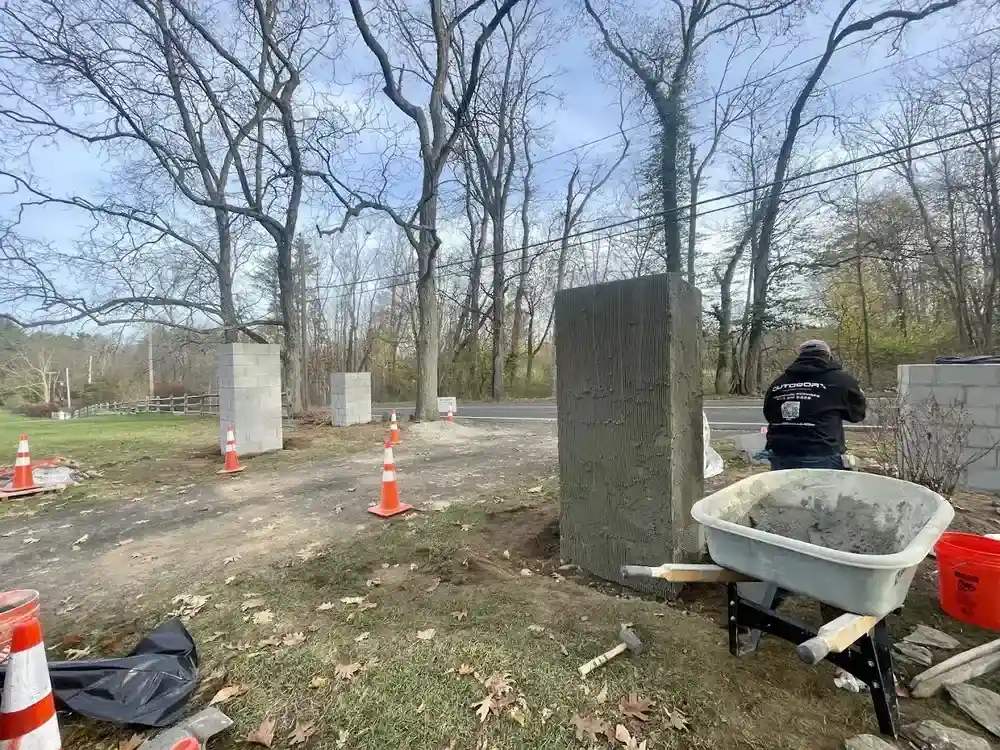
Commercial Hardscaping Near Me: 5 Powerful Benefits in 2025
Why Commercial Hardscaping Near Me Matters for Your Property
When you search for commercial hardscaping near me, you want outdoor features that look great, work hard, and survive brutal New England winters. Hardscape elements—patios, retaining walls, walkways, plazas—form the backbone of a commercial landscape, creating the first impression for visitors, customers, and tenants.
Quick-check list for choosing a partner:
• Licensed & insured, with local commercial experience
• Portfolio of projects in Essex County
• Value-engineering to stretch your budget
• Start-to-finish services (design, permits, install, maintenance)
• Familiarity with local codes and drainage challenges
Unlike traditional landscaping that focuses on plants, hardscaping relies on long-lasting materials such as stone, concrete, and pavers. That means lower long-term maintenance and year-round curb appeal—a big plus in South Hamilton, Beverly, and every other town OutdoorX serves. Studies show well-designed commercial exteriors can boost property values 10–20 % and reduce safety claims tied to poor walkways or drainage.
Local know-how matters. Contractors who understand Essex County soils, freeze-thaw cycles, and coastal salt spray deliver projects that stay level, drain properly, and age gracefully. The right design is both a branding tool and a smart investment that pays off for decades.
1. What Is Commercial Hardscaping?
Commercial hardscaping covers all the fixed, non-living structures outside your building—think stone walkways, seating walls, ADA ramps, drainage systems, and multi-purpose plazas. At OutdoorX we’ve installed these features across Beverly, Newburyport, and the rest of Essex County, turning underused land into high-value space for employees, shoppers, and tenants.
Hardscape vs. Landscape (short version)
| Aspect | Hardscape | Softscape |
|---|---|---|
| Materials | Stone, concrete, pavers, metal | Plants, turf, shrubs |
| Durability | 20–50+ years | Seasonal to 10 years |
| Upkeep | Light cleaning & sealing | Regular mowing, pruning, irrigation |
| Weather impact | Minimal | High |
| Initial cost | Higher | Lower |
Why it matters for every commercial site
• Branding: polished entries and plazas set a professional tone.
• Safety & liability: level surfaces, clear drainage, and lighting cut trip-and-fall risks.
• Low maintenance: most surfaces need only periodic cleaning or sealing.
• Year-round use: patios don’t “go dormant” when frost hits, so you keep usable square footage 12 months a year.
Bottom line: hardscaping provides the structure; landscaping provides the color. Together they create an exterior that performs and impresses, but the hardscape is what keeps everything functional long term.
2. Commercial Hardscaping Near Me: Top Features & Ideas
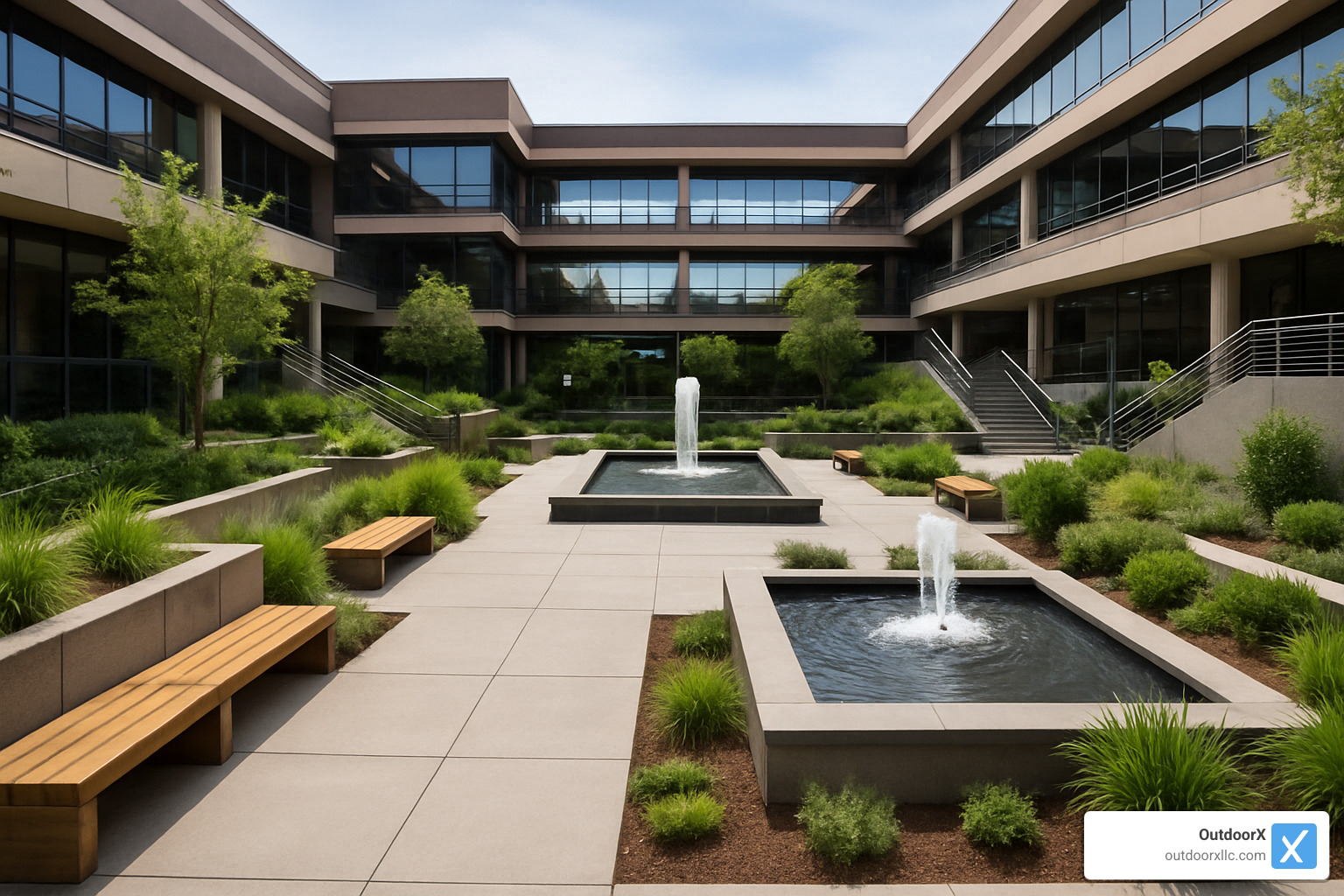
Modern commercial hardscape projects do far more than pour a slab. Popular upgrades we install around Essex County include:
• Outdoor seating plazas – seat walls that double as planters encourage customers to linger and employees to relax.
• ADA-compliant paths & ramps – seamlessly blend accessibility with aesthetics.
• Outdoor kitchens & dining nooks – add revenue for restaurants and amenities for corporate campuses.
• Water or fire features – fountains mask traffic noise; gas fire pits extend patio season into chilly fall evenings.
• Green infrastructure – permeable pavers, bioswales, and rain gardens manage runoff while looking great.
Regional must-haves
New England winters punish poor construction, so we specify freeze-thaw-rated pavers and over-engineer bases to prevent heaving. Coastal sites (Gloucester, Rockport) get salt-resistant materials and extra anchoring against wind.
Trending tech
• Permeable pavers that meet storm-water mandates.
• Recycled aggregates that cut CO₂ footprint.
• Low-voltage LED lighting tied to smart controls for energy savings.
3. How to Choose the Best Commercial Hardscape Contractor
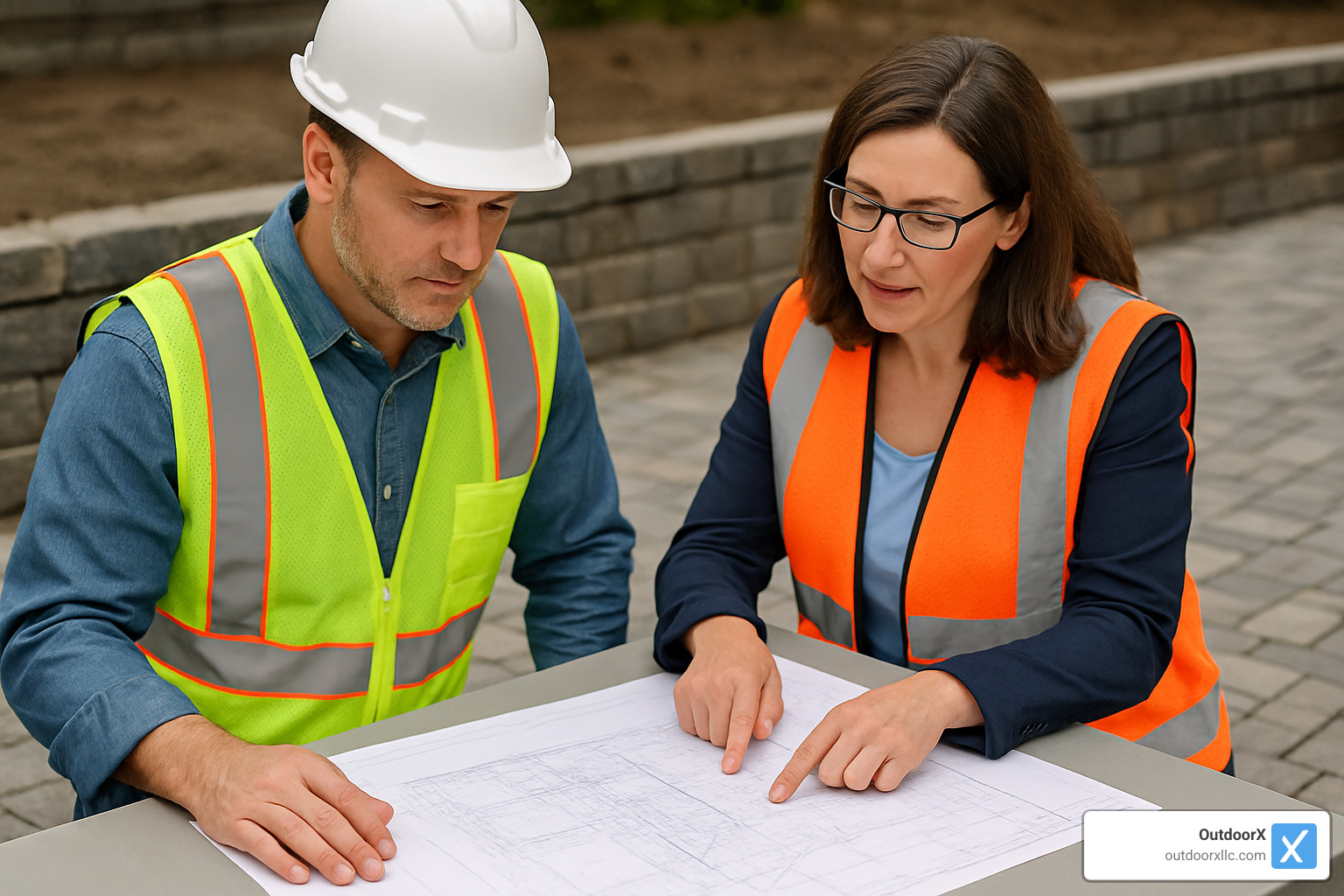
Key qualifications to verify:
- Commercial portfolio in towns like Salem, Andover, or Ipswich—not just backyard patios.
- Licensing & insurance—ask for certificates before work starts.
- Local references—freeze-thaw success can’t be faked.
- Value-engineering mindset—materials and methods that stretch dollars.
- One-stop design-build—fewer hand-offs, fewer headaches.
Questions to ask
• “When can you start and finish?”
• “What’s included in the warranty?”
• “Who pulls permits and calls DigSafe?”
• “Do you offer maintenance programs after install?”
Review tips
Look for recent, detailed case studies and consistent ratings across Google, BBB, and industry sites. A contractor’s response to the occasional negative review often tells you more than a perfect score.
4. Budgeting, Materials & Maintenance
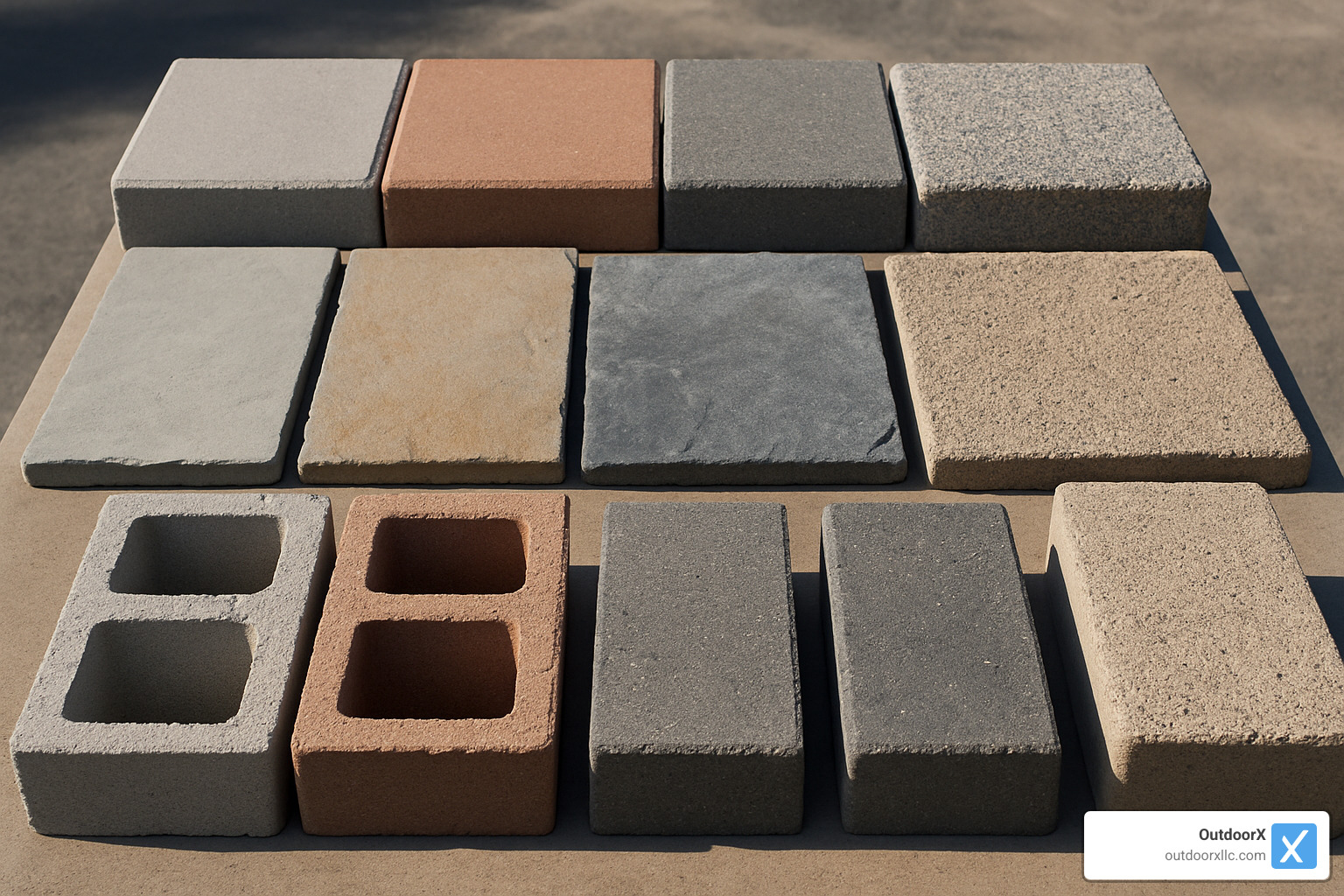
Average cost drivers (based on public internet data, not OutdoorX pricing):
• Labor: $25–$50 /hr for standard landscaping, $60+ /hr for specialist crews.
• Materials: basic concrete pavers $3–$5 /ft²; premium granite $15–$25 /ft²; custom stone can exceed $50 /ft².
• Site prep & drainage: 10–30 % of most projects—crucial for longevity.
Typical project ranges
• Basic upgrades (walkways, small patio, low wall): $10k–$30k.
• Mid-range plazas or multi-level patios: $30k–$100k.
• Full property changes with lighting, water, and multiple retaining walls: $100k–$300k+.
Long-life materials for New England
• Granite & fieldstone: 50-year durability.
• Freeze-thaw-rated concrete pavers: 20-30 years.
• Avoid low-grade concrete blocks or stones not tested for northern climates.
Maintenance cheat sheet
• Re-seal pavers every 2–3 years.
• Clear drainage grates each fall and spring.
• Use plastic shovels or rubber blades for snow.
• Inspect joint sand annually; top up as needed.
Sustainability wins such as permeable pavers or LED lighting often qualify for incentives and slash long-term operating costs.
5. Project Timeline & Eco-Friendly Innovations
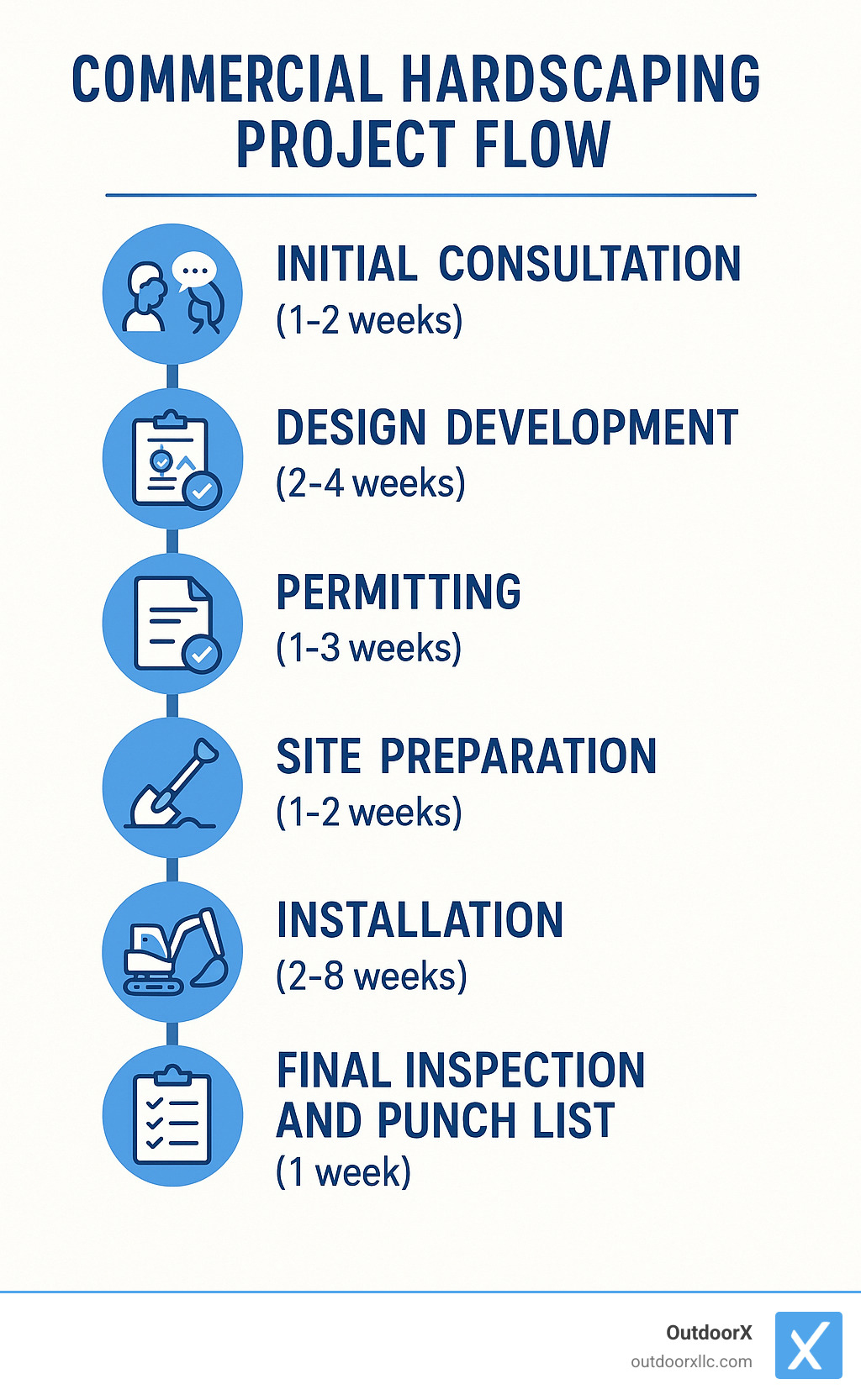
Typical schedule (weather permitting)
- Consultation & site analysis: 1–2 weeks
- Design & revisions: 2–4 weeks
- Permitting: 1–3 weeks
- Site prep: 1–2 weeks
- Installation: 2–8 weeks
- Punch-list & turnover: 1 week
Design-build compresses steps by overlapping design, permitting, and procurement—often trimming 20–30 % off total duration.
Eco-friendly upgrades making waves in 2025
• Permeable paving that meets storm-water codes.
• Bioswales & rain gardens that double as ornamental beds.
• Solar bollard or wall lighting that runs off-grid.
• Locally quarried stone or recycled concrete bases to cut embodied carbon.
Certifications such as LEED or SITES award points for many of these features, adding marketing value alongside environmental benefits.
Frequently Asked Questions about Commercial Hardscaping Near Me
When you’re exploring commercial hardscaping near me options, you probably have questions about timelines, materials, and permits. We’ve answered hundreds of these questions over our years serving Essex County, so let’s tackle the most common ones.
How long does a typical project take?
Most commercial hardscaping projects take 6-12 weeks from the day you sign the contract to final completion. But here’s the thing – every project is different, and several factors influence timing.
Simple installations like basic patios or straightforward walkways often wrap up in 4-6 weeks. These projects have fewer moving parts and typically require minimal permitting.
Complex multi-phase projects can extend to 16-20 weeks, especially when they involve multiple retaining walls, integrated lighting systems, or extensive drainage work. These installations require more coordination and often multiple permit approvals.
Weather plays a huge role in New England. Spring projects from April through June typically stay on schedule because soil conditions are ideal and weather is predictable. Summer installations often move fastest thanks to optimal working conditions and longer daylight hours.
Fall projects can be tricky – we sometimes race against early winter weather. Winter work is possible but typically takes 20-30% longer due to ground conditions and shorter working days.
Which materials last the longest in New England weather?
Our harsh New England climate separates the winners from the losers when it comes to hardscape materials. After years of installations throughout Essex County, we’ve learned which materials truly stand the test of time.
Natural stone performs exceptionally well in our freeze-thaw cycles. Granite and fieldstone can last 50+ years with minimal maintenance. These materials actually get more beautiful with age as they develop natural patina.
High-quality concrete pavers specifically rated for northern climates typically last 20-30 years. The key word here is “rated” – not all pavers are created equal. We only use products tested for repeated freeze-thaw cycles.
Materials to avoid include cheap concrete products that aren’t freeze-thaw rated, certain imported stones that may not meet our climate standards, and inappropriate sealers that can trap moisture and cause cracking.
The secret isn’t just choosing the right material – it’s also about proper installation. Even the best materials will fail prematurely without correct base preparation and drainage.
Do I need permits for retaining walls or large patios?
Permit requirements can be confusing because every municipality has slightly different rules. But there are some general guidelines that apply across most of Essex County.
Retaining walls typically require permits when they’re over 3-4 feet in height. The exact height varies by town – some say 3 feet, others allow up to 4 feet without permits. Any wall supporting additional loads like parking areas or buildings usually needs permits regardless of height.
Large patios often trigger permit requirements once they exceed 500-1000 square feet, depending on your local codes. Some towns also require permits based on the patio’s proximity to property lines or wetlands.
Commercial properties face stricter requirements than residential projects. You’ll likely need to address stormwater management compliance, ADA accessibility standards, and sometimes even architectural review board approvals.
Here’s our advice: always consult with local building departments early in your planning process. Permit delays can push your project timeline back by weeks, and it’s much easier to plan around known requirements than to scramble for approvals mid-project.
We handle permit applications for our clients because we know the local requirements and have established relationships with municipal offices throughout Essex County. It’s one less headache for you to worry about.
Conclusion
Finding the right commercial hardscaping near me partner shouldn’t feel like searching for a needle in a haystack. When you choose OutdoorX, you’re getting more than just another contractor – you’re partnering with a team that truly understands Essex County’s unique challenges and opportunities.
We’ve spent decades learning exactly how New England’s freeze-thaw cycles affect different materials, which drainage solutions work best in our varied soil conditions, and how to create hardscapes that look stunning year-round. That local knowledge makes all the difference between a project that merely looks good at installation and one that performs beautifully for decades.
What sets the OutdoorX approach apart starts with our custom design philosophy. We don’t believe in cookie-cutter solutions because every commercial property has its own personality, challenges, and goals. Whether you’re managing a corporate campus in Beverly or a retail center in Newburyport, we take time to understand how your hardscape needs to work for your specific business.
Our one-stop-shop approach eliminates the headaches that come with coordinating multiple contractors. From initial design through final installation and ongoing maintenance, you work with the same team throughout your project. This means better communication, fewer surprises, and consistent quality from start to finish.
The materials we select aren’t just beautiful – they’re chosen specifically for long-term performance in our challenging climate. We’ve seen too many hardscape installations fail prematurely because contractors used materials that couldn’t handle New England’s weather extremes. Our professional team brings the licensing, insurance, and commitment to excellence that gives you confidence in your investment.
From simple patio improvements to comprehensive site changes, we guide you through every decision with honest advice about what will work best for your budget and timeline. Our design-build approach streamlines the entire process while our maintenance services ensure your hardscape continues looking and performing its best year after year.
Your commercial property deserves hardscaping that improves your brand, reduces long-term costs, and creates spaces people actually want to use. Ready to see what’s possible? Contact OutdoorX today to schedule your consultation and find how professional commercial hardscaping near me can transform your property’s appeal, functionality, and value.
Curious about our complete range of capabilities? Check out More info about all OutdoorX services to explore everything we offer for creating exceptional outdoor spaces throughout Essex County.