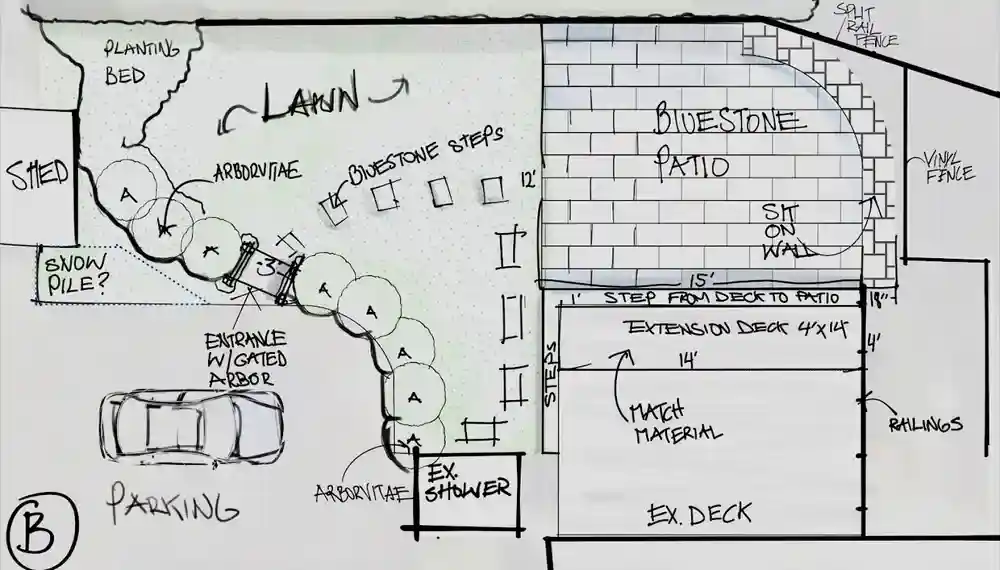
replacing a deck with a patio: 7 powerful benefits in 2025
Is It Time to Transform Your Outdoor Space?
Replacing a deck with a patio is often the perfect solution for homeowners dealing with aging, rotting, or high-maintenance deck structures. Here’s what you need to know at a glance:
| Consideration | Quick Answer |
|---|---|
| Feasibility | Most decks can be replaced with patios, especially ground-level or low-to-grade decks |
| Exception | Decks that exit to doors more than one story above grade cannot be fully replaced |
| Cost Difference | Patios typically cost 40% less than decks (300 sq ft deck: ~$9,000 vs. patio: ~$4,500) |
| Lifespan | Patios last 20-30+ years vs. 10-20 years for wood decks |
| Maintenance | Patios require minimal maintenance (occasional power washing) compared to regular staining/sealing for decks |
Is your old deck showing its age? Maybe a few boards are rotting, causing splinters, or the whole structure feels unstable. You’re not alone. Millions of American homes feature wooden decks that eventually succumb to weather, time, and wear.
The good news? Replacing a deck with a patio isn’t just trending—it’s often a smarter financial decision. Patios typically cost less upfront, require minimal maintenance, and can last decades longer than traditional wood decks.
“Contrary to many peoples’ impressions, patios are actually much cheaper than decks if you’re building fairly close to the ground,” notes one landscape professional. This cost advantage, combined with greater design flexibility and the ability to support features like fire pits and outdoor kitchens, makes patios increasingly popular.
Before diving into a full replacement project, you’ll need to assess your specific situation. Factors like your door height above grade, drainage considerations, and even your preference for railings will influence whether a patio is the right choice for your home.
In this guide, we’ll walk you through everything you need to know about changing your aging deck into a beautiful, long-lasting patio that improves both your outdoor living experience and your property value.
Replacing a deck with a patio terminology:
– adding a drain to a concrete patio
– landscape paver contractors
– laying landscape pavers
Replacing a Deck with a Patio: Can You and Should You?
When you’re staring at your weathered, splintering deck, you might wonder if replacing a deck with a patio is actually doable for your home. Good news from our experience at OutdoorX: it usually is!
“The short answer is: most times,” explains Brad Wiegand, our hardscaping expert who’s transformed countless tired decks into stunning patios across Essex County.
Before you decide, take a moment to consider what’s really important for your outdoor living space. How high is your door threshold from the ground? Will a patio complement your home’s architectural style better than a deck would? Do you actually enjoy having railings, or do they make you feel disconnected from your yard? Is your current deck truly beyond saving, or just in need of some TLC? And most importantly—how do you really want to use your outdoor space?
One of our clients in Hamilton put it perfectly: “Our old deck felt like a jail that kept us from seeing and enjoying our yard. After replacing our deck with a patio, we felt more connected to our landscape and actually spent more time outdoors.”
It’s worth asking yourself why the deck was built in the first place. Many decks were quick solutions during housing booms or simple fixes for slight elevation changes. Your lifestyle and needs today might be completely different from when that deck was installed.
When “replacing a deck with a patio” is the perfect fix
You’re an ideal candidate for a deck-to-patio conversion if you have:
Ground-level doors that sit close to grade (within 8 inches of the ground). In these situations, a patio almost always makes more sense than rebuilding a deck.
Low-to-grade decks that hover less than 2 feet above the soil are practically begging to be replaced with patios. These low decks are notorious for trapping moisture underneath, creating the perfect environment for rot, mold, and even pest problems. Here in Massachusetts, our humid summers make this issue even worse.
Cost savings matter to most homeowners, and patios deliver in a big way. You’ll typically save about 40% compared to deck construction, while getting a surface that lasts decades longer.
Low-maintenance living is another major benefit. If you’re tired of the annual ritual of power washing, staining, sealing, and replacing warped boards, a patio will feel like a revelation. A quick spray with the hose a couple times a year is usually all it needs.
Heavy features like outdoor kitchens, fire pits, or substantial furniture pieces sit more securely on patios. The solid ground support eliminates concerns about weight limits or structural reinforcement that decks often require.
When “replacing a deck with a patio” is NOT possible
While we love changing decks into patios, we have to be honest about situations where it simply won’t work:
Second-story exits present the biggest challenge. If your door sits a full story (typically 8+ feet) above grade, you can’t completely eliminate a deck structure. However, we often create hybrid solutions with a small landing deck that transitions to a beautiful ground-level patio below.
Severe slopes in your yard might require extensive excavation, grading, and retaining walls. In extreme cases, these additional elements can actually make a patio more expensive than rebuilding your deck.
Code-mandated clearances can sometimes throw a wrench in patio plans. Some municipalities in our snowy region require specific step-downs from door thresholds to exterior surfaces for proper drainage and snow clearance.
Access limitations occasionally create logistical headaches. If heavy equipment can’t reach your backyard, the installation process becomes much more labor-intensive and potentially more costly.
Septic system locations or other underground utilities might restrict where and how we can excavate for a proper patio base.
A homeowner from Gloucester shared her experience: “We initially wanted to replace our lifted deck with a patio, but after consultation with OutdoorX, we realized we’d need massive retaining walls due to our sloped yard. We ended up with a smaller deck that transitions to a patio below—the best of both worlds.”
Each property presents unique challenges and opportunities, which is why we always conduct a thorough site assessment before recommending the best approach for your outdoor living space.
Deck vs. Patio: Cost, Maintenance & Longevity
When you’re thinking about replacing a deck with a patio, understanding the differences in your wallet (now and later) can make your decision much clearer. Let’s look at what really matters: how much you’ll spend, how much work you’ll need to do, and how long your investment will last.
Cost Comparison
Money talks, and the numbers tell a compelling story:
| Feature | Wood Deck | Composite Deck | Concrete Patio | Paver Patio |
|---|---|---|---|---|
| Average Cost (300 sq ft) | $9,000 ($30/sq ft) | $13,500 ($45/sq ft) | $4,500 ($15/sq ft) | $6,000 ($20/sq ft) |
| High-End Range | $15,000-$27,000 | $22,500-$40,500 | $7,500-$13,500 | $9,000-$18,000 |
| Permits Required | Yes | Yes | Usually No | Usually No |
| Annual Maintenance Cost | $100-$300 | $50-$100 | $25-$75 | $50-$150 |
Note: These are average costs based on internet data and not actual costs for OutdoorX LLC.
The numbers don’t lie – patios deliver serious savings. I’ve seen countless homeowners’ eyes widen when they realize they can save 40% by choosing a patio over a deck. Even when your door sits a bit higher (around 1.5 feet), a raised patio with a small retaining wall typically runs around $8,000 – still beating that $9,000+ price tag for a comparable deck.
“My budget was tight after buying our fixer-upper,” shares Marie from Beverly. “When I learned I could get a beautiful paver patio for almost half the cost of replacing our rotting deck, it was a no-brainer.”
Maintenance Requirements
Let’s talk about your precious weekends. Do you want to spend them on maintenance or actually enjoying your outdoor space?
With a wood deck, you’re signing up for a regular relationship with your power washer, stain can, and screwdriver. Those boards need cleaning annually (sometimes twice), staining every few years, and the occasional replacement when they warp or split. Don’t forget checking for loose screws and keeping an eye out for unwelcome termite guests!
Composite decks ease some of this burden – no staining required – but they’ll still need cleaning and can fade over time. Plus, you’re paying a premium upfront for that reduced maintenance.
Now, patios? They’re practically maintenance-free roommates. A yearly power wash keeps them looking fresh, with optional resealing every few years. Paver patios might need some fresh polymeric sand every couple of years – a simple afternoon project. No rot, no splinters, no pests.
“After replacing my deck with a patio three years ago,” one Ipswich homeowner told me with a laugh, “my spring to-do list got a lot shorter. Now I actually have time to enjoy my garden instead of maintaining what I’m standing on.”
Lifespan Comparison
Here’s where patios really shine – they simply outlast decks by a country mile.
Wood decks typically give you 10-20 years of service, depending on how diligently you maintain them and how kindly your local weather treats them. Our Essex County winters and humid summers? Not exactly wood’s best friends.
Composite decks fare better, often lasting 25-30+ years, but at a significantly higher initial investment.
Patios, though? They’re in it for the long haul. Concrete patios typically last 20-30+ years, while properly installed paver patios can look fantastic for 25-50+ years. We’ve visited paver patios we installed in the early 2000s that still look almost new – just a quick power wash and they’re ready for another season of memories.
Think about it: while your neighbor is replacing their deck for the second time, you’re still enjoying your original patio investment. As one customer put it, “My patio isn’t just an outdoor space – it’s peace of mind.”
Those harsh New England freeze-thaw cycles that wreak havoc on wood barely phase a properly installed patio. When winter finally releases its grip, your patio stands ready for spring without the splinters, warping, or structural concerns that often come with aging decks.
Latest research on outdoor flooring costs
Site Conditions & Door Height: Will a Patio Work for You?
Before replacing a deck with a patio, you’ll need to take a good look at what you’re working with. Your yard’s natural features will largely determine if a patio makes sense—both practically and financially.
Slope and Drainage
The lay of your land plays a huge role in determining whether a patio is practical for your home. While decks can easily float over uneven terrain, patios need relatively flat surfaces to work properly.
If you’re lucky enough to have a flat or gently sloped yard, you’re in an ideal position for a simple patio installation. Moderate slopes might require some retaining walls and additional fill material, which adds to the cost but still creates a beautiful result. For steep slopes, though, you might be looking at extensive earthwork that could actually make a patio more expensive than rebuilding your deck.
Water management is absolutely crucial for any patio’s long-term success. In Essex County, where we see plenty of rain and significant snow melt, proper drainage becomes even more important.
“Always slope your patio surface to allow water runoff into the yard,” advises a landscape architect. “A minimum 1/4 inch per foot slope away from the house is standard.”
Access and Equipment Considerations
Another practical concern is whether construction equipment can actually reach your project site. This might seem minor, but it can significantly impact your project:
Narrow access points between houses or through gates might limit what machinery we can bring in, sometimes requiring more manual labor (and increasing costs). Overhead obstacles like tree canopies or power lines can restrict equipment use. And don’t forget about soil conditions—rocky or clay-heavy soils may require specialized equipment to properly prepare.
At OutdoorX, we carefully evaluate all these factors during our initial site visit to determine the most efficient approach for your specific property in Essex County.
Frost Line and Climate Factors
Living in New England means dealing with our deep frost line (typically 48-54 inches in Massachusetts), which directly affects how we prepare patio foundations. Without proper preparation, freeze-thaw cycles can wreak havoc on even the most beautiful patio.
We need to ensure proper base depth to prevent frost heave that could crack or shift your patio surface. We also help you select materials that perform best in our freeze-thaw conditions, and may recommend drainage systems that include subsurface options to manage water during spring thaws.
Scientific research on soil drainage
Measuring elevation before “replacing a deck with a patio”
The height of your door relative to the ground is perhaps the most critical measurement when considering replacing a deck with a patio. Here’s a simple way to assess your situation:
First, use a tape measure to determine the vertical distance from your door threshold to the ground. Then, add about 6-8 inches to account for base materials and pavers in the finished patio. Finally, check your local building codes—many municipalities require a step down from interior floors to exterior surfaces to prevent water intrusion.
Based on these measurements, you can determine your best approach:
If your door is 0-8 inches above grade, a standard patio is your most cost-effective option. For doors 8-18 inches above grade, consider a patio with a small stoop or a slightly raised patio with a modest retaining wall. When your door sits 18-30 inches high, you’ll likely need a raised patio with substantial retaining walls or possibly a small deck with steps. And for doors more than 30 inches above grade, you’re looking at either keeping a deck or creating a multi-level solution with perhaps a patio below.
“Building codes often require a one-step drop from door thresholds to exterior surfaces in snowy regions,” notes one contractor. “This helps prevent water intrusion during heavy snow melt.”
Dealing with tricky grades & water
When replacing a deck with a patio on challenging sites, we have several techniques to manage grade changes and water issues effectively.
For moderate slopes, terraced patios create multiple flat surfaces connected by short walls or steps, creating visual interest while solving grade problems. Boulder walls offer a natural-looking solution for grade changes up to about 3 feet, while segmental retaining walls provide engineered systems that can handle taller grade changes safely.
Water management requires equal attention. French drains—perforated pipes in gravel trenches—redirect subsurface water away from your patio and home. Permeable paver systems allow water to pass through into prepared bases rather than pooling or running off. And channel drains collect surface water at patio edges or near door thresholds, directing it safely away.
One Ipswich homeowner shared: “Our backyard sloped away from the house at about a 15-degree angle. OutdoorX installed a beautiful tiered patio with natural stone retaining walls where our old deck used to be. Not only is it more functional, but it actually made our yard more usable by creating flat areas where there were none before.”
For properties with significant drainage challenges, we often recommend adding dedicated drainage systems when replacing a deck with a patio. These systems protect both your new patio and your home’s foundation from water damage—something that’s well worth the investment in the long run.
More info about Retaining Walls
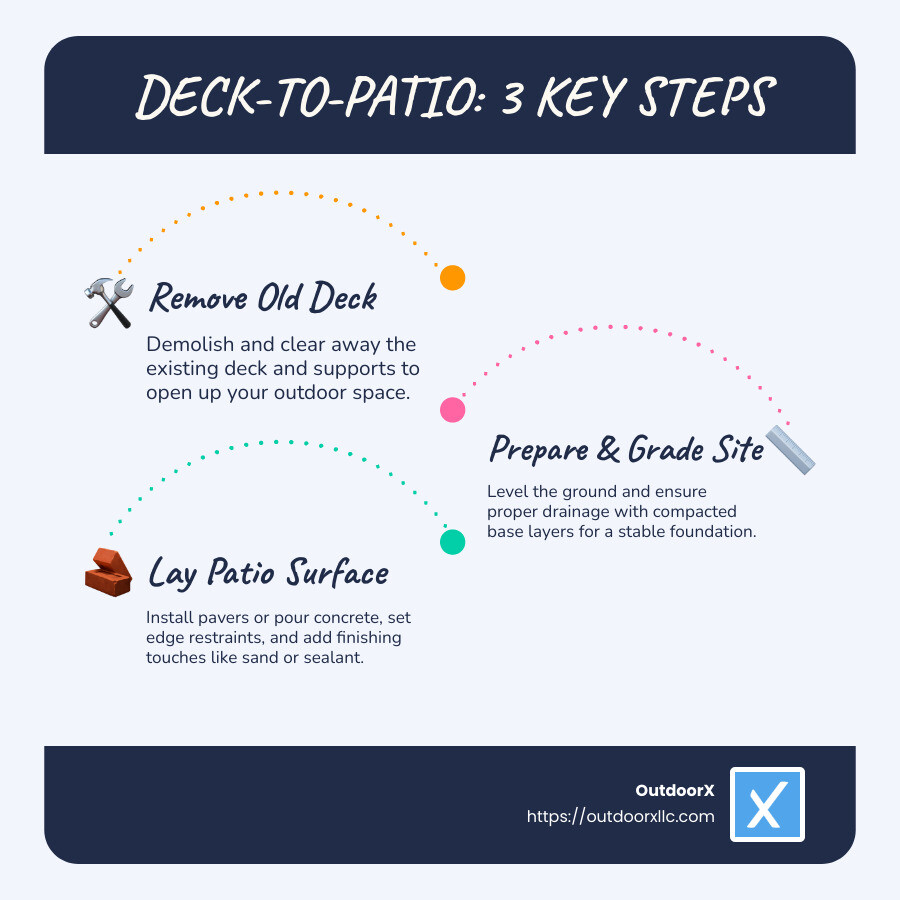
Step-by-Step Guide: From Demo to Dream Patio
Changing your outdoor space by replacing a deck with a patio might seem daunting at first, but breaking it down into manageable phases makes the process much clearer. Let’s walk through how your backyard change will unfold.
Phase 1: Planning and Preparation
The journey begins well before the first board comes off your old deck. Good planning prevents headaches later!
First, we’ll assess your site conditions and carefully measure your door height. This helps determine the perfect patio dimensions and material choices for your space. Whether you’re dreaming of classic brick pavers or modern concrete slabs, we’ll help create detailed design plans that capture your vision.
During this phase, we’ll also check local building codes and apply for necessary permits. The good news? Patios typically require fewer permits than decks, making the approval process smoother. If you have an HOA, we’ll make sure your plans meet their requirements too.
“Half the success of any patio project happens before the first shovel hits the ground,” one of our senior designers often says. “Proper planning prevents poor performance.”
Before ordering materials, we’ll mark all utility locations by calling 811 (Call Before You Dig). Then we’ll select your pavers, edge restraints, and base materials—always ordering 5-10% extra to account for cuts and inevitable waste.
Phase 2: Deck Removal and Site Preparation
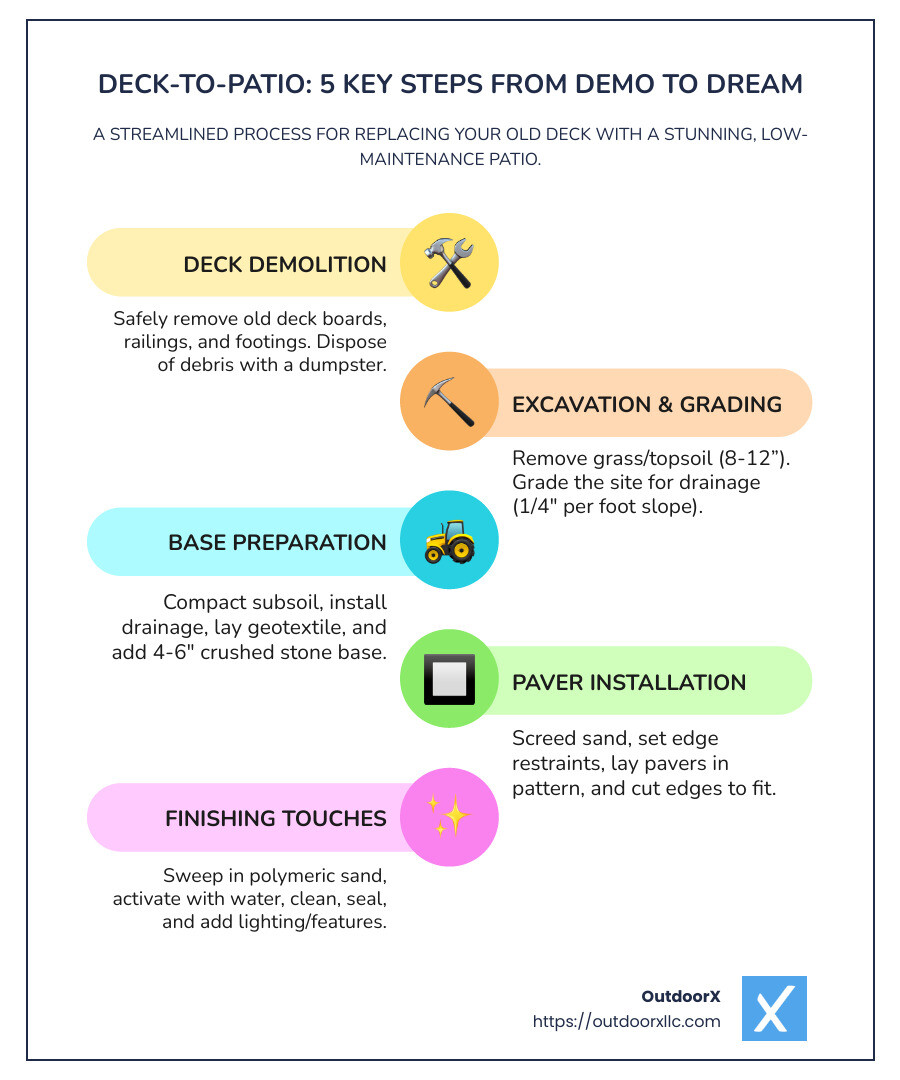
Out with the old, in with the new! Deck demolition begins by disconnecting any electrical connections and systematically removing railings, stairs, and decking boards. We’ll then dismantle the support structure and footings, arranging for proper disposal with an appropriately sized dumpster.
Once the deck is gone, we’ll prepare your site by removing grass and topsoil to the appropriate depth (typically 8-12 inches). This is when the real magic happens—proper grading for drainage. We ensure a minimum 1/4″ per foot slope away from your home to prevent water issues.
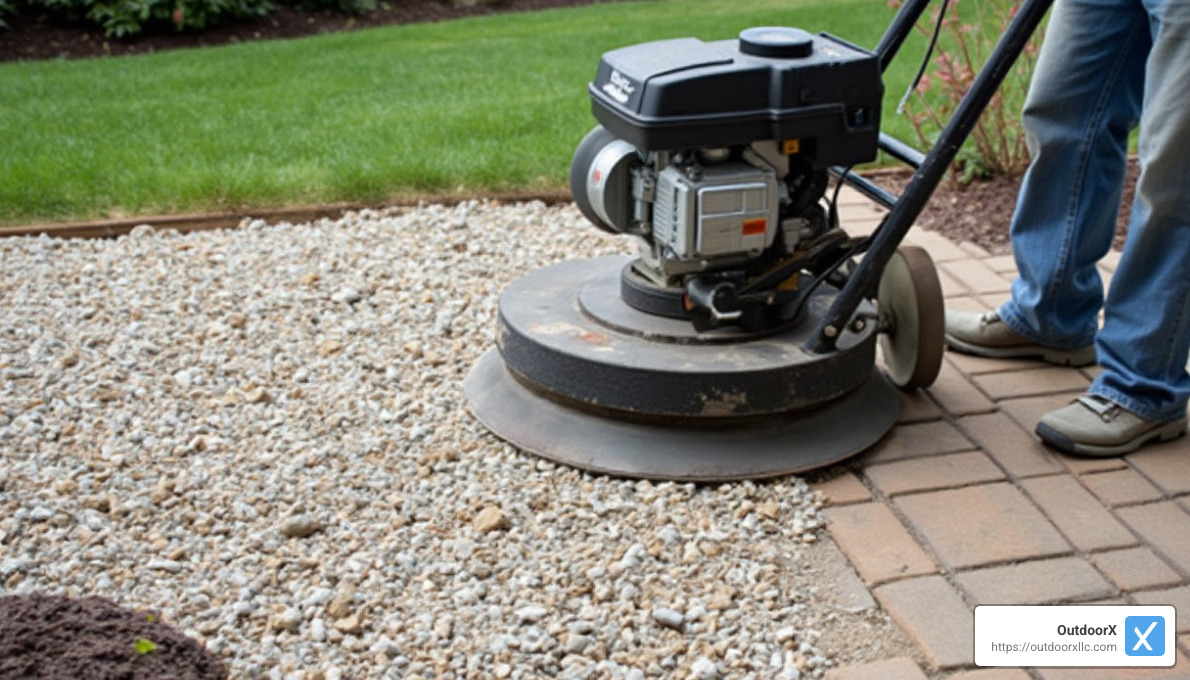
After excavation, we’ll compact the subsoil with a commercial-grade plate compactor. This often-overlooked step is crucial for preventing future settling and shifting.
Phase 3: Patio Construction
With preparation complete, your new patio begins to take shape. We’ll lay geotextile fabric first—this simple step prevents weed growth and improves stability by separating your base material from the soil beneath.
Next comes the foundation: 4-6 inches of crushed stone, compacted in 2-inch “lifts” for maximum stability. On top of this solid base, we add a 1-inch layer of bedding sand, carefully screeded flat to create the perfect surface for your pavers.
Installing edge restraints around the perimeter keeps everything in place for years to come. Then the most visible change happens—laying your chosen pavers in the pattern you’ve selected. We’ll make precise cuts for a perfect fit around edges and obstacles.
After installation, we compact the pavers to set them into the bedding sand. Then comes the finishing touch: sweeping polymeric sand into the joints. This special sand hardens when activated with water, locking pavers in place while remaining slightly flexible for seasonal movements.
“The difference between an average patio and an exceptional one often comes down to the attention paid to these final steps,” shares one of our project managers. “Details matter.”
Tools & materials checklist
Replacing a deck with a patio requires specific tools and materials that vary depending on whether you’re hiring professionals or tackling the project yourself.
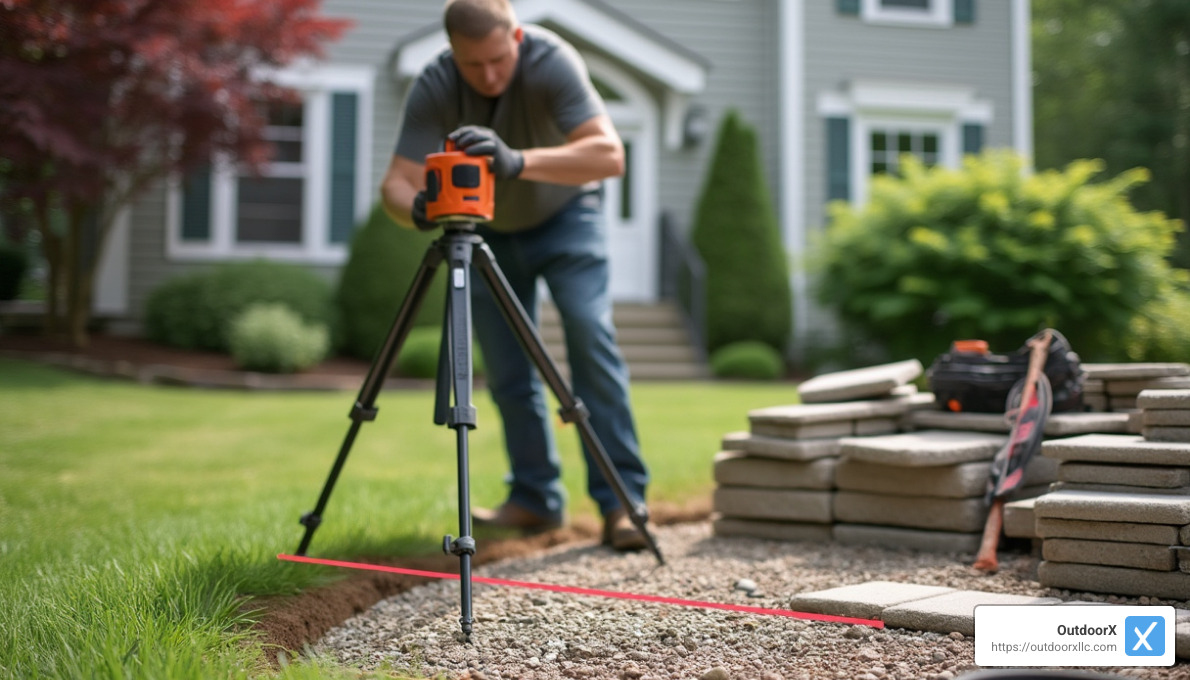
Professional-grade equipment makes a significant difference in both efficiency and results. At OutdoorX, we bring commercial-grade plate compactors (minimum 5000 lbs of force), laser levels, power screeds, and diamond blade wet saws to every Essex County project. For larger jobs, we use excavators or skid steers to move materials quickly and precisely.
DIY-friendly tools include basic items like shovels (both flat and round), rakes, brooms, rubber mallets, and levels. You’ll also need measuring tools, string lines, and stakes for layout. A good wheelbarrow is essential for moving materials around your property.
The materials list starts with geotextile fabric and properly graded crushed stone. Quality bedding sand, sturdy edge restraints, and your chosen pavers form the visible portion. Polymeric sand and optional sealers complete the package, with additional drainage materials as needed for your specific site.
DIY vs Pro: What you should tackle, what to outsource
When replacing a deck with a patio, many homeowners wonder which parts they can handle themselves to save money. The truth is, certain aspects of patio installation are more DIY-friendly than others.
Most homeowners can successfully handle deck demolition (with proper safety precautions), basic design planning, and material research. The final decorating and landscaping around your new patio are also great DIY opportunities to personalize your space.
However, other aspects of the project benefit tremendously from professional expertise. Proper excavation and grading, especially on sloped sites, require experience and specialized equipment. Base preparation and compaction—the foundation of a lasting patio—demand precision that’s difficult to achieve without commercial equipment and training.
“Peace of mind is as valuable as cost savings,” one of our clients wisely noted after watching our team install her patio. This perspective becomes particularly clear when considering that the invisible parts of your patio—the base preparation—determine whether it will remain level for decades or develop problems within a few seasons.
A recent client in North Andover shared: “I initially planned to DIY our patio after removing our old deck, but after watching some tutorials, I realized the precision required for proper slopes and compaction was beyond my skill level. Hiring OutdoorX was the best decision—they completed in three days what would have taken me weeks, with professional results I couldn’t have achieved.”
When you choose professionals like OutdoorX for your Essex County property, you gain access to our commercial-grade equipment, years of experience with local soil conditions, and knowledge of regional building codes. You also receive warranties on workmanship and efficient project completion.
While DIY installation might seem less expensive initially, hidden costs often emerge: tool rental fees, material waste from inexperience, and time away from work or family. Many homeowners find that professional installation provides better value when considering the patio’s lifespan and performance.
After all, your outdoor space should be a source of enjoyment, not ongoing maintenance concerns. A professionally installed patio gives you the confidence to fully enjoy your new outdoor living area from day one.
Design & Value Boosters After Patio Replacement
Replacing a deck with a patio isn’t just about creating a new surface—it’s about reimagining your entire outdoor living experience. The solid foundation a patio provides opens up a world of design possibilities that simply aren’t practical with a wooden deck structure.
Fire Features
There’s something magical about gathering around a fire in your backyard. When replacing a deck with a patio, you can finally incorporate that cozy fire feature you’ve always wanted.
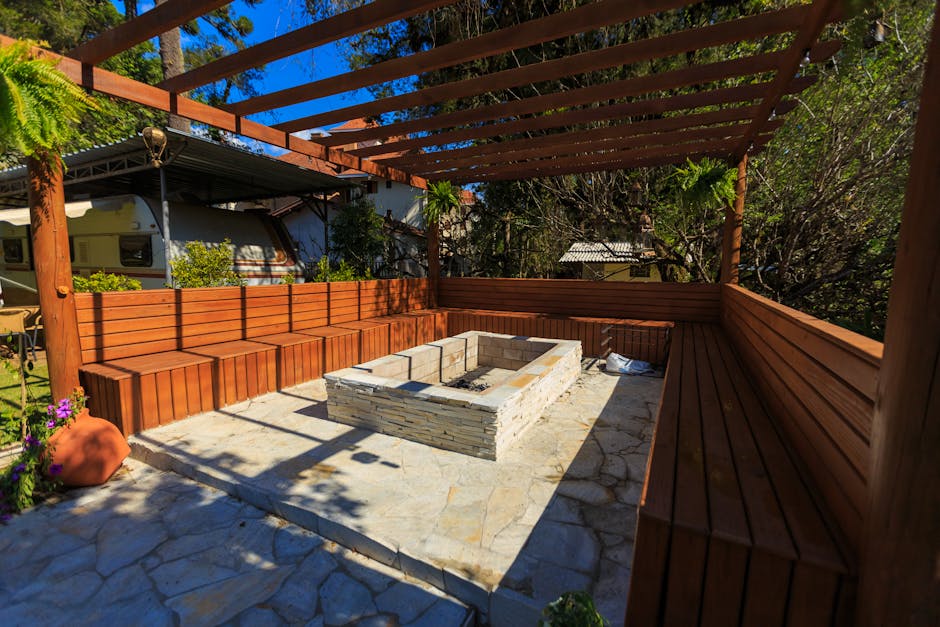
Wood-burning fire pits create that authentic campfire experience—perfect for roasting marshmallows with the kids or enjoying a glass of wine under the stars. For those preferring convenience, gas fire tables offer instant ambiance with just the flip of a switch. And if you’re looking for a true statement piece, built-in fireplaces create dramatic focal points that transform your patio into a true outdoor living room.
“You generally cannot put a firepit or fireplace directly on a deck due to safety and support issues,” notes one design expert. This limitation disappears when you choose a patio, allowing for seamlessly integrated fire features that become year-round gathering spots.
Seating and Retaining Walls
Smart patio designs often incorporate walls that serve multiple purposes. These structures aren’t just practical—they add architectural interest and character to your outdoor space.
Retaining walls can manage elevation changes while creating visual interest with different materials and textures. Seat walls provide built-in seating that reduces the need for movable furniture, creating a more permanent, finished look. For garden lovers, planter walls integrate greenery directly into your hardscape, softening the overall appearance.
At OutdoorX, we’ve seen how curved seating walls that surround fire pits create natural conversation areas that draw people together. One Marblehead client told us, “The seat wall around our fire pit has become everyone’s favorite spot—it’s where all our guests naturally gravitate during parties.”
Outdoor Kitchens and Dining Areas
For serious entertainers, replacing a deck with a patio creates the perfect foundation for outdoor cooking. Unlike decks, patios can easily support the substantial weight of built-in appliances and stone or brick structures.
Built-in grills range from simple installations to elaborate cooking stations with multiple burners and preparation areas. Pizza ovens have become increasingly popular for family-friendly dining experiences that bring everyone together. Bar areas with under-counter refrigeration keep beverages cold and guests happy, while pergolas or pavilions add shade and architectural definition to dining spaces.
A Beverly homeowner shared with us: “Our old deck couldn’t support the outdoor kitchen we dreamed of. After replacing our deck with a patio, we installed a full cooking station with a grill, side burner, and refrigerator. It’s completely changed how we entertain.”
Lighting and Ambiance
The right lighting transforms your patio from a daytime-only space to a 24-hour outdoor retreat. Strategic illumination not only extends your usable hours but also creates atmosphere and improves safety.
Path lights guide guests safely through the space while creating a welcoming glow. Wall lights highlight architectural features and provide ambient illumination. For a more festive feel, string lights draped overhead create an instant party atmosphere. For a touch of drama, in-paver lights add subtle illumination that seems to emerge magically from the ground itself.
Modern low-voltage LED systems are both energy-efficient and relatively simple to install during the patio construction process. At OutdoorX, we often recommend incorporating conduit beneath your patio during installation—even if you’re not ready for lighting yet—to make future additions easier.
Accessibility Considerations
When replacing a deck with a patio, you gain a wonderful opportunity to make your outdoor space more accessible for family members of all ages and abilities.
Gentle ramps can replace steep stairs, making the transition between indoor and outdoor spaces smoother for everyone. Wider pathways accommodate wheelchairs, walkers, and strollers with ease. The smooth, consistent surface of a well-installed patio eliminates the tripping hazards often associated with uneven or warping deck boards. And by designing multiple entry points, you create better flow between your house and different areas of your yard.
One Essex County homeowner noted, “After my mother started using a walker, our deck with steps became an obstacle. Our new patio with a gradual slope has given her back the joy of gardening and outdoor meals.”
Return on Investment
From a financial perspective, replacing a deck with a patio typically offers excellent value on multiple fronts.
The lower initial investment—patios generally cost 30-40% less than comparable decks—means more of your budget can go toward features that improve enjoyment and value. The minimal maintenance costs save hundreds annually on staining, sealing, and repairs that wooden decks require. With a longer lifespan of 20-30+ years versus 10-15 for wood decks, your investment stretches much further. And when it comes time to sell, patios often appeal to a wider range of potential buyers who appreciate the low-maintenance aspect.
While wooden decks typically return about 75-76% of their cost at resale, well-designed patios with additional features like fire pits and outdoor kitchens can offer comparable or better returns while costing significantly less initially.
One real estate professional in Essex County observed: “Homes with established, low-maintenance outdoor living spaces like paver patios are increasingly desirable. Buyers recognize they’re getting a space they can enjoy immediately without the ongoing maintenance of wood decks.”
At OutdoorX, we’ve helped countless Essex County homeowners transform their aging decks into beautiful, functional patios that better connect their homes to their landscapes. Whether you’re looking for a simple patio or a complete outdoor living room, we can help you design a space that improves both your lifestyle and your property value.
More info about Patio Design & Installation
Frequently Asked Questions about Replacing a Deck with a Patio
How much does it cost on average?
When homeowners ask me about replacing a deck with a patio, cost is usually their first question—and understandably so! The investment varies quite a bit depending on several key factors.
Size plays a significant role—while larger patios naturally cost more overall, you’ll often benefit from a lower per-square-foot price as the project scales up. Material choice dramatically impacts your budget too. Concrete typically represents your most economical option, with standard pavers sitting in the middle range, and natural stone commanding premium prices for its unique aesthetic.
Your existing yard conditions matter tremendously. A flat site with easy access might require minimal prep work, while a sloped yard could need extensive grading, drainage solutions, and possibly retaining walls—all affecting your bottom line. And don’t forget about the old deck removal itself! Extensive demolition and disposal costs can add a meaningful amount to your project budget.
Based on internet data (not actual OutdoorX pricing), here’s what homeowners in Essex County might expect to invest for a typical 300 square foot patio:
| Patio Type | Basic Range | Mid-Range | Premium Range |
|---|---|---|---|
| Concrete | $3,000-$6,000 | $6,000-$9,000 | $9,000-$15,000 |
| Standard Pavers | $4,500-$7,500 | $7,500-$12,000 | $12,000-$22,500 |
| Natural Stone | $7,500-$12,000 | $12,000-$18,000 | $18,000-$36,000 |
Note: These are average costs based on internet data and not actual costs for OutdoorX LLC.
When clients ask about enhancing their patio with special features, I always explain how these additions affect the overall investment. A beautiful retaining wall might add $35-$150 per square face foot. A cozy fire pit generally ranges from $1,000 for simple prefabricated models to $5,000 for custom built-in designs. Outdoor kitchens represent a wider range, starting around $5,000 for basic setups and reaching $30,000 or more for gourmet outdoor cooking stations. Even thoughtful lighting systems typically add $1,500-$4,500 to the project.
While these numbers might seem substantial at first glance, I always remind homeowners to consider the long view. Replacing a deck with a patio often proves more economical over time through dramatically reduced maintenance costs and significantly longer lifespan. Many of our clients are pleasantly surprised when they calculate their 10-year cost of ownership!
Will a patio add as much value as a new deck?
This is where conversations get interesting! The value equation when replacing a deck with a patio isn’t quite as straightforward as comparing initial price tags.
Traditionally, wooden decks have boasted strong return on investment, typically recouping about 75-76% of their cost at resale. Basic concrete patios might return slightly less on paper. However, this simple comparison misses several important nuances that smart homeowners consider.
Improved patios with thoughtful features often tell a different story. When you incorporate elements like an outdoor kitchen, atmospheric fire pit, or premium materials, your patio’s ROI can match or even exceed what a standard deck would deliver. I’ve seen this with many Essex County homes.
“Ten years ago, decks commanded higher resale premiums,” explains a real estate appraiser from Salem who frequently works with our clients. “Today, with greater emphasis on outdoor living and entertaining, well-designed patios with useful features often appeal more to buyers than standard decks.”
The maintenance factor increasingly influences buyer perceptions too. Today’s homebuyers are notably more conscious of ongoing maintenance requirements. Many specifically seek low-maintenance properties, making a beautiful, durable patio more attractive than a deck that will need regular attention.
There’s also significant value in longevity. A newly installed patio will likely serve its purpose beautifully for decades with minimal intervention, while even a brand-new deck begins requiring maintenance within just 2-3 years. Savvy buyers recognize this distinction.
Your specific neighborhood context matters tremendously as well. In many Essex County communities, outdoor living spaces that extend the usable season (like patios with fire features) tend to command higher values—particularly important in our New England climate where making the most of outdoor time feels especially precious.
What maintenance will my new patio need?
The smile that spreads across homeowners’ faces when I explain patio maintenance requirements compared to deck upkeep is always delightful! This dramatic reduction in maintenance is one of the most compelling reasons for replacing a deck with a patio.
For concrete patios, maintenance is refreshingly simple. An annual power washing to remove accumulated dirt and debris keeps things looking fresh. Optional sealing every 3-5 years helps preserve color and resist staining, though it’s not strictly necessary. You might occasionally need minor crack repairs, though these are minimal with proper professional installation. Some homeowners spend a few minutes occasionally pulling weeds that may appear around the perimeter—and that’s about it!
Paver patios require similarly minimal attention. Plan on an annual power washing to maintain their appearance. Every 2-3 years, you might need to refresh the polymeric sand between pavers, a simple DIY task or quick professional service. Some homeowners opt for sealing every 3-5 years to improve color and protection, though many skip this step without issues. Properly installed pavers rarely settle, but if any do, adjustments are typically straightforward.
Natural stone patios are perhaps the lowest maintenance option of all. They benefit from an annual gentle cleaning (harsh power washing isn’t recommended for some stone types). Joint sand might need occasional replenishment, but otherwise, these patios largely take care of themselves.
One of our clients in Ipswich perfectly summed up her experience after replacing her deck with a patio: “We power wash it once a year, and that’s literally all we’ve done in three years. Compare that to the staining, sealing, board replacements, and constant sweeping our old deck required. I honestly don’t miss those weekend maintenance projects one bit!”
At OutdoorX, we provide all our Essex County clients with detailed maintenance guidelines specific to their patio material and design choices. For homeowners who prefer professional care, we also offer convenient annual maintenance services that keep your outdoor space looking its absolute best with zero effort on your part.
Conclusion
Replacing a deck with a patio isn’t just about swapping materials—it’s about changing how you experience your outdoor space. Across Essex County, from the coastal views of Beverly to the historic charm of Newburyport, homeowners are finding the remarkable benefits of this conversion: dramatically reduced maintenance, substantially longer lifespan, improved functionality, and often impressive cost savings.
As we’ve explored throughout this guide, several factors influence whether this change makes sense for your home—particularly your door height, existing site conditions, and personal preferences. While not every liftd deck can be completely replaced with a ground-level patio, most low-to-grade decks can be beautifully transformed into patios that create a more natural connection with your surrounding landscape.
At OutdoorX, we bring more than two decades of hands-on experience designing and installing custom patios throughout Essex County. Our team intimately understands the unique challenges presented by New England’s climate and soil conditions. This expertise ensures your new patio will withstand harsh winters, hot summers, and everything in between while requiring minimal upkeep.
Your journey begins with a thorough on-site evaluation and personalized design consultation. We’ll guide you through material options that complement your home’s architecture, drainage solutions custom to your property’s specific needs, and design features that improve both the beauty and functionality of your outdoor living space.
Perhaps you’re envisioning a simple paver patio to replace that weathered, splintering deck. Or maybe you’re dreaming bigger—an elaborate outdoor living room complete with a crackling fire pit, fully-equipped kitchen, and soft ambient lighting for those perfect summer evenings. Whatever your vision, we have the expertise, equipment, and passion to bring it to life.
Ready to explore the possibilities of replacing your deck with a patio? Reach out to OutdoorX today to schedule your complimentary design consultation. Our friendly team proudly serves homeowners throughout Essex County, including Andover, Beverly, Danvers, Gloucester, Ipswich, Marblehead, Newburyport, Salem, and all surrounding communities.
More info about Patio Design & Installation
Transform your outdoor living experience with a beautiful, low-maintenance patio that you’ll enjoy for decades to come—not just this summer, but for many, many summers ahead.