


Retaining wall concrete design: Top 5 Expert Tips 2025
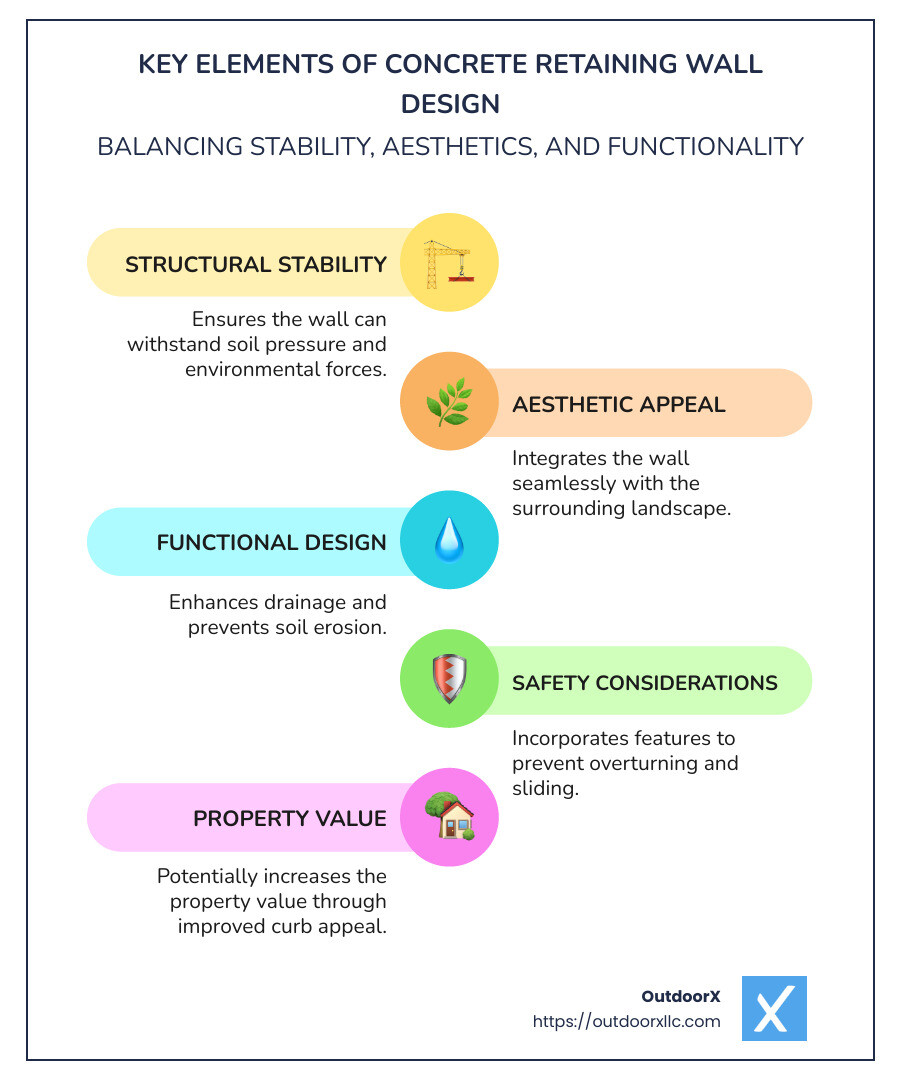
Retaining wall concrete design is a vital aspect of creating stable and attractive outdoor spaces. At its core, this design focuses on:
- Structural Stability: Ensuring the wall can withstand soil pressure and environmental forces.
- Aesthetic Appeal: Integrating the wall seamlessly with the surrounding landscape.
- Functional Design: Enhancing drainage and preventing erosion.
For homeowners in Essex County, MA, seeking to lift their outdoor living areas, a well-designed concrete retaining wall can transform your landscape into a beautiful, functional extension of your home. Not only does it provide crucial support and prevent soil erosion, but it also improves curb appeal and potentially increases property value.
We’ll guide you through the essentials of concrete retaining wall design, helping you understand the balance between function and beauty.
Understanding Retaining Wall Concrete Design
When designing a concrete retaining wall, understanding the forces at play is crucial. One of the main challenges is lateral pressure. This pressure comes from the soil held back by the wall. Imagine the soil as a giant hand pushing against the wall—your wall needs to be strong enough to resist this push.
Compressive strength is another key factor. Concrete is known for its excellent compressive strength, which means it can withstand a lot of pressure from above. In retaining walls, this helps keep the wall from crumbling under the weight of the soil.
To further improve strength, reinforcement is used. Reinforcing bars, or rebar, are placed vertically in the wall. This reinforcement acts like a skeleton, providing additional support to handle tension—like pulling forces that the wall might face due to soil movement.
Incorporating these elements effectively ensures that your retaining wall is not just a pretty face but also a robust structure capable of standing the test of time. Proper design considers all these factors, ensuring safety and longevity.
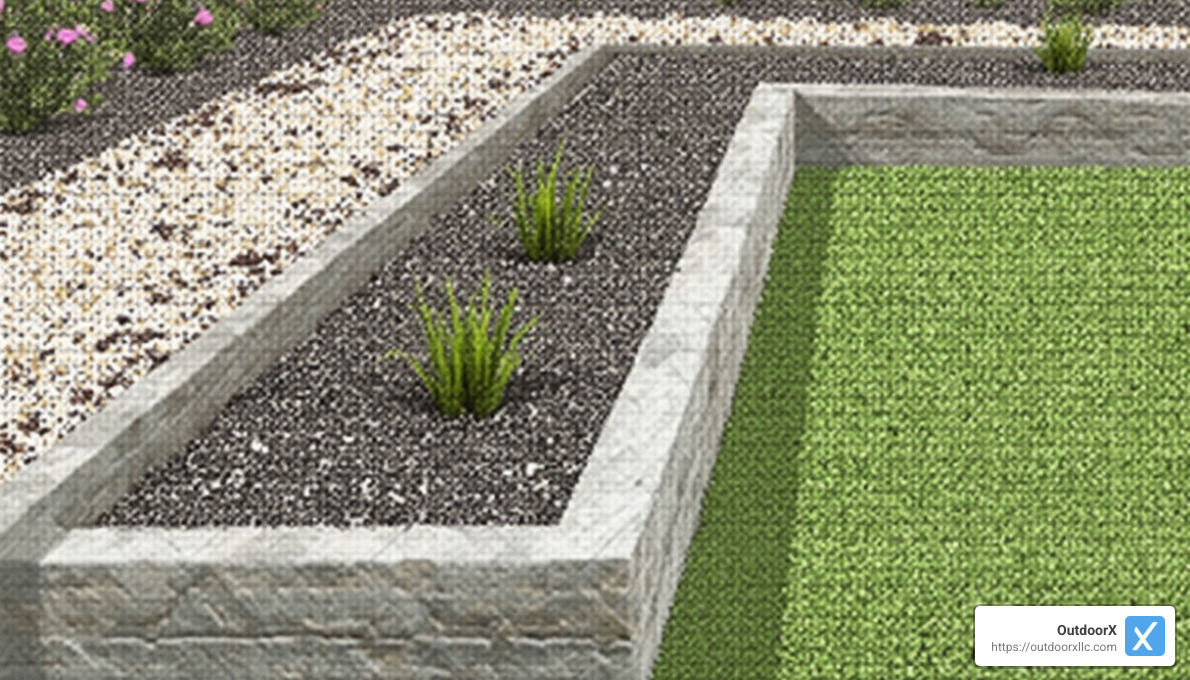
By focusing on these aspects, you can create a retaining wall that not only supports your landscape but also complements it aesthetically. This balance is the essence of retaining wall concrete design.
Key Components of Concrete Retaining Walls
When it comes to building a solid concrete retaining wall, there are a few key components you need to get right: footing size, wall thickness, and reinforcement placement. These elements work together to ensure your wall is strong, safe, and long-lasting.
Footing Size
The footing is the base of your retaining wall, and it plays a crucial role in stability. Think of it like the foundation of a house—it keeps everything grounded. The depth of the footing should be at least two feet, but it must always be below the frost line to prevent movement in colder climates. The length of the footing usually ranges from 50% to 70% of the wall’s total height. This ensures that the wall has a firm grip on the ground, reducing the risk of tipping over.
Wall Thickness
Wall thickness is another critical factor. It’s not just about making the wall look sturdy; it needs to be thick enough to support the loads it will encounter. Generally, the top of the wall should be at least 12 inches thick. This thickness allows for proper concrete placement and provides enough room for reinforcement, especially in areas with severe exposure or reactive soil types.
Reinforcement Placement
Reinforcement, typically in the form of rebar, is like the backbone of your retaining wall. It helps the wall withstand tension and prevents cracking. Proper reinforcement placement involves placing rebar vertically every 16 inches on center, as noted by experts like Tom Ralston. This strategic placement distributes the forces evenly and improves the wall’s ability to handle both lateral pressure and compressive forces.
By ensuring these components are correctly designed and implemented, your retaining wall will not only fulfill its functional role but also stand strong against the elements. This attention to detail is what makes a well-designed retaining wall a lasting addition to any landscape.
Designing for Stability and Safety
When it comes to retaining wall concrete design, ensuring stability and safety is paramount. This involves addressing key factors like overturning resistance, sliding resistance, and safety factor.
Overturning Resistance
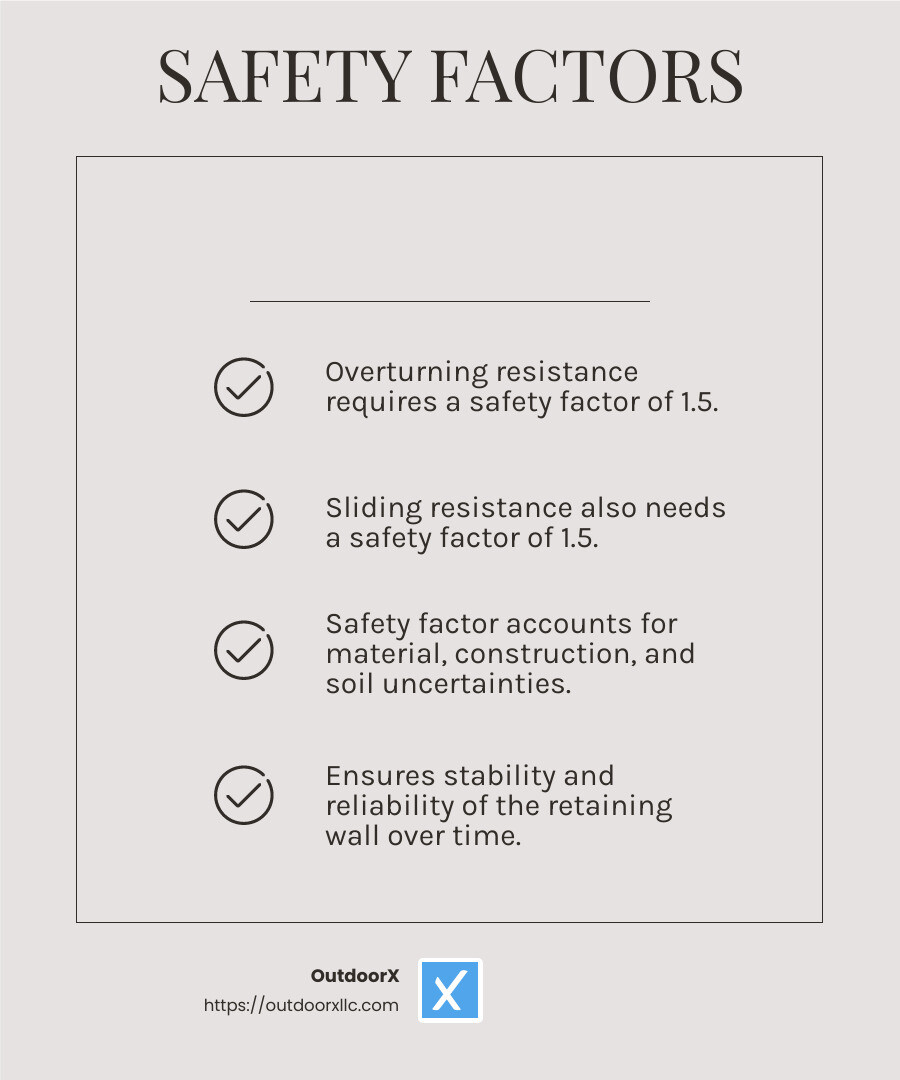
Overturning resistance is all about keeping the wall upright against the lateral pressure from the soil it retains. The wall’s weight, combined with the weight of the soil on the footing, provides a resisting moment. The design should ensure this resisting moment is greater than the overturning moment caused by the soil pressure. A safety factor of at least 1.5 is recommended to ensure that the wall remains stable under typical conditions.
Sliding Resistance
Sliding resistance helps prevent the wall from being pushed forward by the soil. This is achieved by the friction between the wall’s footing and the soil beneath it. For effective sliding resistance, the frictional force must exceed the lateral force pushing against the wall. Using a coefficient of friction, typically around 0.25 for concrete on soil, helps in calculating this resistance. A safety factor of 1.5 is also applied here to ensure that the wall won’t slide under normal conditions.
Safety Factor
The safety factor is a crucial part of the design process. It provides a margin of error to account for uncertainties in material properties, construction methods, and soil conditions. A safety factor greater than 1.5 is generally used for both overturning and sliding resistance. This ensures the wall can withstand unexpected loads or conditions, maintaining its stability and safety over time.
By focusing on these aspects during the design phase, you can create a retaining wall that is both stable and safe, providing lasting support for your landscape. This careful planning and attention to detail are what make a concrete retaining wall a reliable and enduring feature.
Construction Best Practices
Building a concrete retaining wall requires attention to detail and adherence to best practices. Let’s explore three key areas: footing placement, backfilling, and drainage systems.
Footing Placement
The footing is the foundation of your retaining wall. Proper footing placement ensures the wall’s stability. The depth of the footing should be at least two feet, or deeper if you’re in a region with a significant frost line. This prevents the wall from shifting due to freeze-thaw cycles.
Key Tips for Footing Placement:
- Depth: Always keep the footing below the frost line.
- Width: Make the footing width 50% to 70% of the wall height.
- Reinforcement: Use rebar every 16 inches on center for added strength.
Backfilling
Backfilling is the process of refilling the excavated space behind the wall. The right backfill material and technique are crucial to the wall’s longevity.
Backfilling Best Practices:
- Materials: Use gravel or crushed stone, not clay or organic soil, as they allow for better drainage.
- Compaction: Compact the backfill in layers to prevent settling and increase stability.
- Geogrid Reinforcement: Consider using geogrid for additional support, especially for taller walls.
Drainage Systems
Proper drainage prevents water from building up behind the wall, which can cause hydrostatic pressure and lead to wall failure. A well-designed drainage system is essential.
Drainage Tips:
- Weep Holes: Install weep holes at the base of the wall to allow water to escape.
- Drainage Pipes: Use perforated pipes wrapped in geotextile fabric to direct water away from the wall.
- Filter Bed: Place a granular filter bed behind the wall to facilitate water flow and prevent soil clogging.
By focusing on these construction best practices, you can ensure your concrete retaining wall is built for durability and performance. This attention to detail not only improves the wall’s functionality but also its longevity, making it a lasting feature in your landscape.
Frequently Asked Questions about Retaining Wall Concrete Design
How thick should a poured concrete retaining wall be?
When it comes to retaining wall concrete design, thickness is crucial for stability and durability. A good rule of thumb is that the top of the wall should be no less than 12 inches thick. This thickness allows for proper concrete placement and sufficient room for reinforcement.
Why is reinforcement important? The reinforcement cover, typically made of rebar, is essential. It adds strength and helps the wall withstand lateral pressures from the soil behind it. Rebar is usually placed every 16 inches on center to ensure even distribution of forces.
What is the importance of drainage in retaining walls?
Drainage systems are vital to prevent hydrostatic pressure, which is the pressure exerted by water build-up behind the wall. Without proper drainage, this pressure can cause the wall to crack or even fail.
Key Drainage Components:
- Weep Holes: These small openings at the bottom of the wall allow water to escape.
- Perforated Drainage Pipes: These pipes, often wrapped in geotextile fabric, direct water away from the wall, reducing pressure.
- Granular Filter Bed: A layer of gravel or crushed stone placed behind the wall helps water flow and prevents soil clogging.
How do you calculate the total wall structure?
Calculating the total wall structure involves understanding the wall’s height and geometry. The height of the wall at its tallest point determines the structural requirements.
Steps to Calculate:
- Wall Height: Determine the tallest point of the wall.
- Geometry: Consider slopes above and below the wall, as well as any additional loads like vehicles or structures.
- Reinforcement Needs: Use the wall height to decide on the reinforcement required. For taller walls, geogrid reinforcement may be necessary for added stability.
By considering these factors, you can ensure your retaining wall is both safe and effective, providing the necessary support for your landscape.
Conclusion
At OutdoorX, we pride ourselves on delivering top-notch custom landscaping and hardscaping services. Our expertise in retaining wall concrete design allows us to transform outdoor spaces into beautiful, functional areas custom to your specific needs.
We understand that every project is unique, which is why we offer personalized solutions that reflect your vision and preferences. Our team of skilled professionals uses only the highest quality materials to ensure that your retaining wall not only looks great but also stands the test of time.
Why Choose OutdoorX?
- Expert Craftsmanship: Our experienced team brings precision and attention to detail to every project, ensuring flawless results.
- Custom Solutions: We work closely with you to design and install retaining walls that perfectly complement your landscape.
- Quality Materials: We source materials from trusted suppliers, guaranteeing durability and longevity.
Whether you’re looking to improve your property’s curb appeal or improve its structural integrity, our retaining wall solutions are designed to meet your needs. Explore our retaining wall services to see how we can help you create the outdoor oasis you’ve always dreamed of.
Let OutdoorX be your partner in crafting a stunning landscape that you and your family can enjoy for years to come.
