


Garden Retaining Wall Design: Top 5 Stunning Ideas 2025
Garden retaining wall design is more than just a functional component of landscaping—it’s an art form that can transform your outdoor space into a stunning haven. Whether you’re looking to prevent soil erosion, create terraced garden beds, or simply improve the aesthetic appeal of your space, a well-conceived retaining wall can do wonders.
- Key benefits of a garden retaining wall design:
- Prevents soil erosion and manages water drainage efficiently.
- Increases usable yard space with terraces and different garden sections.
- Improves visual appeal through a mix of natural aesthetics and structured design.
- Improves property value by adding curb appeal and functionality.
Retaining walls, constructed from materials like natural stone, concrete blocks, or timber, can be custom to meet a variety of design needs, allowing for both creativity and practicality. When planning your design, consider factors such as soil type, drainage requirements, and the wall’s structural integrity.
The benefits don’t just stop at practicality. A thoughtfully designed retaining wall, as expert designers like OutdoorX emphasize, can bring both elegance and purpose to your garden, creating a space that is as beautiful as it is functional.
Understanding Garden Retaining Wall Design
Garden retaining wall design serves multiple purposes, blending functionality with aesthetic appeal. These walls are not just about holding back soil; they are about changing landscapes into beautiful, usable spaces.
Retaining Wall Purpose
Retaining walls are essential for managing slopes and preventing soil erosion. They provide structural support, especially in areas with uneven terrain. By stabilizing soil, they help prevent landslides and erosion, ensuring that your garden remains intact and flourishing.
Retaining walls also improve drainage by directing water away from your home’s foundation and preventing pooling in low-lying areas. This not only protects your property but also maintains the health of your plants.
Material Choices
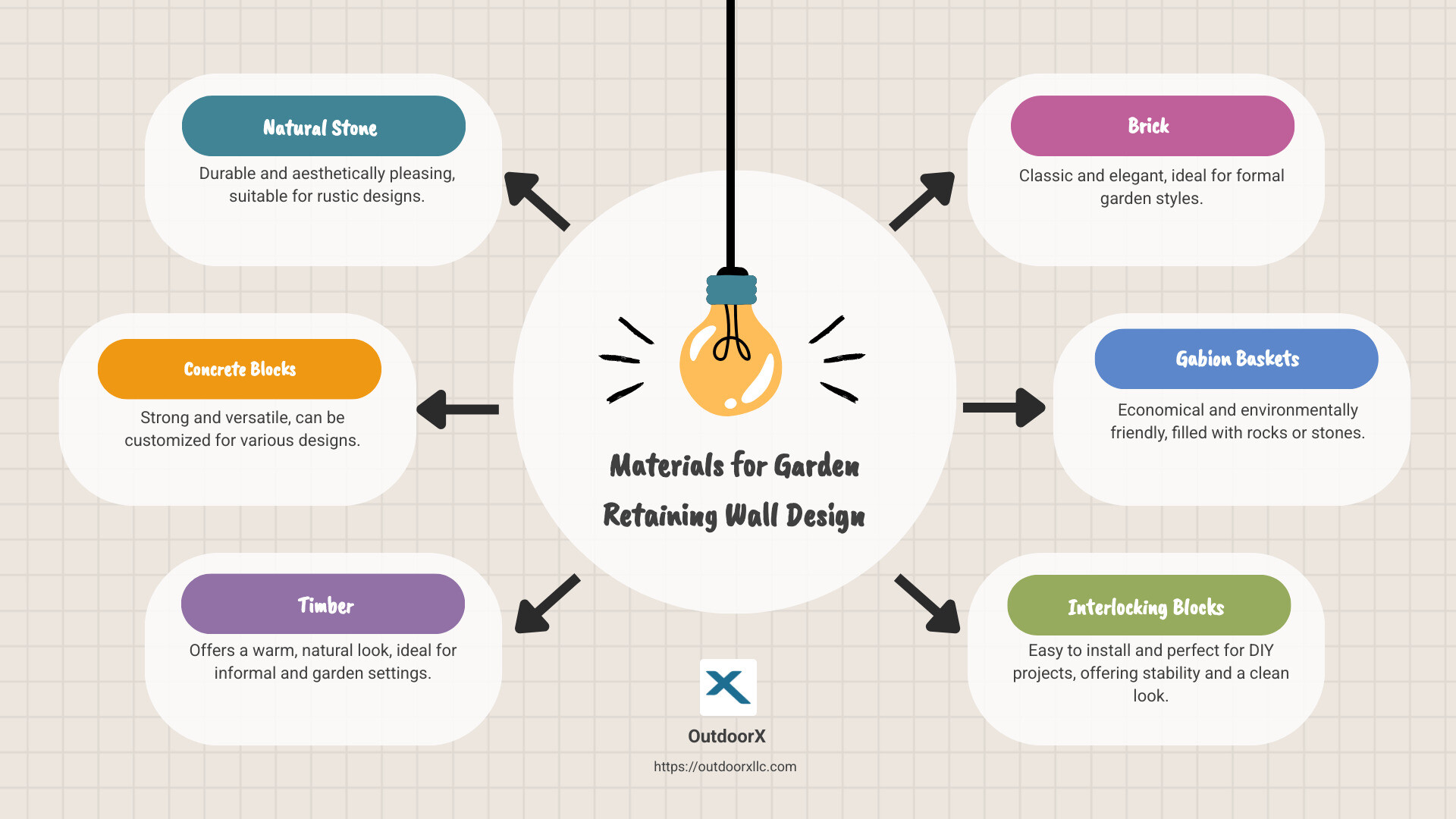
Choosing the right material for your retaining wall is crucial. Each material offers different benefits and aesthetics:
- Concrete Blocks: These are popular for their durability and versatility. They can mimic stone or brick and are often used for their modern and streamlined look.
- Natural Stone: Stones like limestone or fieldstone offer a timeless, rustic charm. They blend seamlessly with natural surroundings, creating a cohesive look.
- Timber: Timber retaining walls provide a warm, organic feel. They are eco-friendly and blend well with gardens that have a natural aesthetic.
- Gabions: These are wire baskets filled with stones. Gabions offer a unique, industrial look and are excellent for erosion control.
Design Elements
Designing a retaining wall involves more than just stacking materials. Here are some key design elements to consider:
- Contrast and Cohesion: Use retaining walls to create contrast between different garden sections. A well-placed wall can highlight specific plants or features, like a birdbath or sculpture.
- Multi-Tiered Walls: For sloped gardens, multi-tiered walls can create terraced beds, perfect for planting flowers, herbs, or even small trees.
- Living Walls: Incorporate soil pockets and plant cascading flowers or greenery to turn your wall into a living piece of art. This adds texture and color, making the wall a focal point.
- Drainage: Proper drainage is vital. Without it, water pressure can build up behind the wall, causing damage. Use gravel or sand for backfill and consider adding drainage pipes for higher walls.
The design and execution of a garden retaining wall are as much about creativity as they are about engineering. By thoughtfully selecting materials and incorporating design elements, you can create a wall that is not only functional but also improves the beauty of your outdoor space.

Next, we’ll explore some top garden retaining wall ideas to inspire your next project.
Top Garden Retaining Wall Ideas
Changing your outdoor space can be as simple as integrating innovative garden retaining wall design elements. Here are some standout ideas to inspire your next project:
Terraced Garden Beds
Terraced garden beds are a fantastic way to maximize space on a slope. By creating multiple levels, you can plant a variety of flowers, herbs, or vegetables in each tier. This not only improves the aesthetic appeal but also improves accessibility for gardening. Mauricio Lobeira, an expert architect, highlights how terraced beds can turn an unworkable incline into beautiful, usable spaces.
Stairway Creation
Incorporating stairs into your retaining wall design can make navigating different levels of your garden seamless. This is especially useful in sloped areas where access might be challenging. Stairs can be built using the same material as the wall, ensuring a cohesive look. Consider adding lighting along the steps for added safety and ambiance.
Living Wall
A living wall is a striking addition to any garden. By integrating pockets of soil within the retaining wall, you can plant cascading flowers or greenery, turning the wall into a lush vertical garden. This not only adds color and texture but also improves air quality. London’s living wall on Digby Road is a prime example of how living walls can transform urban spaces into green havens.
Unique Seating
Why not make your retaining wall do double duty as seating? Adding built-in benches on top of the wall provides a perfect spot for relaxation and enjoying your garden. Pair this with a fire pit for a cozy gathering area. This design offers both functionality and a unique focal point for outdoor entertaining.
Waterfall Feature
For a dramatic and tranquil touch, consider using your retaining wall as a backdrop for a waterfall. The sound of cascading water adds a soothing element to your garden, while the visual impact creates a stunning centerpiece. This feature not only improves the landscape but also provides a habitat for local wildlife.
These ideas showcase the potential of retaining walls to transform your garden into a functional and beautiful space. Whether you choose terraced beds, stairways, living walls, unique seating, or a waterfall, each design can improve your landscape’s usability and aesthetic appeal.
Essential Design Principles
When planning a garden retaining wall design, understanding key design principles can make all the difference. Here are some essential concepts to guide your project:
Follow the Slope
A retaining wall doesn’t have to be a uniform height. One effective approach is to follow the natural slope of your landscape. This method not only provides necessary support to prevent erosion but also maintains the natural flow of the terrain. By adjusting the wall’s height to match the slope, you can achieve a more harmonious integration with the existing landscape. Plus, it allows for creative planting opportunities, adding visual interest without obstructing views.
Design with the Landscape
Instead of altering the landscape dramatically, consider a design that accentuates the natural features. A curved wall, for instance, can highlight the terrain’s natural contours. This approach respects the beauty of nature while providing functional support. It’s about working with what you have and enhancing it, rather than reshaping it entirely.
Multi-Tiered Walls
For those dealing with steep hillsides, a multi-tiered retaining wall can be a practical and visually appealing solution. This design breaks up a large vertical drop into smaller, manageable sections. Each tier can be used as a planting bed, allowing for diverse plantings. You can mix colorful shrubs, flowers, or even create an herb garden. This not only reduces the material cost and complexity compared to a single tall wall but also adds depth and character to your garden.
Drainage Importance
Proper drainage is critical in retaining wall design. Without it, water can pool and cause structural damage. Incorporating drainage solutions such as gravel backfill, weep holes, or in-ground moisture barriers can prevent water buildup and extend the life of your wall. This is especially important near your home’s foundation, where excess moisture can lead to serious issues like rot or structural instability. Water management is not just a practical concern but a key element in maintaining the wall’s integrity and appearance.
By integrating these principles, you can create a retaining wall that not only supports your garden physically but also improves its beauty and functionality.
Frequently Asked Questions about Garden Retaining Wall Design
What is the cheapest retaining wall for a garden?
For budget-conscious gardeners, gabion basket walls and the hollow block stepoc system are cost-effective choices.
- Gabion Basket Walls: These walls are constructed using wire baskets filled with stones or other natural materials. They offer a unique, industrial look and are excellent for erosion control and stability. Their simplicity and the use of readily available materials make them an affordable option.
- Hollow Block Stepoc System: This system involves interlocking hollow blocks that are filled with concrete. It’s a versatile and economical choice, providing both strength and flexibility in design. The stepoc system is particularly popular for its ease of installation and cost-efficiency.
What is the basic rule of retaining wall design?
The fundamental rule in retaining wall design is ensuring effective drainage and structural safety.
- Effective Drainage: Proper drainage prevents water buildup behind the wall, which can cause pressure and lead to failure. Incorporate features like gravel backfill and weep holes to facilitate water movement away from the wall. This is crucial for maintaining the wall’s integrity over time.
- Structural Safety: The wall must be designed to withstand the lateral pressure of the soil it retains. This involves considering the wall’s height, material strength, and the type of soil. Ensuring these factors are addressed will help prevent potential collapse and ensure long-term stability.
How deep should a retaining wall footing be?
The depth and width of a retaining wall footing depend on several factors, including the wall’s height and the soil type.
- Footing Depth: Generally, the footing depth should be at least one-eighth to one-quarter of the wall’s height. For instance, a 4-foot wall would typically have a footing depth of 6 to 12 inches. This depth provides the necessary stability to support the wall.
- Width Requirements: The footing width should be at least twice the width of the wall itself. This helps distribute the weight evenly and provides a stable base. For example, a wall that is 1 foot wide would require a footing width of at least 2 feet.
Understanding these aspects of retaining wall design ensures that your structure is both cost-effective and durable, contributing to a beautiful and functional garden space.
Conclusion
At OutdoorX, we believe that every garden has the potential to become a stunning and functional space. Our custom landscaping and hardscaping services are designed to transform your outdoor areas into beautiful retreats custom to your preferences. Whether you’re envisioning a terraced garden, a serene waterfall feature, or unique seating atop a retaining wall, our expert craftsmanship ensures that your vision comes to life with precision and style.
Custom Landscaping Excellence
Our team specializes in creating bespoke landscaping solutions that not only improve the aesthetic appeal of your property but also provide essential structural support. We understand that a well-designed retaining wall is more than just a functional necessity—it’s an opportunity to showcase your personal style and lift your outdoor space. By choosing OutdoorX, you’re opting for a partner who values creativity, quality, and attention to detail.
Expert Craftsmanship You Can Trust
With years of experience in South Hamilton, MA, and throughout Essex County, our skilled professionals are dedicated to delivering top-tier retaining wall solutions. We use high-quality materials and innovative techniques to ensure that each project not only meets but exceeds your expectations. Our commitment to excellence means you can trust us to handle every aspect of your garden retaining wall design, from concept to creation.
Ready to transform your outdoor space with a stunning new retaining wall? Visit our Retaining Walls page to learn more about how we can bring your vision to life. Let’s create something beautiful together.
